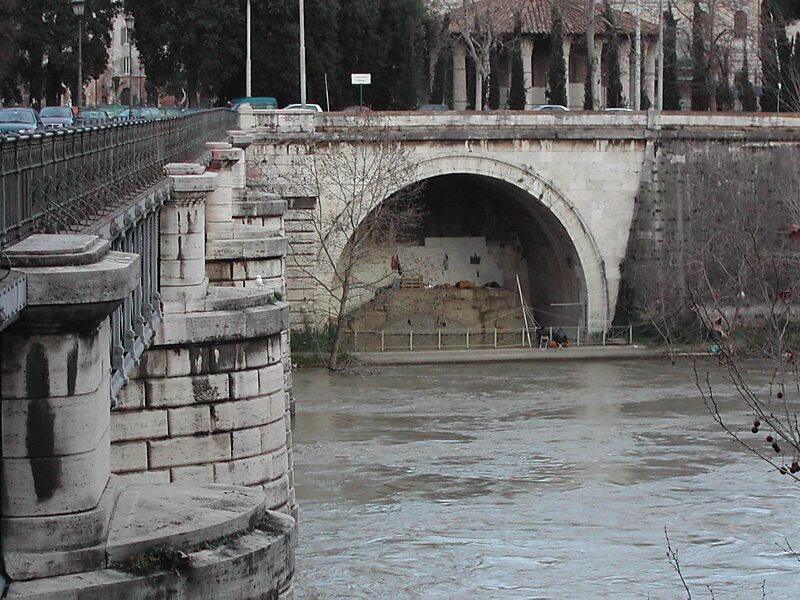
The Cloaca Maxima was one of the world's earliest sewage systems. Its name derives from Cloacina, a Roman goddess. Built during either the Roman Kingdom or early Roman Republic, it was constructed in Ancient Rome in order to drain local marshes and remove waste from the city. It carried effluent to the River Tiber, which ran beside the city. The sewer started at the Forum Augustum and ended at the Ponte Rotto and Ponte Palatino. It began as an open air canal, but it developed into a much larger sewer over the course of time. Agrippa renovated and reconstructed much of the sewer. This would not be the only development in the sewers. By the first century CE all eleven Roman aqueducts were connected to the sewer. After the Roman Empire fell the sewer still was used. By the 1800s it became a tourist attraction. Some parts of the sewer are still used today. Whilst still being used it was highly valued as a sacred symbol of Roman culture, and Roman engineering.
landingPages.LANDING_PAGE.BUTTONS.DOWNLOAD landingPages.LANDING_PAGE.BUTTONS.DOWNLOAD landingPages.LANDING_PAGE.BUTTONS.SEE_MOREWikipedia https://en.wikipedia.org/wiki/Cloaca_Maxima
landingPages.LANDING_PAGE.DETAIL.ADDRESS (Unnamed Road), Roma 00153, Italy
landingPages.LANDING_PAGE.DETAIL.COORDINATES 41°53'19.803" N 12°28'48.855" E