


Akureyri
Akureyri is the largest town in Iceland outside the Reykjavík area. It sits near the head of Eyjafjörður, one of the country's longest fjords, with snowy mountains on both sides. The town is small and easy to walk, but it has its own airport, theatre, museums and a lively café scene. Many visitors use it as a comfortable base for North Iceland.
Come here for a mix of town life and big nature. In one or two days you can see the church, the botanical garden and the harbour, then drive out to waterfalls, lava fields and whale-watching bays. Winter brings skiing above the town and a real chance of northern lights.

Akureyri – A planear uma viagem?
Cria o teu itinerário dia a dia na app Tripomatic.


Quando visitar
Summer is mild and the days are very long, with almost no darkness in June. Winter is cold, snowy and dark, but it is the season for skiing and northern lights, which are best seen from about September to April. Spring and autumn are quiet and can bring snow at any time, so check road conditions before you drive.
The biggest event of the year is Akureyrarvaka, the town festival held on a weekend in late August. It marks the town's birthday with concerts, art installations and outdoor events across the centre.
Principais atrações


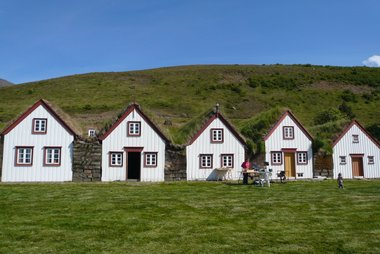
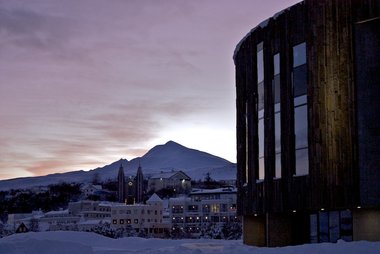


- Akureyrarkirkja is the town's landmark, a white church at the top of a long flight of steps above the centre. Guðjón Samúelsson, who also designed Hallgrímskirkja in Reykjavík, completed it in 1940.
- Akureyri Botanical Garden first opened in 1912 and grows thousands of plant species from Iceland and abroad. Entry is free, and the garden is at its best from June to September.
- Menningarhúsið Hof is the cultural centre on the harbourfront. It hosts concerts and stage shows, and the town's tourist information desk is inside.
- Akureyri Art Museum holds changing exhibitions of visual art. It is the main venue on Kaupvangsstræti, a street of galleries known as the Art Street, below the church.
- Nonnahús is the childhood home of Jón Sveinsson, the children's author known as Nonni. The small timber house is now a museum about his life and books.
- Akureyri Museum tells the story of the region from the first settlers to today. It stands in the old Innbær district beside a museum garden and a small church.
- Forest Lagoon is a geothermal spa in a forest on the opposite shore of the fjord, a few minutes' drive from town. Its warm pools look across the water to Akureyri.
Listas em destaque


O que experienciar
Some things are typical of a visit to Akureyri.
- Whale watching from the town pier: Boats leave from the harbour next to Menningarhúsið Hof. Humpback whales can be seen in the fjord throughout the year.
- A swim at the town pool: Sundlaug Akureyrar, a short walk from the church, has outdoor warm pools, hot tubs and water slides. An evening soak with local families is part of daily life here.
- Skiing at Hlíðarfjall: The ski area is about 5 km above town and is usually open from late November or December until late April. It has floodlit cross-country trails for skiing after dark.
- Hunting for northern lights: On clear, dark nights from about September to April, drive a few minutes out of town, away from street lights, and look north.
Excursões e atividades
Akureyri — Mapa

Passeios de um dia
Akureyri is the best base for day trips in North Iceland. Close options are listed first.
- Christmas House (Jólagarðurinn): a Christmas shop and garden about 10 km south of town, open all year. About 15 minutes by car.
- Old Turfhouse Laufás: a 19th-century turf farmhouse on the east shore of the fjord, run as a museum in summer (June to August). About 30 minutes by car.
- Hrísey: a quiet island in the fjord, reached by a 15-minute ferry from Árskógssandur. The pier is about 35 minutes north of Akureyri by car or bus, and the island is good for short walks and birdwatching.
- Dalvík: a fishing town about 45 minutes north by bus, with whale-watching boats and the ferry to the Arctic island of Grímsey.
- Goðafoss: a wide horseshoe waterfall right next to the Ring Road, about 40 minutes east by car or bus.
- Myvatn: a lake area of lava formations, craters, bird life and geothermal nature baths. About 1 hour by car.
- Húsavík: a harbour town known for some of Iceland's best whale watching. About 1 hour 10 minutes by bus.
- Dettifoss, Selfoss og Hafragilsfoss: one of Europe's most powerful waterfalls, with two neighbouring falls in a deep canyon. Allow about 2 hours each way by car; it combines well with Mývatn.
Onde explorar
Akureyri sits in Northeastern Region, which covers Eyjafjörður, Mývatn and the north-east coast.
- Along the fjord: Eyjafjörður and the fishing town of Dalvík.
- Lakes and waterfalls to the east: Myvatn and Dettifoss, Selfoss og Hafragilsfoss, with Vatnajökull National Park reaching up to the canyons of the far north-east.
- Whale-watching coast: Húsavík on Skjálfandi bay.
- The capital: Reykjavík, a short domestic flight away.
Como chegar
- By air: Akureyri Airport is about 3 km south of the centre. Icelandair flies from Reykjavík's domestic airport several times a day, and the flight takes about 40 minutes. Some European cities have seasonal direct flights. Travelers landing at Keflavík International Airport must first transfer to Reykjavík for a domestic flight, or drive. From Akureyri Airport, take a taxi, the pre-booked airport bus, or walk the 3 km coastal path into town.
- By bus: Strætó route 57 runs between Reykjavík (Mjódd terminal) and Akureyri in about 6½–7 hours. In Akureyri it stops at the airport and outside Menningarhúsið Hof. Strætó
- By car: The Ring Road (Route 1) links Akureyri with Reykjavík, about 390 km away. Plan a full day for the drive, especially in winter.
Como se deslocar
- City buses: Local buses inside Akureyri are free. Every route is a loop that starts and ends at the central Miðbær stop. Service is shorter at weekends. Visit Akureyri: free city bus
- Regional buses: Strætó buses leave from outside Menningarhúsið Hof. Route 78 goes north to Dalvík, route 79 to Húsavík, and route 56 east past Goðafoss to Myvatn. Services are limited, with reduced service in winter, so check timetables and fares before you travel. Strætó
- On foot: The centre, the harbour, the church and the botanical garden are all within a 15-minute walk of each other. Some streets are steep.
- Cycling: Cycling works in summer on the paths along the shore, but hills, wind and winter ice make it hard the rest of the year.
Conduzir
- Is a car worth it?: Not for the town itself, which is compact and has free buses. For the waterfalls, Mývatn and the coast, a car gives you much more freedom than the limited regional buses.
- Parking: The centre has two paid zones, charged on weekdays during the day. Pay with the EasyPark or Parka apps or at the pay stations on Skipagata and Túngata. Outside paid hours, parking is free.
- Tunnel toll: The Vaðlaheiði tunnel east of town on the Ring Road has a toll. Pay online at tunnel.is or in the Veggjald app up to 24 hours before or after driving through. Rental companies add a fee for unpaid tolls.
- Winter roads: Snow, ice and closed mountain roads are common from October to April. Check road conditions before every trip. Road conditions (Vegagerðin)
Comida e bebida
Akureyri has more places to eat than its size suggests. Look for fish from the fjord, Icelandic lamb and lamb soup, and the local love of ice cream, which people eat all year, even in winter.
Most restaurants, cafés and bars are on or near Hafnarstræti, the pedestrian street in the centre, and the streets between it and the harbour. Prices are high, as everywhere in Iceland; soup lunches and bakeries are the cheaper options.
Segurança e saúde
Akureyri is a very safe town, and crime against visitors is rare. The real risks come from nature: fast-changing weather, icy pavements and roads in winter, and strong wind. Wear shoes with good grip from October to April, and never leave marked paths at waterfalls or geothermal areas.
Before driving or hiking outside town, check the weather and register your travel plan if you head into remote areas. Safetravel (ICE-SAR)
História
Norse settlers arrived in Eyjafjörður in the 9th century, and the name Akureyri first appears in records in 1562. For a long time it was only a summer trading post: Danish merchants set up camp here each year and sailed home before winter. People started living here all year in the late 18th century, and the town received its first charter in 1786.
The old trading town grew along the shore south of today's centre, in the district called Innbær. Its timber houses still stand there, and Akureyri Museum tells their story. Nearby, Nonnahús recalls Jón Sveinsson, who grew up here, became a Jesuit priest abroad, and wrote the Nonni children's books, popular in many European countries. The 20th century brought fishing, industry and schools, and in 1940 the town finished Akureyrarkirkja on the hill above the harbour.
Factos sobre o país
Quick practical facts for Iceland at a glance:
- Moeda
- Coroa islandesa ISK kr · Pagamentos com cartão · Amplamente aceite
- Números de emergência
- 112 Polícia · Ambulância · Bombeiros
- Eletricidade
- 230 V · 50 HzTipo C / Tipo F
- Idiomas
- islandês
- Água da torneira
- Própria para beber
- Sentido de condução
- Direita
- Indicativo telefónico
- +354


Akureyri – Planeia os teus dias
Transforma os lugares deste guia num verdadeiro itinerário, com rotas inteligentes, estimativas de tempo e tudo o que precisas para uma viagem perfeita.


Destinos relacionados


Data: © OpenStreetMap contributors, Wikidata, Wikipedia, Tripomatic, Official websites. Tours by GetYourGuide. We earn commission from bookings. Travel guide generated with AI.