



古巴
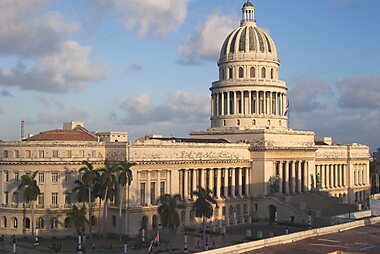
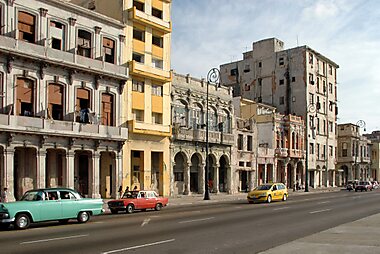
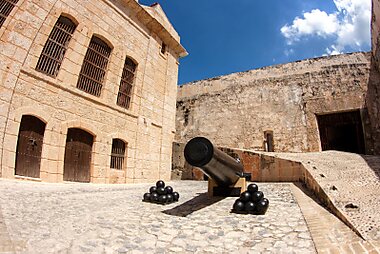
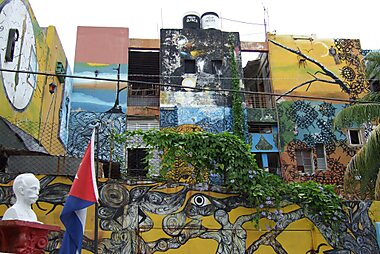
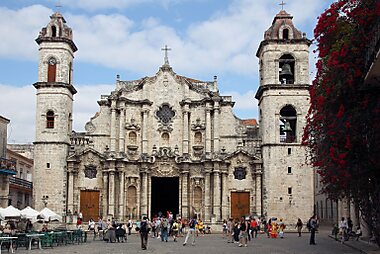
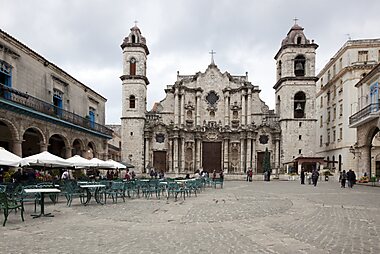
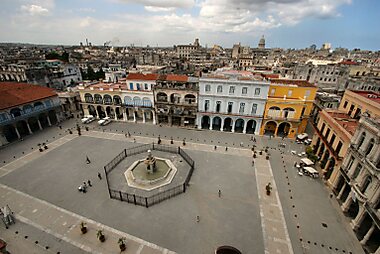
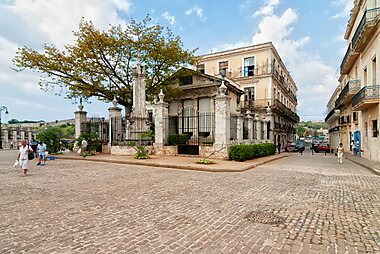
Cuba is the largest island in the Caribbean. It is known for colonial architecture, live music on every street corner, and vintage American cars still used as everyday transport. Decades of isolation have frozen much of its built environment in place, so Old Havana's colonial core survives largely intact next to crumbling facades and faded 1950s billboards. The 1959 revolution led by Fidel Castro replaced the government and reshaped daily life. Its legacy still shapes politics, the economy, and how Cubans talk about their own history.
Cuba is more varied than its reputation suggests. Havana anchors most visits, but colonial towns like Trinidad and Camagüey, tobacco valleys around Viñales, and beach resorts at Varadero are just as popular. The east of the island, around Santiago de Cuba, has a livelier Afro-Cuban culture and a different pace. The country suits travelers drawn to history, music, and architecture who are comfortable with a cash-based economy and infrastructure that runs on improvisation.

古巴 – 正在规划旅行?
在 Tripomatic 应用中按天构建您的行程。


货币与支付
Cuba runs on cash. The Cuban peso (CUP) is the only official currency, and the informal exchange rate is usually far better than the official one — expect it to shift during your trip. Since mid-2026, Visa and Mastercard have not worked anywhere in Cuba, regardless of which country issued the card, after US sanctions forced Cuba's card processor to cut ties with them. Only cash, UnionPay cards, and Cuban prepaid cards are accepted — check the current situation before you go, since it could change. Bring enough US dollars or euros in cash to cover the whole trip, and change only what you need as you go.
A budget traveler can get by on $45-60 a day using casas particulares (private homestays) and local eateries. Mid-range travel — paladares (private restaurants), a mix of casas and hotels, organized day trips — runs $80-120 a day.
精选榜单


观光与活动
古巴 — 地图

 打开互动地图
 小费指南
Tipping is a meaningful part of many Cubans' income, since state salaries are very low. In restaurants and with private guides, it works more like an expected part of the bill than an optional extra; elsewhere it is a welcome bonus.
Cash is best, and US dollars or euros are especially appreciated, though local currency also works. Carry small denominations, since change is not always available.
10-15% of the bill, in cash
round up or a small cash tip
round up
$1-2 per bag for porters, a couple of dollars a day for housekeeping
$5-10 per day, cash
用电
Cuba mostly runs on 110 V at 60 Hz with two-pin flat-blade Type A and B sockets, similar to North America. Many buildings also wire in 220 V circuits, and some hotels have European-style round-pin sockets too. Check the voltage marked next to an outlet before plugging in, and bring a plug adapter that covers more than one standard.
语言
Spanish is the only official language. English is spoken by some staff in hotels and tourist restaurants, but far less widely in smaller towns and by taxi drivers, so a few Spanish phrases go a long way.
网络与通讯
Internet in Cuba is state-run, slower, and pricier than in most countries — plan for less connectivity than usual.
- Wi-Fi: available mainly in hotel lobbies and designated public parks and squares, paid for with an ETECSA scratch card, often bought after a queue at an ETECSA office.
- Mobile data: a local ETECSA SIM lets you buy data packages, but speeds are inconsistent and coverage thins out in rural areas.
- Access: some international sites and apps load slowly or inconsistently; do not count on video calls or large uploads working reliably.
安全与紧急情况
Cuba is generally safe for tourists, and violent crime against visitors is rare. The most common problems are petty theft, such as pickpocketing or bag-snatching in crowded areas. Tourist-targeted scams also happen: overpriced cigars, unofficial "guides," or a restaurant that quotes one price and charges another. Agree on prices before you order or ride anywhere.
健康医疗
Tap water is not safe to drink in Cuba; stick to bottled or boiled water, including for brushing teeth in smaller towns. Pharmacies (farmacias) exist in most towns, but medicine and supplies can be limited. Bring a basic first-aid kit and any medication you need for the whole trip. No special vaccinations are required to enter, though a doctor may suggest routine boosters and hepatitis A protection given local food and water conditions.
签证与入境
Most visitors need a Tourist Card (Tarjeta del Turista) rather than a full visa, bought through an airline, a Cuban consulate, or an approved online agency before departure. It typically allows a 30-day stay, extendable once at a local immigration office; Canadian citizens usually get 90 days.
All travelers must also complete Cuba's online D'Viajeros customs and health declaration in the days before arrival, which generates a QR code needed at immigration.
US citizens face an extra rule: alongside the Tourist Card, they must travel under one of the categories authorized by US law, commonly "Support for the Cuban People."
Visa and entry requirements change frequently. Verify current requirements with the official immigration authority or your country's embassy before travel.
当地礼仪
Cubans are generally warm and direct. A greeting (buenos días/tardes) before asking for anything is expected, even from a shopkeeper or a stranger you're asking for directions.
- Dress is casual almost everywhere, but cover shoulders and knees in churches.
- Ask before photographing people, especially in poorer neighborhoods — a small tip is customary if someone poses for you.
- Cubans discuss politics openly among themselves, but visitors should be cautious about voicing strong opinions about the government in public.
- Bargaining is normal for souvenirs and with unofficial taxis, less so in state-run shops with fixed prices.
节假日与营业时间
Public holidays can close government offices and some shops, though many restaurants and casas particulares stay open to serve tourists. Book transport well ahead around 1 January and 26 July, when domestic travel peaks.
Shops generally open Monday to Saturday, often with a midday break, and run limited hours on Sundays.
当地交通
- By air: domestic flights connect Havana with Santiago de Cuba, Holguín, and other far-flung provinces — worth it if you are short on time and want to skip a long bus ride.
- By bus: Viazul runs air-conditioned coaches between major tourist towns and is the most reliable option for independent travel; book seats a few days ahead in high season. Viazul
- By shared taxi: colectivos run fixed routes between cities for a fraction of a private taxi's price; agree on the fare before boarding.
- By train: the rail network is slow and unreliable, and not a practical option for most visitors.
自驾指南
- Key rules: zero-tolerance for alcohol while driving, and a warning triangle, first-aid kit, and fire extinguisher are mandatory in the car — carry them even in a rental.
- Fuel: stations are attended; ask for "especial" for higher-octane petrol. Carry small bills, since change can be an issue.
- Parking: informal car-watchers ("parqueadores") often appear at busy spots and expect a small tip for keeping an eye on your car.
- Roads: traffic is light outside Havana, but road surfaces and signage are inconsistent — drive cautiously, especially after dark.
- Electric vehicles: rental cars are combustion-engine only, and public charging is still rare outside a handful of new government-run solar stations.
美食与饮品
Cuban food centers on rice, beans, and slow-cooked meat, with Spanish, African, and Caribbean influences. Breakfast is usually simple — bread, eggs, and strong coffee — while lunch is the main meal for many Cubans, built around rice, beans, a meat dish, and fried plantains. Dinner tends to be lighter outside tourist restaurants.
Street food and snacks are cheap and widely available: pizza sold from a hatch, pastries, and fresh fruit from local markets. Rum-based cocktails are as much a part of the culture as the food, and a strong, sweet coffee is drunk throughout the day.
Most tourists eat at paladares (privately run restaurants), which tend to have better food and service than state-run restaurants. Casas particulares often serve home-cooked meals to their guests for an extra charge, which is usually worth it.
周边探索
Havana is Cuba's capital and the start of most trips, with the colonial core of Old Havana, the Malecón seafront, and the country's biggest concentration of museums and nightlife.
Colonial towns:
- Trinidad, a cobblestoned 16th-century town near the coast, is one of the best-preserved colonial towns in the Caribbean.
- Camagüey, known for a maze of narrow, deliberately confusing streets built to slow down pirate raids.
- Santa Clara, home to the Che Guevara Mausoleum and a younger, more alternative arts scene.
Countryside and beaches:
- Viñales, a valley of dramatic limestone hills (mogotes) and tobacco farms in the west.
- Varadero, Cuba's best-known beach resort, with miles of white sand on a narrow peninsula.
- Cienfuegos, a French-influenced port city on a wide bay, nicknamed the Pearl of the South.
The east:
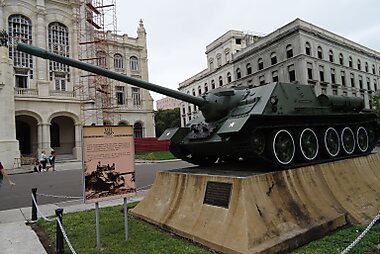
- Santiago de Cuba, the country's second city, with a stronger Afro-Cuban and Caribbean character and sites tied to the 1959 revolution.
- Baracoa, Cuba's oldest colonial settlement, isolated behind mountains and known for its chocolate and cacao farms.
- Holguín, a gateway to the beach resorts around Guardalavaca.
古巴 – 规划您的旅行
挑选您想去的地方,Tripomatic 会将它们规划成每日路线,提供智能路线规划、耗时预估以及完美旅行所需的一切。




