


利马都会区
Lima is Peru's capital and by far its largest city, spread along desert cliffs above the Pacific Ocean. Many travelers only pass through on the way to Cusco, but the city deserves a few days of its own. Its colonial centre is a UNESCO World Heritage Site, and adobe pyramids more than 1,000 years old stand between modern apartment blocks.
Food is the main reason many people come. Lima is known across South America for its food, from simple lunchtime ceviche to two restaurants ranked best in the world. Most visitors stay in the coastal districts of Miraflores or Barranco and take day trips into the historic centre.

利马都会区 – 正在规划旅行?
在 Tripomatic 应用中按天构建您的行程。


最佳旅行时节
Lima almost never gets rain, but the sky changes a lot through the year. December to April is summer, with sunshine and warm beach days. From about June to October the city sits under low grey cloud and light drizzle, called garúa, and it feels cool and damp but never truly cold. The biggest event is the Lord of Miracles (Señor de los Milagros) in October, when huge processions carry a sacred image through the centre from the Sanctuary of Las Nazarenas.
最佳旅行时间: 一月, 三月, 四月, 五月, 六月, 七月, 八月, 九月, 十月, 十一月, 十二月
热门景点


The colonial sights are grouped around the main square in the historic centre. The museums and coastal sights are spread across the city, so plan to use taxis between areas.
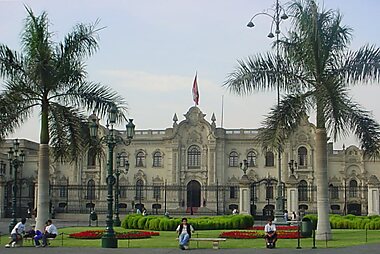
- Main Square of Lima is where Lima was founded in 1535. It is framed by the cathedral, the Archbishop's Palace and the Government Palace, where the changing of the guard takes place daily at noon.
- Cathedral of Lima holds the tomb of Francisco Pizarro, the Spanish conqueror who founded the city. Inside you also find richly carved wooden choir stalls and a religious art museum.
- Monastery of San Francisco is a large 17th-century church and monastery. Guided tours visit its old library and the catacombs below, where tens of thousands of people were buried in colonial times.
- Convent of Santo Domingo is one of the oldest religious buildings in the city. It holds the remains of Santa Rosa de Lima, the first saint of the Americas.
- Larco Museum displays about 5,000 years of pre-Columbian history in an 18th-century mansion with a flower garden. Its gallery of erotic pottery is famous, and you can also walk through the open storage rooms.
- Lima Art Museum covers Peruvian art from ancient cultures to today, in a 19th-century exhibition palace in a large park.
- Huaca Pucllana is a huge adobe pyramid built by the Lima culture between about 200 and 700 AD. It stands in the middle of Miraflores, surrounded by apartment buildings, and you visit it with a guide.
- Bridge of Sighs is a small wooden footbridge from 1876 in Barranco, the city's artistic district. Streets with old mansions, galleries and cafés lead down from here toward the sea.
精选榜单


Lima Parks and Viewpoints
Lima’s public spaces range from colonial-era fortifications to contemporary coastal overlooks. This collection features the Park of the Wall, which preserves 17th-century city defenses, and the bohemian Plaza de Barranco, home to 19th-century architecture. Coastal viewpoints like Salto del Fraile and Mirador Catalina Recavarren offer perspectives of the Pacific cliffs, while the Park of Friendship in Surco showcases a 30-meter Moorish arch and a historic steam locomotive. These sites highlight the city's diverse urban geography and historical development.
20 个地点特色体验
Some of Lima's best moments are things you do, not places you look at.
- Paragliding over the cliffs: Tandem flights take off from the clifftop park in Miraflores and glide along the coast. It is one of the most popular activities in the city when the wind is right.
- Swimming with sea lions: Boat trips leave from Callao to the Palomino Islands, where you can swim near thousands of sea lions. The boat trip takes about four hours.
- Evening water show: At the Magic Water Circuit, 13 fountains are lit in colour after dark, with music and laser shows several times each evening.
- Making a wish in Barranco: Local tradition says a wish comes true if you hold your breath all the way across the Bridge of Sighs. In the evening, Barranco's peñas play live criollo and Afro-Peruvian music.
- Surfing lessons: The beaches below the Miraflores cliffs have steady waves all year, and surf schools rent boards and wetsuits.
观光与活动
利马都会区 — 地图

 打开互动地图
一日游
The best day trip is close to the city. The famous sites farther away need a very long day or an overnight stay.
- Pachacámac — about 40 km south, 1–1.5 hours by car or tour, depending on traffic. This huge sanctuary was a major religious centre for about 1,300 years, and the Incas added a Temple of the Sun on top. A site museum explains the ruins.
- Caral — about 180 km north, 3.5–4 hours each way by road, usually on a guided tour. It is considered the oldest city in the Americas, with pyramids built around 2600 BC.
- Paracas Peninsula — about 250 km south, 3.5–4 hours by bus. Boat trips go to the Ballestas Islands to see sea lions and seabirds, and the desert reserve has red beaches. Most people stay at least one night.
周边探索
Lima's neighbouring areas are easy to combine with a city stay.
- Miraflores is the district where most visitors stay, with the clifftop parks, hotels and many of the best restaurants.
- Callao is Lima's port city and home to the international airport. Its historic port area has colourful restored streets.
- Palomino Islands lie off the coast of Callao and are home to a large colony of sea lions.
For most travelers, Lima is the starting point for a longer trip. The most common next stop is Cusco, a short flight away and the gateway to Machu Picchu.
如何到达
- By air: Jorge Chávez International Airport (LIM) in Callao is Peru's main international gateway. Its new terminal opened in 2025. The airport is about 11 km from the historic centre and 17 km from Miraflores. The Airport Express Lima bus runs to Miraflores hotels for about S/15, and the trip takes 45–70 minutes depending on traffic. For taxis, use the official counters inside the terminal or an app. Lima Airport
- By bus: Comfortable long-distance coaches connect Lima with the whole country, including overnight buses to Arequipa and the coast. Each company runs its own terminal, so check the departure address when you book.
当地交通
- Metropolitano: This rapid bus system runs in its own lanes on a north–south route through the historic centre and along the Vía Expresa, the fastest link between Miraflores and the centre. You pay with a rechargeable card sold at stations. A new card that works across several systems, with validators that also accept bank cards and phone payments, is being introduced during 2026.
- Metro: Line 1 is an elevated train from Villa El Salvador in the south to San Juan de Lurigancho in the northeast. It uses its own rechargeable card. Line 2 is only partly open. Línea 1
- Taxi / ride-hailing: Taxis are the easiest way to move between districts. Use an app or a taxi called by your hotel; street taxis have no meters.
- On foot / cycling: The historic centre, Miraflores and Barranco are pleasant to explore on foot, but distances between them are long and traffic is heavy. A bike path runs along the clifftops of Miraflores, and cycling there is popular.
自驾指南
- Is a car worth it?: No. Traffic in Lima is very heavy and local driving is aggressive. Taxis and apps are cheap, and tours cover sites outside the city.
- Parking: If you do drive, use paid car parks, especially in the historic centre, Miraflores and Barranco. Leave nothing visible inside the car.
- Restrictions: Parts of the historic centre around the main square are pedestrian-only, including Jirón de la Unión.
美食与饮品
Lima is Peru's food capital. Try ceviche at lunchtime, when locals eat it and the fish is freshest; many cevicherías close in the late afternoon. Lima also has two strong fusion traditions: chifa, Peruvian-Chinese cooking, and Nikkei, Peruvian-Japanese cooking.
For casual eating, go to the Barrio Chino (Chinatown) next to the Central Market in the historic centre for chifa. Just next to Miraflores, the Surquillo Market is known for fresh fruit and simple food stalls, and the streets around Parque Kennedy are full of restaurants. Lima is also home to Central and Maido, both named the world's best restaurant (in 2023 and 2025). For these and other top restaurants, book weeks or months ahead.
安全与健康
Lima is a big city with real crime, but most visits are trouble-free if you take normal precautions. Miraflores, Barranco and San Isidro are the safest areas to stay. The historic centre is busy and fine during the day, but leave after dark and keep your phone out of sight.
- Taxis: Never hail a taxi on the street. Use an app, the official airport taxis or a car called by your hotel.
- Theft in traffic: Thieves sometimes break car windows at traffic lights, especially on the route from the airport. Keep bags and phones on the floor, not on the seat.
- Petty theft: Watch for pickpockets in crowded places, on buses and in markets.
- Earthquakes: Lima is in an active earthquake zone. Learn the evacuation route in your hotel.
历史
People lived on this coast long before the Spanish arrived. The Lima culture built Huaca Pucllana between about 200 and 700 AD, and Pachacámac to the south was a major sanctuary for many centuries before the Incas took control.
Francisco Pizarro founded the city in January 1535 as the City of the Kings. For almost three centuries it was the capital of the Spanish Viceroyalty of Peru, which controlled most of South America. The wealth of that time is visible in the churches and in mansions with carved wooden balconies around Main Square of Lima. A powerful earthquake in 1746 destroyed much of the city, so many buildings you see today were rebuilt afterward.
Peru declared independence in Lima in July 1821. In the 20th century the city grew enormously as people moved from the Andes, and today about 10 million people live in the metropolitan area. The historic centre became a UNESCO World Heritage Site in 1988.
国家概况
Quick practical facts for Peru at a glance:
- 货币
- 秘鲁索尔 PEN · 刷卡支付 · 普遍接受
- 紧急求助电话
- 911
- 用电规格
- 220 V · 60 HzA 型插头 / B 型插头 / C 型插头
- 语言
- 艾马拉语, 西班牙语, 克丘亚语
- 自来水
- 不可直接饮用
- 行车方向
- 靠右行驶
- 国际区号
- +51






