



Naxos
Naxos is the largest island in the Cyclades. It has long sandy beaches, a mountain interior and a historic main town. Most visitors stay a few nights and use the island for both swimming and sightseeing.
The island is greener and more spread out than its neighbours. Farm villages, Venetian stone towers and Byzantine churches sit in the hills. The pace is slower and family-friendly, and it suits beach holidays, easy hiking and short drives between villages. Naxos is also a good base for day trips by ferry to Paros and the smaller islands.

Naxos – Plánuješ výlet?
Sestav si itinerář den po dni v aplikaci Tripomatic.


Kdy navštívit
June to September is the main beach season. The sea is warm into October, and the crowds are smaller in September. July and August are hot, dry and windy, because the strong summer meltemi wind blows across the Aegean. Wind can make some beaches rough and delay ferries.
Spring is best for hiking and village visits, with green hills and comfortable days. Winter is mild but wet, and many hotels and seaside restaurants are closed.
Village festivals (panigiria) take place across the island in summer, especially around 15 August, when the large festival in Filoti is the island's biggest. Ask locally for other dates, as each village has its own.
Nejlepší doba k návštěvě: květen, červen, červenec, srpen, září, říjen
Hlavní památky
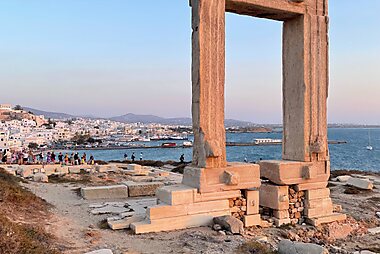


- Portara is the island's symbol. It is the marble doorway of a temple of Apollo that was never finished, built around 530 BC. It stands on a small islet at the harbour, and is easy to reach on foot.
- The Venetian Kastro is the old fortified hill above Naxos town. Narrow lanes lead past stone houses and old mansions, and Tower of Sanoudos is one of the surviving towers. Metropolitan Catholic Church Presentation of Christ is the Catholic cathedral inside the walls.
- Byzantine Museum is in the Kastro area. It shows finds and church art from the Byzantine period, and gives context for the many chapels you will see on the island. The Archaeological Museum is also in Naxos town.
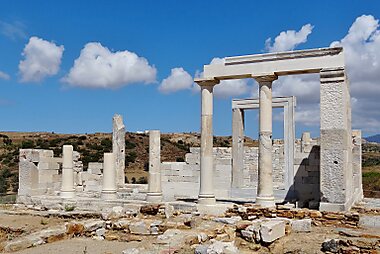
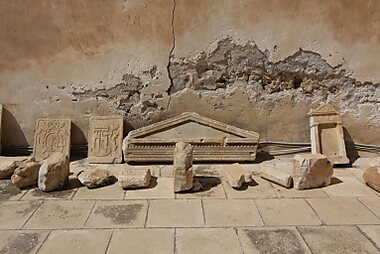
- Demeter Temple is a restored Archaic temple on a hill in the plain near Sangri. A small museum next to the site shows finds from the temple.
- Kouros of Apollonas is a huge unfinished marble statue lying in an ancient quarry above the small port of Apollonas, on the north coast. Kouros of Faranghi is another unfinished statue, in the Flerio area.
- Panagia Drosiani is a very old Byzantine church near Moni, known for its early wall paintings.
- Zas Cave is a large cave on the slopes of Mount Zas, the highest mountain in the Cyclades. A path leads up to it from the village of Filoti.
Apeiranthos and Halki are the two villages most worth a stop. Apeiranthos has marble-paved lanes and small museums. Halki has old mansions, a Venetian tower and shops selling kitron, the local citron-leaf liqueur.
For swimming, the sandy beaches south of Naxos town are the easiest to reach. Agios Georgios is next to town, and Agios Prokopios, Agia Anna and Plaka follow along the coast, with tavernas close to the water. Mikri Vigla has steady wind and is popular for kitesurfing and windsurfing. Alyko and Pyrgaki, further south, are quieter, with dunes and cedar trees.
Doporučené výběry


Beautiful Beaches
Naxos features a diverse coastline ranging from the shallow, family-friendly waters of Saint George near Chora to the expansive dunes of Plaka. This selection includes Mikri Vigla’s southern side, which remains sheltered from the strong Meltemi winds, and the quiet, cedar-lined stretches of Kastraki and Glyfada. These beaches are characterized by fine golden sand and clear Aegean waters, offering varied environments from organized seaside resorts to more secluded, natural landscapes.
5 míst
Ancient Archaeological Sites
Naxos's archaeological landscape spans from the Early Cycladic period to the Venetian era. This collection features the iconic Portara, the colossal unfinished Kouros statues of Flerio, and the 6th-century BC Temple of Demeter at Sangri. Explore the sophisticated Archaic aqueduct system, Hellenistic defensive structures like Pyrgos Kheimarrou, and the medieval fortifications of Apalirou and Apano Kastro. These sites reveal the island's long history as a center for marble quarrying, advanced engineering, and maritime power.
17 míst
Co zažít
- Watch the sunset from the causeway to Portara, when the marble frame glows against the sky. Go a little early to get a spot.
- Windsurf or kitesurf, or take a lesson, at one of the windy beaches on the west coast.
- Hike old stone paths between villages, or up Mount Zas. Spring and autumn are the best seasons.
- Try a kitron tasting in Halki.
- Join a village festival in summer, with local music, dancing and food. Ask your hotel which village has one that week.
- Walk through the lanes of the Kastro at night, when the old mansions are lit and the restaurants fill up.
Prohlídky a aktivity
Naxos – Mapa

 Otevřít interaktivní mapu
 Jednodenní výlety
Naxos is a ferry hub, so island day trips are easy. Check timetables in advance, as they change by season.
- Paros: the closest option, about 20 to 45 minutes by ferry depending on the boat.
- Antiparos: a small, relaxed island next to Paros, reached via Paros.
- Small Cyclades (Koufonisia, Schinoussa, Iraklia and Donousa): small islands to the south-east with clear water and quiet beaches. They are best for an overnight stay, but a day trip can work in summer.
- Ios, Santorini and Mykonos: these are longer ferry rides, and a day trip is a long day. Santorini and Mykonos are only practical in summer, so many travelers stay overnight instead.
- Amorgos: a quiet, mountainous island to the east, better for a night or two than for a day.
Kam vyrazit na průzkum
Jak se tam dostat
- By air: Naxos airport is small and about 3 km from Naxos town. It has flights from Athens, and some seasonal flights from other Greek cities. Planes are small and seats are limited, so book early in summer. A taxi to town is short and cheap.
- By ferry: this is the main way to arrive. Ferries run from Piraeus (Athens) in about 3.5 to 6.5 hours, depending on the boat. High-speed boats are faster, and slow boats are cheaper. Naxos is also linked to Paros, Mykonos, Santorini, Ios and the Small Cyclades. Ferries all use the port in Naxos town.
- Other: there is no train. Buy ferry tickets in advance for July and August. Keep a spare day before any flight home, as strong wind can cancel ferries.
Doprava na místě
- Bus: public buses link Naxos town with the main villages and the west-coast beaches. Service is thinner in the shoulder season and in winter, and timetables are posted at the bus station.
- Car or scooter: rental is common and is the easiest way to reach the mountain villages and quiet beaches. A small car is better than a scooter on steep, windy roads.
- Taxi: available in Naxos town and at the port. Taxis are in short supply in July and August, so book ahead for early flights.
- On foot: Naxos town and the Kastro are easy to walk. Beaches near town are reachable on foot, but the rest of the island is spread out.
Řízení auta
- Is a car worth it?: yes, if you want to see more than Naxos town and the nearby beaches. Villages, sights and quiet beaches are far apart, and buses are limited.
- Roads: main roads are paved, but mountain roads are narrow and winding. Drive slowly and watch for goats and sheep.
- Parking: parking in Naxos town is limited in summer. Park near the port or at the edge of the old town and walk in. Beach car parks fill up early.
- Fuel: petrol stations are mostly around Naxos town and the main roads, so fill up before driving into the hills.
Jídlo a pití
Naxos has some of the best local produce in the Cyclades. Look for Naxos potatoes, local cheeses such as graviera and arseniko, thyme honey, and lamb or goat from the mountain villages. Kitron is the local liqueur, made from citron leaves, and is served after meals.
For eating, go by area instead of single restaurants. The waterfront and old town lanes in Naxos town have many tavernas. In Halki and Apeiranthos, the village squares have simple tavernas with local dishes. Beach tavernas on the west coast are good for a long lunch.
Bezpečnost a zdraví
Naxos is very safe for visitors. Crime is low, and petty theft is rare. Keep valuables out of sight on beaches and in rental cars, as you would anywhere.
- Scooters: accidents are common on steep, loose-gravel roads. Wear a helmet and ride slowly, or rent a car.
- Sun and heat: summer sun is strong. Bring sun protection and water for hikes, as there is little shade.
- Wind and sea: the meltemi can make the sea rough in July and August, so swim only where the water looks calm.
- Wildfires: dry summers carry a fire risk. Follow local warnings and do not light fires outdoors.
- Water: many Greek islands depend on desalinated water. Drink bottled water.
- Health care: Naxos town has the island's main hospital, and pharmacies are in the larger villages as well. For serious cases, patients may be moved to Athens.
Historie
Naxos has been important for more than 4,000 years. Early Cycladic people made marble figures here, and the island was rich in marble and later in emery stone.
In myth, Naxos is where Theseus left Ariadne, and where the god Dionysus found her. In the 6th century BC the tyrant Lygdamis made Naxos a strong sea power. His building projects include Portara and Demeter Temple. Work on the temple at the harbour stopped when he lost power. The huge unfinished statues at Kouros of Apollonas also show how marble was cut here in ancient times.
In 1207 the Venetian Marco Sanudo took the island and founded the Duchy of the Archipelago. The Venetians built the Kastro in Naxos town, where Tower of Sanoudos still stands. Later nobles built fortified stone towers in villages across the countryside. The Ottomans took control in 1566, though local Venetian families kept some influence for many years. The island joined Greece in 1830.
Fakta o zemi
Quick practical facts for Greece at a glance:
- Měna
- euro EUR € · Platby kartou · Široce přijímány
- Nouzová čísla
- 112
- Elektřina
- 230 V · 50 HzTyp C / Typ F
- Jazyky
- řečtina
- Voda z kohoutku
- Pít s opatrností
- Strana jízdy
- Vpravo
- Předvolba
- +30


Naxos – Naplánuj si jednotlivé dny
Proměň místa z tohoto průvodce ve skutečný itinerář s chytrým plánováním tras, časovými odhady a vším, co potřebuješ pro bezstarostný výlet.




