


Nova Gorica
Nova Gorica is a young Slovenian town on the Italian border, built from 1948 after the new frontier left the old city of Gorizia in Italy. Today the two towns form one urban area, and you can walk from one country to the other across a single square. In 2025 they shared the title of European Capital of Culture as GO!2025, the first time the title crossed a national border.
The town itself is modern, green and calm, with wide streets and post-war architecture. Its appeal lies in the history around it: a monastery with the tomb of the last French Bourbon king, a pilgrimage basilica on a hill, a record-breaking stone railway bridge and the clear Soča river. It suits a relaxed stay of two or three nights, combined with day trips to the wine hills of Brda, the Vipava valley and Italian Gorizia.

Nova Gorica – Plánuješ výlet?
Sestav si itinerář den po dni v aplikaci Tripomatic.


Kdy navštívit
Spring and early autumn are the best times to visit. May brings mild weather, and September is warm and settled, with the grape harvest in the nearby hills. July and August are hot, with afternoon storms. Winters are cool, damp and quiet.
The biggest annual event is Gusti di Frontiera, a large food and wine festival in the centre of Gorizia over four days in late September. Hundreds of stalls serve food from Italy and many other countries, and it is an easy walk across the border from Nova Gorica.
Nejlepší doba k návštěvě: září
Hlavní památky


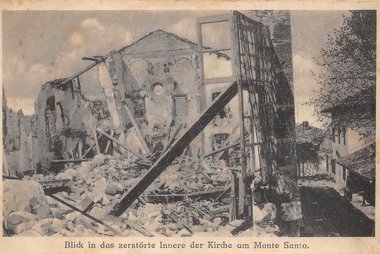
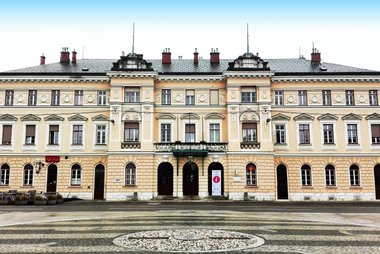

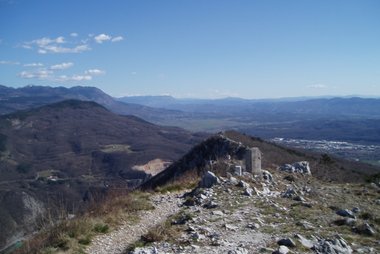


The main sights sit on the hills around the town and along the border, so plan for short walks and a few short drives.
- Nova Gorica railway station is the historic Transalpina station from 1906. In front of it lies Europe Square, where the border once ran behind a fence. Today a mosaic in the middle of the square marks the line. The station building houses a small museum about life on the border.
- Kostanjevica Monastery stands on a hill on the south-west edge of the centre. Its crypt holds the tombs of Charles X, the last Bourbon king of France, and members of his family. The Franciscan library keeps about 10,000 old books, and the garden has a large collection of Bourbon roses that bloom in May and June.
- Sveta Gora Basilica stands on top of the 682 m hill above the town. It has been a Marian pilgrimage site for centuries, and the view takes in the Julian Alps and, on clear days, the Adriatic Sea.
- Solkan Bridge crosses the Soča at Solkan with an 85 m arch, the longest stone arch on any railway bridge in the world. It still carries trains on the Bohinj Railway. The best views are from the riverbank below.
- Sabotin is the ridge on the Italian border above Solkan. It saw heavy fighting in the First World War, and the Park of Peace now preserves the old fighting positions and caves along the ridge.
- Kromberk Castle is a 17th-century castle with four corner towers on the eastern edge of town. It houses the regional Goriški Museum and has a pleasant terraced garden.
- Gorizia Castle sits on a hill in the centre of Gorizia, a 20-minute walk across the border. It has views over both towns and a medieval old quarter around it.
Doporučené výběry

Nova Gorica Essentials
Nova Gorica and its Italian neighbor Gorizia offer a cross-border experience shaped by medieval heritage and 20th-century history. This selection features the 11th-century Gorizia Castle and the Renaissance-style Branik Castle. Architectural highlights include the Solkan Bridge, the world’s longest stone arch railway bridge, and the Nova Gorica railway station, which sits directly on the international border. Significant religious sites include the royal Bourbon tombs at Kostanjevica Monastery, the pilgrimage basilica on Sveta Gora, and the 18th-century Gorizia Synagogue. The Sabotin ridge provides views of the Soča River alongside preserved World War I fortifications.
10 míst
Historic Sites & WWI Heritage
This collection spans centuries of history in the Gorizia region, from the 11th-century Gorizia Castle and the Renaissance-era Kromberk Castle to the brutal battlefields of the Isonzo Front. On Mount Sabotin and Vodice, visitors can explore preserved trench systems, caverns, and open-air museums dedicated to World War I. The list also includes the burial grounds of Austro-Hungarian soldiers and memorials to local philosophers and fallen troops, reflecting the area's complex cross-border heritage.
10 míst
Religious Sites & Historic Churches
This cross-border region features a diverse array of religious architecture spanning several centuries. Key sites include the 18th-century Gorizia Synagogue in the former ghetto and the Kostanjevica Monastery, the final resting place of the last French Bourbons. The area is also home to the Sveta Gora pilgrimage basilica, offering views from its 682-meter peak, and the Duomo di Sant'Ilario e Taziano, which blends Gothic foundations with Baroque interiors. These sites reflect the multi-ethnic and spiritual history of the Gorizia and Nova Gorica urban area.
6 míst
Co zažít
Life in Nova Gorica is closely tied to the border, the river and the surrounding hills.
- Stand on the border at Europe Square: Put one foot in Slovenia and one in Italy on the line that crosses the square in front of the Transalpina station.
- Paddle the Soča at Solkan: The Solkan Kayak Centre runs a whitewater slalom course on the river. In summer, the calm water upstream is good for kayaking and swimming.
- See the Bourbon roses bloom: In May and June, thousands of old Bourbon roses flower in the garden of Kostanjevica Monastery.
- Walk up to Sveta Gora: Follow the marked footpath from Solkan to the basilica, a steep climb of about 600 m, for the view from the top.
- Relax in Rafut Park: This restored villa garden on the edge of town is full of exotic trees and plants. It reopened to the public in 2024.
- Ride a steam train over the Solkan Bridge: On some summer weekends, a historic steam train runs on the Bohinj Railway and crosses Solkan Bridge.
Nova Gorica is also known for its large casinos, which attract many visitors from Italy. They operate mainly as hotel and entertainment complexes.
Prohlídky a aktivity
Nova Gorica – Mapa

Jednodenní výlety
Nova Gorica is a good base for exploring the far west of Slovenia and the nearby part of Italy. Most trips are easiest by car.
- Gorizia (on foot, 15–30 min): The Italian twin town has a castle, Habsburg-era palaces, cafés and a busy old centre. You simply walk across the border.
- Brda (car, 20–30 min): Rolling vineyard hills with small stone villages, wine cellars and views towards the Alps. Visit the walled village of Šmartno and the tower at Gonjače.
- Vipava (car, 30–40 min): A green valley known for wine, fruit and springs. Rihemberk Castle, a large medieval castle at Branik, is on the way.
- Kras (car, 40–50 min): A limestone plateau with stone villages, red Teran wine and cured ham. The hilltop village of Štanjel is a highlight.
- Aquileia, Italy (car, about 40 min): A former Roman city with a basilica famous for its large early Christian floor mosaics. It is a UNESCO World Heritage Site.
- Kobarid (car, about 1 h): Drive up the Soča valley to the First World War museum and the Kozjak waterfall.
Kam vyrazit na průzkum
Jak se tam dostat
- By air: Trieste Airport in Italy is the closest, about 30 km away. A taxi takes about 30 minutes, and buses run to Gorizia Centrale station. Ljubljana Airport is about 1.5 hours by car, and Venice Marco Polo Airport is under 2 hours by car.
- By train: Nova Gorica station is on the scenic Bohinj Railway, with slow regional trains through the Soča valley to Jesenice and across the Karst to Sežana. For Italy, Gorizia Centrale station, about 4 km away, has regional trains to Trieste and Udine, with connections to Venice. Slovenian Railways
- By bus: Buses to Ljubljana take about 2 hours and are usually quicker than the train. Local cross-border buses link Nova Gorica with Gorizia Centrale station.
- By car: The motorway from Ljubljana through the Vipava valley takes about 1.5 hours. Trieste is about 45 minutes away.
Doprava na místě
- On foot: The centre is compact and green. Europe Square and the Kostanjevica hill are within a 15-minute walk, and Gorizia's centre is about 20 minutes on foot.
- Buses: Local buses connect Nova Gorica with Solkan, Šempeter and Gorizia, but services are less frequent in the evening and at weekends.
- By bike: Cycling is pleasant on the flat streets and along the Soča towards Solkan. Sveta Gora and the Brda hills are steep climbs.
- By car: A car is the easiest way to reach Sveta Gora, the Sabotin ridge and the wine regions.
- Visitor information: Events, maps and cross-border information are on the official GO!2025 site. GO!2025 visitor information
Řízení auta
- Is a car worth it?: Not for the town itself, which is easy on foot. A car is very useful for the hills, the wine regions and the Soča valley, where buses are infrequent.
- Parking: Parking in the centre is mostly in paid street zones and car parks, with payment by machine or mobile app. Parking near Europe Square and the monastery is usually easy.
- Border: Italy has run temporary checks on its border with Slovenia since 2023. Always carry your passport or ID card, even for a short trip into Gorizia.
- Vignette: You need an e-vignette for Slovenian motorways, including the road to Ljubljana.
Jídlo a pití
Food here mixes Slovenian, Italian and Friulian traditions. Look for local cured ham, frico (a cheese and potato dish), gnocchi, fresh pasta and game. Wine is a big part of daily life, with whites such as Rebula from Brda and Zelen and Pinela from the Vipava valley. In spring, look out for menus with wild asparagus and cherries from the hills.
For the best eating, go to the farm restaurants and wine estates of the nearby Brda and Vipava hills, where many places serve their own wine and produce. In town, most cafés and restaurants are in the compact centre, and Gorizia's old centre is a short walk away for Italian food.
Bezpečnost a zdraví
Nova Gorica is a safe town with little crime. Normal care with valuables is enough, including around the casinos at night. Tap water is safe to drink.
In summer, carry water on hill walks and on the Sabotin ridge, which has little shade. The Soča is cold and fast in places, so swim only where locals do and follow signs near the kayak course.
Historie
For centuries the town of Gorizia was the centre of a mixed Slovenian, Italian, Friulian and German region under the Habsburgs. In the First World War the area became part of the Isonzo Front. Heavy fighting on Sabotin and the surrounding hills destroyed much of the region. In 1916 the retreating Austrian army blew up Solkan Bridge, and it was rebuilt in a very similar form in 1927.
After the Second World War, the 1947 Paris Peace Treaty set a new border. Gorizia stayed in Italy, and its eastern suburbs went to Yugoslavia. The authorities decided to build a new town here, and the architect Edvard Ravnikar drew up the modernist plan. Construction began in 1948. The border ran right in front of Nova Gorica railway station, and the square was divided by a fence for decades.
The fence came down in 2004 when Slovenia joined the European Union, and border controls ended in 2007 with Schengen. In 2025, the two towns celebrated together as GO!2025, the first cross-border European Capital of Culture.
Fakta o zemi
Quick practical facts for Slovenia at a glance:
- Měna
- euro EUR · Platby kartou · Široce přijímány
- Nouzová čísla
- 112
- Elektřina
- 230 V · 50 HzTyp C / Typ F
- Jazyky
- slovinština
- Voda z kohoutku
- Pitná
- Strana jízdy
- Vpravo
- Předvolba
- +386


Nova Gorica – Naplánuj si jednotlivé dny
Proměň místa z tohoto průvodce ve skutečný itinerář s chytrým plánováním tras, časovými odhady a vším, co potřebuješ pro bezstarostný výlet.


Související destinace

Data: © OpenStreetMap contributors, Wikidata, Wikipedia, Tripomatic, Official websites, geoBoundaries (CC BY 4.0). Tours by GetYourGuide. We earn commission from bookings. Travel guide generated with AI.
Naplánuj si výlet s Tripomatic
- Plánování s umělou inteligencíNech AI sestavit svůj itinerář, zodpovědět otázky k cestování a zařadit rezervační dokumenty do výletu.
- Cestovní upozorněníOficiální doporučení, nepříznivé počasí, stávky a přírodní hrozby pro místa na každý den tvého výletu.
- Státní svátky a událostiMěj přehled o svátcích, festivalech a zavíracích dnech během svého výletu a zjisti, co znamenají pro tvé plány.
- Odhad nákladůPřehled nákladů na výlet s pomocí AI, ať víš, s jakým rozpočtem počítat ještě před odjezdem.
- Prohlídky a vstupenkyRezervuj si prohlídky, přednostní vstupenky a zážitky přímo ve svém plánu.