



Kanton Tessin
Ticino is Switzerland's southernmost canton and its only Italian-speaking one. Palm trees line the lakefront of Lugano, medieval castles guard Bellinzona, and snow-capped peaks rise behind both. The result feels more Mediterranean than Alpine, even though the high mountains are only about an hour away by train or car.
The canton suits travelers who want variety in one trip: lakeside cafes and museums one day, castle ramparts or a mountain cable car the next. The architect Mario Botta, born in Mendrisio, designed several of the region's best-known modern buildings, which now sit alongside its medieval castles and stone villages.

Kanton Tessin – Planst du eine Reise?
Erstelle deine Reiseroute Tag für Tag in der Tripomatic-App.


Beste Reisezeit
Summers (June to August) are warm and sunny by the lakes, ideal for swimming and boating. Spring and autumn are mild, while winter turns cold and often snowy away from the lakeshore. The region's headline event is the Locarno Film Festival each August, when Locarno's Piazza Grande becomes a free open-air cinema for thousands of viewers under the stars.
These figures reflect the canton's mountainous interior. Lakeside towns like Lugano sit at low altitude and stay noticeably milder year-round.
Top-Sehenswürdigkeiten

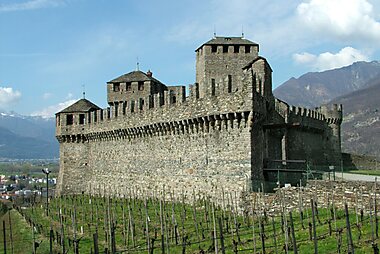
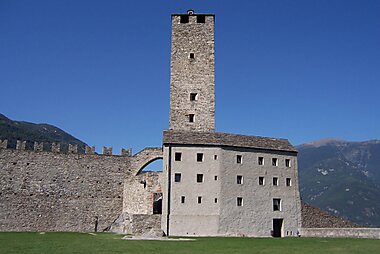

- Castelgrande is the largest of Bellinzona's three medieval castles, its ramparts stretching across the rock that once guarded the Gotthard trade route. Climb the tower for views over the old town.
- A short walk uphill, Castello di Montebello adds a second ring of walls and a small museum on the castles' history.
- The third castle, Castello di Sasso Corbaro, stands apart on its own hill outside town. Together the three fortresses and their walls form a UNESCO World Heritage Site.
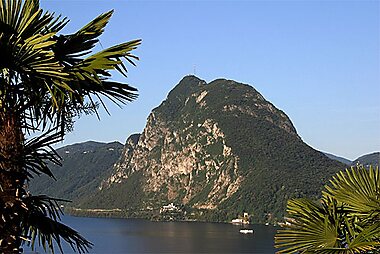
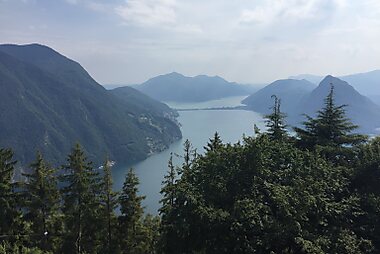
- A cable car climbs from the edge of Lugano to Monte San Salvatore, a pyramid-shaped peak with a panorama over Lake Lugano and, on clear days, the plains of northern Italy.
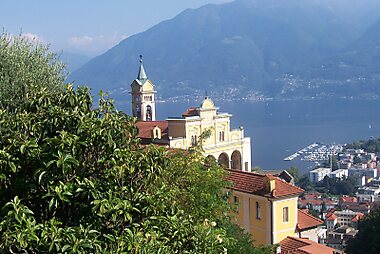
- Above Locarno, Santuario della Madonna del Sasso is a pilgrimage church reached by funicular or a steep walk, with views over Lake Maggiore and the Maggia river delta.
- In the Verzasca valley, Ponte dei Salti is a centuries-old double-arched stone footbridge over turquoise water, and one of the region's most photographed spots.
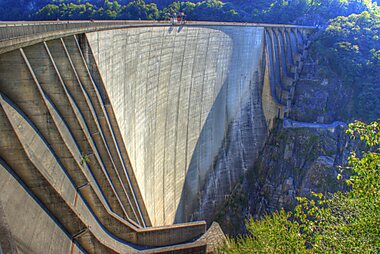
- Downstream, Diga di Contra is the 220-metre dam made famous by the opening bungee jump in the James Bond film GoldenEye; visitors can still jump, or watch from the platform.
- Southwest of Lugano, Monte San Giorgio is a UNESCO World Heritage Site protected for its 240-million-year-old marine fossils, with hiking trails and a small museum in the village below.
Empfohlene Listen

Kanton Tessin's absolute Essentials
Diese Auswahl hebt die architektonischen und natürlichen Wahrzeichen des südlichsten Kantons der Schweiz hervor. Sie umfasst die drei mittelalterlichen Burgen von Bellinzona, die zum UNESCO-Weltkulturerbe gehören – Castelgrande, Montebello und Sasso Corbaro – sowie den fossilienreichen Monte San Giorgio. Die Liste enthält den historischen Gotthardpass, die ikonische steinerne Bogenbrücke Ponte dei Salti im 17. Jahrhundert in Lavertezzo und die 220 Meter hohe Verzasca-Staumauer. Das religiöse Erbe wird durch das Heiligtum Madonna del Sasso und die Kathedrale San Lorenzo in Lugano repräsentiert, während der Monte San Salvatore einen Panoramablick über den Luganersee bietet.
15 Orte


Schweizer Seen und Stauseen
Die Landschaft des Tessins wird von seinen vielfältigen Gewässern geprägt, vom eiszeitlichen Luganersee an der italienischen Grenze bis zu hochalpinen Stauseen wie dem Lago di Luzzone. Viele dieser Seen, wie der Lago Ritom und der Lago di Lucendro, dienen als wichtige Energiequellen für die Schweizerischen Bundesbahnen. Diese alpinen Gewässer liegen in der Nähe von Gebirgspässen wie dem St. Gotthard und dem Lukmanier und bieten einzigartige geologische Merkmale und unterschiedliche Oberflächen, die die komplexe Wasserbaukunst und die natürliche Eiszeitgeschichte der Region widerspiegeln.
20 OrteErlebnisse & Aktivitäten
A few local rituals are worth building time around.
- Swim in the emerald pools of the Verzasca river near Lavertezzo, a summer ritual for locals and visitors alike.
- Ride the cable car up Monte Bre at sunset for views over Lake Lugano from what's nicknamed the sunniest mountain in Switzerland.
- Take a lake steamer across Lake Maggiore or Lake Lugano, stopping at a village reachable only by boat.
- Join the crowds on Locarno's Piazza Grande for a free open-air screening during the Locarno Film Festival every August.
- In October and November, villages in the Maggia and Onsernone valleys hold castagnate, chestnut-roasting festivals with music and local wine.
Touren & Aktivitäten
Kanton Tessin — Karte

 Interaktive Karte öffnen
 Tagesausflüge
Ticino's position on the Swiss-Italian border puts several worthwhile Italian towns within easy reach.
- Como (≈40 minutes by direct train): a historic lakeside town with a Gothic-Renaissance cathedral, a lakefront promenade, and a funicular up to Brunate for panoramic views.
- Stresa (≈1.5 hours by car; longer by train with a change): the gateway to Lake Maggiore's ornate Borromean Islands, reachable by a short boat ride.
- Milan (≈1.5–2 hours by direct train): a full day out for its Gothic cathedral, the Galleria Vittorio Emanuele II shopping arcade, and Leonardo da Vinci's Last Supper.
- The Centovalli valley and Domodossola (≈2 hours by the panoramic Centovalli Railway from Locarno): the train crosses high viaducts through chestnut-forested valleys, ending at this Italian market town below the Simplon Pass.
Orte zum Entdecken
Within the canton, two cities anchor most visits. Lugano is Ticino's largest city, built around its lake and known for banking, museums, and lakeside promenades. Bellinzona, the cantonal capital, is smaller and centers on its three UNESCO-listed castles.
Anreise
- By air: Ticino has no commercial airport of its own — Lugano Airport handles only private and business aviation, with no scheduled passenger flights. Most travelers fly into Milan Malpensa (MXP) in Italy, about 1.5 hours away by direct train or bus, or Zurich Airport (ZRH), around 2 hours away by train with a change at Zurich's main station.
- By train: Lugano and Bellinzona sit on the main Gotthard rail line linking Zurich and Basel to Milan, with several direct EuroCity trains a day. Since the Ceneri Base Tunnel opened, the Zurich-Lugano trip takes under 2 hours.
- By bus: Regional postal buses reach mountain villages and valleys not served by rail, but they serve local travel rather than long-distance arrival.
Unterwegs vor Ort
- Public transit: Trains link the main lake towns in well under an hour, and regional buses reach villages and valleys. Buy tickets from the SBB app or station machines before boarding — most regional trains and buses do not take contactless card payment on board. Most hotels, B&Bs, and campsites in the canton give overnight guests a free Ticino Ticket, valid on almost all public transport and many cable cars for the length of the stay; ask at check-in. SBB
- Taxi: Available in the larger towns; ride-hailing apps have limited coverage outside Lugano.
- On foot / cycling: Lake promenades in Lugano and Locarno are flat and easy to walk or cycle. The surrounding hills and valleys are steep, so an e-bike helps for longer rides.
Autofahren
- Is a car worth it?: Not for the lake towns — trains link them in under an hour — but it opens up the Verzasca, Maggia, and Centovalli valleys, where bus service is thin.
- Parking: Historic centers in Lugano, Locarno, and Bellinzona restrict traffic; park in a signed car park or park-and-ride at the edge of town and walk or take a bus in.
- Restrictions: The Gotthard Pass and San Bernardino Pass roads close in winter; use the road tunnels instead when the passes are shut.
Essen & Trinken
Ticino's kitchen blends Swiss ingredients with Italian technique: expect risotto, polenta, air-dried meats, and local Merlot rather than the fondue and roesti found farther north.
The defining way to eat here is at a grotto, a rustic stone tavern often built into a hillside, serving cold cuts, cheese, and wine at shared wooden tables, usually with no printed menu. Look for one in the hills above Lugano or Bellinzona rather than in the town centers, where they are harder to find. The Mendrisiotto district in the south is Ticino's main wine region, known for its Merlot.
Sicherheit & Gesundheit
Ticino is very safe, with petty theft such as pickpocketing and bag-snatching the main risk in busy spots like train stations and lakefront promenades during festival season. Mountain weather changes quickly: check forecasts before hiking and stick to marked trails. River currents in the Verzasca and Maggia valleys can be stronger than they look, especially downstream of the dams, so take care when swimming.
Geschichte
Ticino's location on the main route over the Gotthard pass made it a prize for centuries. The three castles of Bellinzona — Castelgrande, Castello di Montebello, and Castello di Sasso Corbaro — guarded that route for the Duchy of Milan until Swiss confederate forces took control in 1500, formalized by treaty in 1503. The canton did not join the Swiss Confederation as an equal member until 1803, and Italian remains its official language today.
In the early 20th century, the hill above Ascona called Monte Verita drew a wave of artists, anarchists, and free thinkers seeking an alternative way of life, among them the writer Hermann Hesse, who later settled nearby. Their ideas about nature, diet, and art still shape the region's relaxed character, and Complesso museale del Monte Verità now documents that history with archives and exhibits.
Länderfakten
Quick practical facts for Switzerland at a glance:
- Währung
- Schweizer Franken CHF CHF · Kartenzahlung · Weitgehend akzeptiert
- Notrufnummern
- 112
- Stromnetz
- 230 V · 50 HzSteckertyp C / Steckertyp J
- Sprachen
- Deutsch, Französisch, Italienisch, Rätoromanisch
- Leitungswasser
- Trinkbar
- Fahrseite
- Rechtsverkehr
- Telefonvorwahl
- +41


Kanton Tessin – Plane deine Tage
Verwandle die Orte aus diesem Reiseführer in eine echte Reiseroute mit intelligenter Routenführung, Zeitschätzungen und allem für eine perfekte Reise.




