



Ljubljana
Ljubljana is Slovenia's small, walkable capital, built around a green river below a hilltop castle. The Old Town is largely car-free, so most sightseeing happens on foot along the Ljubljanica River's café-lined embankments.
Two or three days cover the main sights comfortably. The Alps, karst caves, and the coast are all close enough for an easy day trip. Architect Jože Plečnik shaped much of what visitors see today. National poet France Prešeren is honored on the city's main square.

Ljubljana – Planst du eine Reise?
Erstelle deine Reiseroute Tag für Tag in der Tripomatic-App.


Beste Reisezeit
Spring (April–May) and autumn (September–October) are mild and pleasant, the best time for walking and outdoor cafés. Summer is warm and occasionally hot with afternoon thunderstorms, while winter is cold and often grey.
Plan around the December Fairy Tale if you can. Ljubljana strings the city center with lights and markets from late November into early January.
Beste Reisezeit: Juni, September
July and August bring the warmest, sunniest days. Late spring and early autumn offer milder weather and fewer crowds.
Top-Sehenswürdigkeiten
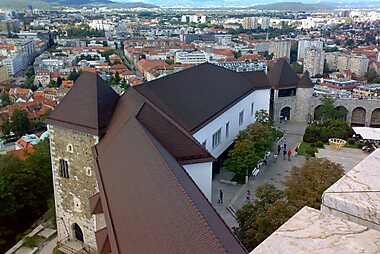
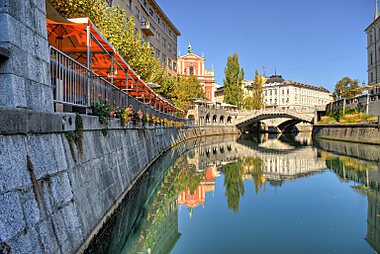
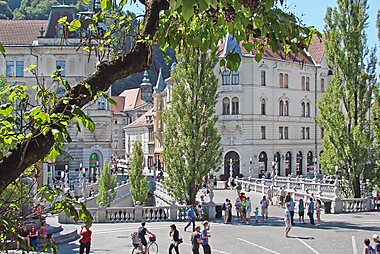
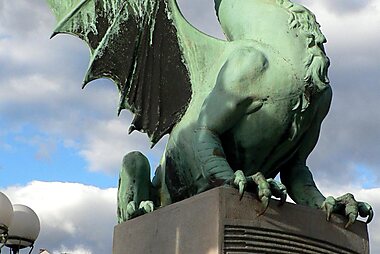
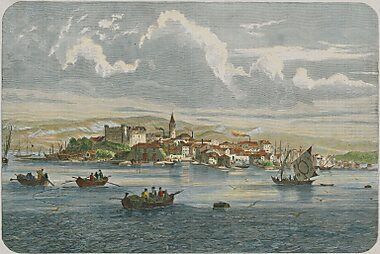
Ljubljana's compact center rewards slow exploration on foot, and its best sights sit within a few minutes of each other along the river.
Ljubljana Castle sits on a wooded hill above downtown, reachable by a short funicular ride, with sweeping views over the city and the Alps beyond. Below it, Triple Bridge — three linked bridges Jože Plečnik expanded in the 1930s — connects the medieval old town to the newer city center.
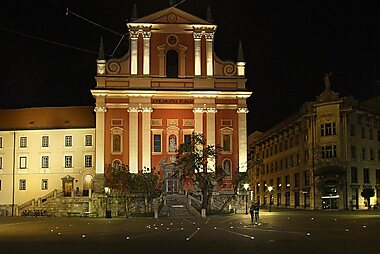
Prešeren Square, the city's central square, is anchored by a monument to national poet France Prešeren, with the salmon-pink Franciscan Church of the Annunciation rising behind it. A few minutes east, Dragon Bridge carries four copper dragon statues, the animal that has symbolized Ljubljana since its legendary founding.
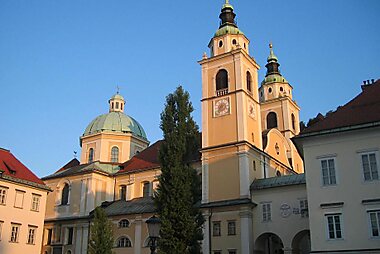
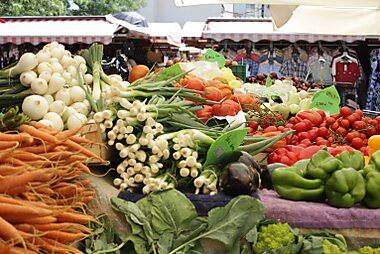
Nearby, Ljubljana Cathedral is a Baroque landmark with a green dome and a richly frescoed interior. Along the riverbank, Central Market draws locals daily for fresh produce, fish, and flowers under Plečnik's riverside colonnades.
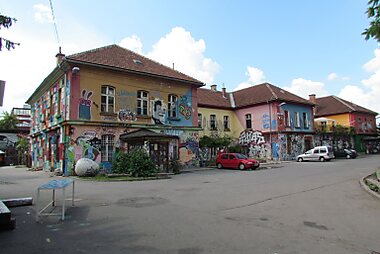
Just north, National and University Library of Slovenia is considered one of Plečnik's finest buildings and part of Ljubljana's UNESCO-listed architectural legacy. For a different side of the city, Metelkova is a former army barracks turned self-governed art squat, packed with murals, clubs, and studios.
Empfohlene Listen


Historic Churches of Ljubljana
Ljubljana’s ecclesiastical landscape features a blend of Baroque grandeur, Neogothic precision, and 20th-century innovation. The collection includes the Cathedral of St. Nicholas with its Quaglio frescoes and the Franciscan Church’s iconic pink facade on Prešeren Square. It also highlights the work of architect Jože Plečnik at the Church of St. Anthony of Padua, alongside the Eastern Orthodox Church of Cyril and Methodius, notable for its five domes and traditional iconography.
7 Orte


Ljubljana Gastronomy
Ljubljana’s culinary scene spans from the riverside stone arcades of the Central Market, designed by Jože Plečnik, to the terrace of the 1930s Nebotičnik skyscraper. This selection highlights traditional regional flavors, including the protected Carniolan sausage at Klobasarna and the historic frog legs at Gostilna Pri Žabarju. The list also features local landmarks like Parma, the first pizzeria in the former Yugoslavia, and contemporary breakfast spots along the Ljubljanica river.
9 OrteErlebnisse & Aktivitäten
- Browse Odprta kuhna (Open Kitchen), the Friday street-food market that fills the square by Central Market with stalls from local restaurants, running from spring through autumn.
- Watch the sunset over the city and the Alps from the terrace of Café Nebotičnik. It sits atop a 1930s high-rise, once the tallest building in the Balkans.
- Take a short boat trip along the Ljubljanica River, passing under the city's bridges and Plečnik's riverside colonnades.
- In December, walk the illuminated streets of the December Fairy Tale and browse the stalls of the Christmas market around the Old Town.
Touren & Aktivitäten
Ljubljana — Karte

 Interaktive Karte öffnen
 Tagesausflüge
Ljubljana sits close to the Alps, karst caves, and Slovenia's coastline. A rental car or regional train opens up plenty of one-day trips.
- Škofja Loka — a well-preserved medieval town with a hilltop castle, about 30 minutes by bus or car. One of Slovenia's oldest town centers.
- Kamnik — a small alpine town below the Kamnik–Savinja Alps, about 30–40 minutes by bus or car. A relaxed base for short walks with mountain views.
- Bled — Slovenia's best-known lake town, with an island church and a clifftop castle, roughly 50 minutes to an hour by train, bus, or car.
- Postojna — home to one of Europe's largest karst cave systems, reachable by train or car in about an hour. Pair it with nearby Predjama Castle, built into a cliff face.
- Piran — a small Venetian-style coastal town on the Adriatic, about 1.5–2 hours by bus or car. Worth the longer trip for its old harbor and sea views.
Anreise
- By air: Ljubljana Jože Pučnik Airport (LJU) is about 25 km north of the city. A direct bus runs to the main bus station in around 45 minutes; a taxi takes about 30 minutes and costs roughly €40–50.
- By train: The central railway station has a direct train to Zagreb, a daily EuroCity service to Vienna, and an overnight sleeper to Munich. Slovenian Railways
- By bus: The bus station sits next to the railway station and serves regional coaches plus international routes to Zagreb, Trieste, and other neighboring cities.
Unterwegs vor Ort
- Public transit: City buses run by LPP cover the wider city; the Old Town itself is walkable and mostly car-free. Buy or top up an Urbana card at kiosks, vending machines, or the bus station to ride. Ljubljana Public Transport
- Taxi / ride-hailing: Local taxi apps operate alongside traditional taxi stands.
- On foot / cycling: The center is small and flat, so walking covers almost everything. Bicikelj, the city's bike-share network, is a practical way to cover longer distances.
Autofahren
- Is a car worth it?: Not for the city itself — the center is compact, walkable, and largely car-free. A car is useful only for day trips into the mountains or countryside.
- Parking: Several paid garages ring the pedestrian core; street parking in the center is limited and metered.
- Restrictions: The historic core is closed to general traffic — only residents, deliveries, and a few permitted vehicles may enter.
Essen & Trinken
Ljubljana's food scene centers on the riverside market and a handful of specialty spots rather than one restaurant district.
For a taste of the region, browse Central Market, Jože Plečnik's riverside market halls, good for fresh produce, fish, and bakery stalls. Or stop at Klobasarna for kranjska klobasa, the country's protected Carniolan sausage. Otherwise, the café-lined embankments on both sides of the Ljubljanica are a reliable, low-effort choice for any meal.
Sicherheit & Gesundheit
Ljubljana is one of Europe's safer capitals for visitors. Petty theft such as pickpocketing occasionally happens in crowded spots like the market and main square. Keep valuables secure, as in any city center.
Emergency services are reliable and English is widely understood by police and medical staff. No special health precautions are needed for a typical visit.
Geschichte
According to legend, Jason and the Argonauts sailed up the Ljubljanica River after stealing the Golden Fleece. They camped in the marshes here, where Jason slew a monster living in a lake. That dragon still marks the city today, appearing on its coat of arms and guarding Dragon Bridge.
The real story starts with Emona, a Roman colony founded here around 15 AD. A stretch of Roman Wall, later restored by Jože Plečnik, still stands south of the center. A destructive 1511 earthquake leveled much of the medieval town. It was rebuilt in the Baroque style visible today around Ljubljana Cathedral.
Ljubljana took its current look largely from Jože Plečnik, who spent decades reshaping the riverside with bridges, colonnades, and public buildings, including Triple Bridge and National and University Library of Slovenia. During the Second World War, occupying forces enclosed the city in a barbed-wire perimeter. After the war, Ljubljana became a republic capital within Yugoslavia. In June 1991, Slovenia declared independence at Square of the Republic, and a brief conflict with the Yugoslav army followed.
Länderfakten
Quick practical facts for Slovenia at a glance:
- Währung
- Euro EUR · Kartenzahlung · Weitgehend akzeptiert
- Notrufnummern
- 112
- Stromnetz
- 230 V · 50 HzSteckertyp C / Steckertyp F
- Sprachen
- Slowenisch
- Leitungswasser
- Trinkbar
- Fahrseite
- Rechtsverkehr
- Telefonvorwahl
- +386


Ljubljana – Plane deine Tage
Verwandle die Orte aus diesem Reiseführer in eine echte Reiseroute mit intelligenter Routenführung, Zeitschätzungen und allem für eine perfekte Reise.




