



Luxemburg
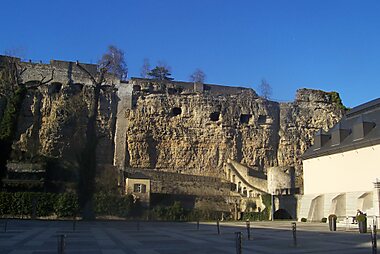
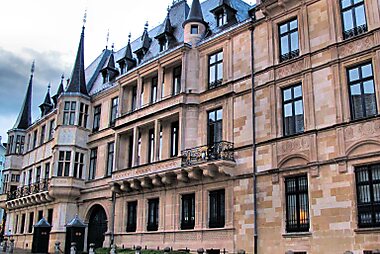
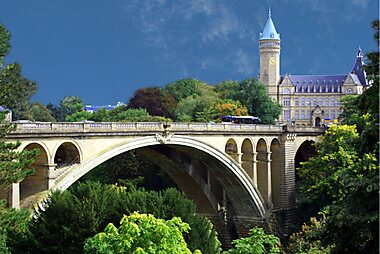
Luxembourg is a small, landlocked country wedged between Belgium, France, and Germany, easy to cross in a single day. The capital's Luxembourg City: Old Quarters & Fortifications is a UNESCO World Heritage Site, with underground passages at the Bock Casemates and the Palais Grand Ducal nearby. Beyond the city, the north rises into wooded hills and castle towns, the south holds a former steel region reinvented for culture, and the east follows the Moselle River through vineyards to Germany.
Luxembourg's modern identity is tied closely to Europe. In 1985, five countries signed the Schengen Agreement aboard a boat near the village of Schengen, opening the borders that shape EU travel today. Luxembourg City hosts major European Union institutions and one of the world's most international populations. The country suits travelers who want easy day trips from one base, a mix of medieval castles and modern architecture, and a slower pace than its larger neighbors.



Luxemburg – Planst du eine Reise?
Erstelle deine Reiseroute Tag für Tag in der Tripomatic-App.


Geld & Bezahlen
Small bakeries, weekend markets, and street parking meters in villages sometimes still expect cash. ATMs are common in every town center, and withdrawal fees are usually low within the eurozone.
Empfohlene Listen


Touren & Aktivitäten
Luxemburg — Karte

 Interaktive Karte öffnen
 Trinkgeld
round up or ~5-10%
1-2 EUR per bag/night
round up
a few euros
A service charge is already included in restaurant and bar bills, so tipping is a way to say thanks rather than an obligation. Rounding up or leaving a few extra euros is common in restaurants and taxis. Hotel porters and tour guides also appreciate a small tip.
Strom & Stecker
Luxembourg uses Type C and F plugs at 230 V / 50 Hz, standard across continental Europe — most modern chargers work without an adapter.
Sprache
French, German, and Luxembourgish are all official languages. French dominates official signage, restaurant menus, and government paperwork, while Luxembourgish is the language most people speak at home. English is widely understood in Luxembourg City and at tourist sites, less so in small villages.
Internet & Mobilfunk
EU/EEA SIM and eSIM plans work in Luxembourg without extra roaming charges. Prepaid SIM cards are available at the three network operators' shops and at Findel Airport; bring a passport, since ID registration is required by law for any prepaid SIM. There are no unusual content or access restrictions.
Sicherheit & Notfälle
Luxembourg has one of the lowest crime rates in Europe. The most common issue for visitors is pickpocketing around the train station and busy pedestrian streets in the capital, especially during weekend nightlife. Petty theft from parked cars also occurs at remote hiking trailheads, so avoid leaving valuables visible inside a vehicle.
Gesundheit
Tap water is safe to drink throughout the country. Pharmacies, marked with a green cross, are found in every town and keep a rotating on-call schedule for nights and Sundays, posted in each pharmacy's window. No special vaccinations are required for visiting Luxembourg.
Visum & Einreise
Luxembourg is part of the Schengen Area. Citizens of the EU, US, UK, Canada, Australia, and many other countries can enter visa-free for stays of up to 90 days within a 180-day period for tourism. Travelers who need a visa apply for a Schengen visa through a Luxembourg embassy or consulate, or through the embassy of another Schengen country where Luxembourg has no representation.
Visa and entry requirements change frequently. Verify current requirements with the official immigration authority or your country's embassy before travel.
Knigge & Bräuche
Greetings usually include a handshake on first meeting; friends and family exchange cheek kisses, typically three. Luxembourgers value punctuality for both business and social plans. Modest dress — covered shoulders and knees — is expected in churches and abbeys, including the ones in Echternach and Clervaux. Sundays are quiet: most shops close, and many smaller restaurants outside the capital close for the day too.
Feiertage & Öffnungszeiten
Public holidays close most shops, banks, and offices, though restaurants and museums in tourist areas usually stay open.
Regular shop hours are shorter than in many countries: many close by 18:00-19:00 on weekdays, close early on Saturday afternoons, and stay shut all day Sunday outside the capital's train station and a handful of exceptions.
Unterwegs vor Ort
- By train: All second-class trains within Luxembourg are free, part of a nationwide free public transport policy in place since 2020. The rail network reaches most larger towns, including Diekirch, Clervaux, and Esch-sur-Alzette.
- By bus: Buses are also free and fill in gaps the rail network doesn't reach, including castle towns such as Vianden and Echternach.
- By tram: Luxembourg City's tram line links the airport, the Kirchberg EU quarter, the main station, and the old town.
- By bike: The capital's vel'OH! bike-share system covers the city center, and national cycling paths follow former rail lines into the countryside.
- By air: Findel Airport, a short drive from the capital, is the country's only international airport.
Autofahren
- Tolls: No tolls or vignette are required on Luxembourg's roads.
- Fuel: Fuel is noticeably cheaper than in Belgium, France, and Germany, so many drivers cross the border just to fill up. Stations are self-service, pumps take cards, and labels read Super 95 and Super 98 for petrol and Diesel.
- Parking: Blue-zone disc parking is standard in town centers; free Park & Ride lots on the edge of Luxembourg City connect to the free tram and bus network into downtown.
- Electric vehicles: The public Chargy network covers the whole country. Charging is billed per kWh through a provider app or subscription, not free.
Essen & Trinken
Luxembourgish food blends German heartiness with French technique. A hot lunch is the main meal of the day for many locals, often eaten in a brasserie or a company canteen. The national dish is Judd mat Gaardebounen, smoked collar of pork served with broad beans. Bouneschlupp, a green bean and potato soup, and Kachkéis, a soft cooked cheese spread, both show up on traditional menus.
Street markets and fairs sell Gromperekichelcher, crisp fried potato pancakes, as a snack. In late summer, bakeries fill their windows with Quetschentaart, an open plum tart. The Moselle valley in the east produces crisp white wines and Crémant sparkling wine, both worth trying alongside a meal or on a vineyard visit.
Orte zum Entdecken
Beyond the capital, Luxembourg's small size makes every region reachable on a day trip.
North: the Éislek
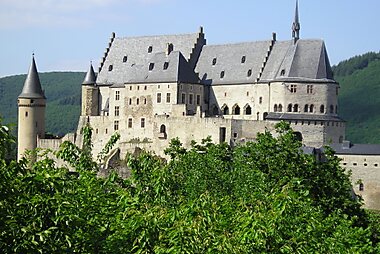
Hilly and forested, dotted with castle towns. Vianden sits below its restored hilltop castle. Clervaux pairs its own castle with the Family of Man photography exhibition. Wiltz hosts an open-air theatre festival each summer. Diekirch is known for its brewery and a military history museum covering the Battle of the Bulge. Ettelbruck is the region's main rail junction. Esch-sur-Sûre sits inside a dramatic bend of the Sûre river, below the ruins of its medieval castle.
East: Mullerthal and the Moselle
Sandstone hiking trails meet vineyards. Echternach, the country's oldest town, is the gateway to the Mullerthal Trail and home to an abbey linked to Saint Willibrord. Larochette has the ruins of two medieval castles above its old center. Along the Moselle River, Remich and Grevenmacher are wine towns with riverside promenades and cellar tours.
South: the Minett
Once the heart of Luxembourg's steel industry. Esch-sur-Alzette, the country's second-largest city, has reinvented former steelworks at Belval into a university campus and cultural venue. Neighboring Dudelange is known for its contemporary art and photography museums, also built on former industrial sites.


Luxemburg – Plane deine Tage
Verwandle die Orte aus diesem Reiseführer in eine echte Reiseroute mit intelligenter Routenführung, Zeitschätzungen und allem für eine perfekte Reise.




