


Πόρτο Βένερε
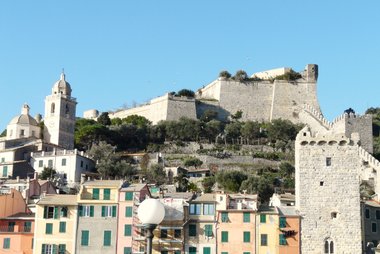
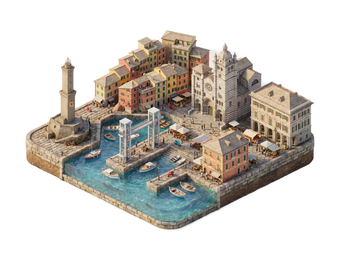
Porto Venere is a small harbour town at the tip of a rocky peninsula, where the Gulf of La Spezia meets the open sea. Tall, narrow houses in yellow, pink and red stand in a single row along the waterfront, facing the boats. Above them, a Genoese castle and old town walls climb the hill. At the end of the point, a striped church stands on the rocks above the waves.
The town, the island of Palmaria and the smaller islands of Tino and Tinetto are a UNESCO World Heritage Site together with the Cinque Terre. Porto Venere suits a slow stay of one or two nights: walking the old lanes, swimming from the rocks, taking the short boat ride to Palmaria and watching the sunset from the point. Boats also link it with the Cinque Terre villages, so it works as a quieter base for the coast.

Πόρτο Βένερε – Σχεδιάζεις ταξίδι;
Φτιάξε το δρομολόγιό σου ημέρα με την ημέρα στην εφαρμογή Tripomatic.


Πότε να πας
May, June and September are the best months: warm sea, long days and fewer people than in high summer. July and August are hot and very busy, especially at weekends, when day visitors fill the harbour. October and November are the wettest months. Winter is mild and quiet, but boat services are reduced and some restaurants close.
The biggest event of the year is the feast of the Madonna Bianca, the town's patron, on 17 August. After dark, thousands of candles and torches light up the old town, the church and the rocks of the point, and a procession carries the holy image through the lanes.
Ιδανική εποχή για επίσκεψη: Μαΐου, Ιουνίου, Ιουλίου, Σεπτεμβρίου
Κορυφαία αξιοθέατα


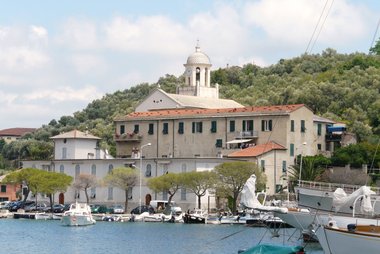
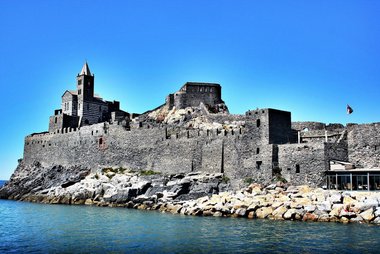

Porto Venere is small, and you can see the old town in half a day. Keep a second day for the islands and the paths above the town.
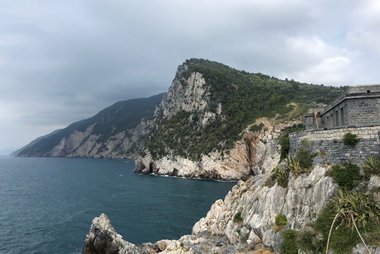
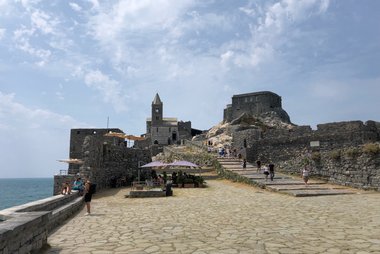
San Pietro stands on the rocky point at the end of the town, on the site of an ancient temple to Venus. The church was consecrated in 1198, and its black-and-white striped Gothic part dates from the 13th century. The terrace and the arches next to it look straight down at the open sea.
Castello Doria rises on the hill above the old town. The Genoese built and enlarged it from the 12th century onwards to guard their naval base. From its terraces you see the whole town, the point and the islands.
Grotta di Byron is a rocky cove below the cliffs between the church and the castle. Lord Byron started his swim across the gulf to San Terenzo from here in 1822. Today it is a popular viewpoint over the open sea.
San Lorenzo is the town's Romanesque parish church, begun in 1098 on a small square below the castle. It keeps the image of the Madonna Bianca, the patron of Porto Venere.
Palmaria, Tino and Tinetto Islands lie just across a narrow channel from the harbour. Palmaria, the largest, is a few minutes away by boat and has walking paths, quiet coves and old forts. Tino is a military zone, and tiny Tinetto is a protected rock with the remains of an early monastery.
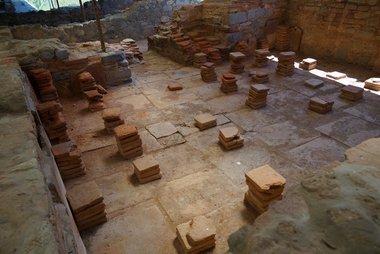
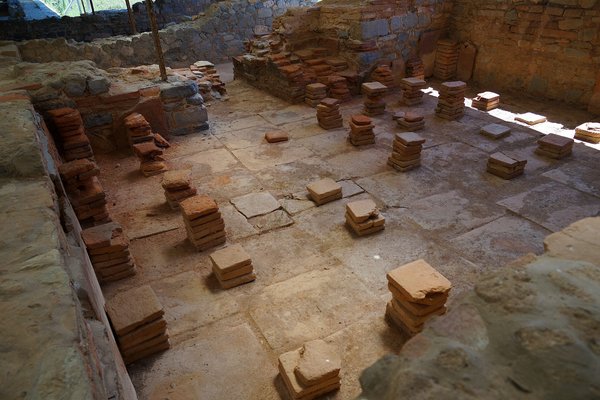
Varignano Roman Villa sits on a quiet inlet at Varignano, near the village of Le Grazie, about 2 km north-east of the centre. The remains of this Roman estate include baths and an olive oil press, with a small museum.
Santuario di Nostra Signora delle Grazie is the church of a former Olivetan monastery in Le Grazie, with a carved wooden choir.
Προτεινόμενες λίστες



Τι να ζήσεις
The best moments here happen on the water and on the cliffs above it.
- Walk around Palmaria: Take the boat across and follow the path around the island, past old marble quarries, forts and coves. The full loop takes 3–4 hours with little shade, so start early in summer.
- Swim from the rocks: In summer, people swim from the rocky shore below the point and from the small coves on Palmaria. Go only in calm water.
- Watch the sunset from the point: Stay until evening, when the day visitors leave, and watch the sun go down over the open sea from the rocks below San Pietro.
- Hike towards the Cinque Terre: A mountain path climbs from the castle over the Muzzerone heights towards Campiglia and Riomaggiore. The whole route to Riomaggiore takes 5–6 hours, with steep and rocky sections.
- Climb the sea cliffs: The limestone walls of the Muzzerone, above the open sea, are a well-known rock-climbing area with routes for experienced climbers.
- Visit Tino on its feast day: The island of Tino is usually closed, but it opens to visitors around the feast of San Venerio in mid-September. Boat places are limited and must be booked ahead.
Περιηγήσεις και δραστηριότητες
Πόρτο Βένερε — Χάρτης

Ημερήσιες εκδρομές
Porto Venere is linked to the rest of the coast by bus and, from spring to autumn, by boat. Times are one way.
- La Spezia – about 30 minutes by bus. The port city and rail hub, with a long seafront, a naval museum and the trains to the Cinque Terre.
- Lerici – about 40 minutes by car, or by seasonal boat across the gulf. A seaside town with a castle above the harbour, and the village of San Terenzo next door.
- Riomaggiore – under an hour by seasonal boat. The first of the Cinque Terre villages, with colourful houses in a narrow ravine.
- Vernazza and Monterosso al Mare – about 1–1.5 hours by seasonal boat, or by bus and train via La Spezia. Vernazza has a small harbour below a medieval tower; Monterosso has long sandy beaches.
- Pisa – about 1.5 hours by car, or about 2.5 hours by bus and train via La Spezia. Home of the Leaning Tower.
Μέρη για εξερεύνηση
Porto Venere shares its UNESCO listing with the Cinque Terre, which start just north of the Muzzerone heights.
- Riomaggiore is the nearest of the five villages.
- Corniglia, Vernazza and Monterosso al Mare follow farther north-west along the same coast.
Πώς να πας
Porto Venere has no train station. Almost everyone arrives through La Spezia.
- By air: Pisa International Airport is the nearest large airport. Take the Pisa Mover shuttle to Pisa Centrale, a train to La Spezia Centrale and then the bus; allow about 2.5 hours, longer with poor connections. Genoa Airport is the other option, with a train south to La Spezia.
- By train: La Spezia Centrale has direct trains from Rome, Milan and Genoa, and connections from Florence via Pisa. Trenitalia
- By bus: ATC buses run from La Spezia to Porto Venere in about 30 minutes, along the shore of the gulf through Le Grazie. The stop in La Spezia is in Via Garibaldi, about 10 minutes on foot from the station. ATC
- By boat: From late March to early November, boats link Porto Venere with La Spezia, Lerici and most Cinque Terre villages. They do not run in rough seas. Navigazione Golfo dei Poeti
- By car: The coast road from La Spezia takes about 30 minutes. Parking near the town is limited and paid in season.
Μετακινήσεις
- On foot: The old town is small and closed to most traffic. The waterfront is flat, but the lanes up to the castle are steep and stepped.
- Bus: For Le Grazie and La Spezia, buy ATC tickets before you board at newsstands and tobacconists, or in the DropTicket app. Tickets bought from the driver cost more, and on some routes are sold only early and late in the day. ATC tickets
- Boat to Palmaria: Small ferries cross from the harbour to Palmaria all year, about every 30 minutes during the day, with late-evening runs in July and August. The crossing takes a few minutes.
- Islands tour: From late March to early November, a 45-minute boat trip circles Palmaria, Tino and Tinetto from the harbour. It does not land on the islands.
Οδήγηση
- Is a car worth it?: Not for the town itself. A car helps only if you plan to explore inland or along the gulf; for the Cinque Terre, boats and trains are easier.
- Parking: Paid car parks line the road into town along the shore, with the cheapest one at Cavo, about 2 km before the centre. In summer they fill early, especially at weekends.
- Restrictions: The old town is a limited traffic zone (ZTL), closed to visitors' cars. Ask your accommodation before arriving if you need to unload.
Φαγητό & ποτό
Porto Venere follows the Ligurian kitchen: trofie pasta with basil pesto, focaccia, chickpea farinata and fresh seafood. The Gulf of La Spezia is known for its farmed mussels, called muscoli here; try them stuffed and baked, or in a simple pasta. Local white wines come from the nearby Cinque Terre and the hills of the gulf.
Most restaurants line the harbourfront below the coloured houses, where tables look out at the boats and at Palmaria. Cheaper focaccia shops and bakeries are in Via Capellini, the narrow main lane of the old town. In summer, book dinner ahead, especially for a table by the water.
Ασφάλεια & υγεία
Porto Venere is very safe, and serious crime is rare. The main risks are practical:
- Crowds: The harbour and old town are packed on summer weekends. Keep an eye on bags and phones in queues for the boats.
- The sea: The rocks at the point are exposed to the open sea and very slippery. Swim only in calm water, and never from the rocks in rough weather.
- Paths: The trails on Palmaria and over the Muzzerone are rocky and steep, with little shade. Wear proper shoes, carry water and avoid the midday heat. Porto Venere Regional Park
- Boats: Services stop in rough seas. Check the return times before you leave Palmaria, as the last boat can be early outside summer.
Ιστορία
The Romans knew this harbour as Portus Veneris, the port of Venus, and a temple to the goddess stood on the point. In the early 12th century, the town passed to the Republic of Genoa. The Genoese built the walls and Castello Doria to make it a fortified base against their rival, Pisa. The tall houses along the harbour were built close together as part of this defence.
San Lorenzo was begun in 1098, and San Pietro was consecrated a century later on the site of an older church. According to local tradition, the image of the Madonna Bianca arrived from the sea in 1204. In 1399, during a plague, its colours suddenly returned, and the epidemic ended.
In the 19th century, poets came to the gulf: Percy Bysshe Shelley lived in San Terenzo, and Lord Byron swam across the gulf from Porto Venere to visit him in 1822. The navy built forts on Palmaria and the hills to protect the base at La Spezia. In 1997, Porto Venere, the islands and the Cinque Terre became a UNESCO World Heritage Site.
Στοιχεία για τη χώρα
Quick practical facts for Italy at a glance:
- Νόμισμα
- Ευρώ EUR € · Πληρωμές με κάρτα · Ευρέως αποδεκτές
- Τηλέφωνα έκτακτης ανάγκης
- 112
- Ηλεκτρικό ρεύμα
- 230 V · 50 HzΤύπος C / Τύπος F / Τύπος L
- Γλώσσες
- Ιταλικά
- Νερό βρύσης
- Πόσιμο
- Πλευρά οδήγησης
- Δεξιά
- Κωδικός κλήσης
- +39


Πόρτο Βένερε – Σχεδίασε τις ημέρες σου
Μετάτρεψε τα μέρη από αυτόν τον οδηγό σε ένα πραγματικό δρομολόγιο, με έξυπνη δρομολόγηση, εκτιμήσεις χρόνου και όλα όσα χρειάζεσαι για ένα τέλειο ταξίδι.


Σχετικοί προορισμοί

Data: © OpenStreetMap contributors, Wikidata, Wikipedia, Tripomatic, Official websites, geoBoundaries (CC BY 4.0). Tours by GetYourGuide. We earn commission from bookings. Travel guide generated with AI.
Σχεδίασε το ταξίδι σου με το Tripomatic
- Σχεδιασμός με AIΆφησε το AI να δημιουργήσει το δρομολόγιό σου, να απαντήσει σε ταξιδιωτικές ερωτήσεις και να αρχειοθετήσει τα έγγραφα των κρατήσεών σου στο ταξίδι σου.
- Ταξιδιωτικές ειδοποιήσειςΕπίσημες ταξιδιωτικές οδηγίες, έντονα καιρικά φαινόμενα, απεργίες και φυσικοί κίνδυνοι για τα μέρη σε κάθε ημέρα του ταξιδιού σου.
- Επίσημες αργίες & ΕκδηλώσειςΔες αργίες, φεστιβάλ και ημέρες μη λειτουργίας κατά τις ημέρες του ταξιδιού σου και πώς επηρεάζουν τα σχέδιά σου.
- Εκτίμηση κόστουςΑνάλυση του κόστους του ταξιδιού με AI, ώστε να γνωρίζεις τον προϋπολογισμό σου πριν ξεκινήσεις.
- Περιηγήσεις & ΕισιτήριαΚλείσε περιηγήσεις, εισιτήρια χωρίς αναμονή στην ουρά και δραστηριότητες απευθείας στο πλάνο σου.