



Cape Verde
Cabo Verde is a group of ten volcanic islands in the Atlantic Ocean, about 600 km west of Senegal. Nine of the islands are inhabited. The islands were empty until Portuguese settlers arrived in the 15th century, and the country became independent in 1975. Today it is a stable democracy, and locals describe their easy-going hospitality with one word: morabeza.
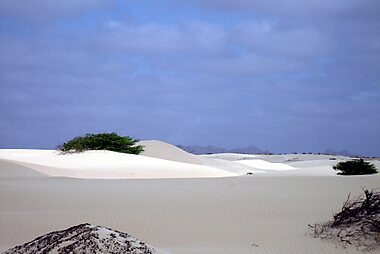
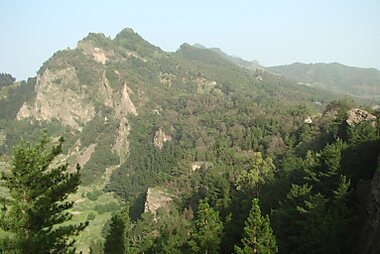
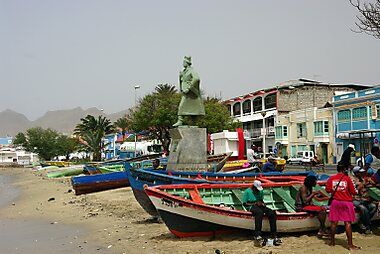
Each island is different. Sal and Boa Vista are flat and sandy, with long beaches, resorts and kitesurfing. Santo Antão has green valleys and the best hiking. On Fogo, you can climb an active volcano. São Vicente is home to Mindelo, the centre of morna music made famous by Cesária Évora. On Santiago, the capital Praia is close to Cidade Velha, a UNESCO World Heritage Site. The country suits beach lovers, hikers and music fans who enjoy a slow pace.




Cape Verde – Planning a Trip?
Build your day-by-day itinerary in the Tripomatic app.


Money & payments
The escudo has a fixed rate of 110.265 escudos to one euro. Prices often use the $ sign in place of a decimal point, so 1$500 means 1,500 escudos.
- Euros: many hotels, restaurants and taxis in tourist areas accept euros, often at a rounded rate of 100 escudos to the euro. Paying in escudos is usually cheaper.
- Cash: small shops, alugueres (shared minibuses), village bars and many guesthouses take cash only. Cards work in resorts, larger hotels and supermarkets.
- ATMs: cash machines are common in towns but rare in villages and on the smaller islands, such as Brava and Maio. Withdraw enough before you travel there.
- Tourist tax: hotels charge a nightly tourist tax of about €2.50 per guest over 16, for up to 10 nights.
- Leaving: escudos are hard to exchange abroad, so spend or change them before you fly home.
Featured Lists

Cabo Verde's Absolute Essentials
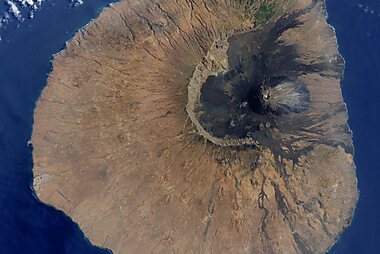
Cabo Verde’s diverse geography is defined by the active stratovolcano of Pico do Fogo, rising 2,829 meters, and the shifting sand dunes of the Viana Desert. This selection spans the white sandy beaches of Sal and Boa Vista to the quieter, eastern shores of Maio Island. Key landmarks include the historic ruins of the Cabo Santa Maria shipwreck and the colonial-style Igreja de Santa Isabel in Sal Rei, offering a glimpse into the archipelago's Portuguese and African heritage.
11 places
Best Beaches
Cabo Verde’s coastline spans diverse landscapes, from the 22-kilometer stretch of undeveloped white sand at Santa Mónica on Boa Vista to the palm-fringed, sheltered bay of Tarrafal on Santiago. Sal Island features the turquoise waters of Santa Maria, a hub for windsurfing and kitesurfing, alongside the secluded rocky coves of Calheta Funda. São Vicente offers the shallow natural lagoon of Baía das Gatas, while Boa Vista’s Varandinha is characterized by limestone sea caves and dramatic rock formations.
20 places
Cape Verdean Volcanoes
Cape Verde’s archipelago is defined by its dramatic volcanic topography, ranging from the active stratovolcano Pico do Fogo, which rises to 2,829 meters, to the ancient, eroded peaks of Sal and Boa Vista. This collection highlights the diverse geological formations across the islands, including massive calderas, cinder cones, and rugged volcanic plugs. Visitors can explore the high-altitude landscapes of Santo Antão, the peaks of São Nicolau, and the stark, windswept volcanic ridges that shape the unique identity of each island in the chain.
27 places
Sacred Sites and Churches
Cabo Verde’s religious landscape is defined by its colonial history and Roman Catholic heritage. This collection features significant sites across the islands, ranging from the ruins of the 16th-century Sé Catedral in Cidade Velha, a UNESCO World Heritage site, to the neoclassical Santa Isabel church in Boa Vista. Visitors can explore quiet village chapels in Povoação Velha and prominent parish churches in Maio and Fogo, reflecting the deep-rooted faith and architectural evolution of the archipelago.
20 places
Local Market Discoveries
Cabo Verde's markets are the archipelago's commercial hubs, offering everything from fresh Atlantic fish and volcanic-soil produce to traditional crafts. In Praia, the historic Plateau market and the sprawling Sucupira bazaar provide textiles, local music, and grogue. Mindelo features specialized fish markets near the harbor, while municipal halls across Sal and Boa Vista focus on daily essentials and artisanal souvenirs like hand-woven panu di terra fabrics. These centers reflect a unique blend of West African and Portuguese influences.
27 places
Scenic Viewpoints and Cliffs
Cape Verde’s diverse topography, from the volcanic peaks of Fogo and Santo Antão to the rugged coastlines of Sal and Santiago, offers a variety of dramatic overlooks. This selection features coastal cliffs like Ponta Jalunga, high-altitude summits such as Pico da Cruz at 1,585 meters, and urban viewpoints like Monte Curral in Espargos. These sites provide perspectives on the archipelago’s volcanic craters, salt flats, and the Atlantic Ocean, highlighting the unique geological formations of the Macaronesian region.
14 places
Tours & Activities
Cape Verde — Map

 Open the interactive map
 Tipping
Tipping is not required, but it is appreciated, especially in tourist areas. In a sit-down restaurant, about 10 % is a kind gesture for good service. In a simple local café, leaving the small change is enough. Taxi drivers do not expect a tip. Hiking and boat guides do, for example after a climb on Fogo.
about 10 % in tourist areas
round up the fare
at the end of a hike or tour
small tip for porters and housekeeping
Electricity
Cabo Verde uses European two-pin plugs at 220 V, so most European chargers work without an adapter. Short power cuts can happen on the smaller islands, and a power bank is useful.
Language
Portuguese is the official language of government, schools and signs. In daily life, almost everyone speaks Cape Verdean Creole, called Kriolu. It is based on Portuguese with West African influences, and each island has its own accent.
In the resorts on Sal and Boa Vista, many staff speak English, and some speak Italian, French or German. Away from the resorts, English is less common. French is often understood, and a few words of Kriolu are always welcome.
Staying connected
- SIM cards: the two mobile networks are Alou and Unitel T+. Both have shops in the main towns and at the international airports.
- Coverage: 4G works in towns and along the main roads. Signal can drop in the deep valleys of Santo Antão and Fogo, and at sea between islands.
Safety & emergencies
Crime rates are low, and most visits are trouble-free. Petty crime does happen.
- Theft: pickpocketing, bag snatching and muggings occur in Praia and on Sal and Boa Vista. Keep valuables in the hotel safe and avoid unlit, empty areas after dark.
- Taxis: use only official taxis. On Sal and Boa Vista, they are painted blue and yellow.
- Swimming: tides and currents around the islands are very strong. Swim only on beaches with lifeguards, and follow the warning flags.
- Hiking: trails on Santo Antão and Fogo are steep and exposed. Carry water and sun protection, and climb the Fogo volcano with a local guide.
- Quad bikes: helmets are required by law. Check that your travel insurance covers quad biking.
Health
- Tap water: most tap water is desalinated and is not recommended for drinking. Bottled water is sold everywhere.
- Mosquitoes: the World Health Organization certified Cabo Verde malaria-free in January 2024. Since then, a small number of local malaria cases have been reported, mostly in Praia. Dengue is also a risk, especially on Santiago, Fogo and Brava. Use insect repellent day and night.
- Vaccinations: check current recommendations about 8 weeks before travel. You need proof of yellow fever vaccination only if you arrive from a country with yellow fever risk.
- Sun: the sun is strong all year, and the cool trade winds hide it. Use strong sunscreen.
- Medical care: hospitals are basic, and some medicines are in short supply. Bring any regular medicines with you. Serious cases may need evacuation, so buy travel insurance that covers it.
Visas & entry
Citizens of the EU, the UK, the US, Canada and several other countries can visit without a visa for up to 30 days. Travellers from countries on Cabo Verde's visa list must get a visa from an embassy before they travel.
- Pre-registration: every visitor must register on the official EASE portal at least 5 days before arrival and pay the airport security fee (TSA) online. Since 1 July 2026, travellers who arrive without registering pay double the fee at the border.
- Passport: it must be valid for at least 6 months after your arrival date.
- Longer stays: to stay longer than 30 days, apply for a visa or an extension through the official channels before your permitted stay ends.
Visa and entry requirements change frequently. Verify current requirements with the official immigration authority or your country's embassy before travel.
Etiquette
- Greetings: say bon dia (good morning) or boa tarde (good afternoon) when you enter a shop, bar or minibus. A handshake is normal, and friends kiss on both cheeks.
- Pace: schedules are relaxed. Patience and a smile help.
- Dress: swimwear is fine on the beach, but cover up in towns, shops and churches.
- Photos: ask before you photograph people, especially fishermen, market sellers and children.
- Music: music is central to local life. Morna is on UNESCO's list of intangible cultural heritage, and live music in bars is common.
- Bargaining: not usual in shops. Light bargaining is fine at craft stalls and for private tours.
Holidays & opening hours
On public holidays, government offices, banks and many shops close. Ferries and flights fill up before long weekends. Carnival in February or March is the biggest party of the year, especially in Mindelo. Each town also celebrates its own saint's day with processions and music.
Shops usually open on weekdays from about 8:00 to 12:30 and from 15:00 to 18:30. On Saturday, most open only in the morning, and many close on Sunday. Supermarkets and shops in resort areas keep longer hours.
Getting around
Travel between the islands is the main challenge. Connections are limited, and delays are common, so leave a spare day before your international flight home.
- By air: domestic flights link the islands with airports, mostly through Praia and Sal. The airline and routes have changed several times in recent years, so check current schedules before you book. Santo Antão and Brava have no working airport and are reached by ferry.
- By ferry: CV Interilhas runs the national ferries. The busiest route links Mindelo on São Vicente with Porto Novo on Santo Antão, in about one hour. Ferries also link Praia with Fogo and Brava. Long crossings can take many hours in rough seas.
- By aluguer: shared minibuses and pick-up trucks called alugueres are the main public transport on every island. They leave when full and take cash.
- By taxi: taxis wait in towns and at airports. Most have no meter, so agree the price before you get in.
Driving
Hiring a car is easy on Sal, Boa Vista, Santiago and São Vicente. On steep islands such as Santo Antão and Fogo, many visitors hire a local driver instead.
- Licence: a UK photocard licence is valid for up to 6 months. Other visitors should carry an International Driving Permit with their national licence.
- Road conditions: many roads are cobblestone, which is bumpy and slippery when wet. On Boa Vista and Maio, you need a 4x4 to reach remote beaches.
- Hazards: watch for goats, dogs, pedestrians and alugueres that stop suddenly. Mountain roads are narrow, with steep drops. Avoid driving after dark.
- Alcohol: drink-driving can bring severe penalties, including prison.
- Fuel: stations are in the main towns only. Fill up before you drive into rural areas.
- Electric vehicles: public charging is very limited, so an electric car is not practical for touring.
Food & drink
Cape Verdean food mixes Portuguese and West African traditions, with plenty of fresh fish. The national dish is cachupa, a slow-cooked stew of corn and beans with fish or meat. Leftover cachupa is fried the next morning and served with an egg for breakfast. Lunch is the main meal, and many local cafés serve a cheap prato do dia (dish of the day).
On the coast, try grilled tuna or wahoo, and lapas (limpets) with garlic and lemon. Fresh goat's cheese with papaya jam is a popular snack. The local spirit is grogue, made from sugarcane, especially on Santo Antão. Ponche is a sweeter version with honey. Fogo also produces wine from vines grown in volcanic soil.
Where to explore
Sal and Boa Vista
- Sal is the main entry point and the busiest resort island. Life centres on the town of Santa Maria and Praia de Santa Maria. Float in the salt pools of Pedra de Lume, watch lemon sharks in the shallows at Shark Bay, and see the light in the Blue Eye rock pool at midday.
- Boa Vista has long, empty beaches and the dunes of the Deserto de Viana. It is a major nesting site for loggerhead turtles in summer. The small town of Sal Rei faces the Ilhéu de Sal Rei.
Santiago
- Praia is the capital and the largest city. Its old centre, the Platô, has colonial buildings, markets and the Presidential Palace.
- Ribeira Grande de Santiago is home to Cidade Velha, the first European colonial town in the tropics. The hilltop Fort Real de São Filipe looks over the old town.
- Tarrafal in the north has a sheltered beach and the Tarrafal Concentration Camp Museum. On the way, Serra Malagueta Natural Park offers good mountain hiking.
São Vicente and Santo Antão
- São Vicente is home to Mindelo, the cultural capital, known for music, bars and Carnival.
- Santo Antão is the hiking island, with deep green valleys, terraced fields and cliffside villages. It is one hour by ferry from Mindelo. Pico da Cruz is a popular hiking goal.
Fogo and Brava
- Fogo is dominated by Pico do Fogo, at 2,829 metres the highest point in Cabo Verde. Villages and vineyards sit inside the crater. São Filipe is the island's colourful colonial town.
- Brava is the smallest inhabited island, green and quiet, and reached by ferry from Fogo.
Other islands
- São Nicolau is rugged and little visited, with hikes in Monte Gordo Natural Park and the old town of Ribeira Brava.
- Maio is flat and very quiet, with long beaches and few visitors.
- Santa Luzia Nature Reserve protects the uninhabited island of Santa Luzia and its islets, important for seabirds.
Cape Verde – Plan Your Trip
Pick the places you want to see and Tripomatic turns them into a day-by-day route, with smart routing, time estimates, and everything you need for a perfect trip.


Related destinations


Data: © OpenStreetMap contributors, Wikidata, Wikipedia, Tripomatic, Official websites, geoBoundaries (CC BY 4.0). Tours by GetYourGuide. We earn commission from bookings. Travel guide generated with AI.