



Cayman Islands
The Cayman Islands are a British Overseas Territory of three islands in the western Caribbean Sea. Grand Cayman is the main island, with most of the hotels, restaurants and population. Cayman Brac and Little Cayman are smaller and quieter, reached by a short flight from Grand Cayman. All three islands are flat and ringed by coral reefs, with calm, clear water.
Grand Cayman suits travelers who want comfort and convenience: modern resorts, English-speaking service and a short flight from North America. Cayman Brac and Little Cayman suit visitors who prefer quiet beaches, wall diving and birdwatching over nightlife. The islands work well for a relaxed beach trip, a diving holiday or a family vacation. They are less suited to budget travel or deep historical sightseeing — the islands have little in the way of ancient sites or ruins.





Cayman Islands – Planning a Trip?
Build your day-by-day itinerary in the Tripomatic app.


Money & payments
The Cayman Islands dollar is pegged to the US dollar, and US dollars are accepted everywhere alongside the local currency. Carry a little cash for small vendors and taxis on Cayman Brac and Little Cayman, where card machines are less common. ATMs are common on Grand Cayman but scarce on the sister islands, so withdraw what you need before flying there.
Tours & Activities
Cayman Islands — Map

 Open the interactive map
 Tipping
Tipping follows US habits more than British ones. Restaurants often add a 10-15% service charge automatically, so check the bill before tipping again. Taxi drivers and hotel staff expect a similar amount. Dive boat crews rely on tips — a few dollars per tank, or 15-20% of the trip cost, is standard for a day on the water.
10-15% (often already added as a service charge — check the bill before adding more)
around 10% (often added as a service charge)
10-15%
US$5-10 per tank for dive boat crews, or 15-20% of the charter cost
Electricity
The Cayman Islands use Type A/B plugs at 120 V / 60 Hz, the same as the United States and Canada — visitors from those countries need no adapter.
Language
English is the official and everyday language across the islands, so there is no language barrier for most visitors. Older Caymanians often speak with a distinct local accent and use some Caribbean expressions, but everything is understandable to English speakers.
Safety & emergencies
The Cayman Islands are one of the safer destinations in the Caribbean. Most crime affecting visitors is petty theft, such as an unattended bag left on the beach, rather than violent crime. Hurricane season runs from June to November; storms are uncommon but can disrupt travel plans with little warning, so check forecasts if visiting during these months. Medical care on Grand Cayman is good, but Cayman Brac and Little Cayman have only small clinics — serious cases are flown to Grand Cayman or Miami.
Health
Tap water on Grand Cayman comes from desalination plants and is safe to drink straight from the tap. On Little Cayman, some properties rely on rainwater collected in cisterns, so ask your accommodation before drinking tap water there. Pharmacies are well stocked on Grand Cayman and keep standard shop hours; the sister islands have far fewer options, so bring what you need. No special vaccinations are required to enter, though routine immunizations should be up to date. Sun and heat are the biggest everyday health risks — drink plenty of water and use sunscreen, especially when snorkeling or diving.
Visas & entry
Citizens of the United States, Canada, the United Kingdom and most Commonwealth countries can enter without a visa. A return or onward ticket is required, and the initial stay is usually 30 days. Longer stays, up to six months, are possible for visitors who can show proof of funds and accommodation. A number of nationalities need a visa to enter, or even to transit through, so check requirements well before booking.
Visa and entry requirements change frequently. Verify current requirements with the official immigration authority or your country's embassy before travel.
Etiquette
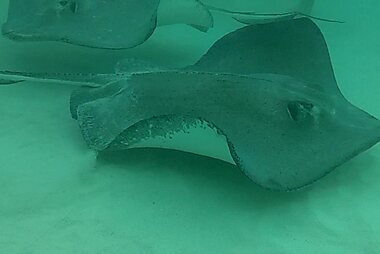
Caymanian culture is relaxed but conservative — swimwear belongs at the beach or pool, not in shops, restaurants or town. Marine life is strictly protected. It is illegal to lift a starfish out of the water, even briefly for a photo, and turtles, coral and shells must also be left where they are. Boats and jet skis must slow down near dive flags and stay clear of designated swim zones. Greet people with a simple hello before starting a conversation or asking for help — Caymanians appreciate the courtesy.
Holidays & opening hours
Public holidays bring most banks, offices and some shops to a stop, though hotels, restaurants and tourist attractions generally stay open. Shops on Grand Cayman are typically open Monday to Saturday, with shorter hours or closures on Sunday; banks close by early-to-mid afternoon and are shut on weekends.
Getting around
- By air: Cayman Airways runs short domestic flights connecting Grand Cayman with Cayman Brac and Little Cayman, and between the two sister islands. Flights take under an hour and are the only dependable way to island-hop.
- By minibus: On Grand Cayman, privately run minibuses connect George Town, Seven Mile Beach, West Bay, Bodden Town, East End and North Side. Flag one down at a bus stop and pay the driver directly.
- By ferry: Ferries and boat charters occasionally link the islands, but schedules change by season, so do not rely on them for a fixed itinerary.
- By taxi: Taxis cover Grand Cayman, but they are not metered — agree the fare before you set off. On Cayman Brac and Little Cayman, arrange transport through your accommodation, since taxis are scarce.
Driving
- Which side: Cars drive on the left, like in the UK — a change of habit for visitors from the US, Canada or mainland Europe.
- Licence: Visitors can drive on a valid home driver's licence for up to six months; no separate local permit is required.
- Rental cars: Most visitors explore Grand Cayman by rental car; roads are well paved but narrow in places, and roundabouts are common.
- Parking: Parking is free at most beaches and attractions; George Town has metered and lot parking near the cruise port.
- Fuel: Stations are a mix of full-service and self-service. Major-brand stations take cards; smaller ones may be cash only. Pumps are labeled Regular, Premium or Diesel.
Food & drink
Caymanian cooking blends Caribbean, Jamaican and British influences, built around fresh seafood. Locals eat a light breakfast, then a bigger midday meal of fish, rice and beans, followed by a lighter dinner. Restaurants range from casual jerk stands and fish shacks to formal dining rooms, with the more upscale spots concentrated around Seven Mile Beach and Camana Bay.
Seafood dominates the menu: fried or steamed fish, conch prepared as fritters, stew or ceviche, and spiny lobster in season. Cassava and coconut appear in savory stews and sweet cakes alike. Rum is the local drink of choice, made by Cayman-based distillers, alongside sorrel at Christmas and fresh fruit juices year-round.
Where to explore
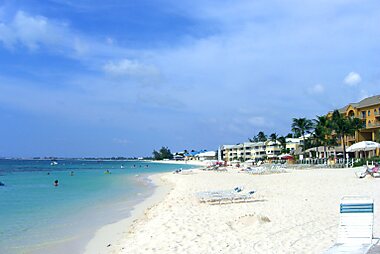
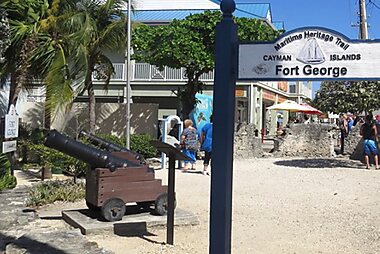
The three islands each offer something different. Grand Cayman is home to most hotels, restaurants and the capital, George Town, along with Seven Mile Beach and the busiest dive sites. Cayman Brac is a quieter island built around a dramatic limestone bluff, popular with hikers, birdwatchers and cave explorers. Little Cayman is the smallest and least developed of the three, known for deep wall diving and one of the Caribbean's largest colonies of red-footed boobies.


Cayman Islands – Add to Your Trip
Create a detailed travel itinerary with smart routing, time estimates, and everything you need for a perfect trip.


Related destinations


Data: © OpenStreetMap contributors, Wikipedia, Tripomatic, Official websites, geoBoundaries (CC BY 4.0). Tours by GetYourGuide. We earn commission from bookings. Travel guide generated with AI.