



Dominican Republic
The Dominican Republic shares the Caribbean island of Hispaniola with Haiti and packs an unusually wide range of scenery into one country: white-sand beaches, a mountain range with the Caribbean's highest peak, and a capital with the oldest colonial core in the Americas. Santo Domingo's Zona Colonial, anchored by Alcázar de Colón, was part of the first permanent European settlement in the New World, founded in 1496. Merengue and bachata, both born on this island, still fill the streets, colmados, and beach bars across the country.
Each coast has its own character. The east, around Higüey and La Romana, is the country's resort heartland, with long beaches and all-inclusive hotels. The north coast around Puerto Plata and Sosúa draws surfers, kitesurfers, and independent travelers. The Samaná peninsula stays quieter and greener, with humpback whales offshore in winter. Inland, the Cordillera Central around Jarabacoa suits hikers and rafters. First-time visitors after an easy beach holiday and travelers chasing colonial history or mountain adventure both find a fit here. The dry season, December to April, is the most popular and reliable time to visit; hurricane season runs June to November, peaking in September.




Dominican Republic – Planning a Trip?
Build your day-by-day itinerary in the Tripomatic app.


Money & payments
Most restaurants, hotels, and shops in tourist areas and cities take cards without issue. Keep small bills in pesos for público vans, motoconchos (motorbike taxis), street food, and small-town markets, where cash is still the norm. ATMs are common in cities and resort areas but scarcer in rural regions, so withdraw before heading off the main coastal routes. Many ATMs cap withdrawals and charge a local fee on top of your bank's own foreign-transaction fee.
Featured Lists


Best Sandy Beaches
The Dominican Republic’s coastline features a diverse range of shorelines, from the 10-kilometer stretch of Bahia de las Aguilas to the wind-driven surf of Cabarete. This collection spans the island's geography, including the calm, shallow waters of Playa La Ensenada in the northwest and the secluded, coconut-lined shores of Playa Rincón on the Samaná Peninsula. Visitors can find specific conditions for snorkeling at Playa Dorada and Sosúa, or visit the wide, white-sand banks of Playa Juanillo in the Cap Cana area.
14 places
Historic Religious Sites
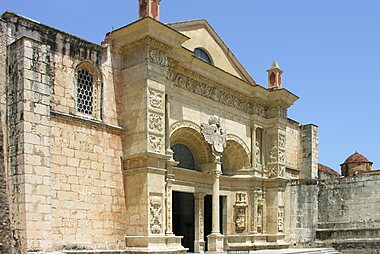
The Dominican Republic holds a significant place in colonial history as the site of the first Christian institutions in the New World. This collection features the Basilica Cathedral of Santa María la Menor, the oldest cathedral in the Americas, and the Iglesia y Convento Dominico, which once housed the first university in the Western Hemisphere. Modern architectural highlights include the massive concrete arches of the Basílica de la Altagracia and the Byzantine-influenced Catedral de la Inmaculada Concepción, showcasing a transition from 16th-century Gothic styles to contemporary religious design.
10 places

Dominican Nature and Landmarks
Explore historical monuments and natural features across the Dominican Republic, from the capital to the central highlands. The Columbus Lighthouse in Santo Domingo Este serves as a monumental mausoleum, while the nearby Parque Colón features a statue of the explorer. Natural sites include the Jimenoa Waterfall in the La Vega Province and the El Choco Caves in Cabarete, known for crystal-clear swimming holes. The list also includes Parque Mirador Del Sur, built along a limestone ridge, and the outdoor recreation grounds of La Hacienda.
6 places
Tours & Activities
Dominican Republic — Map

 Open the interactive map
 Tipping
Dominican restaurant bills already include a legally mandated 10% service charge (propina legal) plus 18% ITBIS sales tax, both shown as separate line items. An additional tip for good service is appreciated but not obligatory. In bars, rounding up is common but not expected. Hotel staff, tour guides, and drivers who go out of their way are usually tipped a small amount in cash.
10% service charge is already included by law; extra is appreciated for good service
round up
50-100 DOP per bag/day for porters and housekeeping
round up
200-500 DOP per person for a half/full-day tour
Electricity
The Dominican Republic uses Type A/B plugs at 110 V / 60 Hz, the same standard as the United States and Canada, so travelers from those countries need no adapter. Visitors from Europe, the UK, and most other regions will need a plug adapter and should check that chargers are rated for 110 V.
Language
Spanish is the official language, spoken with a fast, clipped Caribbean accent and its own local vocabulary. English is widely understood in resort zones, at hotels, and among tour operators, especially around Punta Cana and Puerto Plata, but far less so once you leave tourist areas. A handful of Spanish phrases go a long way outside the resorts.
Staying connected
Prepaid SIM and eSIM plans from Claro, Altice, and Viva are sold at the airport and in city stores; bring your passport, since Dominican law requires ID to register a SIM card. Coverage is strong along the coasts and in cities, and weaker in the mountainous interior and remote parts of the south-west.
Safety & emergencies
Tourist zones and resort areas see a heavy police and tourist-security presence (POLITUR), and most visitors experience nothing worse than petty theft or an opportunistic scam — overcharging, unlicensed taxi rates, distraction theft — in crowded areas of Santo Domingo and Puerto Plata. Crime rates are higher in some non-tourist neighborhoods, so stick to well-traveled areas at night and take a licensed taxi rather than walking after dark outside resort zones. Road safety is a bigger day-to-day concern than crime for most visitors: driving is assertive, streetlighting is inconsistent outside cities, and motorbikes weave through traffic, so stay alert as both a driver and a pedestrian, and avoid unlit rural roads after dark.
Health
Tap water is not considered safe to drink; stick to bottled or purified water, including for brushing teeth, and be cautious with ice outside hotels and reputable restaurants. Pharmacies (farmacias) are widespread in cities and tourist areas, with some open 24 hours in Santo Domingo and Punta Cana; bring copies of prescriptions for any regular medication. No special vaccinations are required for entry, though routine immunizations and, depending on your itinerary and health situation, typhoid or hepatitis A protection are commonly recommended by travel clinics — check with your doctor before the trip. Mosquito-borne illnesses (dengue, Zika) are present, so repellent is worth packing, particularly outside the peak of the dry season.
Visas & entry
Nationals of the United States, Canada, the UK, the EU, and most of Latin America can enter the Dominican Republic without a visa for stays of up to 30 days for tourism, covered by a tourist card that is now bundled into the airline ticket price or paid on arrival for land entries. Longer stays or other purposes generally require an extension or a specific visa arranged in advance. Citizens of some countries do need a visa before travel — check your specific nationality.
Visa and entry requirements change frequently. Verify current requirements with the official immigration authority or your country's embassy before travel.
Etiquette
Dominicans are warm and informal, and greetings matter: a handshake for a first meeting, a cheek kiss (women) or a warm handshake/pat (men) among people who already know each other. Beachwear belongs on the beach or at the pool — cover up when entering shops, restaurants, or town centers. Modest dress (shoulders and knees covered) is expected at churches and religious sites, including Basílica Catedral Metropolitana Santa María de la Encarnación Primada de América and Basílica Nuestra Señora de La Altagracia. Bargaining is normal in markets and with street vendors, but not in shops with marked prices or in restaurants. Ask before photographing people directly, and be aware that Dominicans generally run on a relaxed sense of time — punctuality expectations are looser than in North America or Northern Europe.
Holidays & opening hours
Public holidays that fall midweek are sometimes moved to the nearest Monday to create a long weekend (a "puente"), and banks, government offices, and many shops close on the day itself. Expect reduced services and busier domestic travel around Easter week (Semana Santa) and Christmas/New Year, when many Dominicans travel to see family or head to the beach. Shops in cities generally open Monday–Saturday and often stay open Sunday mornings in tourist areas, while smaller-town businesses may close for a few hours around midday.
Getting around
- By air: domestic flights connect Santo Domingo, Punta Cana, Puerto Plata, and Santiago, and are worth it if you're combining the capital with a beach stay on a short trip, since road transfers between regions can take four hours or more.
- By bus: long-distance coach companies connect all major cities with air-conditioned buses on fixed schedules — the most comfortable way to travel between destinations without a car.
- By público / guagua: shared vans and cars running fixed routes are the cheapest way to travel between towns; they leave when full rather than on a schedule and are best for travelers comfortable with some unpredictability.
- By rental car: gives the most flexibility for exploring beyond the resort zones — see the driving section below.
- Within cities: metered taxis, ride-hailing apps (available in Santo Domingo and the main resort areas), and motoconchos (motorbike taxis, best for short hops, agree the price first) cover local trips.
Before you go, the official Dominican Republic Ministry of Tourism site has current travel advisories and event listings.
Driving
- Key rules: driving is assertive and lane markings are often treated as suggestions; defensive driving is essential, especially around motorbikes and unlit rural stretches after dark.
- Tolls: the country's main highways (Autopista Duarte, Autovía del Este, Autopista del Coral) charge tolls in cash at booths as you pass — keep small peso bills handy.
- Parking: hotels and shopping centers have guarded lots (often with a small fee or tip for the attendant); street parking in city centers can be tight.
- Fuel: stations are staffed — an attendant pumps the gas — and take both cash and card at most locations in cities and along main routes; carry cash for rural stations. Pump labels read "Gasolina Premium" or "Gasolina Regular" for petrol and "Gasoil Óptimo" or "Gasoil Regular" for diesel.
- Electric vehicles: charging infrastructure is limited outside Santo Domingo and a handful of resort hotels, so an EV rental is only practical for short, planned routes.
Food & drink
Breakfast is often mangú — mashed boiled plantains — topped with fried eggs, cheese, and salami in a combo Dominicans call "los tres golpes." Lunch is the main meal of the day, typically "la bandera dominicana": white rice, stewed red beans, meat, and a side salad or fried plantain. Dinner is usually lighter, and on weekends families gather over sancocho, a slow-cooked stew of meats, plantain, and root vegetables.
Street food includes tostones (twice-fried plantain), yaniqueques (fried dough disks sold at the beach), and empanadas. For dessert, try habichuelas con dulce, a sweet cream made from red beans, coconut milk, and spices, traditionally eaten during Lent. To drink, Dominican coffee is strong and usually served sweet; mamajuana, a rum-based infusion of tree bark, herbs, and honey, is the country's signature drink; and Presidente is the everyday beer. Most everyday eating happens at colmados (small neighborhood shops-cum-bars) and comedores (simple lunch counters serving set plates), while restaurants in resort towns and Santo Domingo range from casual to upscale.
Where to explore
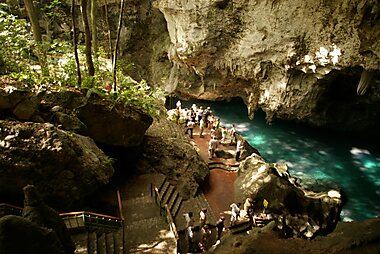
Capital and colonial core: Santo Domingo anchors the country, with the Zona Colonial's Alcázar de Colón, Basílica Catedral Metropolitana Santa María de la Encarnación Primada de América, Fortaleza Ozama, and Puerta del Conde within walking distance of each other, plus the cave pools of Los Tres Ojos on the city's east side. Beach day-trippers from the capital head to Boca Chica, a calm, reef-protected bay close enough for a half-day out.
East coast resorts: Higüey's coastal districts of Punta Cana and Bávaro hold the country's largest concentration of all-inclusive resorts and beaches like Playa El Cortecito. Further south, La Romana and the fishing-village-turned-resort-town of Bayahibe are the jumping-off points for Isla Saona and the recreated Mediterranean village of Altos de Chavón.
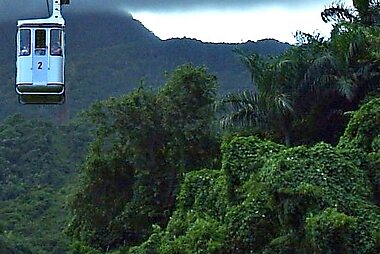
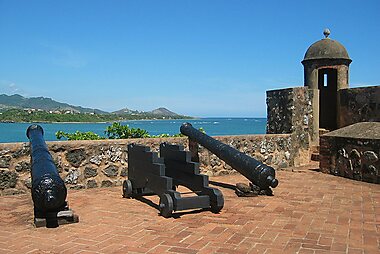
North coast: Puerto Plata pairs a historic center and Fortaleza de San Felipe with a cable-car ride up Pico Isabel de Torres. Nearby Sosúa and the surf town of Cabarete are the region's beach and watersports base.
Samaná peninsula: Samaná and Las Terrenas are greener and less developed, known for the waterfall at Salto El Limón, the island of Cayo Levantado (Bacardi Island), and whale watching from January to March.
Mountains and the south-west: Jarabacoa, in the Cordillera Central, is the base for climbing Pico Duarte, the Caribbean's highest peak, and for river rafting. Santiago de los Caballeros, the country's second-largest city, is a working center for cigar and rum production, overlooked by Monumento a los Héroes de la Restauración. The remote south-west around Barahona holds the stark, hypersaline Lago Enriquillo and the empty, ten-kilometer beach at Playa Bahía de las Águilas.
Dominican Republic – Plan Your Trip
Pick the places you want to see and Tripomatic turns them into a day-by-day route, with smart routing, time estimates, and everything you need for a perfect trip.




