



Ethiopia
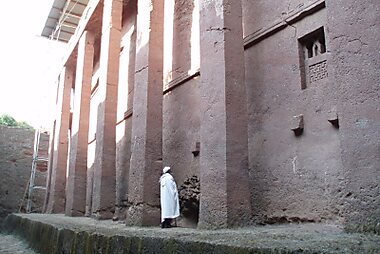
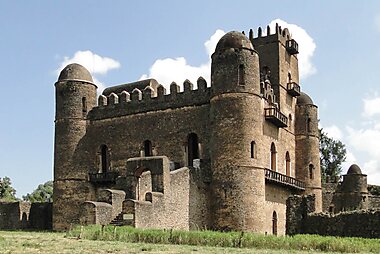
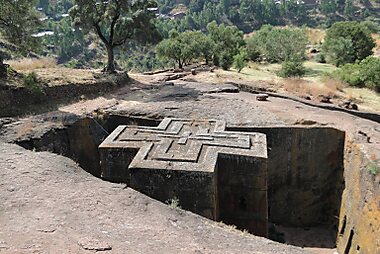
Ethiopia is a large, high country in the Horn of Africa. Most of it sits on a cool highland plateau, split by the Great Rift Valley. It has its own ancient church, its own script and its own calendar. Together with Liberia, it is one of only two African countries that were never colonised. Italy occupied it only briefly, from 1936 to 1941. The rock-hewn churches of Lalibela, the castles of Gondar and the obelisks of Aksum are among the most unusual historic sites in Africa.
The country suits curious, flexible travellers who are interested in history, faith, hiking and traditional cultures. Distances are long and roads are slow, so most visitors combine a few domestic flights with a guided road trip. Security varies a lot by region and changes quickly. Several famous northern areas are currently affected by conflict, so check your government's travel advice before you plan a route.





Ethiopia – Planning a Trip?
Build your day-by-day itinerary in the Tripomatic app.


Money & payments
Ethiopia is still mainly a cash economy. Top hotels, airlines and some upscale restaurants in Addis Ababa take foreign cards. Almost everywhere else you pay in birr cash. Some payments, such as fuel, now work only through local mobile money, which your guide or driver can handle.
- ATMs: common in Addis Ababa, but limited and unreliable in smaller towns. Commercial Bank of Ethiopia machines usually accept foreign Visa cards. Withdrawal limits per transaction are low, so carry enough cash before you leave the capital.
- Exchange: change foreign cash only at banks, hotels or licensed bureaus. Changing money on the street is illegal.
- Currency limits: you may bring in or take out only a small amount of birr cash. Declare large amounts of foreign cash on arrival.
- Prices for foreigners: tour operators, national parks and many hotels quote prices in US dollars. Carry some clean, recent US dollar notes.
- Daily budget: budget travellers can manage on basic guesthouses and local food. A guided trip with drivers, guides and park fees costs much more than the local price level suggests.
Featured Lists

Tours & Activities
Ethiopia — Map

 Open the interactive map
 Tipping
Tipping is a normal part of travel in Ethiopia. It matters most for guides, drivers and other people who help you on a tour.
loose change; ~10% in tourist restaurants
daily tip for guides, drivers and scouts
small tip for porters
round up
leave small change
- Restaurants: in local places, leave loose change. In tourist restaurants, about 10% is appreciated if no service charge is on the bill.
- Guides and drivers: plan a daily tip for your guide, driver and scouts on a multi-day tour. It is often a large part of their income.
- Church and site helpers: priests who unlock churches or show you manuscripts, and local guides at sites, expect a small tip.
Electricity
Ethiopia uses 220 V at 50 Hz with mixed socket types. Power cuts happen, especially outside Addis Ababa, so a power bank is useful.
Language
Amharic is the federal working language, and Afaan Oromo, Tigrinya, Somali and Afar are also official. The country has more than 80 languages in total. English is taught in schools and is spoken in hotels, airlines and by tour guides. Outside tourist services, English is limited.
Amharic uses its own Ge'ez script (fidel). Many street signs in Addis Ababa also show English, but in smaller towns signs, menus and bus destinations are often only in Amharic.
Ethiopian calendar and time: Ethiopia has its own calendar, about seven to eight years behind the Western one, with New Year in September. Local time is also often counted from 6 am, so "3 o'clock" can mean 9 am. Always confirm whether a time or date is in local or Western format.
Staying connected
- SIM cards: Ethio Telecom has the widest coverage across the country. Safaricom Ethiopia is strong in Addis Ababa and larger towns. Both sell tourist data packages at shops in the Bole International Airport arrivals hall. You need your passport to register a SIM.
- eSIM: few international eSIMs work well nationwide. Check which local network an eSIM uses before you buy.
- Shutdowns: the government sometimes cuts mobile internet or blocks social media, often in conflict regions or during unrest. Download offline maps and save important bookings before you travel.
Safety & emergencies
Most visits to Ethiopia pass without problems, and people are generally welcoming to travellers. However, the security situation is uneven and changes quickly. Armed conflict and unrest affect several regions. These include Amhara Region, where Lalibela, Gondar and Simien Mountains National Park are located, and Tigray Region. Many governments currently advise against all travel to these areas. Most of Afar Region, including the area around the Danakil Depression, is also under travel warnings. Check your government's latest advice for every region on your route, and travel with a registered local operator.
- Crime: pickpocketing and bag snatching happen in Addis Ababa, especially around Merkato, Piazza and Meskel Square. Keep phones out of sight in crowds.
- Scams: in the capital, friendly strangers sometimes invite visitors to a "cultural ceremony" that ends with a very large bill.
- Photography: do not photograph military sites, police, government buildings or key infrastructure. It can lead to detention.
- Demonstrations: avoid protests and large political gatherings.
Health
- Tap water: do not drink it. Bottled water is cheap and sold everywhere.
- Vaccinations: yellow fever vaccination is recommended for most of the country and is required if you arrive from a country with yellow fever risk. Also check routine vaccines, hepatitis A, typhoid and rabies with a travel clinic.
- Malaria: there is malaria risk in lowland areas, including the Rift Valley, the south and the far west. Most highland cities, including Addis Ababa, are above the risk zone. Ask a travel clinic about tablets for your route.
- Altitude: Addis Ababa lies at about 2,350 m, and trekking areas go much higher. Take the first days slowly and drink plenty of water.
- Pharmacies and hospitals: pharmacies are common in towns. Good private hospitals are mainly in the capital. Medical care in rural areas is basic, so bring travel insurance that covers evacuation.
Visas & entry
Most visitors need a visa. Only citizens of Kenya and Djibouti can enter without one.
- E-visa: apply online before you travel at Ethiopian e-Visa portal. Tourist e-visas are available for 30 or 90 days, single entry. Processing usually takes a few working days.
- Entry point: the e-visa is only valid for a first arrival at Bole International Airport in Addis Ababa. If you plan to arrive by land, get a visa from an Ethiopian embassy.
- Visa on arrival: now available only to very few nationalities. Do not rely on it.
- Passport: it should be valid for at least six months from your arrival date.
Visa and entry requirements change frequently. Verify current requirements with the official immigration authority or your country's embassy before travel.
Etiquette
- Churches and mosques: dress modestly and remove your shoes before you enter. Women usually cover their hair in Orthodox churches, and some monasteries do not admit women at all.
- Greetings: people greet each other at length and shake hands. Use your right hand to give, receive and eat.
- Fasting: Orthodox Christians fast on most Wednesdays and Fridays and for long periods before Easter. During fasts, many restaurants serve only vegan dishes.
- Photography: ask before you photograph people. This is especially important in the Omo Valley, where villagers usually expect a fee per photo.
- Coffee ceremony: if a family invites you to a coffee ceremony, it is polite to stay for at least the first cups.
- Bargaining: bargain calmly in markets and with souvenir sellers. Hotel and restaurant prices are fixed.
Holidays & opening hours
Religious festivals shape the year. The big Orthodox festivals bring large processions, and hotels in festival towns fill up months ahead. Easter and the Muslim holidays move each year, so check the dates for your trip. On public holidays most offices and banks close, and transport gets busy.
Offices usually work Monday to Friday with a lunch break, and many also open on Saturday morning. Shops and markets open long hours, but many close on Sunday morning during church.
Getting around
- By air: domestic flights are the most practical way to cover long distances. Ethiopian Airlines flies from Addis Ababa to more than 20 domestic airports. Passengers who arrive on an Ethiopian Airlines international ticket can often get cheaper domestic fares at an Ethiopian Airlines office in the city.
- By train: an electric railway links Addis Ababa with Dire Dawa and continues to Djibouti. Passenger trains leave from Furi-Lebu station on the edge of the city a few times a week, and the journey takes about 10 hours. It is a good way to reach Harar.
- By bus: long-distance buses such as Selam Bus and Sky Bus connect the capital with major towns. They leave early in the morning. Book a day ahead at the company office.
- With a driver: most visitors hire a car with a driver through a tour operator, especially for the south, the Rift Valley lakes and national parks.
Driving
Self-drive is uncommon for visitors. Most people hire a car with a driver, which is often cheaper than a self-drive rental.
- Licence: a foreign licence is accepted only for a short visit. For a longer stay you need an Ethiopian licence.
- Road conditions: main highways are paved, but people, donkeys, cattle and slow trucks share the road. Rural roads can be rough and slow. Avoid driving after dark.
- Tolls: a few new expressways, such as the one from Addis Ababa towards Adama, charge a toll at a barrier.
- Checkpoints: police and military checkpoints are common. Keep your passport, licence and vehicle papers ready.
- Fuel: stations are attended. Payment is usually electronic, by local mobile money such as telebirr, so it is easiest to let your driver pay. Petrol is usually labelled "Benzine", and diesel "Nafta" or "Diesel". Shortages happen, so fill up when you can on long trips.
- Electric vehicles: many EVs are used in Addis Ababa, but public charging outside the capital is very limited. Do not plan a road trip in an EV.
Food & drink
Ethiopian food is based on injera, a large, soft and slightly sour flatbread made from teff. You tear off pieces with your right hand and use them to pick up stews called wat. Popular dishes include doro wat (spicy chicken stew with egg), tibs (fried meat with onion and pepper), shiro (chickpea stew) and kitfo (minced beef, often served raw). Because of the many Orthodox fasting days, vegan food is easy to find, especially the colourful mixed platter called beyaynetu.
Breakfast is often firfir (injera shredded into sauce) or ful (spiced beans). Lunch is the main meal. People often share one large plate. Ethiopia is where coffee comes from, and the traditional coffee ceremony with three rounds of coffee is part of daily life. Other drinks include tej (honey wine), tella (home-brewed beer) and good local bottled beers. Fresh fruit juices, often served in layers, are sold in juice bars in every town.
Where to explore
Cities
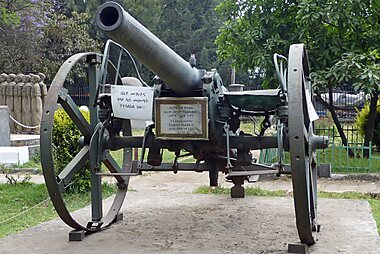
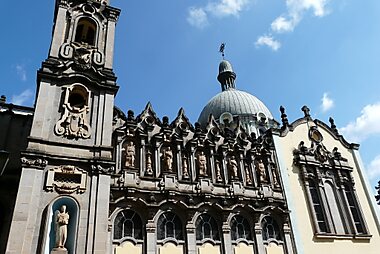
- Addis Ababa is the capital and the country's main entry point. Its museums tell the story of Ethiopia's history, from early humans to the emperors.
- Harar is an old walled Muslim city in the east, with narrow lanes, colourful houses and hyena feeding at night.
- Dire Dawa is a railway town and the usual gateway to Harar.
The historic north
Lalibela, Gondar, Bahir Dar on Lake Tana, and Aksum form the classic "Historic Route". It is famous for rock-hewn churches, royal castles, island monasteries and ancient obelisks. Check current travel advice for Amhara Region and Tigray Region before planning a trip here.
Mountains and nature
- Simien Mountains National Park has dramatic cliffs, high trekking and gelada monkeys. It lies in Amhara Region, so check current travel advice first.
- The Bale Mountains in the south-east, reached from Goba, are home to the rare Ethiopian wolf.
- The Rift Valley lakes, such as Lake Hawassa, Lake Langano and Lake Chamo, are good for birdwatching and relaxing.
The south and the Danakil
- Konso has UNESCO-listed stone-terraced villages, and the Omo Valley further west is home to many traditional communities.
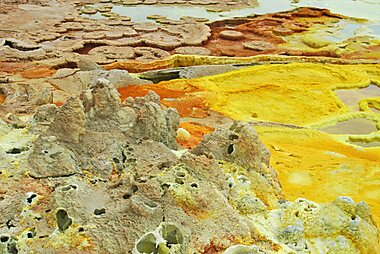
- The Danakil Depression in Afar Region is one of the hottest places on Earth, with the salt flats of Assale Salt Lake and the colourful Dallol hot springs. It lies close to the Eritrean border, so check current travel advice and go only with an experienced operator.
Ethiopia – Plan Your Trip
Pick the places you want to see and Tripomatic turns them into a day-by-day route, with smart routing, time estimates, and everything you need for a perfect trip.


Related destinations


Data: © OpenStreetMap contributors, Wikidata, Wikipedia, Tripomatic, Official websites, geoBoundaries (CC BY 4.0). Tours by GetYourGuide. We earn commission from bookings. Travel guide generated with AI.