



Ghana
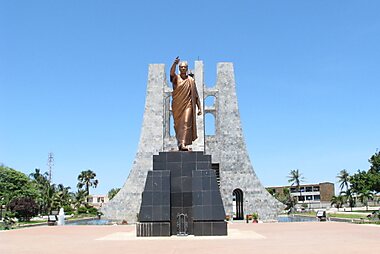
Ghana is a coastal country in West Africa and one of the easiest places in the region for a first visit. English is the official language, and the country has a long record of peaceful elections. In 1957 it became one of the first African colonies to win independence, led by Kwame Nkrumah.
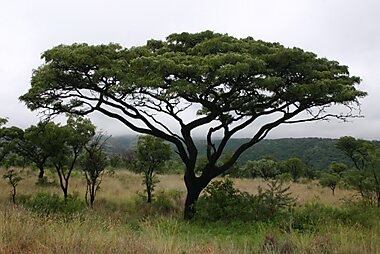
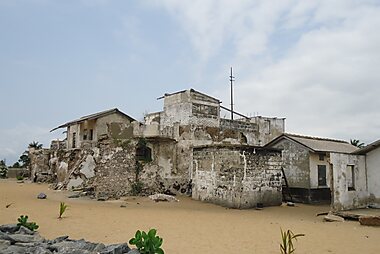
Most trips combine three areas. The Atlantic coast has sandy beaches, fishing villages and the old European forts and castles linked to the transatlantic slave trade. The forest belt around Kumasi is the home of the Ashanti kingdom, with its crafts, markets and royal traditions. The drier north offers savannah wildlife in Mole National Park and a quieter, more rural way of life. Ghana suits travelers interested in history, culture and nature who are comfortable with basic infrastructure outside the big cities.





Ghana – Planning a Trip?
Build your day-by-day itinerary in the Tripomatic app.
Money & payments
Ghana is still largely a cash economy. You will need cedis for markets, trotros (shared minibuses), taxis, street food and most small restaurants. Card payment works mainly in larger hotels, supermarkets, malls and upscale restaurants in Accra and Kumasi.
- ATMs are common in cities and larger towns but scarce in rural areas and national parks. Carry a second card as a backup. Withdraw enough before heading north or into the countryside.
- Exchange: forex bureaus give better rates than banks. Bring clean, undamaged US dollar or euro notes; older or torn notes are often refused.
- Mobile money (MoMo) is how many Ghanaians pay. With a local SIM you can use it for taxis, shops and even market stalls.
A budget traveler can manage on around 400–700 cedis a day with guesthouses, local food and public transport. Mid-range travel with private drivers, air-conditioned hotels and guided tours costs several times more.


Featured Lists


Tours & Activities
Ghana — Map

Tipping
Tipping is not a strict rule in Ghana, but it is appreciated, especially in the tourism sector.
- Restaurants: check the bill first, since some places add a service charge. If not, around 10% is a kind gesture in sit-down restaurants. Street food and chop bars do not expect tips.
- Taxis: agree on the fare before the ride; no tip is expected.
- Hotels: a few cedis for porters and housekeeping is welcome.
- Guides and drivers: a tip is expected at the end of a tour, for example after a castle tour, a guided walk in Kakum National Park or a day with a private driver.
about 10 % if no service charge
a few cedis for porters and housekeeping
at the end of a tour
Electricity
Ghana uses the British-style Type G plug at 230 V / 50 Hz, so most travelers from outside the UK need an adapter. Power cuts still happen, so carry a power bank.
Language
English is the official language and is used in government, business, schools and signage. English is understood almost everywhere, though in rural areas some older people speak only local languages. Ghanaian English has its own expressions, and people often speak fast, so ask them to repeat if needed.
Around 80 local languages are spoken. Twi, a form of Akan, is the most widely understood across the south and centre. Ga is common in Accra, Ewe in the Volta Region, Fante on the central coast and Dagbani in the north. A few words of Twi, such as medaase (thank you), are always warmly received.
Staying connected
- SIM cards: the main networks are MTN, Telecel and AT. MTN has the best coverage, especially outside the cities. SIM registration is mandatory — foreigners need their passport, and it is easiest at an official network shop rather than a street vendor.
- Coverage: 4G is good in cities and along main roads. Signal can be weak or absent in national parks and remote northern areas.
Safety & emergencies
Ghana is one of the safer countries in West Africa for visitors, and violent crime against tourists is uncommon. Normal city precautions are enough in most places.
- Petty theft: pickpocketing and bag snatching happen in crowded markets, bus stations and on busy beaches. Keep your phone out of sight on the street and avoid walking alone on beaches at night.
- Scams: be careful with online romance or business offers, fake "officials", and strangers asking for donations at tourist sites.
- Roads: road accidents are the biggest real risk. Avoid long-distance travel after dark, and choose reputable bus companies or drivers.
- Swimming: the Atlantic has strong currents and rip tides. Swim only at beaches where locals say it is safe.
- Northern border areas: parts of the far north near the Burkina Faso and Togo borders, including the Bawku area, have security issues. Check your government's travel advice before going there.
- Laws: same-sex sexual activity is illegal and attitudes are conservative. Drug penalties are severe.
Health
- Yellow fever: a vaccination certificate is required for entry and is checked on arrival.
- Malaria: the risk is high all year across the whole country. Take antimalarial tablets as advised by your doctor, and use repellent and a mosquito net.
- Other vaccines: doctors usually recommend hepatitis A, typhoid and routine vaccines. Ask a travel clinic about meningitis and rabies, especially for the dry season in the north.
- Water: do not drink tap water. Bottled water and sealed "pure water" sachets are cheap and sold everywhere.
- Pharmacies: easy to find in cities and towns, with many basic medicines available without a prescription. Bring your own supply of any regular medication.
- Medical care: good private hospitals and clinics exist mainly in Accra. Care is more limited elsewhere, so travel insurance with medical evacuation is strongly advised.
- Heat: it is hot and humid year-round. Drink plenty of water and use sun protection.
Visas & entry
Since May 2026, Ghana no longer offers visas on arrival. Most visitors must now arrange entry online before they travel.
- ECOWAS citizens (from West African states) can enter visa-free with a valid passport and usually stay up to 90 days.
- Other African Union citizens and travelers from countries that used to be visa-exempt need a free Electronic Travel Authorization (ETA) before departure.
- Most other nationalities, including EU, UK and US passport holders, need an eVisa. Apply online and allow at least several working days for processing.
Apply through the official portal: Ghana eVisa portal. Carry your yellow fever certificate with your passport, as it is checked at the airport.
Visa and entry requirements change frequently. Verify current requirements with the official immigration authority or your country's embassy before travel.
Etiquette
- Greetings matter: always greet people before asking a question or starting business. A handshake is common, and a simple "good morning" is always appreciated.
- Use your right hand: give, receive, eat and wave with your right hand. Using the left hand is considered rude.
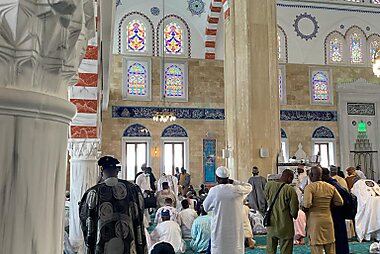
- Dress: casual clothes are fine, but cover shoulders and knees in villages, churches, mosques and at traditional sites. Beachwear is for the beach.
- Photos: ask before photographing people, markets or shrines. Some people will ask for a small payment. Do not photograph military sites, police or airports.
- Chiefs and elders: when visiting a village or palace, you may be expected to greet the chief and bring a small gift, such as a bottle of schnapps or some money. Your guide will advise.
- Bargaining: normal in markets and with taxis. Stay friendly and patient.
- Slave castles: these are places of memory for many visitors of African descent. Behave respectfully during tours.
Holidays & opening hours
On public holidays, government offices, banks and many shops close, and roads out of the cities can be busy. Christmas and Easter are major travel periods.
Most shops and offices open Monday to Saturday, from about 8:00 to 17:00 or 18:00. Sunday is a church day, so many businesses stay closed or open only in the afternoon. Markets start early, and street food is easiest to find in the morning and evening. Muslim communities, mainly in the north, may keep shorter hours on Friday afternoons.
Getting around
Distances in Ghana look short on the map, but road journeys are slow. Plan fewer places and more time.
- By air: domestic flights connect Accra with Kumasi, Tamale and Sekondi-Takoradi. The flight to Tamale saves a very long day by road if you are heading to Mole National Park.
- By bus: large air-conditioned coaches from companies such as STC and VIP link the main cities. Book a day ahead for popular routes.
- By trotro: shared minibuses go almost everywhere and are very cheap, but they are crowded and leave only when full.
- By taxi: taxis have no meters, so agree on the price before you get in. Outside Accra and Kumasi, ride-hailing apps are rare.
- By private driver: hiring a car with a driver is a common and comfortable way to cover several regions.
Rail travel is not a practical option for visitors.
Driving
Most visitors hire a car with a driver rather than drive themselves. Roads between big cities are mostly paved, but traffic is chaotic and rural roads can be in poor condition.
- Documents: carry your national licence and an International Driving Permit.
- Hazards: expect potholes, overloaded trucks, livestock and pedestrians on the road. Avoid driving at night, when unlit vehicles are a serious danger.
- Police checkpoints: common on main roads. Stay polite and keep your documents ready.
- Traffic: Accra and Kumasi have heavy congestion at rush hour. There are no low-emission zones.
- Tolls: road tolls have not been collected since late 2021. An electronic toll system has been approved but is not yet running.
- Parking: usually informal, with attendants who expect a small fee. Hotels and malls often have guarded parking.
- Fuel: stations are attended, and staff fill the tank for you. Pay in cash or mobile money; cards are not always accepted.
- Electric vehicles: public charging is very limited. An EV is not practical for touring.
Food & drink
Ghanaian food is filling, starchy and often spicy. Meals are built around a starch, such as fufu, banku, kenkey or rice, served with a soup or stew of fish, chicken, goat or beef. Breakfast is often porridge, such as spicy millet hausa koko, with bread or fried dough. Lunch is usually the main meal, and many people eat with their right hand.
Try jollof rice, a tomato rice that Ghanaians proudly compare with Nigeria's version. Other favourites are waakye (rice and beans), red red (bean stew with fried plantain), banku with grilled tilapia, and fufu with light soup or groundnut soup. For snacks, look for kelewele (spicy fried plantain), chichinga kebabs and fresh coconuts from street sellers.
Locals eat at "chop bars" (simple local restaurants), roadside stalls and markets, which are cheap and often the best places to try traditional food. Popular drinks include sobolo (hibiscus drink), fresh palm wine in the villages, and local lager beers. Ghana is one of the world's biggest cocoa producers, so local chocolate is worth buying.
Where to explore
Cities
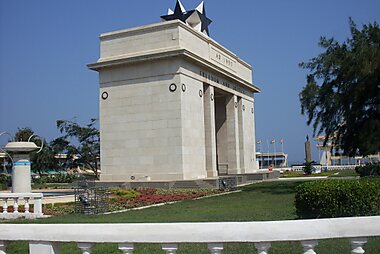
- Accra is the capital and main entry point, with independence monuments, museums, markets and beaches.
- Kumasi is the historic capital of the Ashanti kingdom, known for its royal palace, crafts and huge markets.
- Tamale is the largest city in the north and the gateway to Mole National Park.
- Bolgatanga in the far north is known for basket weaving and traditional mud-built villages.
The coast
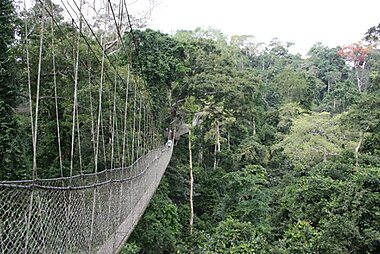
- Cape Coast has the most visited slave castle and is close to Elmina Castle and Kakum National Park, famous for its canopy walkway.
- Sekondi-Takoradi is the base for the western beaches and old forts, and for Ankasa Conservation Area rainforest.
- Keta sits on a lagoon in the east, with a quiet beach and a Danish-built fort.
Nature and the Volta Region
- Hohoe is the base for Wli Falls and hikes in the green hills of the Volta Region, while Ho is the regional capital.
- Lake Volta is one of the largest artificial lakes in the world.
- Lake Bosomtwe is a crater lake near Kumasi, good for a relaxing day trip.
- Boabeng-Fiema Monkey Sanctuary protects monkeys that local villages consider sacred.
- Kintampo is a stop for its waterfalls on the road north.
- Shai Hills is an easy wildlife trip from Accra, with baboons, antelopes and caves.
Ghana – Plan Your Trip
Pick the places you want to see and Tripomatic turns them into a day-by-day route, with smart routing, time estimates, and everything you need for a perfect trip.


Related destinations

Kumasi

Mole National Park

Accra

Kakum National Park

Tamale Metropolitan District

Sekondi Takoradi Metropolitan District

Bolgatanga Municipal District

Cape Coast Metropolitan District

Ankasa Game Reserve and Nini-Suhien National Park

Keta Municipal District

Hohoe Municipal District

Ho Municipal District

Lake Volta

Lake Bosomtwe impact crater

Boabeng - Fiema Monkey Sanctuary

Kintampo North Municipal Assembly
