



Grenada
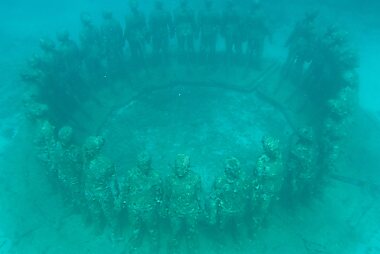
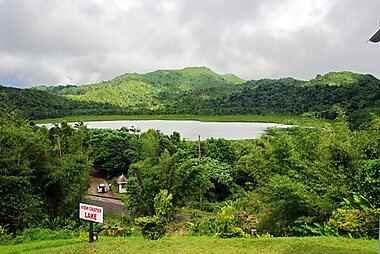
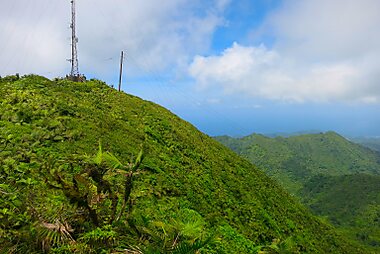
Grenada is a small volcanic island in the southeastern Caribbean, nicknamed the "Spice Isle" for its nutmeg, mace, and cocoa plantations. Rainforest-covered mountains rise above a coastline of black-sand coves and white beaches such as Grand Anse Beach. The capital, St. George's, wraps around a horseshoe harbor lined with pastel warehouses and watched over by two 18th-century forts. Off the west coast, Underwater Sculpture Garden is the world's first underwater sculpture park. Its concrete figures are now grown over with coral.
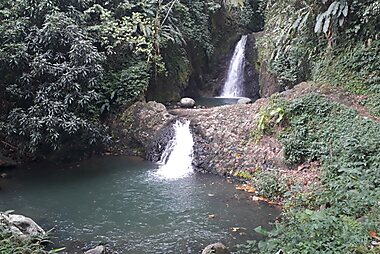
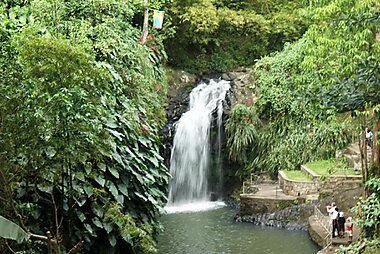
Grenada suits travelers who want an active, low-key Caribbean trip rather than a resort stay. Highlights include hiking to crater lakes and waterfalls, touring working spice and rum estates, and sailing to the quieter sister islands of Carriacou and Petite Martinique. France and then Britain ruled the island for close to 300 years before independence in 1974. A 1983 revolution ended when the prime minister, Maurice Bishop, was executed. A United States-led military intervention followed days later, a period Grenadians still discuss openly. The dry season, January to May, is the best time to visit. Hurricane season runs June to November. Parts of Carriacou and the mainland's north coast are still rebuilding after Hurricane Beryl in 2024.

Grenada – Planning a Trip?
Build your day-by-day itinerary in the Tripomatic app.
Money & payments
US dollars are accepted almost everywhere, but change usually comes back in East Caribbean dollars at a less favorable rate, so it is worth carrying some local cash. Cards work in most hotels, restaurants, and larger shops on the main island. Bring cash for minibuses, small vendors, market stalls, and for Carriacou and Petite Martinique, where card machines are less common.


Featured Lists

Tours & Activities
Grenada — Map

Tipping
10% if not already included (many bills add an 18% service charge)
often included as an 18% service charge; 10% if not
round up
10-15% of the tour cost
round up
Many hotels and restaurants already add an 18% service charge to the bill — check before tipping again. If no charge is added, 10% is the norm. Taxi fares are fixed, so drivers are not usually tipped, though rounding up is appreciated. For a multi-day tour guide, a tip of 10–15% of the tour cost is a fair way to say thank you.
Electricity
Grenada uses UK-style Type G sockets at 230 V / 50 Hz, a leftover of British colonial rule. Most of the Caribbean uses American Type A/B outlets instead, so visitors from North America will need a plug adapter, not just a voltage converter.
Language
English is the official language and is spoken everywhere, including on Carriacou and Petite Martinique. Casual conversation between Grenadians often shifts into Grenadian Creole English, which can be hard to follow at speed but is not a barrier — locals switch easily back to standard English with visitors. A French-based patois once spoken on the island has almost disappeared and is no longer needed for travel.
Staying connected
Digicel and Flow both run 4G networks that cover the main tourist areas well; coverage gets patchier in the interior and on Carriacou and Petite Martinique. Prepaid SIM cards from either provider are easy to find in St. George's and at the airport — bring your passport when you buy one. Wi-Fi is standard in hotels and guesthouses across the island.
Safety & emergencies
Grenada is generally relaxed, but crime against visitors has been rising. Keep valuables out of sight, avoid walking alone late at night, and be cautious on isolated beaches or trails after dark. Petty theft happens in crowded markets and at Carnival events, so watch bags and pockets. Boaters should be wary of unfamiliar vessels approaching at anchor. Police response outside St. George's can be slow, so prevention matters more than in many other Caribbean destinations.
Health
Tap water on the main island is treated and safe to drink. Carriacou and Petite Martinique rely on rainwater harvesting instead, so bottled water is the safer choice there. Pharmacies are well stocked in St. George's and around Grand Anse; options are more limited elsewhere and on the smaller islands, so bring extra of any regular medication.
Dengue and Zika are both present in Grenada. Both spread through mosquitoes that bite during the day, so use repellent even outside the evening hours. No vaccinations are required to enter Grenada unless arriving from a country with yellow fever — a certificate is needed in that case.
Visas & entry
Citizens of the United States, Canada, the United Kingdom, the EU, and most Commonwealth and Caribbean countries do not need a visa. They can typically stay up to 90 days as tourists. Everyone needs a passport valid for at least six months beyond arrival and a return or onward ticket.
Visa and entry requirements change frequently. Verify current requirements with the official immigration authority or your country's embassy before travel.
Etiquette
- Camouflage-patterned clothing and accessories are illegal for civilians in Grenada and can be confiscated on arrival — do not pack any.
- Cover up away from the beach or pool; swimwear is fine on the sand but not in town or restaurants.
- Greet people with "good morning" or "good afternoon" before asking a question — jumping straight to a request is considered rude.
- Ask before photographing people, especially in markets and fishing villages.
Holidays & opening hours
Spicemas, Grenada's Carnival, takes over St. George's for several days in August with parades and street parties — expect many businesses to close and transport to be crowded. Sundays are quiet island-wide, with most shops and some restaurants closed, so plan grocery and errand stops for Saturday.
Getting around
- By air: Maurice Bishop International Airport, near Grand Anse, is the main gateway. Small propeller flights connect the mainland to Carriacou in about 20 minutes — useful if the ferry schedule does not fit your plans.
- By ferry: A passenger ferry links St. George's with Carriacou (and on to Petite Martinique) a few days a week; the crossing takes roughly two hours. Book ahead in high season and around Carriacou's Regatta Festival in late July/early August.
- By minibus: Privately run minibuses ("reggae buses") cover the main roads for EC$2.50–6.50 depending on distance, roughly 6 am to 9 pm Monday to Saturday, with little to no service on Sundays. Flag them down anywhere along the route.
- By taxi: Taxis run on a fixed-rate card rather than a meter — agree the fare, or check it against the posted rates, before you get in.
Driving
- Traffic drives on the left, following British rules — a change to plan for if you normally drive on the right, especially at junctions and roundabouts.
- Speed limits: around 40 km/h in towns and villages, about 60 km/h on the open road.
- Visitor's permit: rental agencies typically arrange a local driving permit for about EC$60, valid for 90 days, on top of your home license.
- Road conditions: main roads around St. George's and Grand Anse are well maintained; interior roads toward Grand Etang and the northern parishes are narrow, steep, and winding — drive slowly and avoid them after dark if you can.
- Fuel: stations are concentrated near St. George's and Grand Anse, so fill up before heading north or into the interior.
Food & drink
Breakfast is often simple — saltfish and bakes (fried dough) with a cup of local cocoa tea. The national dish is oil down: breadfruit, salted meat, callaloo, and dumplings layered in a pot with coconut milk and turmeric. It simmers, unstirred, until the liquid is fully absorbed. Every parish and household makes it a little differently.
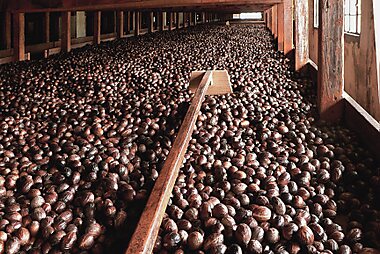
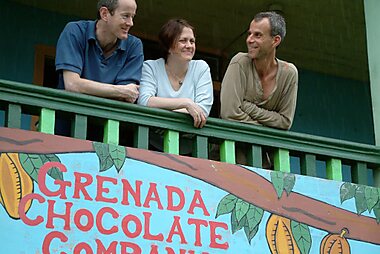
Spices define Grenadian food. The island is one of the world's largest nutmeg producers, and nutmeg, mace, cinnamon, and cloves flavor stews, rum punch, and ice cream alike. Rum matters just as much: River Antoine Rum Distillery still presses and distills cane by hand on 19th-century equipment, and estates like Clarke's Court Rum Distillery offer tours of the process. Cocoa is the third local staple — plantations such as Belmont Estate and small producers like Grenada Chocolate Factory take visitors from bean to bar.
For street food, Friday night in Gouyave is worth planning around. The town turns its main street into an open-air fish fry, grilling and frying seafood with local hot sauce. To drink, look for rum punch, sea moss punch (a creamy, nutmeg-spiced tonic), and the bitter, herbal mauby, alongside the usual Caribbean beers.
Where to explore
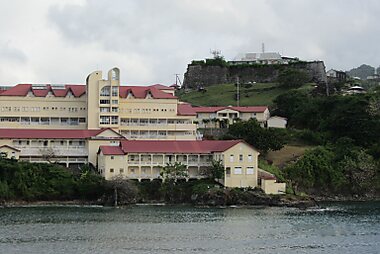
Most visitors base themselves on the mainland, close to the capital, St. George's, with its harbor and historic forts. Just south of town is the resort strip along Grand Anse Beach. On the west coast, the fishing town of Gouyave is known for its nutmeg processing station and Friday fish fry. Grenville, on the east coast, has one of the island's biggest produce markets. In the north, Sauteurs sits above the site where the island's last Kalinago inhabitants died rather than surrender to French forces in 1651.
For a slower pace, Carriacou and Petite Martinique is Grenada's sister-island dependency, a short flight or ferry from the mainland. Carriacou's main town, Hillsborough, and the tiny, mostly car-free Petite Martinique see far fewer visitors. Both have quiet beaches and strong sailing and diving traditions, and Carriacou has its own small museum of island history. Just offshore, the powder-white sandbar of Sandy Island is one of the country's best-known views.


Grenada – Plan Your Days
Turn the places from this guide into a real itinerary, with smart routing, time estimates, and everything you need for a perfect trip.

