



Guernsey
Guernsey is a small island in the English Channel. It is closer to France than to England. It is a Crown Dependency: it has its own government and laws, and it is not part of the United Kingdom or the European Union. The Bailiwick of Guernsey also includes Alderney, Sark, Herm and a few smaller islands. The capital and main harbour is St Peter Port.
The island has cliffs, sandy bays, old forts and a busy harbour town. Visitors come for coastal walks, beaches, gardens and history. The German occupation in World War II left many bunkers and museums. The tide range is large, about 10 metres, so the coast looks very different at low and high tide. Guernsey suits couples, families and slow travellers. Car-free Sark and Herm are easy day trips or overnight stays.




Guernsey – Planning a Trip?
Build your day-by-day itinerary in the Tripomatic app.
Money & payments
Guernsey uses the pound. The Guernsey pound has the same value as pound sterling, and sterling is accepted everywhere on the island. Guernsey notes and coins are not legal tender in the UK and may be refused there. Spend them or change them before you leave.
There is no VAT in Guernsey. ATMs are found at banks, the airport and supermarkets. Cash is not accepted on buses (see Getting around).


Featured Lists

Guernsey Essentials
Explore the layers of Guernsey’s history, from the 800-year-old ramparts of Castle Cornet to the World War II German Naval Signals HQ. This collection highlights the island's unique cultural landscape, including Victor Hugo’s self-designed residence at Hauteville House and the intricate shell-work of the Little Chapel. Discover coastal defenses like the "cup and saucer" Fort Grey and the millennium-celebrating Guernsey Tapestry, alongside the historic Victorian architecture of Market Square and the Seigneur’s traditional residence on the neighboring island of Sark.
10 places


Museums & Culture
Guernsey’s heritage spans from medieval fortifications to the 20th-century German occupation. Explore Hauteville House, the former residence of Victor Hugo, and the 800-year-old Castle Cornet overlooking St Peter Port. Specialized sites include the German Naval Signals HQ and the German Occupation Museum, which document wartime life. Maritime history is preserved at the Fort Grey Shipwreck Museum, while local culture is represented through the Quay Gallery and the Sark heritage collections of La Société Serquaise.
7 places Tours & Activities
Guernsey — Map

Tipping
Tipping follows UK habits and is never required.
- Restaurants: about 10% is common if no service charge is added to the bill.
- Taxis: rounding up is enough.
- Bars: tipping is not usual.
- Hotels and guides: a small tip is optional for good service.
about 10 % if service is not included
round up
Electricity
Guernsey uses the UK three-pin plug (type G). Visitors from Europe, North America and most other regions need an adapter.
Language
English is the everyday language. Guernésiais is an old Norman-French language of the island. Only a small share of people speak it fluently. You will see it in some place names and on a few signs. Many street and parish names are French, for example the lanes called Rue or Ruette.
Visitors do not need any other language.
Staying connected
Guernsey is outside the UK and the EU. Phone roaming charges may apply, including for UK phone plans. Check with your provider before you travel.
Safety & emergencies
Guernsey is a very safe place for visitors. The main risks are natural ones.
- Tides: the tide range is large and fast. Check tide times before you walk on a beach or rocks, so you are not cut off.
- Cliffs and paths: stay on marked paths. Cliff edges can be steep and slippery after rain.
- Narrow lanes: many country lanes are narrow, with walkers and cyclists sharing the road.
- Sark at night: Sark has no street lights. Bring a torch.
Call 999 or 112 for police, fire, ambulance or coastguard.
Health
Tap water is safe to drink.
Healthcare for visitors is not free. Guernsey has its own health system. It is separate from the UK's NHS. Visitors normally pay for GP visits, hospital care, prescriptions and ambulance transport. The UK has a reciprocal health arrangement with Guernsey, but it helps with only part of the cost of essential treatment. Take travel insurance that covers medical care and return travel.
Visas & entry
Guernsey is not part of the UK or the EU, but it is part of the Common Travel Area with the UK, Ireland, Jersey and the Isle of Man. It sets its own entry rules, which follow the UK system closely.
- Arriving from within the Common Travel Area (UK, Ireland, Jersey, Isle of Man): recognised photo ID is enough for British and Irish citizens. Other nationalities from Ireland need a valid passport.
- Arriving from anywhere else: you need a valid passport, whatever your nationality.
- Visa-free nationalities: from 23 April 2026, visitors who do not need a visa but arrive from outside the Common Travel Area need an Electronic Travel Authorisation (ETA). You apply online through the UK ETA service. British and Irish citizens do not need an ETA. Dual British or Irish citizens cannot get one, so use a British or Irish passport or a certificate of entitlement.
- Visa nationals: you must get a visa before you travel.
- French day visitors: only French nationals on day trips by scheduled ferry from France may use a valid French identity card instead of a passport.
Details are on the official site: States of Guernsey immigration.
Visa and entry requirements change frequently. Verify current requirements with the official immigration authority or your country's embassy before travel.
Holidays & opening hours
Many shops, banks and offices close on public holidays. Ferry and flight timetables may also be reduced. Liberation Day on 9 May marks the end of the German occupation in 1945. It is celebrated with events across the island.
Getting around
- By air: Aurigny, the island airline, flies between Guernsey and the UK. It also flies to Alderney and Jersey all year.
- By sea from the UK and France: Condor Ferries sails from Poole (about 3 hours, fast ferry) and Portsmouth (about 7 hours). Cars can be taken on board. Sailings are not daily in every season, so book early in summer. Ferries also link Guernsey with Jersey and St Malo in France.
- To Herm: a small boat leaves St Peter Port harbour all year and takes about 20 minutes.
- To Sark: the Isle of Sark Shipping Company runs ferries all year. The crossing takes 35 to 50 minutes.
- To Alderney: fly with Aurigny. A ferry service runs from March to October.
- Buses on Guernsey: buses cover the island all year. Only contactless payment is accepted on board, and cash is not taken. Cash passes can be bought at the Town Terminus shop and the airport. Fares start from about £1.70. See Guernsey scheduled buses.
- Car-free islands: cars are not allowed on Sark or Herm. Use bikes, walking and, on Sark, tractor buses and horse-drawn carriages.
Bring your own car only if you want to explore Guernsey's country lanes at your own speed. Islands such as Sark and Alderney are visited without one.
Driving
- Side of the road: traffic drives on the left, as in the UK.
- Speed: the general limit is 35 mph, and 25 mph in built-up areas and near schools. Quiet country lanes called Ruettes Tranquilles are for walkers and cyclists first, so drive at about 15 mph there. There are no motorways.
- Junctions: some junctions use a "filter in turn" system. Cars take turns to merge, one from each side.
- Parking: public parking is free but uses a disc zone system. You need a parking clock set to your arrival time. Clocks are sold on the ferries. Ask locally about other outlets.
- Lanes: many lanes are narrow with high hedges and few passing places. Large vehicles can find them difficult.
Food & drink
Seafood is the local speciality. Look for crab, lobster and scallops, often served simply. Fish and chips from a beach kiosk is a favourite. Guernsey is also known for its dairy cows and for rich milk, cream and butter.
Traditional dishes include the bean jar, a slow-cooked stew of beans and pork, and gâche, a fruit bread eaten with butter. The ormer is a local shellfish, and collecting it is strictly regulated. Tea rooms and beach cafés are common, and many restaurants are in and around St Peter Port.
Where to explore
Guernsey
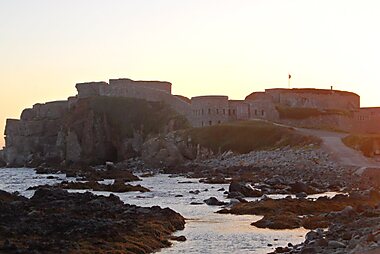
- Castle Cornet is a medieval castle at the harbour entrance of St Peter Port.
- Hauteville House was the home of the French writer Victor Hugo during his exile from 1856 to 1870. It is now a museum.
- German Occupation Museum World War II tells the story of the German occupation in World War II.
- Little Chapel is a very small chapel decorated with pieces of china, pebbles and shells.
- Sausmarez Manor is a historic manor house with gardens.
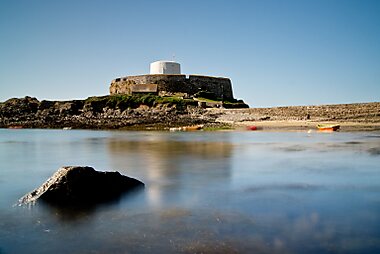
- Fort Grey is a small coastal fort on the west coast.
- Fermain Bay and Cobo Bay are two well-known beaches.
Other islands
- Sark has no cars and no street lights. Visitors walk, cycle or ride a carriage. See the cliff walkway of La Coupée, and the gardens at La Seigneurie Gardens. Sark was named an International Dark Sky Community in 2011, the first in Europe.
- Alderney is a quiet island with old forts, sandy beaches and a small museum. It is a short flight from Guernsey.
- Herm is a small car-free island, about 20 minutes by boat from St Peter Port. It is known for Shell Beach, a hotel, cottages and a campsite.


Guernsey – Plan Your Days
Turn the places from this guide into a real itinerary, with smart routing, time estimates, and everything you need for a perfect trip.

