



Iran
Read this first: the UK, US, Australian and many other governments advise against all travel to Iran. They warn of a serious risk of arbitrary arrest and detention for foreign and dual nationals, sometimes for years. Iran does not recognise dual nationality, so dual nationals are treated as Iranian citizens. Since 2025, strikes on and by Iran have damaged airports, roads and railways across the country, and the airspace can close at short notice. Consular help is extremely limited or unavailable. Travel insurance is usually invalid when you travel against official advice. Check your government's latest advice before you make any plans.
For those who still go, Iran has a very long history. Persian empires left great ruins such as Persepolis and Chogha Zanbil. Later dynasties built tiled mosques, covered bazaars and walled gardens in cities like Isfahan and Shiraz. The land ranges from snowy mountains and green Caspian forests to hot deserts and Persian Gulf islands. Iranians are famous for their hospitality. The country suits experienced travellers with a deep interest in history and architecture who accept strict laws on dress, alcohol and behaviour.




Iran – Planning a Trip?
Build your day-by-day itinerary in the Tripomatic app.


Money & payments
- Foreign cards do not work. Because of international sanctions, Visa, Mastercard and other foreign debit and credit cards cannot be used anywhere in Iran, and ATMs will not accept them. International bank transfers and Western Union are also unavailable.
- Bring all the cash you need for the whole trip, in euros or US dollars, in clean, recent notes. Declare all foreign cash on arrival; undeclared cash can be confiscated.
- Change money only at licensed exchange offices (sarafi). They give the open-market rate. Changing money with people on the street is illegal.
- Rial or toman? The official currency is the rial, but people almost always quote prices in toman. One toman is 10 rials, so a price of "50,000" usually means 500,000 rials. Always ask which unit is meant. A reform to remove four zeros from the currency was approved in 2025, so you may see old and new amounts side by side during the transition.
- Prices change fast. High inflation means rial prices rise often, and amounts you read online go out of date quickly. Some licensed providers sell prepaid tourist debit cards that work on the local card network, which saves carrying large amounts of cash.
Featured Lists


Historic Mosques and Tombs
This collection spans over two millennia of Iranian history, from the monumental rock-cut Achaemenid royal tombs at Naqsh-e Rostam to the intricate tilework of Islamic-era mosques. Significant sites include the 11th-century Seljuk Malek Mosque and the Safavid-era Ganjali Khan complex in Kerman. The list also highlights Qajar architecture in Sanandaj and Arak, alongside prominent regional mausoleums, illustrating the evolution of Persian funerary and religious design through the Achaemenid, Seljuk, Safavid, and Qajar dynasties.
12 places


Tours & Activities
Iran — Map

 Open the interactive map
 Tipping
Tipping is appreciated but rarely demanded. In restaurants, check whether a service charge is already on the bill; if not, leaving about 10% or rounding up is a kind gesture. Taxi drivers do not expect a tip, but rounding up is common. Private guides and drivers on multi-day trips usually expect a tip at the end.
Iranians often practise taarof, a polite custom of refusing payment at first. If a driver or shopkeeper says "it's nothing", insist two or three times before you accept.
round up or ~10 % if no service charge
small note for porters
at the end of a multi-day tour
Electricity
Iran uses Type C/F plugs at 220 V / 50 Hz, the same round-pin sockets as most of continental Europe. Power cuts have become more common in recent years, especially in summer, so carry a power bank.
Language
The official language is Persian (Farsi). Azerbaijani Turkish, Kurdish, Arabic, Luri, Gilaki and Baluchi are also spoken in different regions. English is spoken by some younger people, hotel staff and guides in the big cities, but rarely elsewhere.
Persian uses a version of the Arabic script, and most street signs, menus and bus boards are only in Persian. Main road signs are often also in English. Learn the Persian numerals — prices, bus numbers and phone numbers use them.
Staying connected
- Heavy internet filtering. Many foreign websites and apps are blocked, including major social networks and messaging services. Most Iranians use a VPN to reach them.
- Shutdowns are frequent. In 2026 the authorities imposed long nationwide internet blackouts, and access has only been partly restored. Mobile data and international calls can stop without warning. Do not rely on apps, online maps or messaging for your safety.
- Download before you arrive. Save offline maps, translation packs, bookings and important documents to your phone before entering Iran.
- SIM cards. Local SIM cards (for example from MCI/Hamrah-e Aval or Irancell) are sold at the airport and in city shops. You need to show your passport to buy one.
- Be careful online. Posts that criticise the government or religion can lead to arrest. Your phone may be searched at the border.
Safety & emergencies
Many governments, including the UK, US and Australia, advise against all travel to Iran (checked September 2026). The main risks are:
- Arbitrary detention. Foreign and dual nationals have been arrested on vague espionage or security charges and held for months or years. A UK or US passport, or links to Western countries, can be enough to be detained. Iran does not recognise dual nationality.
- Conflict. Since 2025 there have been strikes on Iran and retaliatory attacks by Iran across the region. Airports, ports, roads, railways and power facilities have been hit, and there is a risk of further escalation. Iranian airspace can close at short notice, leaving travellers stranded.
- Protests. Demonstrations can turn violent, and bystanders have been arrested. Leave any area where a crowd is gathering.
- Very limited help. Several countries, including the US and UK, cannot offer face-to-face consular help in Iran. Register with your embassy if you travel anyway.
- Strict laws. Alcohol, drugs, same-sex relationships and sex outside marriage are illegal, with very severe penalties, including the death penalty for some offences. Women must follow the dress code (see Etiquette). Do not photograph military or government sites, police or protests.
- Petty crime. Pickpocketing and bag snatching happen in busy bazaars. Some thieves pose as plain-clothes police; ask to go to a police station before you show a passport or money.
Health
- Travel insurance. Many foreign insurers exclude Iran or do not pay when you travel against official advice. Check that your policy covers Iran explicitly, including medical evacuation.
- Medical care. Private hospitals in Tehran and other large cities are good, but facilities in rural areas are basic. Hospitals expect payment in cash before treatment, and foreign cards cannot be used.
- Medicines. Pharmacies (daru-khaneh) are common in cities, and some open all night. Bring enough of your own medicine for the whole trip, with a doctor's letter, because sanctions cause shortages of some imported drugs.
- Water. Tap water in the big cities is treated, but most visitors drink bottled water, especially outside cities.
- Heat and air. Summers in the desert and on the Gulf coast are extremely hot. Tehran often has heavy air pollution in winter.
- Vaccinations. Ask a travel clinic about routine vaccines, plus hepatitis A and typhoid.
Visas & entry
Almost all visitors need a visa. Some nationalities, including Turkey, Georgia, Armenia and Azerbaijan, can visit without one. The Kish and Qeshm free zones allow short visa-free visits for most nationalities.
- eVisa and visa on arrival. Most other nationalities apply online through the official portal, then collect the visa at an Iranian embassy or at an international airport. Bring a printed copy of the approval notice. Iran MFA e-visa portal
- UK, US and Canadian citizens cannot travel independently. They must usually book an organised tour with a licensed guide or have a sponsor in Iran, and the visa process is long and unpredictable.
- Passport. It must be valid for at least six months after arrival.
- Israel. You may be refused entry if your passport shows travel to Israel, including stamps from its border crossings.
- Dual nationals who hold Iranian citizenship must enter and leave on an Iranian passport and are treated only as Iranians.
- Customs. Alcohol and pork products are banned. Declare foreign cash on arrival.
Visa and entry requirements change frequently. Verify current requirements with the official immigration authority or your country's embassy before travel.
Etiquette
- Dress code for women. By law, women must cover their hair with a headscarf in public. They must also wear loose trousers or a long skirt and a long-sleeved tunic or coat that covers the hips. The rules apply to foreign visitors, and breaking them can lead to fines or arrest. Holy shrines require a full-length chador, which is usually lent at the entrance.
- Dress code for men. Men should wear long trousers and long-sleeved shirts in public.
- Mixing of sexes. Avoid public displays of affection. Do not shake hands with someone of the opposite sex unless they offer first.
- Religious sites. Remove shoes where locals do, and stay quiet during prayers. Non-Muslims may be kept out of some shrine areas.
- Photography. Ask before you photograph people, especially women. Never photograph military sites, government buildings, police or protests.
- Politics. Avoid discussing politics or religion in public or online.
- Hospitality. Iranians often invite visitors home. Bring a small gift, take off your shoes at the door and accept tea when it is offered.
- Ramadan. During the fasting month, do not eat, drink or smoke in public during daylight hours. Opening hours are shorter during Ramadan.
- Weekly rhythm. Friday is the weekly day off, and many offices also close on Thursday. Shops often close for a long break in the early afternoon and reopen until late evening.
Getting around
Since 2025, strikes have damaged some airports, railways, roads and bridges. Expect cancellations and changing routes, and always check with your tour operator or hotel before a journey. During Nowruz, the Persian New Year from about 21 March, many businesses close for around two weeks and trains, flights and hotels fill up fast.
- By air: Domestic flights link Tehran with most regional cities and are cheap. They save a lot of time on long routes such as Tehran to Shiraz or Mashhad. Flights can be cancelled at short notice when airspace closes.
- By train: Iranian Railways connects Tehran with Mashhad, Tabriz, Yazd, Kerman and other cities. Overnight sleeper trains are comfortable. Book through your hotel or agency, since the booking sites work only with Iranian bank cards.
- By bus: Long-distance buses are cheap and frequent. The VIP buses with wide reclining seats are the most comfortable choice for routes like Isfahan to Shiraz.
- By taxi and private driver: City taxis are cheap. Snapp is the main local ride-hailing app, and international apps do not work. Many visitors hire a driver-guide for trips between cities.
Driving
Most visitors do not drive in Iran. UK, US and Canadian citizens must travel with a licensed guide anyway, and hiring a car with a driver is common and affordable.
- Licence: An International Driving Permit is required alongside your national licence.
- Road safety: Iran has a very high rate of road accidents. Driving is fast and aggressive, and lane markings are often ignored. Avoid driving at night outside cities.
- Accidents: Do not leave the scene of an accident before the police arrive.
- Tolls: Many freeways charge tolls, now mostly collected electronically by number-plate cameras. Ask your rental company or driver how tolls are paid.
- Fuel: Fuel is very cheap and stations are attended. Petrol is benzin, and diesel is gazoil. Pay in cash.
- Checkpoints: Police checkpoints are common near borders and in some regions. Keep your passport ready.
Food & drink
Iranian food is mild, fragrant and built around rice, fresh herbs, saffron and slow-cooked stews. Breakfast is usually flatbread with white cheese, walnuts, herbs, butter, jam and sweet black tea. Lunch is the main meal, and dinner is often late. Try chelow kabab (grilled meat with buttery saffron rice), ghormeh sabzi (a herb and bean stew), fesenjan (chicken in a pomegranate and walnut sauce) and dizi, a lamb and chickpea stew served in a stone pot. The crispy rice from the bottom of the pot, tahdig, is the part everyone wants.
Tea is served everywhere, often with sugar cubes or rock candy (nabat). Popular drinks include doogh, a salty yogurt drink, and fresh fruit juices. Alcohol is illegal for everyone, including visitors; "beer" on menus is non-alcoholic malt drink. For sweets, try faloodeh, a frozen rose-water dessert from Shiraz, and gaz, a nougat from Isfahan. Traditional teahouses (chaikhaneh), often in old bathhouses or bazaars, are good places to try water pipes, tea and simple dishes.
Where to explore
The classic route
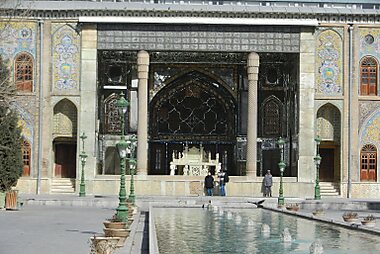
- Tehran is the capital and main arrival point. Visit Golestan Palace, the Grand Bazaar of Tehran and Azadi Tower.
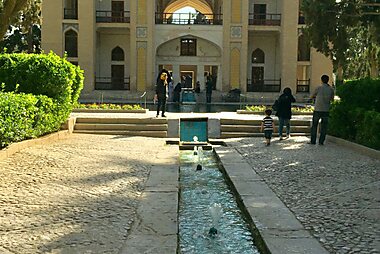
- Kashan, between Tehran and Isfahan, has elegant merchant houses such as Borujerdis House and Tabatabaei House, and the Persian garden of Fin Garden.
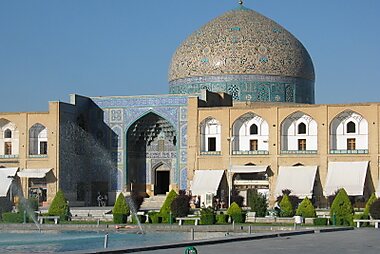
- Isfahan is the highlight for many visitors. Its huge Naqsh-e Jahan Square is lined by Sheikh Lotfollah Mosque and other Safavid monuments. Nearby are Chehel Sotoun Palace, the Jameh Mosque of Isfahan and Vank Cathedral in the Armenian quarter.
- Yazd is a desert city of mud-brick lanes and wind towers. See its Jameh Mosque of Yazd and the Zoroastrian Fire Temple. The old town of Meybod is close by.
- Shiraz is the city of poets and gardens, with the pink-tiled Nasir-ol-Molk Mosque, the Citadel of Karim Khan and the tomb of Saadi at Sa'diyeh. Day trips lead to Persepolis, the royal tombs of Naqsh-e Rostam and the Tomb of Cyrus at Pasargadae.
The south-east
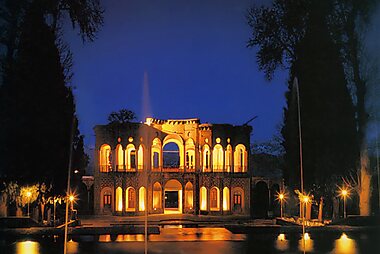
- Kerman is the base for the Shazdeh Garden and the desert rock formations of the Kaluts of the Lut Desert.
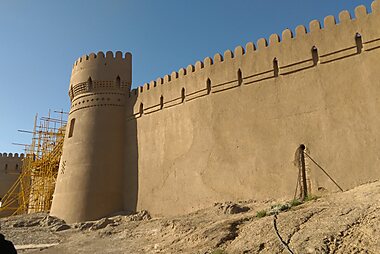
- Bam has the huge mud-brick citadel of Arg-e Bam, badly damaged in the 2003 earthquake and partly restored since.
The north-west and west
- Tabriz has a vast covered bazaar listed by UNESCO, the Tabriz Historic Bazaar, and the Blue Mosque of Tabriz. The Armenian monasteries of Saint Thaddeus Monastery and Saint Stepanos Monastery lie near the northern border.
- In the west, see the ancient inscription of Bisotun and the fire-temple ruins of Takht-e Soleyman.
- In Khuzestan, the ziggurat of Chogha Zanbil and the Shushtar Historical Hydraulic System of Shushtar date back thousands of years.
The north-east, Caspian and Gulf
- Mashhad is home to the Imam Reza shrine, the most important pilgrimage site in Iran.
- Rasht is the gateway to the green, rainy Caspian coast and its rice fields and forests.
- On the Persian Gulf, Bandar Abbas is the port for the colourful Hormuz Island. Qeshm Island has canyons and salt caves, and Kish is a resort island with its own visa-free rules.
Iran – Plan Your Trip
Pick the places you want to see and Tripomatic turns them into a day-by-day route, with smart routing, time estimates, and everything you need for a perfect trip.




