



Lebanon
Lebanon is a small country on the eastern Mediterranean coast that packs remarkable variety into a short drive. In winter, a visitor can ski in the mountains and swim in the sea on the same day. The capital, Beirut, mixes a busy seafront and restaurant scene with visible reminders of a long civil war. Away from the capital, the country holds Roman temples at Baalbeck Ruins, ancient Phoenician ports, and mountain villages perched above snow-covered peaks.
Lebanon suits travelers who want history, food, and dramatic scenery close together, rather than a beach-resort trip. The cedar trees at Cedars of God Forest are mentioned in the Bible and have symbolized the country for thousands of years. The country is still recovering from a severe financial crisis. Political tension flares up from time to time, so check current travel advisories before a trip. Most visits to the main tourist areas pass without incident.



Lebanon – Planning a Trip?
Build your day-by-day itinerary in the Tripomatic app.


Money & payments
Lebanon's economy has been largely dollarized since its 2019 financial crisis. Many hotels, tour operators, and higher-end restaurants quote prices in US dollars and prefer payment in dollar cash. Smaller shops, taxis, and local markets often deal only in Lebanese pounds, so carry both currencies in small denominations. ATMs are common in cities but often dispense only dollars, with unpredictable fees, so bring some cash from home.
A modest daily budget covers casual meals and shared taxis; a mid-range trip adds hotel comfort and sit-down restaurant meals.
Featured Lists


Tours & Activities
Lebanon — Map

Tipping
Tipping is customary but rarely mandatory outside of hotels and guided tours. Round up taxi fares, and leave a tip at restaurants when service is not already added to the bill. Tour guides commonly expect a small tip per person.
5-10% if not already added to the bill
a dollar or two for porters and housekeeping
round up the fare
a few dollars per person
round up or a small tip
Electricity
Lebanon uses a mix of Type A, B, C, and G electrical outlets at 220 V and 50 Hz. Power cuts are frequent even in Beirut, so most hotels and many buildings run on generators that switch on automatically during outages.
Language
Arabic is Lebanon's official language. French and English both appear widely on signs and menus, especially in Beirut and other tourist areas, where English is usually enough to get by. Arabic script reads right to left, so following street signs takes more attention than in Latin-script countries.
Staying connected
Prepaid SIM cards from Alfa or touch, Lebanon's two mobile operators, are sold at the airport and in shops across the country. Bring a passport, since registration is required. Coverage is reliable in cities but can drop in mountain villages and during the power cuts that also affect fixed-line internet.
Safety & emergencies
Most trips to Lebanon's main tourist areas — Beirut, the coast, and the mountains — pass safely, but the security situation can change quickly. Some border areas and parts of the south and the Bekaa Valley see periodic unrest; check current travel advisories before planning a route there. In cities, petty theft and taxi overcharging are the most common issues for tourists. Agree on a fare before getting in, or use a ride-hailing app.
Health
Tap water is not reliably safe to drink; stick to bottled or filtered water, including for brushing teeth outside major hotels. Pharmacies are common in cities, marked by a green cross sign, and many pharmacists speak English or French. No vaccinations are mandatory for entry, but routine vaccines and, depending on your trip, hepatitis A and typhoid are commonly recommended; check with a travel clinic before departure.
Visas & entry
Passport holders from many countries, including the EU, UK, US, Canada, and Australia, can get a visa on arrival. This covers stays of up to a month. Travelers whose passports show any evidence of travel to Israel, and citizens of Israel, are refused entry. Longer stays, or travelers from countries without visa-on-arrival access, need to arrange a visa through a Lebanese embassy before departure.
Visa and entry requirements change frequently. Verify current requirements with the official immigration authority or your country's embassy before travel.
Etiquette
Dress modestly at mosques and churches, covering shoulders and knees; women may need a headscarf at some mosques. Lebanon's Christian, Sunni, Shia, Druze, and other communities live closely together, so avoid casual comments about religion or politics. Greetings are warm, typically a handshake, or a kiss on each cheek between people who already know each other. Hospitality matters: accepting an offer of coffee or food is polite, and a host may insist you eat more than you planned. Bargaining is normal in souks and markets but not in shops with marked prices.
Holidays & opening hours
Lebanon observes both Christian and Muslim holidays. Banks, government offices, and some shops close around several dates through the year, and business hours often shorten during Ramadan.
Shops generally open late morning and stay open into the evening, with a quieter stretch in the early afternoon. Friday and Sunday are the main rest days for Muslim and Christian communities respectively, so some businesses close on one day rather than both.
Getting around
- By shared taxi ("service"): the main way locals get around within cities and between nearby towns; flag one down and confirm the destination and fare before getting in, since routes are informal rather than fixed lines.
- By private taxi or ride-hailing app: Uber and Bolt operate in Beirut and other cities; for a regular taxi, agree on the fare in advance.
- By intercity bus and van: independent minibuses connect Beirut to Tripoli, Byblos, Sidon, Tyre, and Zahle from informal stations; there is no national passenger rail network.
- By rental car: a practical way to reach mountain towns and the Bekaa Valley; see Driving below for road conditions.
Driving
- Key rules: carry your license and passport; an International Driving Permit is recommended. Mountain roads can be narrow and unlit, and local driving is more assertive than in Western Europe.
- Congestion: Beirut's streets get heavily congested at rush hour, and checkpoints can add delays; allow extra time.
- Parking: paid valet parking is common outside restaurants and hotels in the capital; street parking elsewhere is informal and usually free.
- Fuel: stations are staff-attended, not self-service, and cash is more reliable than cards; look for pumps labeled Benzine (petrol) or Mazout (diesel).
Food & drink
Lebanese meals are built around meze — a spread of small shared dishes eaten with flatbread, ordered together rather than as separate courses. A weekend lunch can stretch for hours, moving from cold dishes like hummus and tabbouleh to grilled meats, finished with coffee and something sweet. Breakfast is often lighter: manakish, a flatbread topped with za'atar or cheese, eaten on the way to work alongside strong Arabic coffee.
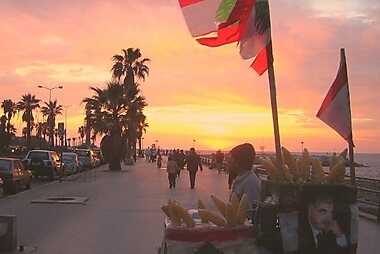
Street food is easy to find in every town: wraps of shawarma or falafel, and snacks sold from carts along The Corniche in Beirut. Bakeries sell baklava and other syrup-soaked pastries by weight. Arak, an anise spirit mixed with water and ice, is the traditional drink to accompany a meze meal, alongside wine from vineyards in the Bekaa Valley.
Most everyday eating happens at small, family-run restaurants and street stalls rather than formal dining rooms. Eating out is a normal, affordable part of daily life, not an occasional treat.
Where to explore
Lebanon's main draws lie along a short stretch of Mediterranean coast and the mountains just behind it.
The coast
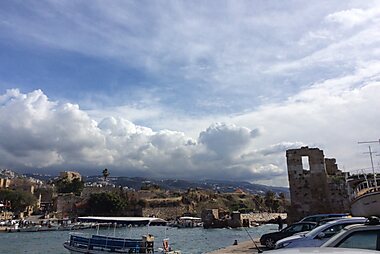
Beirut is the natural base for a first visit, with its seafront The Corniche, the rock formations at Pigeon Rocks, and the National Museum of Beirut. A cable car from the resort town of Jounieh climbs to Our Lady of Lebanon, a hilltop shrine with wide coastal views. North along the coast, Byblos is an ancient Phoenician port with a Byblos Castle. It is considered one of the world's oldest continuously inhabited towns. Batroun is a smaller coastal town known for its old souk and beach clubs. South of the capital, Sidon keeps a 13th-century Sidon Sea Castle. Tyre has a Roman-era Tyre Hippodrome. North, Tripoli is Lebanon's second city, with a large medieval souk and the Citadel of Raymond de Saint-Gilles.
Baalbek and the Bekaa Valley
Inland, Baalbek holds Baalbeck Ruins, among the best-preserved Roman temple complexes anywhere. The surrounding Bekaa Valley, centered on Zahle, is Lebanon's wine country and its most productive farmland.
The mountains
Bcharre, high in the north, sits near the Cedars of God Forest and the cliffside monasteries of Qadisha Valley. Ski resorts operate above towns like this from December to April, within a couple of hours of the coast. In the Chouf Mountains south of Beirut, the 19th-century Beiteddine Palace and the cedar woodland around Al Shouf Cedar Nature Reserve entrance make an easy day trip from the capital.
Lebanon – Plan Your Trip
Pick the places you want to see and Tripomatic turns them into a day-by-day route, with smart routing, time estimates, and everything you need for a perfect trip.




