



Nigeria
Nigeria is Africa's most populous country, with more than 200 million people and over 250 ethnic groups. Most visitors come for culture rather than classic sightseeing: music, art, fashion, food and big festivals. The south is mostly Christian and humid, with rainforest, lagoons and the Atlantic coast. The north is mostly Muslim, drier and older in feel, with walled cities and savanna.
Nigeria suits confident, independent travelers, business visitors and people visiting friends or family. It is not an easy first trip to Africa. Distances are long, roads are hard, and security varies a lot by region. Many visitors base themselves in Lagos and add short trips to nearby Yoruba towns. Plan with a local contact where you can.



Nigeria – Planning a Trip?
Build your day-by-day itinerary in the Tripomatic app.


Money & payments
The naira is the only legal currency for everyday payments. Nigeria is still largely a cash economy outside big hotels and upmarket restaurants. Most local shops, markets, buses and street food stalls want cash or a bank transfer. Card fraud and skimming are common, so use foreign cards only in major hotels and carry enough naira for each day.
- ATMs: common in Lagos, Abuja and other big cities, but less reliable elsewhere. Use ATMs inside banks or hotels, in daylight.
- Exchange: US dollars, British pounds and euros are easy to change. Bring clean, recent notes. Only change money at banks, hotels or licensed bureaux de change.
- Costs: a budget traveler can manage on simple guesthouses and local food. Mid-range hotels in Lagos and Abuja are expensive for what you get, and security adds to the price.
Featured Lists

Tours & Activities
Nigeria — Map

 Open the interactive map
 Tipping
Tipping is appreciated but rarely demanded. Check restaurant bills first, as upmarket places often add a service charge and VAT. Drivers and guides you hire for a day or more expect a tip at the end. Small cash tips for hotel porters and security staff are common.
5–10 % if no service charge
₦500–2,000 for porters
₦5,000–10,000 per day
round up
Electricity
Most sockets are British-style, with some older round-pin sockets. Power cuts are frequent, and most hotels and businesses run generators, so a power bank is useful.
Language
English is the official language and is used in government, business, signs and schools. You can travel the whole country in English. On the street you will also hear Nigerian Pidgin, an English-based language that many people use every day. The three largest local languages are Hausa in the north, Yoruba in the southwest and Igbo in the southeast. A greeting in the local language is always welcome.
Staying connected
- SIM cards: MTN and Airtel have the widest coverage, with Glo and 9mobile as alternatives. SIM registration is mandatory, so bring your passport to an official operator shop. Street sellers may offer pre-registered SIMs; avoid them.
- eSIM: travel eSIMs work in Nigeria and save the registration step, but data is usually more expensive than a local SIM.
- Coverage: 4G is good in cities and weak or absent in many rural areas.
Safety & emergencies
Safety is the biggest planning question in Nigeria. Risks differ greatly between regions, and some areas are too dangerous for tourists. Kidnapping for ransom happens in many parts of the country. Terrorist groups are active in the northeast. Many foreign governments advise against all travel to several northern states and to riverine areas of the Niger Delta. Check your government's travel advice for each state before you plan a route.
In cities, the main issues are armed robbery, phone snatching and carjacking. Online scams are also common.
- Do not travel by road after dark between cities.
- Use a trusted driver or a ride-hailing app instead of taxis hailed on the street.
- Keep your phone out of sight in traffic, and keep car windows closed.
- Stay calm and polite at police and military checkpoints, and carry a copy of your passport.
The national emergency number can be unreliable, and there is no national ambulance service. Save the numbers of your hotel, a local contact and a private clinic.
Health
- Yellow fever: a vaccination certificate is required to enter Nigeria. Get the vaccine at least 10 days before you travel.
- Malaria: the risk is high everywhere, all year. Take antimalarial tablets and use insect repellent, especially in the evening.
- Water: do not drink tap water. Bottled water is cheap and sold everywhere.
- Medical care: good private hospitals exist in Lagos and Abuja, but they expect payment up front. Care outside big cities is basic. Get travel insurance that covers medical evacuation.
- Pharmacies: easy to find in towns. Buy from established pharmacies, as fake medicines are a known problem.
Visas & entry
Most visitors need a visa. Citizens of ECOWAS countries in West Africa and a few other nationalities can enter visa-free. Everyone else applies online for an eVisa before travel; the old visa-on-arrival system ended in 2025. Approved eVisas arrive by email, usually within 48 hours. Print it and show it at the airport, where officers add a visa endorsement to your passport.
Your passport should be valid for at least six months. You also need your yellow fever certificate.
Visa and entry requirements change frequently. Verify current requirements with the official immigration authority or your country's embassy before travel.
Etiquette
- Greetings matter: always greet people before you ask a question. Use titles such as "Sir", "Ma", "Chief" or "Alhaji" with older people.
- Respect for age: elders are served first and addressed formally. Among the Yoruba, younger people may bow or curtsy to elders.
- Right hand: use your right hand to eat, give and receive things.
- Dress: people dress smartly in cities. Wear modest clothes in the north and in mosques and churches, covering shoulders and knees. Women should cover their hair in mosques.
- Photography: ask before you photograph people. Never photograph police, soldiers, airports, bridges or government buildings.
- Bargaining: expected in markets and with motorbike and taxi drivers. Keep it friendly.
Holidays & opening hours
On public holidays, banks and government offices close, and roads out of big cities get very busy. The Muslim holidays Eid al-Fitr and Eid al-Adha are also national holidays; their dates follow the lunar calendar and are announced shortly before.
Shops and markets usually open from morning until early evening, Monday to Saturday. Many businesses close or open late on Sunday in the south. In the north, many people stop work for Friday midday prayers.
Getting around
- By air: the most practical way to cover long distances. Domestic flights link Lagos and Abuja with most regional capitals. Delays and cancellations are common, so leave spare time.
- By train: modern standard-gauge trains run between Lagos and Ibadan and between Abuja and Kaduna. They are comfortable and cheap, but book ahead. Check travel advice for Kaduna State before using the Abuja line. Nigerian Railway Corporation booking
- By bus: large coach companies run between cities. They are cheap, but road accidents are frequent. Travel only in daylight.
- In cities: ride-hailing apps work well in Lagos and Abuja. Motorbike taxis (okada) and tricycles (keke) are common, but crashes are frequent and some areas ban them.
Driving
Most visitors hire a car with a local driver rather than driving themselves. This is not expensive, and it is much safer.
- Road conditions: many roads have deep potholes, and heavy trucks and unlit vehicles are common. Lagos traffic jams, called go-slow, can last hours.
- Night driving: avoid driving outside cities after dark. Crime and accident risks rise sharply.
- Checkpoints: police, army and road safety officers stop cars often. Have your licence, car papers and passport ready.
- Documents: bring an International Driving Permit with your home licence.
- Fuel: stations are attended. Petrol is labelled PMS and diesel AGO. Pay in cash or by bank transfer, and expect shortages from time to time.
- Electric vehicles: there is almost no public charging network.
Food & drink
Nigerian food is filling, spicy and built around starches and rich soups. Breakfast is often akara (bean fritters) with pap, a thin corn porridge, or bread with tea. Lunch is the main meal. A typical plate is a "swallow" such as pounded yam, eba or amala, eaten by hand with a soup like egusi (ground melon seed) or ewedu. Jollof rice is the national favorite at parties, often served with fried plantain and chicken.
Street food is excellent. Try suya, spicy grilled meat skewers sold at night, and puff-puff, sweet fried dough balls. Pepper soup is a light, very spicy broth that many people eat in the evening with a cold beer. Popular drinks include Chapman, a fruity mocktail, zobo made from hibiscus flowers, and fresh palm wine in the south.
Locals eat at a buka or "mama put", simple canteens where you point at dishes in pots. These are cheap and full of flavor. Ask for less pepper if you are not used to strong chilli.
Where to explore
Lagos and the southwest
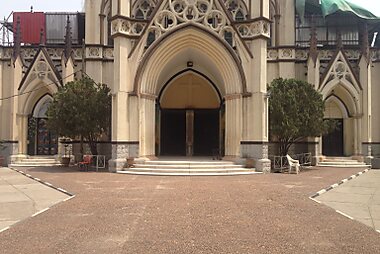
Lagos is the country's largest city and cultural center. Lagos Island is the historic heart, with markets, colonial buildings and the busy business district. Badagry, near the border with Benin, has museums on the history of the transatlantic slave trade. Epe sits on the lagoon east of the city.
Inland, Abeokuta South covers central Abeokuta, a city known for nearby Olumo Rock and adire (indigo-dyed) cloth. Ibadan North is part of Ibadan, one of the largest cities in Nigeria and an old Yoruba center. Osogbo is the gateway to the Osun-Osogbo Sacred Grove, a UNESCO World Heritage Site. The granite hills of Idanre have an old hilltop town reached by more than 600 steps, and Ado-Ekiti is the base for the Ikogosi warm springs.
The southeast
Calabar Municipal is the center of Calabar, a relaxed, green city known for its December carnival and colonial history. From there you can reach Obudu and the cool Obudu Plateau nearby, as well as Cross River National Park - Okwangwo Division, home to rare primates. Okomu National Park in Edo State protects one of the last large rainforest areas in the south.
The north
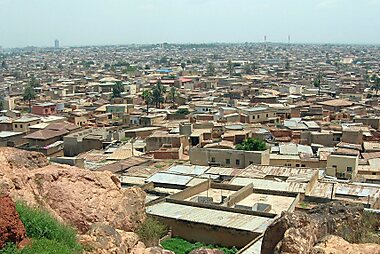
Kano Municipal is the old center of Kano, one of West Africa's oldest trading cities. It has old city walls and indigo dye pits. Several foreign governments advise against all but essential travel to Kano State and much of the north, so check the latest advice first.
Nigeria – Plan Your Trip
Pick the places you want to see and Tripomatic turns them into a day-by-day route, with smart routing, time estimates, and everything you need for a perfect trip.


Related destinations


Data: © OpenStreetMap contributors, Wikidata, Wikipedia, Tripomatic, Official websites, geoBoundaries (CC BY 4.0). Tours by GetYourGuide. We earn commission from bookings. Travel guide generated with AI.