



Panama
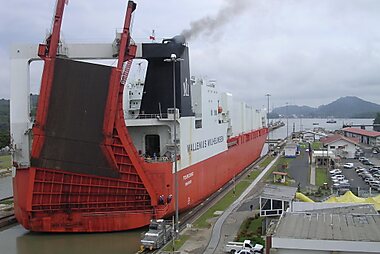
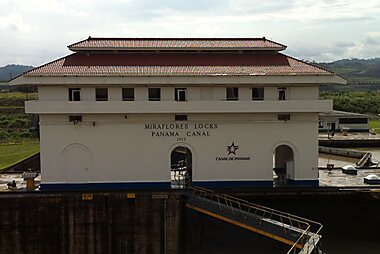
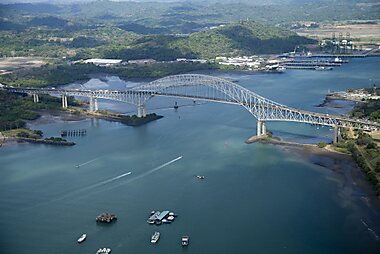
Panama is a narrow bridge of land between North and South America, with the Pacific Ocean on one side and the Caribbean Sea on the other. The Panama Canal cuts straight through the country, and cargo ships pass within sight of the capital's skyscrapers. France began digging the canal in 1881, the United States finished it in 1914, and Panama has run it since 1999.
Away from the canal, Panama has cloud forests, coffee highlands, two very different coastlines, and Indigenous territories that govern their own land, including the Guna people's islands in the Caribbean. It suits travelers who want variety in one trip: watch a ship rise through a lock in the morning, then reach a jungle lodge or a Caribbean beach the same day.

Panama – Planning a Trip?
Build your day-by-day itinerary in the Tripomatic app.
Money & payments
Panama's official currency is the balboa (PAB), but it is pegged 1:1 to the US dollar and the two circulate side by side. Only balboa coins exist — banknotes are US dollar bills, so a $1 bill and a 1-balboa coin are worth exactly the same. ATMs dispense US dollars.
Cards are accepted at most hotels, restaurants, and shops in Panama City and other tourist areas. Carry small bills and coins for rural buses, local markets, and small towns, where cash is still the norm.


Featured Lists

Tours & Activities
Panama — Map

 Open the interactive map
 Tipping
Tipping in Panama is appreciated but rarely obligatory. Restaurants in cities often add a 10% service charge to the bill; if they don't, leaving 10% is normal. Round up the fare for taxis rather than adding a large tip. Tour guides and hotel staff who go out of their way are usually tipped a few dollars.
10%, often already added to the bill
round up
$1-2 per bag or per night for housekeeping
$5-10 per day
Electricity
Panama uses the same plug types and voltage as the United States, so most North American devices need no adapter.
Language
Spanish is Panama's official language and the one you will need outside the main tourist areas. English is widely spoken in Panama City, in the former Canal Zone communities, and along parts of the Caribbean coast, where many people also speak Guna or other Indigenous languages. In smaller towns and rural areas, plan on using Spanish.
Staying connected
Prepaid SIM cards are sold at the airport and at phone shops in most cities; eSIMs can be bought online before you arrive. Bring your passport — Panama requires ID to register a SIM card, and the process can take a few minutes at the counter. Coverage is reliable in cities and along the Pan-American Highway, but thins out in Guna Yala and the Darién region.
Safety & emergencies
Panama is generally safe for visitors who take normal precautions. Petty theft and bag-snatching happen in crowded parts of Panama City, including Casco Viejo and the bus terminals, so keep valuables out of sight. Some neighborhoods of Panama City and Colón are best avoided at night, and the Darién region near the Colombian border is not a tourist destination — check official travel advisories before heading toward any border area.
Health
Tap water is safe to drink in Panama City and most of the country; in rural areas and on small Caribbean islands, stick to bottled or filtered water. Pharmacies (farmacias) are common in cities, can advise on minor ailments, and some in Panama City stay open 24 hours. No special vaccinations are required for most travelers, though a yellow fever certificate may be requested if you are arriving from certain countries — check current requirements with a travel clinic before you go.
Visas & entry
Citizens of the United States and Canada can enter Panama without a visa for up to 180 days, and citizens of the European Union and many other countries for up to 90 days. Panama sometimes asks for proof of onward travel and sufficient funds at the border. Travelers who need a visa can usually apply at a Panamanian consulate before departure.
Visa and entry requirements change frequently. Verify current requirements with the official immigration authority or your country's embassy before travel.
Etiquette
Panamanians are generally warm and informal, though greetings still matter — a handshake, or a light cheek kiss among friends, is normal, and skipping a greeting before getting down to business is considered rude. Casual dress is fine almost everywhere, but cover shoulders and knees in churches. Bargaining isn't common in shops, but it's normal for handicrafts bought directly from Guna or Emberá artisans. Ask before photographing people, especially in Indigenous communities, where some groups restrict or charge for photos.
Holidays & opening hours
Public holidays can close banks, government offices, and many shops. The biggest is Carnival, the week before Ash Wednesday, when much of the country shuts down and Panama City empties out as people head to the beach or to Carnival towns in the interior.
Shops in cities typically open in the late morning and stay open into the evening, and many malls open on Sundays. Smaller-town shops may close for a couple of hours around midday and on Sunday afternoons.
Getting around
- By air: domestic flights connect Panama City's Albrook Airport to Bocas del Toro, David, and other regional airports. Worth it for Bocas del Toro or the Darién, where roads are slow or don't reach.
- By bus: long-distance buses link Panama City to David, Santiago de Veraguas, Colón, and other cities from the Albrook bus terminal. They are cheap and reasonably comfortable. Panama City's Metro and Metrobús network cover the capital itself.
- By boat: boats are the main way to get around Bocas del Toro and Guna Yala, since both are archipelagos with little or no road access.
Buy Metro and Metrobús fares with a rechargeable Metrobús card, sold and topped up at stations. Panama City's Metro, the first in Central America, is a fast way to skip traffic between downtown and Albrook.
Driving
- Speed limits: generally 40–50 km/h in towns, up to 90 km/h on rural roads, and up to 100 km/h on the Pan-American Highway and city expressways.
- Key rules: seatbelts are mandatory for everyone in the car, and using a handheld phone while driving is illegal.
- Tolls: Panama City's Corredor Norte and Corredor Sur expressways are fully electronic — most lanes no longer take cash — so a rental car needs a transponder, usually arranged through the rental company, or the toll gets billed afterward. Roads outside the capital are generally toll-free.
- Parking: metered street parking is common in Panama City; malls and hotels usually have their own lots, paid or free.
- Fuel: stations are attended, not self-service, and take cards or cash. Petrol is sold as "gasolina" (91 or 95 octane); diesel is "diesel."
Food & drink
Panamanian food blends Spanish, Caribbean, and Indigenous influences, with rice, beans, and plantains at the center of most meals. Breakfast is often hojaldre (fried dough) or a tortilla with eggs and coffee. Lunch, the main meal of the day, might be sancocho — a hearty chicken and vegetable soup — or a plate of rice, meat, and salad from a small local eatery known as a fonda. Ceviche is popular everywhere, especially on the coasts, made fresh with corvina or shrimp.
Street food and snacks include patacones (twice-fried plantain), carimañolas (fried yuca stuffed with meat), and empanadas. For something sweet, look for raspao, shaved ice with syrup, sold from carts in almost every town. Seco, a sugarcane spirit, and chicha, a fruit or grain drink, are common alongside Panama's own beers and the coffee grown in the Boquete highlands, prized by specialty roasters worldwide.
Where to explore
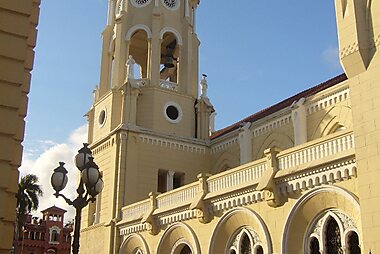
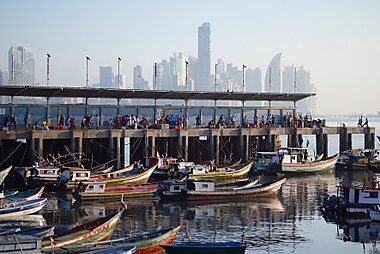
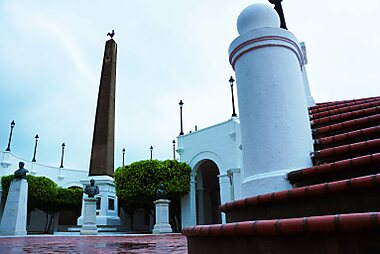
Panama City is the natural starting point, mixing a skyline of high-rises with the colonial streets of Casco Viejo and views over the canal itself.
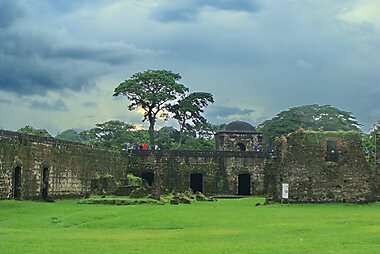
On the Caribbean side, Colón guards the canal's Atlantic entrance and gives access to the colonial forts of Portobelo, once a major Spanish treasure port. Further east, the Guna people govern Guna Yala, better known to visitors as San Blas — a string of small Caribbean islands reachable only by boat or light aircraft.
In the highlands near the Costa Rican border, Boquete is a cool mountain town known for coffee farms and hikes up Volcán Barú, while David is Panama's second city and the main gateway to Chiriquí province. On the Caribbean coast nearby, the Bocas del Toro archipelago draws surfers and divers to its beaches and coral reefs.
Inland, the cool town of El Valle de Antón sits inside an extinct volcanic crater, and the Azuero Peninsula around Chitré and Santiago de Veraguas is the heartland of Panama's folk traditions, from Carnival to handmade Panama hats.
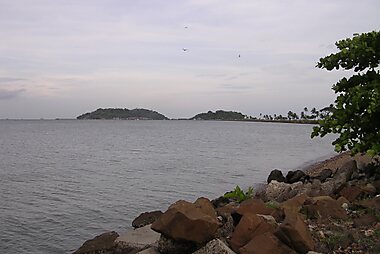
Out in the Pacific, Coiba National Park protects Central America's largest island inside a UNESCO World Heritage marine reserve, prized by divers for its sharks and reef life; boats out to the park leave from the mainland surf town of Santa Catalina. Closer to the capital, the Pearl Islands scatter across the Gulf of Panama, and Contadora Island is the most visited of them — a short flight from Panama City and known for its beaches.
Panama – Plan Your Trip
Pick the places you want to see and Tripomatic turns them into a day-by-day route, with smart routing, time estimates, and everything you need for a perfect trip.




