



Rwanda
Rwanda is a small, landlocked country of green hills, volcanoes and lakes in central Africa. Most visitors come to see mountain gorillas in the Virunga volcanoes. Many also track chimpanzees in the rainforest of Nyungwe Forest National Park and look for lions, elephants and rhinos on a savannah safari in Akagera National Park. Distances are short, main roads are good, and the capital, Kigali, is clean and orderly. You can cover the highlights in about a week.
The 1994 Genocide against the Tutsi shapes the country, and a visit to the Kigali Genocide Memorial helps visitors understand modern Rwanda. The country suits wildlife lovers and travelers who want a well-organised trip. Check official advice first: the US government rates Rwanda at Level 3 ("Reconsider travel") and says do not travel within 10 km of the border with the Democratic Republic of the Congo (DRC). Volcanoes National Park, where the gorillas live, is excluded from this zone if you use official treks with licensed guides. The UK government advises against all but essential travel to parts of Rusizi District near the DRC border. See the safety section for details.




Rwanda – Planning a Trip?
Build your day-by-day itinerary in the Tripomatic app.


Money & payments
Rwanda is still a largely cash economy outside Kigali. Hotels, lodges, supermarkets and better restaurants in Kigali take cards, and mobile money (MTN MoMo and Airtel Money) is how most Rwandans pay. Carry Rwandan francs for markets, small shops, buses and motorbike taxis.
- ATMs: common in Kigali and larger towns, but not always reliable. Withdraw cash before you go to a national park.
- US dollars: lodges, tour operators and park fees are often priced in US dollars. Bring clean notes printed after 2009. Old, torn or marked notes are refused, and notes smaller than USD 100 may be refused at exchange bureaus and hotels.
- Big costs: a gorilla trekking permit costs USD 1,500 per person per day. Permits, park fees and lodges make up most of a trip's budget, while local food and transport are cheap.
Featured Lists


Tours & Activities
Rwanda — Map

 Open the interactive map
 Tipping
Tipping is not a strong tradition in everyday Rwandan life, but it is expected in tourism. Gorilla and chimpanzee guides, trackers, porters and safari drivers rely on tips, given in cash at the end of the activity or trip. In restaurants, check the bill for a service charge. If there is none, a small tip for good service is appreciated. Taxi and motorbike drivers do not expect a tip.
about 5–10 % if no service charge
small tip for porters and staff
cash tip for guides, trackers, porters and drivers
Electricity
Rwanda uses both European round-pin sockets and British-style three-pin sockets, so pack a universal adapter. Some park lodges run on solar power or generators, so a power bank is useful.
Language
Rwanda has four official languages: Kinyarwanda, English, French and Swahili. Almost everyone speaks Kinyarwanda. English is the language of schools and government, and staff in hotels, lodges and the tourism industry speak it well. Many older Rwandans speak French rather than English. A greeting in Kinyarwanda is always welcome.
Staying connected
- SIM cards: MTN and Airtel are the main networks. Buy a SIM at an official operator shop, including at Kigali International Airport. You need your passport to register it.
- Mobile money: with a local SIM you can register for mobile money and pay taxis, shops and restaurants by phone.
- Coverage: 4G works well in Kigali and most towns. It is weaker in the national parks and in deep valleys.
Safety & emergencies
Check official travel advice before you book and again before you leave. The US government rates Rwanda at Level 3 ("Reconsider travel"), citing health, crime and unrest, and says do not travel within 10 kilometers of Rwanda's border with the Democratic Republic of the Congo. The UK government advises against all but essential travel to the parts of Rusizi District within 10 km of the DRC border, including the Rwandan islands in Lake Kivu and Kamembe Airport.
The border zone includes the lakeside towns of Rubavu (Gisenyi) and Rusizi (Cyangugu) and much of the Congo Nile Trail along Lake Kivu. Volcanoes National Park is excluded from the US warning, including the gorilla treks and hikes up Mount Karisimbi and Mount Bisoke. Visit the park only on official Rwanda Development Board (RDB) treks with licensed guides. Fighting in eastern DRC can affect the Rwandan side, and border crossings can close at short notice. Border lines in remote areas are poorly marked.
Crime levels are relatively low, but take normal care:
- Petty crime: bag snatching, theft and burglary happen in Kigali. Avoid walking alone at night and arrange transport in advance.
- Roads: many rural roads are unlit and driving standards are poor. Avoid travel after dark outside Kigali.
- Motorbike taxis: accidents are common. Always wear the helmet the rider gives you.
- Terrorism: attacks cannot be ruled out. Follow local news and the advice of the authorities.
Health
- Yellow fever: if you arrive from a country with yellow fever risk, you must show a vaccination certificate. Many travelers get the vaccine anyway.
- Malaria: malaria is present in Rwanda. Ask a travel clinic about antimalarial tablets, and use repellent and a mosquito net.
- Other vaccinations: see a travel clinic at least 8 weeks before the trip to check recommended vaccines.
- Ebola: there is an Ebola outbreak in the neighbouring DRC and in Uganda. Check current health notices before you travel.
- Water: tap water is not safe to drink. Drink bottled or treated water.
- Altitude: gorilla treks go up to about 2,500–4,000 m, and a hike up a volcano goes higher. The paths are steep and muddy, so good fitness helps.
- Medical care: Kigali has private clinics and pharmacies. Care elsewhere is basic, and serious cases need evacuation, so buy travel insurance that covers it.
Visas & entry
Rwanda has one of the most open visa policies in Africa. Visitors of every nationality can get a visa on arrival, or apply online in advance through the official Rwanda immigration visitors visa page.
- Visa on arrival: a 30-day single-entry tourist visa costs USD 50. A multiple-entry tourist visa, valid for 90 days, costs USD 70.
- Free visas: citizens of African Union, Commonwealth and La Francophonie countries get a free 30-day visa on arrival. This includes citizens of the UK.
- East Africa Tourist Visa: a USD 100 multiple-entry visa for Rwanda, Kenya and Uganda, valid for 90 days. Enter first through the country that issued it.
- Passport: it must be valid for at least 6 months after arrival, with one blank page.
- Plastic bags: Rwanda bans plastic bags. Officials confiscate them at the airport and border, so pack with cloth or paper bags.
Visa and entry requirements change frequently. Verify current requirements with the official immigration authority or your country's embassy before travel.
Etiquette
- Greetings: greet people before asking a question. A handshake is normal, and people often touch their right forearm with the left hand as a sign of respect.
- Dress: Rwandans dress neatly. Cover shoulders and knees in towns and churches. Safari clothing is fine in the parks.
- Genocide memorials: dress modestly, speak quietly and follow the staff's rules. Photography is not allowed inside many exhibitions, so ask first. Some sites display human remains. Do not question or joke about the genocide; denying it is a crime in Rwanda.
- Kwibuka: the national commemoration starts on 7 April, and the first week is a period of mourning. Expect quiet streets and fewer events.
- Umuganda: on the last Saturday of each month, the country does community work from about 7:00 to 11:00. Most shops and services close and traffic is limited. Plan to stay put that morning.
- Photography: do not photograph government buildings, military sites or the police. Ask before you photograph people. Drones need a permit.
- Rules: plastic bags, vapes and e-cigarettes are banned. Littering is frowned upon.
- Gorillas: you must be at least 15 years old to track gorillas. Follow the rangers' instructions. You get one hour with the gorillas, and you must keep your distance.
Holidays & opening hours
On public holidays, government offices and banks close, while most shops, restaurants and hotels stay open. During the week after 7 April, the start of the genocide commemoration, many events stop and the mood is quiet.
Shops in Kigali usually open from about 8:00 to 20:00, and many open on Sundays. Supermarkets and shops in malls stay open later. On the morning of Umuganda, the last Saturday of the month, most businesses open only after about 11:00. Kigali also holds car-free mornings on the first and third Sundays of the month.
Getting around
Rwanda is small, and most trips combine Kigali, the volcanoes in the north-west, Lake Kivu, Nyungwe in the south-west and Akagera in the east.
- By car with driver: the most common way for visitors to travel. Tour operators provide a 4x4 and a driver-guide. Kigali to Musanze, the base for gorilla treks, takes about 2 to 2.5 hours.
- By bus: comfortable coaches link Kigali's Nyabugogo bus station with all main towns. Buses are cheap and frequent. Buy tickets at the bus company's counter.
- In Kigali: city buses use the Tap&Go card. Motorbike taxis are everywhere and the riders give you a helmet. Agree the fare before you ride.
- By air: RwandAir flies from Kigali to Kamembe. Kamembe Airport is inside the area where the UK government advises against all but essential travel.
- By boat: boats on Lake Kivu link lakeside towns, but much of the lake shore is within 10 km of the DRC border.
Driving
- Licence: carry your national driving licence and an International Driving Permit. After one year you need a Rwandan licence.
- Road conditions: main roads between Kigali and the big towns are paved and in good condition. Rural roads are narrow and winding, and many are unlit. Park roads may need a 4x4 in the rainy season.
- Speed cameras: speed cameras are common and fines are strict. Using a phone without a hands-free kit is illegal.
- Night driving: avoid driving after dark outside Kigali. Pedestrians, cyclists and livestock use the roads.
- Umuganda and car-free days: roads are mostly closed to private traffic on the morning of the last Saturday of each month. Parts of Kigali close to cars on the mornings of the first and third Sundays.
- Tolls: there are no road tolls or vignettes.
- Fuel: stations are attended. You can pay in cash, and often by card or mobile money in towns. Fill up before you head to remote parks.
- Electric vehicles: public charging is very limited outside Kigali, so an EV is not practical for touring.
Food & drink
Rwandan food is simple and filling. Breakfast is often sweet milky tea with bread or porridge. Lunch is the main meal, and many Rwandans eat it at a buffet restaurant. A typical plate combines cooking bananas (ibitoke), sweet potatoes, cassava, rice or beans with a sauce. Isombe, cassava leaves cooked with peanut paste, is a classic. On Lake Kivu, try sambaza, small fried fish.
Goat brochettes, grilled meat on a stick, are the favourite evening snack. Rwandans often eat them with fried potatoes at a bar. Akabenz, fried pork, is another bar favourite. Drink local beers such as Primus and Mützig, or try urwagwa, a traditional banana beer. Ikivuguto is a fermented milk that locals drink cold. Rwanda grows excellent coffee and tea, and you can visit coffee and tea farms near Nyungwe and Huye.
Where to explore
Cities and towns
- Kigali: the capital, spread over green hills. Visit the Kigali Genocide Memorial and the Campaign Against Genocide Museum in the parliament building.
- Musanze: the gateway town for gorilla treks and volcano hikes in Volcanoes National Park.
- Huye: a university town in the south, home to the country's main ethnographic museum. The Murambi genocide memorial is a short drive away.
- Nyanza: the old royal capital, with the King's Palace Museum and its long-horned Inyambo cattle.
- Rubavu (Gisenyi) and Karongi (Kibuye): resort towns on Lake Kivu. Rubavu lies directly on the DRC border, inside the US government's "do not travel" zone.
National parks
- Volcanoes National Park: the home of mountain gorillas and golden monkeys, on the slopes of the Virunga volcanoes such as Mount Sabyinyo and Mount Muhabura. Book gorilla permits early on the official Visit Rwanda gorilla tracking page.
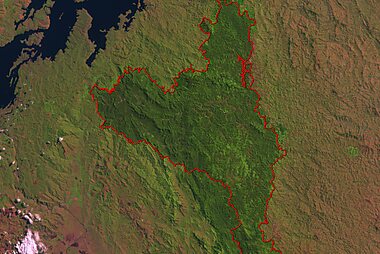
- Nyungwe Forest National Park: mountain rainforest with chimpanzees, many other primates and a canopy walkway.
- Akagera National Park: savannah, lakes and wetlands in the east, with lions, elephants, rhinos and boat trips on Lake Ihema.
Lakes and landscapes
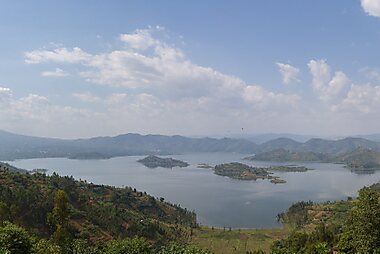
- Lake Kivu: a large lake on the DRC border with beaches and island boat trips. The Congo Nile Trail follows its shore. Much of the shore is within 10 km of the DRC border.
- Lac Ruhondo: one of the quiet twin lakes near Musanze, with views of the volcanoes.
- Rusumo Falls: powerful falls on the Kagera River at the border with Tanzania.


Rwanda – Add to Your Trip
Create a detailed travel itinerary with smart routing, time estimates, and everything you need for a perfect trip.


Data: © OpenStreetMap contributors, Wikidata, Wikipedia, Tripomatic, Official websites, geoBoundaries (CC BY 4.0). Tours by GetYourGuide. We earn commission from bookings. Travel guide generated with AI.