



San Marino
San Marino is a tiny, landlocked republic completely surrounded by Italy, perched on the slopes of Monte Titano. According to legend, a stonemason named Marinus fled religious persecution in the 4th century and founded a small community here that grew into a self-governing state. San Marino is often called the world's oldest surviving republic, still run under a constitution written in 1600.
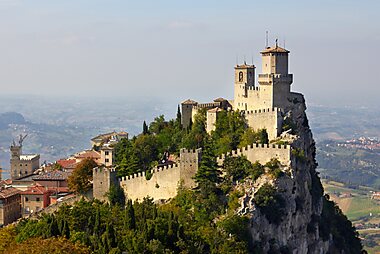
Most visitors come on a day trip from Italy's Adriatic coast, especially nearby Rimini. The historic center sits on top of the mountain, its medieval towers, walls, and viewpoints looking out over the surrounding hills toward the sea. San Marino suits travelers who enjoy walking through a car-free old town and taking in wide views rather than those planning a multi-day stay — a few hours covers the highlights.




San Marino – Planning a Trip?
Build your day-by-day itinerary in the Tripomatic app.
Money & payments
San Marino is not part of the European Union, but it uses the euro as its official currency under a special monetary agreement, so no currency exchange is needed if you're arriving from most of Europe.
ATMs are easy to find in the historic center and in Borgo Maggiore. Budget travelers sticking to cafés and self-guided walking can get by cheaply; costs rise quickly with sit-down restaurant meals and museum tickets.


Featured Lists

Authentic Italian Dining
This selection features five authentic Italian dining venues in San Marino, each offering traditional cuisine with a focus on regional recipes and pizza specialties. The list includes establishments known for their local cultural significance and diverse Italian culinary styles, from classic trattorias to contemporary bars with Wi-Fi amenities.
5 places

San Marino Art & Museums
This collection highlights San Marino's diverse museums featuring archaeological artifacts, artistic collections, and thematic exhibits on migration and curiosities. It also includes a cultural venue offering contemporary art and event spaces, reflecting the country's rich heritage and evolving cultural scene.
5 places Tours & Activities
San Marino — Map

Tipping
San Marino follows Italian tipping habits: a service charge is sometimes already built into the bill, and any extra tip is a way to reward good service rather than an obligation.
round up or ~5-10%
small amount for porters/housekeeping
round up
€5-10 for a private tour
Rounding up the bill or leaving a few euros is appreciated at restaurants and for taxi drivers. Bar staff and hotel porters do not expect anything extra.
Electricity
San Marino uses the same plugs and power as Italy: Type C, F, and L, at 230 V / 50 Hz. Most modern phone and laptop chargers handle this automatically; you'll only need an adapter if you're arriving from outside Europe.
Language
Italian is the official language and what you'll hear in shops, on signs, and in daily life. Staff at the main towers, museums, and hotels in the historic center generally speak enough English to help visitors; it's less common once you're outside the capital.
Staying connected
San Marino is not an EU member, so a European mobile plan's roam-like-at-home allowance may not automatically cover it the way it covers Italy — check with your provider before relying on it for data. Mobile coverage itself is good throughout the historic center and surrounding towns, on the same networks used in neighboring Italy.
Safety & emergencies
San Marino has very little crime, and violence against tourists is essentially unheard of. The main risks are the ordinary kind: pickpocketing in crowds near the towers and main square in peak season, and steep, sometimes slippery cobblestone streets and steps in the historic center, so wear sturdy shoes.
Health
Tap water is safe to drink everywhere in the country. Pharmacies are easy to find in the historic center and in Borgo Maggiore and can help with minor ailments without a doctor's visit. San Marino has no unusual health risks and no required vaccinations for travelers. Because the country sits outside the EU, an EU health insurance card may not be accepted here, so check that your travel insurance covers care in San Marino specifically before you go.
Visas & entry
San Marino has no border checks with Italy, so in practice visitors cross freely as part of a trip to the surrounding region. It is not a Schengen member itself, but because it has no independent border control, entry works in line with Italy's Schengen rules: most nationalities that can enter the Schengen Area visa-free for up to 90 days can visit San Marino the same way, and travelers who hold a Schengen visa for Italy do not need a separate one for San Marino.
Visa and entry requirements change frequently. Verify current requirements with the official immigration authority or your country's embassy before travel.
Etiquette
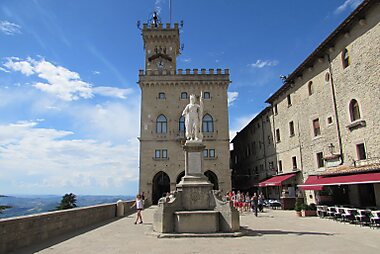
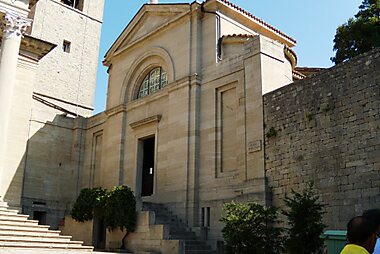
Dress modestly for the Basilica di San Marino and other churches — cover shoulders and knees. The Captains Regent's changing of the guard at Palazzo Pubblico draws a crowd; keep a respectful distance and stay quiet during the ceremony itself. San Marino has no real bargaining culture, so prices in shops and restaurants are fixed.
Holidays & opening hours
Public holidays can close shops, banks, and some restaurants, especially the Feast of San Marino and the Republic on 3 September, the country's national day, when the historic center fills with parades and reenactments in medieval costume.
Many small shops and some restaurants close for a couple of hours in the early afternoon, and Sunday hours are more limited — check ahead if you plan to shop or eat outside the main tourist streets.
Getting around
- On foot: The historic center is compact and mostly pedestrian, but steep and stepped in places — comfortable shoes make the walk between the towers and the main square much easier.
- By cable car: The San Marino Cable Car links Borgo Maggiore, at the foot of the mountain, with the historic center in about two minutes, saving a stiff uphill walk.
- By bus: Local buses connect the capital with Borgo Maggiore and the country's other towns, and a direct line runs to Rimini in Italy; buy tickets on board or from ticket machines.
Driving
- Speed limits: 50 km/h in built-up areas and around 70 km/h on other roads — San Marino has no true motorway.
- Parking: Signed car parks ring the historic center just outside the old walls; public elevators and escalators carry you up into town from them, which is much easier than the steep walk in.
- Fuel: Petrol (benzina) and diesel (gasolio) are usually a bit cheaper than in Italy. Stations are self-service or attended and take cards.
- Tolls: San Marino has no toll roads or vignette system.
Food & drink
San Marino's food is close to that of the surrounding Emilia-Romagna and Marche regions of Italy, built around fresh pasta, cured meats, and local cheeses. A typical day starts with coffee and a pastry, a light lunch, and a longer meal in the evening, often several courses eaten slowly at the table.
Local specialties include piadina, a thin flatbread filled with cheese, cold cuts, or vegetables, and torta tre monti, a layered wafer cake shaped like San Marino's three towers and coated in chocolate. Formaggio di fossa, a cheese aged in underground pits, and cured meats such as prosciutto and salami are common on antipasto plates.
San Marino also makes its own wine on the slopes below the capital, mainly from the Sangiovese grape. Meals are usually eaten at small family-run trattorie rather than chains, and a slow, unhurried lunch or dinner is the norm.
Where to explore
San Marino's tourist life centers on two towns.
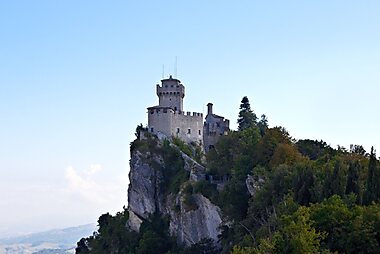
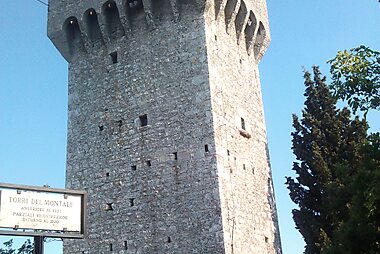
San Marino is the walled historic capital on top of Monte Titano, home to the three medieval towers, the Basilica di San Marino, and the government seat at Palazzo Pubblico. This is where almost all visitors spend their time, walking the old streets and viewpoints inside the walls.
Borgo Maggiore sits at the foot of the mountain and is the country's main market town, linked to the capital by the San Marino Cable Car. It has a lively Thursday market and makes a good base if hotels in the historic center are full.

San Marino – Plan Your Days
Turn the places from this guide into a real itinerary, with smart routing, time estimates, and everything you need for a perfect trip.

