



Singapore
Singapore is a small, densely built island city-state at the tip of the Malay Peninsula, one of the most efficient and orderly places to visit in Southeast Asia. English is the working language, streets are clean and safe, and the public transit system reaches almost everywhere, so first-time visitors find it easy to navigate. The city blends Chinese, Malay, Indian, and colonial influences into distinct historic neighborhoods, alongside a very modern skyline around Marina Bay.
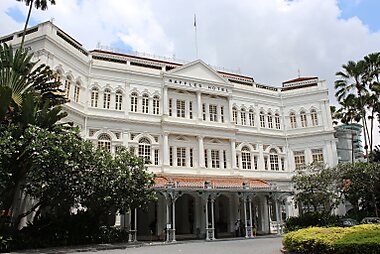
Singapore rewards travelers who enjoy food, architecture, and gardens more than nightlife sprawl or budget backpacking — it is a compact but expensive destination best suited to a focused two-to-four night stay, often combined with a longer Southeast Asia trip. Founded as a British trading post in 1819 by Sir Stamford Raffles, the city grew into one of the world's busiest ports and, since independence in 1965, one of the wealthiest nations in the world.





Singapore – Planning a Trip?
Build your day-by-day itinerary in the Tripomatic app.


Money & payments
Singapore is a highly cashless society, with card and mobile payment accepted almost everywhere, including hawker centers and taxis.
Some older hawker stalls and small shops still prefer cash, so carrying a modest amount of Singapore dollars is useful. ATMs are widespread in malls, MRT stations, and banks.
Featured Lists


Top Museums & Galleries
From national history and art to science and heritage centres, Singapore's best museums in one list.
12 places


Parks & Nature
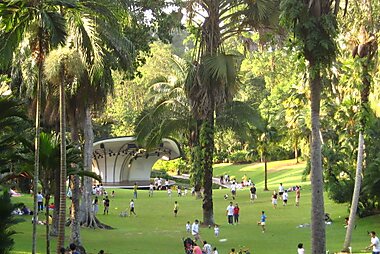
Singapore's City in Nature: UNESCO gardens, futuristic Supertrees, rainforest trails and wetlands.
11 places

Tours & Activities
Singapore — Map

 Open the interactive map
 Tipping
Tipping is not part of Singapore's culture and is not expected anywhere. Many restaurants already add a 10% service charge plus tax to the bill, so an additional tip is not needed.
- Restaurants: not expected; a service charge is usually already included.
- Hawker centers and food courts: no tipping.
- Taxis and ride-hailing: not expected; round up only if you wish.
- Hotels: porters and housekeeping may appreciate a small tip, but it is optional.
not customary; a 10% service charge is often already included
not customary
round up only
small tip, not expected
not required
Electricity
Singapore uses Type G plugs — the same three-pin design as the UK — at 230 V / 50 Hz. Visitors from North America or continental Europe will need an adapter.
Language
English is the language of government, business, and instruction, and is spoken fluently throughout Singapore — navigating the country requires no other language. Malay, Mandarin Chinese, and Tamil are also official languages, reflecting the country's main ethnic communities, and are widely used within each community. Signs are usually in English, with some also in Chinese, Malay, or Tamil depending on the neighborhood.
Staying connected
Prepaid SIM and eSIM plans are sold at the airport, convenience stores, and telecom shops; registering one requires showing your passport. Coverage is excellent island-wide, including underground on the MRT. There are no internet restrictions that affect ordinary browsing for tourists.
Safety & emergencies
Singapore is one of the safest countries in the world for tourists, with very low rates of both violent and petty crime. Its safety comes with strict laws that are actively enforced: littering, jaywalking, and vandalism carry real fines, chewing gum is banned for sale (though allowed for personal use), and drug offenses carry severe penalties, including the death penalty for trafficking. Follow posted rules and you are unlikely to have any issues.
Health
Tap water is safe to drink throughout Singapore — it meets World Health Organization standards. Pharmacies are widely available in malls and neighborhoods, many open late; Guardian and Watsons are the two major chains.
No special vaccinations are required for most travelers, though a yellow fever vaccination certificate is required if arriving from a country with risk of yellow fever transmission. Healthcare quality is excellent but private treatment is expensive, so travel insurance is strongly recommended.
Visas & entry
Singapore allows visa-free entry for most nationalities, including the US, UK, EU, Canada, and Australia, typically for stays of 30 to 90 days depending on nationality. All visitors need a passport valid for at least six months and must complete the SG Arrival Card online before arrival.
Citizens of some countries need a visa in advance, arranged through a Singapore embassy, consulate, or an approved local agent.
Visa and entry requirements change frequently. Verify current requirements with the official immigration authority or your country's embassy before travel.
Etiquette
Singapore's culture blends Chinese, Malay, Indian, and Western influences, and etiquette varies a little by setting, but a few rules apply everywhere.
- Cleanliness rules: littering, jaywalking, and eating or drinking on the MRT are all finable offenses — follow posted signs.
- Religious sites: remove your shoes before entering mosques, Hindu temples, and some Buddhist temples; dress modestly, covering shoulders and knees.
- Hawker centers: it's common practice to "chope" (reserve) a table with a packet of tissues before ordering food.
- Greetings: a handshake is standard in business and social settings across all communities.
Holidays & opening hours
Public holidays reflect Singapore's multicultural population, spanning Chinese, Malay, Indian, and Christian traditions. Most shops and malls stay open on public holidays, though some smaller family-run businesses close, especially during Chinese New Year.
Malls typically open around 10 or 11 am and close at 9 or 10 pm, seven days a week; hawker centers keep longer and more varied hours, with some stalls open only for breakfast or only at night.
Getting around
- By MRT and bus: the MRT subway network is fast, frequent, and air-conditioned, reaching nearly every part of the island; buses fill in the rest. Tap in and out with a contactless bank card, phone, or an EZ-Link card — no need to buy paper tickets.
- By taxi and ride-hailing: metered taxis are plentiful and can be flagged on the street or booked by app; Grab is the dominant ride-hailing app in Singapore.
- On foot: many central areas are very walkable, but the heat and humidity make midday walking tiring — many attractions connect via air-conditioned underground passages and malls.
- By bike: bike-sharing schemes are available, though most locals prefer the MRT for longer trips.
Driving
- Driving side: Singapore drives on the left, as in the UK and Malaysia.
- Key rules: most visitors can drive on their home license (if it's in English) for up to 12 months; an international driving permit is only needed if your license isn't in English. Drink-driving limits are strictly enforced.
- Electronic Road Pricing (ERP): overhead gantries automatically charge a fee at busy times and locations — a rental car usually comes fitted with the device already, so no separate action is needed from a short-term visitor.
- Cost and congestion: car ownership is very expensive here, which keeps overall traffic light — public transit is the practical choice for most visitors, and renting a car is rarely worth it for a short stay.
- Parking: paid parking is standard everywhere, usually via an app or parking coupon; malls and hotels have their own paid parking.
- Fuel: stations are typically full-service or self-service, paid by card.
- Electric vehicles: charging points are increasingly common at malls and car parks.
Food & drink
Food is central to Singaporean culture, and hawker centers — open-air complexes of independent food stalls — are the best place to experience it; UNESCO recognized Singapore's hawker culture as an element of humanity's Intangible Cultural Heritage in 2020. Meals are eaten throughout the day, and it's normal to share dishes or order several small plates rather than one large meal.
National favorites include Hainanese chicken rice, laksa (a spicy coconut noodle soup), and chili crab, alongside Malay dishes like satay and nasi lemak, and Indian dishes like roti prata and biryani. Breakfast is often kaya toast with soft-boiled eggs, paired with strong local coffee (kopi) or tea (teh), sweetened with condensed milk unless you ask otherwise.
Street food culture is strong even outside hawker centers, from bubble tea shops to durian stalls. Alcohol is relatively expensive because of high taxes, so many locals socialize over food rather than drinks.
Where to explore
Singapore is small enough to cover its main areas in a few days, all connected by MRT.
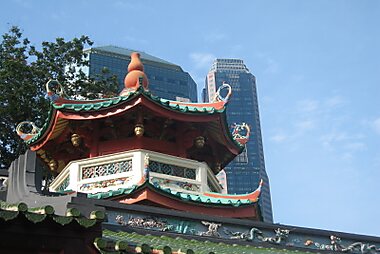
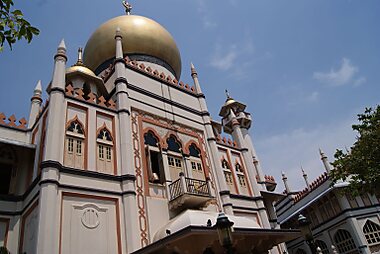
Historic districts: Chinatown centers on Chinese heritage shophouses, temples, and hawker food. Little India is a compact, colorful district of Hindu temples, spice shops, and South Indian food. Nearby, the Kampong Glam area around Arab Street and Masjid Sultan is Singapore's historic Malay-Muslim quarter.
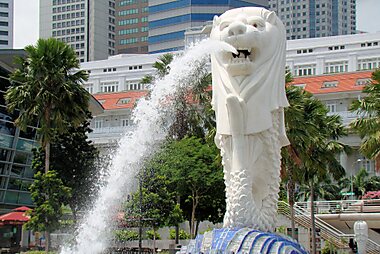
Modern core: Marina Bay is the country's futuristic downtown, home to its skyline, waterfront promenade, and Gardens by the Bay. Orchard is the main shopping district, lined with malls along Orchard Road.
Beyond downtown: Tiong Bahru is a quieter residential enclave known for Art Deco architecture and a well-loved food market. Sentosa is a resort island reached by cable car or a short walk, with beaches, theme parks, and Southeast Asia's Universal Studios. For a slower pace, Pulau Ubin is a rustic offshore island reachable by bumboat, with no high-rises — a rare glimpse of what Singapore looked like decades ago.


Singapore – Plan Your Days
Turn the places from this guide into a real itinerary, with smart routing, time estimates, and everything you need for a perfect trip.




