



Slovenia
Slovenia packs alpine peaks, dense forests, karst caves, and a short stretch of Adriatic coast into a country you can cross by car in a few hours. Ljubljana, the small, walkable capital, sits roughly in the middle, with the Julian Alps and Lake Bled to the northwest, wine-growing hills to the east, and the Adriatic towns of Piran and Koper to the southwest. It is a Schengen and eurozone member, and its road and rail links make it an easy add-on to trips through Austria, Italy, or Croatia.
The country suits travelers who like the outdoors: hiking, lake swimming, cycling, and cave exploring are all within short drives of each other. It also works well as a slower, greener alternative to its larger neighbors, with fewer crowds than the Alps further west and a compact size that rewards a road trip more than a single-city stay.


Slovenia – Planning a Trip?
Build your day-by-day itinerary in the Tripomatic app.


Money & payments
Slovenia uses the euro.
Carry some cash for small guesthouses, farm stays, market stalls, and a handful of mountain huts that do not take cards. ATMs are common in towns and cities; look for ones attached to a bank rather than standalone machines in tourist areas, which tend to charge higher fees. Budget travelers can expect to spend noticeably less than in Western Europe on food and transport, while accommodation in Bled and Ljubljana in peak summer runs closer to Western European prices.
Featured Lists


Castles and Ruins
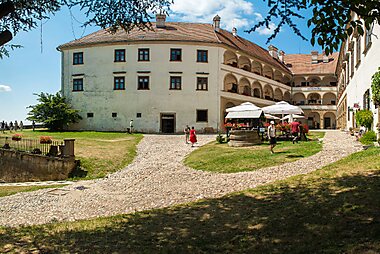
This collection features a diverse range of Slovenian fortifications and manors, from the well-preserved Renaissance halls of Grad Strmol to the medieval ruins of Stari grad Kamnik. Highlights include the 11th-century Gorizia Castle and the Škofja Loka Castle complex, which houses extensive regional museum collections. These sites illustrate the region's strategic history through Romanesque, Gothic, and Baroque architectural styles, offering insights into the noble families and defensive structures of Upper Carniola and the Lož Valley.
19 places
Churches and Places of Worship
Slovenia's spiritual heritage is showcased through diverse sites ranging from the Romanesque rotunda in Selo to the Gothic pilgrimage basilica of Ptujska Gora. This collection includes the wooden Memorial Church of the Holy Spirit on Javorca, a WWI heritage site, and the Pleterje Charterhouse, the country's only active Carthusian monastery. Other highlights feature the fortified church at Hrastovlje with its medieval frescoes and various historic parish churches along the border regions that blend cultural and architectural influences.
18 places
Alpine Huts and Viewpoints
This collection features mountain lodges and observation points across Slovenia's Karawanks, Pohorje, and Julian Alps. Highlights include the high-altitude Ribnica Lodge, the peat bogs of Lovrenška jezera, and the Prešeren Lodge situated just below the summit of Mt. Stol. These locations provide access to historic border passes like Ljubelj, traditional culinary specialties at Dom na Kofcah, and panoramic vistas from the Slavnik and Žlejžn viewpoints.
13 places
Tours & Activities
Slovenia — Map

 Open the interactive map
 Tipping
Tipping is appreciated but not obligatory. In restaurants, rounding up the bill or adding around 10% for good service is common in cities and tourist areas; in small local eateries, rounding up is enough. Bars and cafes do not expect a tip beyond loose change. Taxi drivers are usually tipped by rounding up the fare. Tour guides doing a good job are commonly tipped a few euros per person or 5 to 10% for a longer tour.
round up or ~10%
round up
5-10% or a few euros per person
Electricity
Slovenia uses Type C and F plugs at 230 V / 50 Hz, the standard continental European system, so most phone and laptop chargers work without an adapter.
Language
Slovene is the official language, a Slavic language written in the Latin alphabet, so signage and menus are easy to read even without knowing the words. English is widely spoken in Ljubljana, Bled, and the coastal towns, especially by younger people and anyone working in tourism. In small villages and among older residents, German or Italian may be more useful than English, depending on the region.
Staying connected
EU-regulated prepaid SIMs and eSIMs from operators like Telekom Slovenije, A1, or Telemach are inexpensive and easy to buy at shops or the airport; bring your passport in case the vendor asks for ID. Coverage is strong nationwide, including in the mountains around most trailheads, though signal can drop in remote alpine valleys. There are no content or access restrictions travelers need to plan around.
Safety & emergencies
Slovenia is one of the safer countries in Europe for visitors. Violent crime targeting tourists is rare; the main risks are petty theft and pickpocketing in busy spots like Ljubljana's old town and Lake Bled during peak summer weekends. Normal precautions with bags and valuables are enough.
The bigger safety consideration is in the mountains: weather in the Julian Alps changes fast, and trails to Triglav and other peaks require proper equipment and, above the marked hiking routes, real scrambling experience. Check conditions locally and do not attempt high routes alone or underprepared.
Health
Tap water is safe to drink throughout the country, including straight from many mountain springs and fountains in towns. Pharmacies (lekarna) are widely available in towns and cities, generally open standard weekday and Saturday-morning hours, with a rotating on-call pharmacy in larger towns covering nights, Sundays, and holidays. No special vaccinations are required for most travelers beyond routine immunizations. Anyone hiking in forested or grassy areas from spring through autumn should check for ticks afterward, since tick-borne encephalitis and Lyme disease both occur in Slovenia.
Visas & entry
Slovenia is a full Schengen Area member. Citizens of the EU and EEA can enter freely with a valid ID card or passport. Citizens of the US, UK, Canada, Australia, and many other countries can enter visa-free for stays of up to 90 days within any 180-day period, for tourism or business. Travelers from countries without a visa-free arrangement need a Schengen visa, applied for in advance through a Slovenian embassy or consulate, or the embassy of another Schengen state if Slovenia has no local representation.
Visa and entry requirements change frequently. Verify current requirements with the official immigration authority or your country's embassy before travel.
Etiquette
Slovenians are generally reserved but friendly once engaged; a handshake and direct eye contact are the norm when meeting someone. Dress modestly when visiting churches and monasteries: covered shoulders and knees are appreciated, especially outside major tourist sites. Ask before photographing people directly, particularly in smaller towns and villages.
Slovenia takes its nature seriously: stick to marked trails in Triglav National Park, pack out all litter, and avoid wild camping outside designated sites, since enforcement is active in popular areas like the Julian Alps and around Lake Bled.
Holidays & opening hours
Public holidays close most shops, banks, and many restaurants, and reduce public transport schedules to a Sunday-style timetable. Many smaller shops and some supermarkets also close on Sundays, a contrast to the longer, more flexible hours common elsewhere in Western Europe, so plan grocery runs and errands for weekdays or Saturday.
Getting around
- By train: Slovenske železnice runs an affordable, reasonably reliable network linking Ljubljana with Maribor, Celje, Ptuj, Bled (Lesce-Bled station), and the coast via Divača. It will not reach every village, but it covers the main cities well. Book and check timetables at Slovenske železnice.
- By bus: Long-distance coaches (including Nomago and FlixBus) fill the gaps the rail network misses, including direct routes to Bled, Bohinj, Piran, and smaller alpine towns.
- By air: Domestic flights are not really a factor given the country's small size; road or rail between any two major towns rarely takes more than two to three hours.
- In Ljubljana: city buses run on a rechargeable Urbana card, sold at kiosks, the tourist information center, and vending machines; there is no cash payment on board. The compact historic center is largely closed to private cars and is best explored on foot.
For most visitors combining Ljubljana with the Alps, the coast, and the countryside, renting a car for at least part of the trip makes the most of the short distances between regions.
Driving
- Key rules: headlights must be on at all times, even in daylight. Winter tires or snow chains are mandatory from mid-November to mid-March, or whenever conditions require them. The blood alcohol limit is 0.05%, dropping to zero for drivers under 21 or with fewer than two years of experience.
- Tolls and vignettes: motorways and expressways require a vinjeta (vignette). Since December 2021 this is a digital e-vignette only, tied to the license plate and bought online, at petrol stations, or at border crossings; the shortest option typically covers seven days, priced for the vehicle category.
- Congestion and low-emission zones: Ljubljana's historic center is largely restricted to pedestrians, cyclists, and permitted vehicles only; park on the edge and walk or take a bus in.
- Parking: most town centers use paid, metered or app-based parking (zones are usually color-coded); free street parking is rare in central areas.
- Fuel: stations are typically self-service with card payment accepted almost everywhere. Petrol is sold as neosvinčeni bencin (unleaded) and diesel as dizel.
- Electric vehicles: charging points are increasingly common along motorways and in larger towns, run mainly by Petrol and Gremo na elektriko, with apps needed to start most sessions; costs are usually per kWh or per session.
Food & drink
Slovenian food changes with the region: Alpine dishes with Austrian influence in the north, hearty Balkan-style grilled meats and stews further south and east, and Mediterranean cooking with olive oil, seafood, and pasta along the short Adriatic coast. Breakfast is usually simple, bread with cold cuts or cheese; lunch is often the main meal of the day, especially outside cities.
Look for štruklji (rolled dumplings, sweet or savory), kranjska klobasa (a protected type of sausage), jota (a hearty bean and sauerkraut stew), and potica (a rolled nut cake served at holidays). On the coast, fresh fish and seafood dominate menus. For something sweet, Bled is known for its cream cake, kremna rezina. Wine is a serious local product, especially from the Vipava Valley, Štajerska, and the Primorska hills, and a growing craft beer scene has taken hold in Ljubljana and Maribor.
Locals eat at gostilna (traditional inns) for everyday meals, with restaurants reserved more for special occasions in smaller towns. Farmers' markets, like Ljubljana's Central Market, are good spots for fresh produce, cheese, and quick bites.
Where to explore
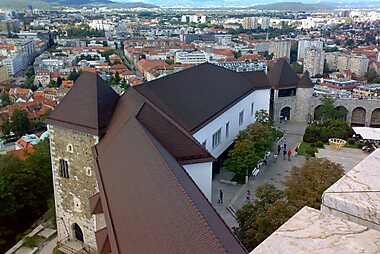
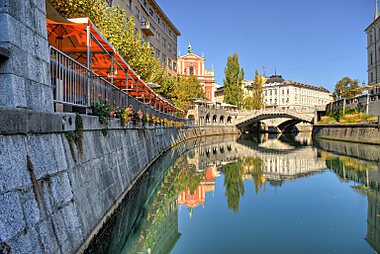
Ljubljana is the natural base for a first visit: a small, walkable capital with a hilltop castle, riverside cafes, and a compact old town.
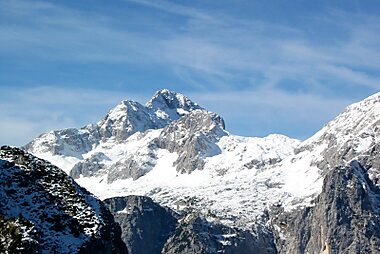
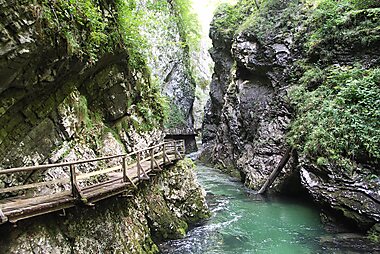
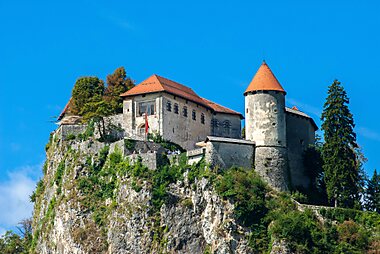
The Julian Alps and their lakes are the country's signature landscape. Bled draws the crowds for its island church and clifftop castle, while Bohinj offers a quieter, less-visited lake nearby. Kranjska Gora is the base for the high mountain roads and ski slopes of Triglav National Park, and the Soča Valley around Kobarid adds turquoise river scenery and World War I history.
On the short Adriatic coast, Piran is a small, car-free Venetian-style old town on a narrow peninsula, and Koper is the larger port city nearby with its own historic center.
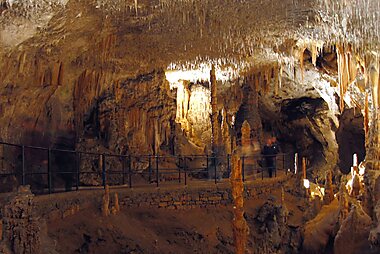
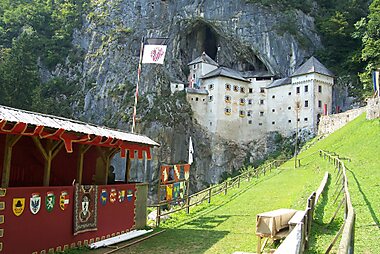
Inland, the karst region holds some of Europe's most visited cave systems: Škocjan Caves, a UNESCO World Heritage Site with the world's largest known underground canyon, and the show caves around Postojna. To the east, Maribor, Ptuj, and Celje anchor Slovenia's wine country; the second of these is one of the oldest towns in the country.
Slovenia – Plan Your Trip
Pick the places you want to see and Tripomatic turns them into a day-by-day route, with smart routing, time estimates, and everything you need for a perfect trip.




