



St. Moritz
St. Moritz sits at 1,822 metres in the Swiss Alps' Engadin valley, beside a lake that turns from deep blue in summer to a frozen white stage in winter. It is where modern winter tourism began: in 1864, hotelier Johannes Badrutt bet a group of English summer guests that autumn in the Alps would be sunnier than they expected, and offered to pay their travel costs if he was wrong. They came, they stayed, and St. Moritz went on to host the Winter Olympics twice, in 1928 and 1948.
Today the resort still draws two different crowds. Skiers come for wide, sunny slopes and a historic bobsled and skeleton scene found nowhere else. Summer visitors come for high-altitude hiking, lake walks, and the same clear light that first made the town famous. Expect a genuinely glamorous reputation and polished hotels, but the mountains and lake around it are the real draw.

St. Moritz – Planning a Trip?
Build your day-by-day itinerary in the Tripomatic app.


When to visit
Winter is the main season here: cold, sunny, and reliably snowy from December to March, best for skiing and the resort's ice sports. Summer (June to September) is much milder and suits hiking, with warm days and cool nights. Spring and late autumn are quiet shoulder seasons when many lifts and hotels close.
Plan around White Turf if you can: for three weekends every February, thoroughbred horses race on the frozen lake in front of the town, a spectacle unique to St. Moritz.
Nights stay well below freezing for most of the winter. Even July and August afternoons rarely feel hot, so pack warm layers whatever the season.
Top sights

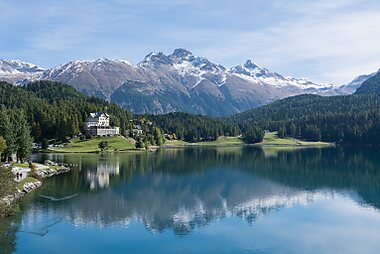
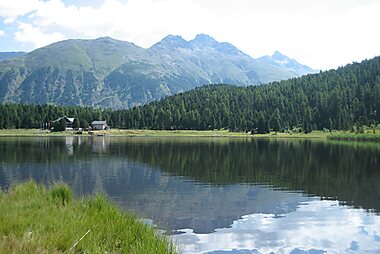
Lake St. Moritz is the heart of the resort, a small alpine lake that hosts polo matches and horse races on its frozen surface every winter. In summer, a path circles the shore for an easy walk with views back to the village.
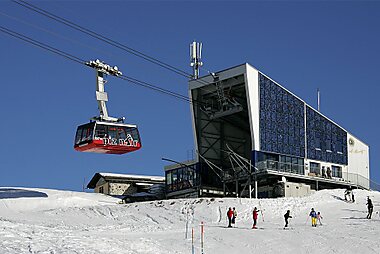
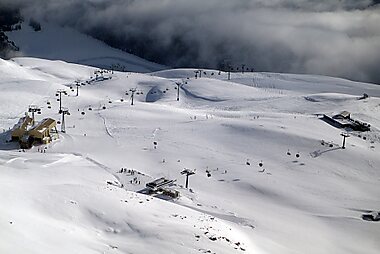
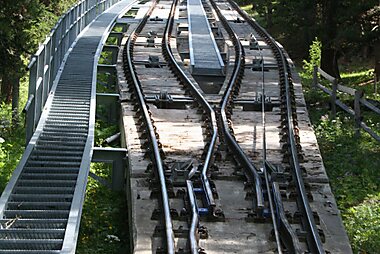
A funicular and cable car climb from the village to Corviglia, the ski area that hosted the alpine events of the 1928 and 1948 Winter Olympics and still has some of the sunniest slopes in the Alps.
From the top station, a short ride continues to Piz Nair, a 3,056-metre summit with a panoramic terrace looking out over the Engadin's chain of lakes.
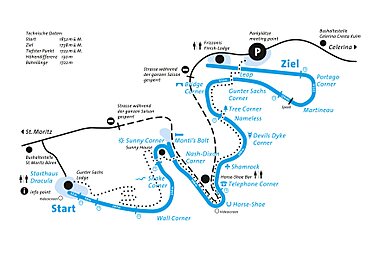
Opened in 1884, Cresta Run is the world's only natural ice track built purely for skeleton racing, rebuilt from scratch by hand each winter.
Nearby, Olympia Bob Run St. Moritz-Celerina has been in continuous use since 1904, making it the oldest bobsled track anywhere and the only one still refrigerated naturally by winter cold.
Segantini Museum is dedicated to the paintings of Giovanni Segantini, the Alpine painter who spent his final years in this valley.
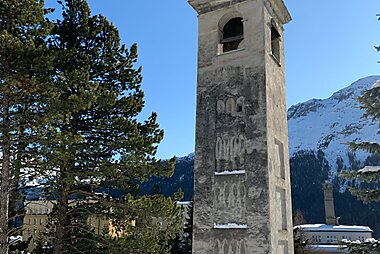
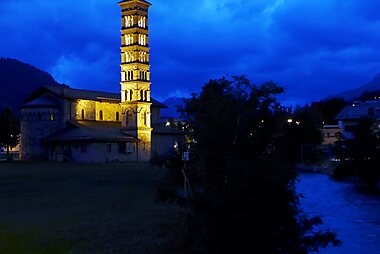
The Leaning Tower of St. Moritz, a 33-metre stump of stone leaning sharply over the main square, is all that survives of a church demolished in the 1890s.
Engadine Museum recreates historic Engadine interiors, with entire wood-panelled rooms moved here from farmhouses across the valley.
Featured Lists


What to experience
St. Moritz's identity comes from its winter sports heritage as much as its scenery, and several of its signature experiences let visitors join in rather than just watch.
- Take a guest ride down Olympia Bob Run St. Moritz-Celerina in a professional-piloted bobsled. No experience is needed, and few other bob runs in the world let visitors do this.
- Toboggan the public run from Muottas Muragl down to Punt Muragl, a winter activity open to everyone, unlike the members-only Cresta Run.
- Ski or walk part of the Engadin Skimarathon route, an annual cross-country race held every March across the valley's frozen lakes.
- In summer, ride a cable car up for lunch on a sun terrace overlooking a glacier, then follow a marked trail back down to the valley.
Tours & Activities
St. Moritz — Map

 Open the interactive map
 Day trips
The Upper Engadin valley is dotted with villages and viewpoints that make easy trips from St. Moritz.
Nearby villages (10-15 min by bus, train, or bike):
- Celerina: quiet and low-key, home to the finish line of the Cresta Run and Olympia Bob Run.
- Pontresina: gateway to the Roseg Valley, a flat, car-free walk beneath glaciated peaks.
- Silvaplana: a lakeside village known for windsurfing and kitesurfing on its reliably windy lake.
Mountain viewpoints (20-40 min by funicular, cable car, or postbus):
- Muottas Muragl: a funicular ride to a panoramic terrace over the Engadin's chain of lakes. Go at sunrise or sunset for the best light.
- Piz Corvatsch: a high cable car above Silvaplana with glacier views and a summer ski slope.
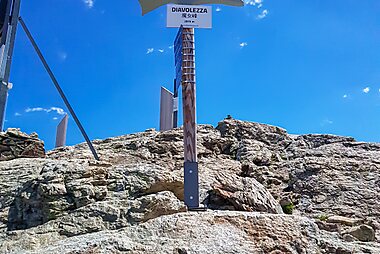
- Diavolezza: a cable car near Pontresina facing the Morteratsch Glacier and Piz Bernina, the highest peak in the Eastern Alps.
Further afield:
Where to explore
St. Moritz sits inside a single valley system that shares hiking trails and a regional bus and rail network with its neighbors.
Samedan is the valley's transport hub, home to the regional airport and the area's main golf course. Sils im Engadin sits at the quiet, western end of the valley's lake chain, a favourite retreat of the philosopher Friedrich Nietzsche, who spent several summers there working.
Getting there
- By air: the nearest airports with scheduled flights are Zurich (ZRH) and Milan Malpensa (MXP), each roughly 3 to 3.5 hours away by train or car, with a change required along the way. St. Moritz's own high-altitude airfield at Samedan handles only private and charter flights, not scheduled passenger service.
- By train: Chur is the main junction for trains from the rest of Switzerland; from there, a UNESCO World Heritage-listed Rhaetian Railway line climbs over the Albula Pass to St. Moritz. The Bernina Express continues this same line south from St. Moritz, crossing open mountain passes to Tirano in Italy.
- By bus: postbuses cross the Julier and Maloja passes to link St. Moritz with central Switzerland and Italy, though both routes can close after heavy snow.
Getting around
- Public transit: local buses link St. Moritz Dorf, St. Moritz Bad, and the neighboring villages. Buy tickets from the machines at stops, or through the SBB Mobile and PostAuto apps before boarding.
- Taxi / ride-hailing: international ride-hailing apps have little presence here. Call a local taxi firm, or ask your hotel to book one.
- On foot / cycling: Dorf sits on a hillside above Bad and the lake; the walk between them takes about 20 minutes downhill. Cycling suits the valley-floor paths around the lakes better than the steep streets of the centre.
Driving
- Is a car worth it?: not for the town itself. St. Moritz is compact and well served by local buses. A car helps for reaching the Julier and Maloja pass viewpoints and villages off the rail line, especially outside peak season when buses run less often.
- Parking: paid garages serve both Dorf and Bad; street spaces are metered and scarce in winter. Many hotels include a space, so check before driving in.
- Restrictions: snow chains or winter tyres are compulsory on mountain passes in winter, and the Julier and Maloja passes can close temporarily after heavy snowfall.
Food & drink
Look for Engadine specialties: capuns, chard leaves stuffed with a bread-and-cheese filling, and pizokel, a rustic buckwheat pasta. Bakeries across town sell Engadiner Nusstorte, a caramel-and-walnut tart that travels well if you want to take one home.
For a meal out, the restaurants and pastry shops along Via Maistra, St. Moritz Dorf's main pedestrian street, cover everything from casual lunches to fine dining.
Safety & health
St. Moritz is very safe; petty crime is rare, though it is worth locking valuables out of sight if you park at a trailhead or ski-area car park, since gear theft does happen occasionally.
The town itself sits at 1,822 metres, and the cable cars go considerably higher — Piz Nair tops 3,000 metres. Take it easy on your first day if you are not used to altitude, since headaches or breathlessness become more likely the higher you go. Sun and glare are stronger here too, so sunscreen and sunglasses matter even on a cloudy day, especially on snow.
History
St. Moritz's mineral spring has drawn visitors since at least the Bronze Age, but the town's modern identity was built in the 19th century. Hotelier Johannes Badrutt is credited with inventing winter tourism here in 1864, and the Kulm Hotel installed the first electric lighting in a Swiss hotel in 1878, a novelty guests came specifically to see.
Winter sport followed close behind: the Kulm Hotel's guests and local residents built the first Cresta Run by hand in 1884, and the Olympia Bob Run St. Moritz-Celerina opened in 1904, both still in use today. That sporting pedigree brought the Winter Olympics here twice, in 1928 and 1948. That is a rare distinction for a town of under 5,000 people.
Country facts
Quick practical facts for Switzerland at a glance:
- Currency
- Swiss Franc CHF CHF · Card payments · Widely accepted
- Emergency numbers
- 112
- Electricity
- 230 V · 50 HzType C / Type J
- Languages
- German, French, Italian, Romansh
- Tap water
- Safe to drink
- Driving side
- Right
- Calling code
- +41


St. Moritz – Plan Your Days
Turn the places from this guide into a real itinerary, with smart routing, time estimates, and everything you need for a perfect trip.




