



The Gambia
The Gambia is the smallest country on mainland Africa. It is a narrow strip of land along both banks of the River Gambia, and Senegal surrounds it on three sides. The short Atlantic coast has sandy beaches, and most visitors stay in the resort strip near Kololi and Bakau. English is the official language, and the country calls itself "the Smiling Coast of Africa".
Beyond the beach, the river is the main attraction. Boat trips go to Kunta Kinteh Island, a UNESCO World Heritage Site linked to the Atlantic slave trade and to Alex Haley's book Roots. Further upriver are the Wassu stone circles, chimpanzee islands and quiet river towns. The country suits winter sun seekers, birdwatchers and travellers interested in West African history, who are happy with simple roads and a slow pace.





The Gambia – Planning a Trip?
Build your day-by-day itinerary in the Tripomatic app.
Money & payments
The Gambia is largely a cash economy. Plan to pay cash for markets, taxis, shared minibuses, guides, boat trips and most small restaurants.
- Cards: larger hotels, supermarkets and some restaurants in the resort area accept cards, but card machines often fail. Always carry cash as a backup.
- ATMs: cash machines are found in Banjul, Serrekunda Central and the resort area. They are rare upcountry, so take enough dalasi before you travel inland.
- Foreign cash: US dollars, euros and pounds are easy to change at banks and bureaux de change. Some tourist businesses accept them directly.
- Airport fee: carry cash for the USD 20 airport security fee (see Visas and entry). You can pay in dollars, euros, pounds or dalasi, and the card machines are often out of service.
- Bargaining: prices at markets and craft stalls, and taxi fares, are negotiable. Agree the price before you start.


Tours & Activities
The Gambia — Map

Tipping
Tipping is not required, but it is appreciated, because wages are low. Tip in cash, and only where the service was good.
- Restaurants: check the bill for a service charge before you add a tip.
- Guides and boat crews: give the tip to the guide directly at the end of the trip, so it reaches the crew.
- Taxis: agree the fare before the ride instead of tipping.
about 10 % if no service charge
small tip for porters and cleaners
agree the fare first; round up if you wish
a tip for a good day or boat trip
Electricity
The Gambia uses British-style Type G sockets at 230 V / 50 Hz. Power cuts happen, so a power bank and a small torch are useful, especially away from the larger hotels.
Language
English is the official language. It is used in government, schools, signs and the tourist trade, so English speakers can travel without a phrasebook.
At home and in the market, most people speak a local language. Mandinka is the most widely spoken, while Wolof is common in Banjul and the coastal towns. Fula, Jola and Serahule are also widely spoken. A few words of Wolof or Mandinka are welcome. Greetings matter here, so say hello and ask how someone is before you ask for directions or a price.
Staying connected
- SIM cards: local SIM cards from Africell, QCell and Gamcel are cheap and sold at company shops and street kiosks.
- Coverage: mobile data works well in the coastal area. Coverage is weaker and slower upcountry and on the river.
Safety & emergencies
The UK and US governments do not advise against travel to any part of The Gambia. The US rates the country Level 2: Exercise Increased Caution (January 2026). Most visits are trouble-free, but petty crime and hustling are common in tourist areas.
- Bumsters: young men, locally called bumsters, approach tourists on beaches and in resort streets. They offer to be your guide, friend or partner, and then ask for money. A polite, firm "no, thank you" usually works. Book guides through your hotel or an official guide stand.
- Theft: pickpocketing and bag snatching happen in markets, crowded places and on quiet beaches, especially after dark. Thefts from hotel rooms are reported, so use the room safe for your passport and valuables.
- Ferries: the Banjul–Barra ferry is often overcrowded and lacks life-saving equipment. Road travellers can use the Senegambia Bridge further inland instead. Small wooden boats (pirogues) often leave overloaded.
- Southern border: a separatist rebel group operates in the Casamance region of Senegal, just south of the border. There has been sporadic fighting along The Gambia's southern border in the past. Stay on main roads near the border, and do not travel there after dark.
- Illegal border tours: some bumsters offer trips into Senegal that skip the official border post. This is illegal, and travellers have been detained.
- Laws: same-sex relationships are illegal and can lead to long prison sentences. There is zero tolerance of illegal drugs, and some medicines containing codeine or diazepam are banned.
There is no single national emergency number. Police stations and fire stations use their own numbers, often mobile phones. Ask your hotel for local emergency contacts when you arrive.
Health
- Malaria: malaria is present across the country all year, and the risk is highest in the rainy season. Talk to a travel clinic about antimalarial tablets, and use insect repellent and a mosquito net.
- Vaccinations: you need a yellow fever certificate if you arrive from a country with yellow fever risk. Some other countries may ask for one when you travel on from The Gambia. See a travel clinic at least 8 weeks before your trip.
- Other risks: dengue and schistosomiasis are also present. Use repellent in the daytime too, and do not swim or wade in the river or other fresh water.
- Water: do not drink tap water. Use bottled or filtered water, and be careful with ice and raw salads outside good hotels.
- Medical care: medical facilities are very limited, and serious cases often need evacuation to another country. Make sure your travel insurance covers medical evacuation.
- Medicines: bring enough of any prescription medicine, in its original packaging with the prescription. Pharmacies in the coastal towns stock basic medicines.
- Sun and heat: the sun is strong all year. Drink plenty of water and wear sun protection, especially on river trips.
Visas & entry
Citizens of the UK, EU member states, the Commonwealth and ECOWAS countries do not need a visa for a tourist visit. Some other countries have visa-free agreements too.
- Length of stay: on arrival you get a passport stamp. UK visitors get 28 days, and can apply for two extensions of 28 days at the Immigration Office in Banjul or at the tourist police stations in the resort area.
- Visa needed: nationals of other countries need a visa. They should get it from a Gambian embassy before travel. US citizens can also get a visa on arrival at Banjul International Airport for about USD 100–105, paid in cash.
- Entry clearance: travellers who cannot get a visa in time can apply to the Gambia Immigration Department for entry clearance. The fee is D3,000, non-refundable, and you should apply at least 7 days before travel. Bring a copy of the approved clearance, which is valid for 30 days.
- Airport security fee: most travellers pay USD 20 at the airport, on arrival and again on departure. Children aged 1 or under and transit passengers are exempt.
- Passport: it must be valid for your whole stay.
- Yellow fever: bring a vaccination certificate if you arrive from a country with yellow fever risk.
Visa and entry requirements change frequently. Verify current requirements with the official immigration authority or your country's embassy before travel.
Etiquette
The Gambia is a mostly Muslim country with a relaxed, tolerant culture. Christians are a small minority, and both communities share each other's holidays.
- Greetings: take time to greet people and shake hands. Use your right hand to give, take and eat.
- Dress: beachwear is fine at the beach and the hotel pool. In towns, markets and villages, cover your shoulders and knees. Women should cover their hair when entering a mosque.
- Photos: ask before you photograph people, especially women and elders. Some people will ask for a small payment.
- Ramadan: during the fasting month, do not eat, drink or smoke in public in daytime, especially outside the resort area.
- Villages: when you visit a village, greet the chief or elders first. A small gift of kola nuts is a traditional sign of respect.
Holidays & opening hours
Banks, government offices and many shops close on public holidays. Islamic holidays follow the moon, so their dates move each year and are announced shortly before. Koriteh and Tobaski are the biggest festivals. Families travel home, transport is busy, and many businesses close for two days or more.
Shops usually open from about 8:00 or 9:00 until 18:00, Monday to Saturday. Many offices and some shops close early on Friday for midday prayers. Markets open early and are busiest in the morning.
Getting around
The country is small, but roads upcountry are slow, and there are no trains. Most visitors base themselves on the coast and take day trips or organised river tours.
- By air: Banjul International Airport is at Yundum, about 20–30 minutes by road from the resort area. There are no domestic flights.
- By taxi: green "tourist taxis" wait outside hotels and charge fixed, higher fares. Yellow-and-green taxis are cheaper and shared on set routes. Agree the fare before you get in.
- By bus and minibus: shared minibuses, called gele-gele, and bush taxis connect the towns. They are cheap, slow and crowded, and leave when full. Road journeys to Janjanbureh or Basse take most of a day.
- By boat: river cruises and pirogue trips are the best way to see the River Gambia and its wildlife. Book with an established operator that provides life jackets. The Banjul–Barra ferry crosses the river mouth to the north bank, but it is often crowded and delayed.
- To Senegal: the Senegambia Bridge crosses the river near Farafenni, on the main road between northern and southern Senegal. The main border posts are Amdalai, north of Barra, for Dakar, and Giboro–Séléti, south of the coast, for the Casamance. Use official crossings only.
Driving
- Road conditions: the coastal roads and the main South Bank highway are paved, but many roads are potholed. Rural roads can flood in the rainy season (June to October).
- Night driving: avoid it. Street lighting is poor, many vehicles have weak or no lights, and animals and pedestrians use the roads.
- Checkpoints: police checkpoints are frequent. Keep your licence, passport and vehicle papers ready. If an officer asks for a fine, ask for an official receipt.
- Licences: a UK photocard licence is valid for up to 3 months. After that, you need a Gambian licence.
- Fuel: stations are attended, and you pay cash. Fill up in the larger towns before you drive upcountry, because stations are far apart there.
- Renting: most visitors hire a car with a driver rather than driving themselves. This is often easier and not much more expensive.
Food & drink
Gambian meals are based on rice, with a rich sauce or stew. Lunch is the main meal, often eaten from a shared bowl with the right hand. Breakfast is light, often tapalapa bread with beans or eggs. Dinner is usually a smaller meal of rice or grilled meat.
The national favourites are domoda, a groundnut stew, and benachin, a one-pot rice dish. Yassa, chicken or fish in lemon and onion sauce, is found on almost every menu. The coast has excellent fresh fish, such as barracuda and ladyfish. In the evening, look for roadside grills selling afra, spiced grilled meat. Fresh fruit, such as mangoes and oranges, is cheap in season.
Local drinks include wonjo (hibiscus juice), baobab juice and ginger juice. Ataya, sweet green tea, is brewed slowly and shared among friends. JulBrew is the local beer, sold in hotels, bars and restaurants in the resort area. Many Gambians do not drink alcohol, so be discreet with it away from tourist areas.
Where to explore
The coast
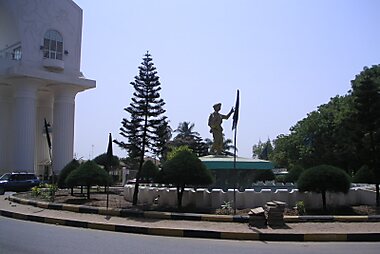
- Banjul is the small capital, on an island at the mouth of the river. See Arch 22, the busy Albert Market and the Gambia National Museum.
- Kololi is the heart of the resort strip, with the Senegambia beach area, hotels, restaurants and nightlife. Kotu beach is nearby.
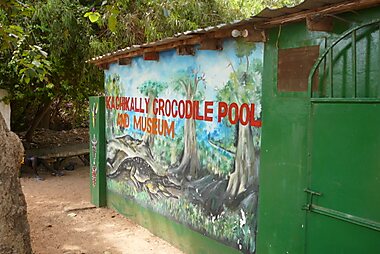
- Bakau is a fishing town next to Cape Point. It is home to the sacred Kachikally Crocodile Pool, where visitors can see crocodiles up close.
- Serrekunda Central is the centre of Serrekunda, the largest urban area, with a big, busy market.
- Abuko Nature Reserve is a small forest reserve close to the coast, good for monkeys, birds and short walks.
- South of the resorts, the coast is quieter. The fishing village of Tanji has a busy beach where boats land their catch in the afternoon. Further south, Gunjur has long, empty beaches.
- Makasutu Culture Forest, near Brikama, offers mangrove boat trips and forest walks.
Along the river
- Kunta Kinteh Island is the most popular river day trip. The nearby villages of Albreda and Juffureh have the Maurel Frères Building, a museum about the slave trade. Across the river mouth from Banjul, Fort Bullen guards the north bank.
- Niumi National Park protects mangroves, lagoons and beaches on the north bank.
- Kiang West National Park is a quiet reserve for birds, monkeys and wildlife along the south bank.
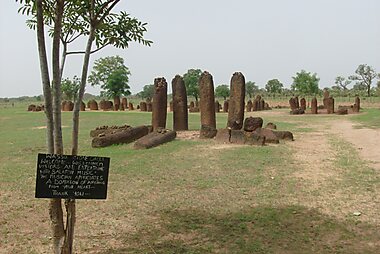
- Kuntaur is the base for the Wassu Stone Circles, part of a UNESCO World Heritage Site, and for boat trips to River Gambia National Park, where chimpanzees live on protected islands.
- Janjanbureh is a historic river town on an island, with colonial buildings and good birdwatching.
- Basse is the main town at the eastern end of the country, with a busy market.
The Gambia – Plan Your Trip
Pick the places you want to see and Tripomatic turns them into a day-by-day route, with smart routing, time estimates, and everything you need for a perfect trip.




