



Thessaloniki Municipality
Thessaloniki is Greece's second city, built along a curving bay at the foot of low hills in northern Greece. Unlike Athens, it feels lived-in rather than monument-heavy: locals fill the seafront promenade every evening, and university students keep the café and bar scene going late into the night. The city has been layered by Roman, Byzantine, Ottoman, and Sephardic Jewish history, and that mix still shows in its churches, mosques, and street names.
It suits travelers who want a real Greek city rather than a postcard island — good food, a walkable historic core, and enough ancient and Byzantine sites to fill two or three days without ever feeling rushed. The philosopher Aristotle is the city's most famous namesake (its central square and university both carry his name), and the city itself was founded in 315 BC and named for Alexander the Great's half-sister, Thessalonike.

Thessaloniki Municipality – Planning a Trip?
Build your day-by-day itinerary in the Tripomatic app.


When to visit
Spring (April–May) and autumn (September–October) are mild and comfortable for walking. Summer gets hot and humid with little rain, while winter is cool and damp rather than snowy. The Thessaloniki International Film Festival, held every November, fills the city's cinemas and cafés with premieres and is one of the biggest film events in southeastern Europe — worth timing a trip around if you enjoy cinema.
Best time to visit: April, May, September, October
June through August brings the muggiest, stickiest heat; the shoulder months trade a few degrees for far more comfortable evenings on the waterfront.
Top sights
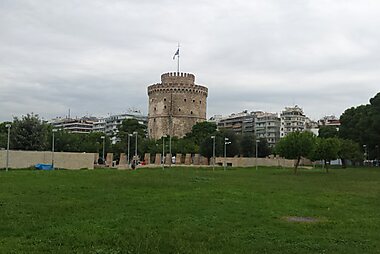
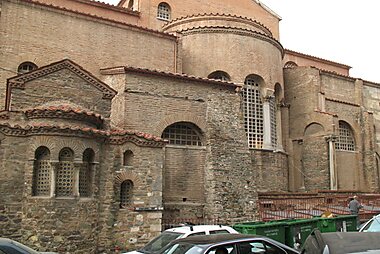
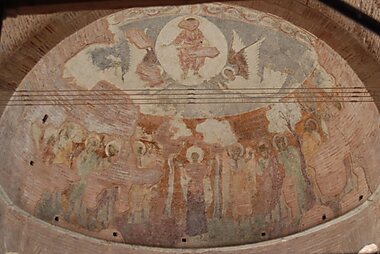
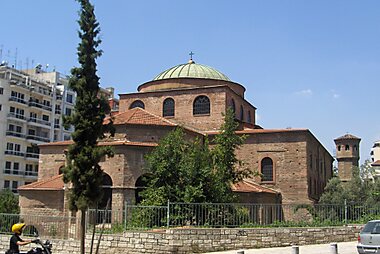

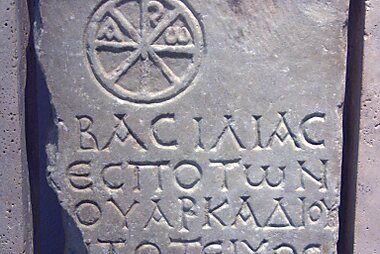
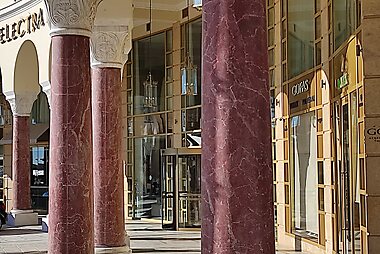
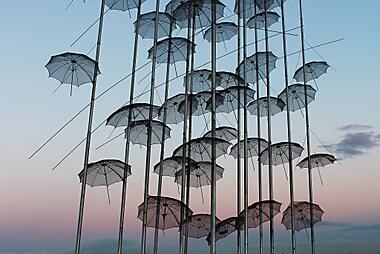
Thessaloniki's sights span more than two thousand years, and most of the essential ones sit within easy walking distance of each other along or above the waterfront.
- White Tower of Thessaloniki is the city's best-known symbol, an Ottoman-era fortified tower on the waterfront with a museum on the city's history inside and views over the bay from the top.
- Rotunda started as a Roman mausoleum, became a church, then a mosque, and is now a UNESCO-listed monument with rare early Christian mosaics still visible inside its dome.
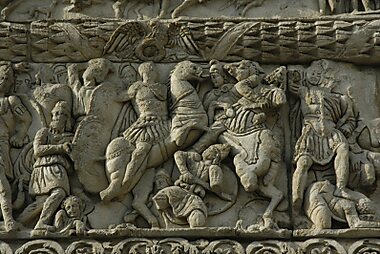
- Arch of Galerius is a Roman triumphal arch built to celebrate a military victory, decorated with carved reliefs that are still legible after 1,700 years.
- Hagia Sophia is one of the oldest churches in the city still in continuous use, with Byzantine mosaics dating back to the 9th century.
- Church of Saint Demetrios honors the city's patron saint and stands over what is believed to be his martyrdom site, with a crypt open to visitors below the main church.
- Archaeological Museum Thessaloniki holds finds from Macedonian tombs and settlements across the region, including gold jewelry from the era of Philip II and Alexander the Great.
- Museum of Byzantine Culture covers the Byzantine period in more depth, with well-preserved textiles, icons, and everyday objects displayed across several eras.
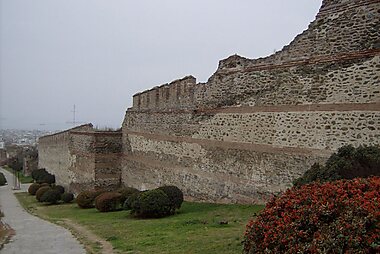
- Byzantine Walls mark the edge of the old upper town, Ano Poli, and are one of the best-preserved stretches of city wall left from the Byzantine era.
Featured Lists


What to experience
A few things define a visit here beyond sightseeing:
- Walk or cycle the length of the seafront promenade at sunset, ending at Umbrellas, a spot locals treat as an evening ritual rather than a tourist stop.
- Climb up into Ano Poli to Trigonio Tower for the best panoramic view over the rooftops and the bay, especially near dusk.
- Browse the produce and spice stalls at Modiano Market, a working covered market that has operated in the same spot since the early 20th century.
Tours & Activities
Thessaloniki Municipality — Map

 Open the interactive map
 Day trips
Thessaloniki sits close to some of Greece's most important ancient sites, as well as beaches and wine country, making it a good base for day trips.
- Pella — about 45 minutes by car or bus, this was the ancient capital of Macedon and the birthplace of Alexander the Great; its excavated palace grounds and mosaic floors are worth the short trip.
- Kassandra peninsula (Halkidiki) — roughly an hour by car, the closest of the three Halkidiki "fingers" has sandy beaches and pine forest right down to the water, an easy half-day or full-day escape.
- Vergina — about an hour by car, home to the Royal Tombs of Aigai, a UNESCO World Heritage site where the tomb of Philip II of Macedon was found intact with its treasures.
- Edessa — about 1.5 hours by car or train, a hill town known for waterfalls that drop right through the town center, best seen after spring rains.
- Meteora — around 2.5–3 hours each way, so best treated as a long full day or an overnight; the cliff-top monasteries are one of Greece's most striking sights and justify the distance.
Where to explore
Thessaloniki's home region stretches from the coast to inland lakes and mountains, giving easy access to very different landscapes.
- Chalkidiki is the beach region most Thessaloniki locals head to on weekends — three separate peninsulas with everything from lively resort towns to quiet pine-backed coves.
- Heading inland instead, Serres is the gateway to Lake Kerkini, a wetland reserve known for pelicans, water buffalo, and birdwatching boat trips.
Getting there
- By air: Thessaloniki Airport "Makedonia" (SKG) has scheduled international and domestic flights and sits about 16 km southeast of the center; a public bus (route 78 or 78N) reaches downtown in roughly 40–50 minutes, or a taxi takes about 25 minutes.
- By train: Thessaloniki's main railway station connects to Athens by intercity and high-speed trains (around 4–4.5 hours); a seasonal overnight sleeper runs to Belgrade in summer, and a bus now covers the Sofia route since the direct train was suspended.
- By bus: The city's long-distance KTEL bus terminal has frequent coach connections to Athens, and to towns across northern Greece.
Getting around
- Public transit: A bus network (OASTH) covers the whole city, and a metro line opened in 2024 running from the New Railway Station through downtown. Both accept contactless bank card or phone payment directly at the validator, so there is no need to plan ahead for tickets. See the OASTH site for routes.
- Taxi: Metered taxis are common and easy to hail on the street in the center.
- On foot / cycling: The waterfront and the historic core below Ano Poli are flat and easy to explore on foot; a bike path runs the length of the seafront promenade, though the old town's hilly, cobbled streets are better done on foot than by bike.
Driving
- Is a car worth it?: Skip it for the city itself — the center is compact and walkable, and parking is limited. A car becomes useful once you want to explore Halkidiki's beaches or inland towns at your own pace.
- Parking: Paid street parking (pay-and-display) covers most central streets, plus a handful of multi-story car parks near the port and Aristotelous Square; expect higher demand and enforcement on weekdays.
- Restrictions: A limited pedestrian and restricted-traffic zone covers parts of the historic center and Ladadika district, so check signage before driving in.
Food & drink
Thessaloniki has a reputation as Greece's food capital, shaped by refugee cooks who arrived from Asia Minor in the 1920s and brought spiced, Ottoman-influenced dishes with them. Look for bougatsa (a custard or cheese-filled pastry, usually eaten for breakfast), trigona Panoramatos (syrup-soaked pastry triangles), and street-food staples like koulouri (sesame bread rings) sold from carts everywhere.
For a concentrated area to eat and drink, head to the Ladadika district near the port, a former warehouse quarter now packed with tavernas, or the streets around Modiano Market for cheap, casual meze bars.
Safety & health
Thessaloniki is a safe city for tourists by international standards; violent crime against visitors is rare. The main risks are pickpocketing on crowded buses and around the main squares and nightlife areas, so keep bags zipped and phones out of back pockets. Tap water is safe to drink throughout the city.
History
Thessaloniki was founded in 315 BC by a Macedonian king who named it after his wife, Alexander the Great's half-sister. It grew into one of the Byzantine Empire's most important cities, second only to Constantinople, which is why its churches — including Hagia Sophia and Church of Saint Demetrios — carry some of the finest surviving Byzantine mosaics anywhere.
Under Ottoman rule from 1430 to 1912, the city became home to one of the largest Sephardic Jewish communities in Europe, expelled from Spain in 1492 and welcomed here; before the Second World War, Jewish residents made up close to half the population. Most of that community was deported and murdered during the Nazi occupation, a history now marked around the city with memorials. The Arch of Galerius and the Roman-era ruins nearby are reminders of an even older layer, when the city was a key stop on the Roman road connecting Byzantium to the Adriatic.
Country facts
Quick practical facts for Greece at a glance:
- Currency
- Euro EUR € · Card payments · Widely accepted
- Emergency numbers
- 112
- Electricity
- 230 V · 50 HzType C / Type F
- Languages
- Greek
- Tap water
- Drink with caution
- Driving side
- Right
- Calling code
- +30


Thessaloniki Municipality – Plan Your Days
Turn the places from this guide into a real itinerary, with smart routing, time estimates, and everything you need for a perfect trip.




