



Uruguay
Uruguay is a small, calm country tucked between Argentina and Brazil, known for wide grass plains, gaucho ranches, and a long Atlantic coastline of resort towns and surf beaches. It has a reputation as one of the most stable, secular, and safe countries in Latin America, with a relaxed pace that suits travelers who want to slow down rather than rush between sights.
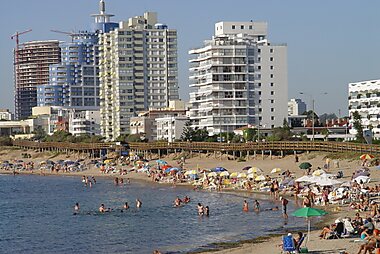
The country's character shifts by region: the riverside towns near Buenos Aires, like Colonia del Sacramento, keep a cobblestoned colonial feel, the coast east of Montevideo runs through beach resorts such as Punta del Este, and the interior is open cattle country dotted with small towns and thermal springs. Uruguay suits travelers drawn to beaches, wine country, and easygoing city life more than dense urban sightseeing — its capital is compact, and the national rhythm runs on long lunches, mate in hand, and slow afternoons.


Uruguay – Planning a Trip?
Build your day-by-day itinerary in the Tripomatic app.


Money & payments
Cards are accepted at most hotels, restaurants, and shops in Montevideo and the main coastal resorts. Carry cash for small towns, beach kiosks, market stalls, and local buses, where card machines are less common. ATMs are easy to find in cities but can be scarce in small coastal villages outside the summer season, so withdraw what you need before heading to the coast.
Featured Lists


Notable Christian Churches and Cathedrals
Uruguay’s religious landscape features a diverse range of Christian architecture, from the colonial foundations of the Basílica del Santísimo Sacramento in Colonia del Sacramento to the modern brick mastery of Eladio Dieste at the UNESCO-listed Iglesia de Cristo Obrero. Key sites include the 18th-century Montevideo Metropolitan Cathedral and the Cathedral of Our Lady of Guadalupe in Canelones. These churches reflect the country's Spanish colonial heritage, neoclassical influences, and innovative 20th-century engineering, serving as central landmarks in cities like Mercedes, Durazno, and Punta del Este.
10 places


Montevideo Parks and Plazas
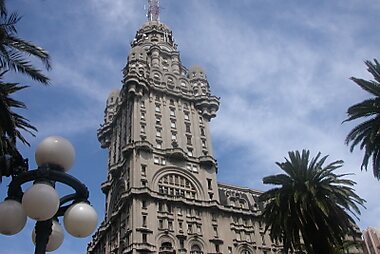
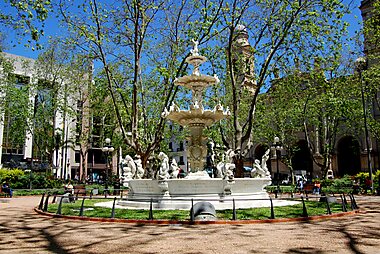
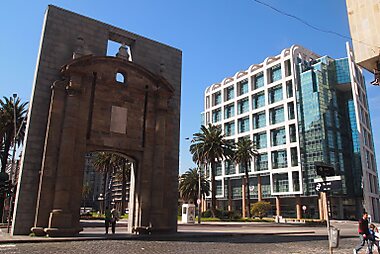
Montevideo’s urban identity is defined by its historic squares, such as Plaza Independencia, which bridges the colonial Ciudad Vieja with the modern city center. This collection highlights Uruguay's diverse public spaces, from the monument-rich Plaza de la Constitución to the expansive coastal Parque Rodó. Beyond the capital, the list includes significant regional sites like the southern tip of Punta del Este and the botanical trails of Piriápolis, showcasing the blend of European architectural influence and native South American flora.
20 places
Tours & Activities
Uruguay — Map

 Open the interactive map
 Tipping
Tipping in Uruguay is modest and mostly optional. At restaurants, rounding up or leaving around 10% is appreciated, though some places already add a service charge to the bill — check before tipping twice. Taxi drivers are usually tipped by rounding up the fare rather than a set percentage. Tour guides are the exception: a tip is customary for organized tours.
~10%, sometimes added as a service charge
round up
small tip for porters
10-15% of the tour price
Electricity
Uruguay uses a mix of plug types — C, F, I, and L are all common, sometimes even in the same building — at 230 V / 50 Hz. A universal adapter is the simplest way to cover all of them.
Language
Spanish is the official language, spoken here in the same Rioplatense style as Argentina, with "vos" replacing "tú" for "you". English is common in hotels and tourist businesses in Montevideo and Punta del Este, but far less so once you leave the main tourist areas, so a few basic phrases go a long way.
Staying connected
- Prepaid SIM/eSIM: Antel, Movistar, and Claro all sell tourist SIM cards, but Uruguay requires passport registration to activate one — plan for the paperwork to take longer than in neighboring Argentina or Brazil. Antel has the widest coverage in rural areas and along the coast; Movistar and Claro are strongest in Montevideo and other cities.
- eSIM: an eSIM bought online before arrival skips the in-country registration line and activates immediately.
Safety & emergencies
Uruguay is widely considered the safest country in South America for visitors, and it's normal to walk around central neighborhoods well after dark. Violent crime against tourists is rare, but petty theft picks up during the busy summer months (December to February), when pickpockets work crowded markets, plazas, and bus terminals. A newer risk is bag-snatching by pairs on motorcycles, so keep bags on your inland side, away from the street, and don't display phones openly while walking.
In Montevideo, the Ciudad Vieja old town quiets down after about 10 pm on weekdays and is best avoided late at night, while Pocitos, Punta Carretas, and Carrasco stay lively and safer after dark. Use official taxis or a rideshare app rather than unmarked cabs, especially from airports and bus terminals, and swim only at beaches with lifeguards on duty.
Health
Tap water is safe to drink throughout the country. Pharmacies (farmacias) are widespread in cities and towns, and at least one in each area stays open late or 24 hours on a rotating basis. No special vaccinations are required for most travelers beyond routine immunizations — check with a travel clinic before your trip if you have specific health concerns. Summer sun is intense, especially near the coast, so sunscreen and water are worth carrying on beach days.
Visas & entry
Citizens of the EU, the United Kingdom, the United States, Canada, Australia, and most Mercosur and Latin American countries can enter Uruguay without a visa and stay up to 90 days as tourists, with a further 90-day extension available from immigration authorities inside the country. Argentine residents can often enter using a national ID card instead of a passport. Travelers from countries not on Uruguay's visa-exempt list need to apply for a visa at a Uruguayan embassy or consulate before departure.
Visa and entry requirements change frequently. Verify current requirements with the official immigration authority or your country's embassy before travel.
Etiquette
- Greetings: a single kiss on the cheek is common between women, and between men and women, even on a first meeting; men typically shake hands with each other.
- Mate: sharing a gourd of mate is an everyday social ritual. If you're offered a sip, it's polite to accept, drink through the metal straw, and hand it back — you don't need to say "thank you" until you're finished with your turn, since that signals you don't want more.
- Dress: casual and relaxed almost everywhere, including in most restaurants; smarter dress is only expected at upscale restaurants in Punta del Este.
- Meal times: dinner starts late, often after 9 pm, and lunch can run past 2 pm — plan accordingly if you're used to eating earlier.
Holidays & opening hours
Public holidays can close banks, offices, and some shops, especially in smaller towns, and intercity buses run reduced schedules. Carnival and Easter week (Semana de Turismo) are effectively a national holiday stretch, when many Uruguayans travel and the coast gets busy.
Shops in cities generally open Monday to Saturday with standard daytime hours; malls and supermarkets often open daily, including Sundays. In smaller towns, expect a slower pace and some shops closed on Sunday afternoons.
Getting around
- By bus: long-distance coaches are the backbone of travel between cities, run by several private companies with frequent departures. Montevideo's main terminal is Tres Cruces, with routes reaching Colonia del Sacramento in about 2.5 hours and Punta del Este in about 2 hours.
- By ferry: fast ferries connect Montevideo and Colonia del Sacramento directly to Buenos Aires, Argentina, and are a popular way to combine both countries in one trip.
- By air: Montevideo's Carrasco International Airport is the main international gateway; domestic flights are rare since distances between cities are short.
Driving
- Key rules: Uruguay has zero tolerance for drink-driving — the legal blood alcohol limit is 0.0%. Headlights are required on rural roads even during the day.
- Tolls: fully electronic on domestic routes, with no cash lanes — see the toll note below for how to pay as a visitor.
- Parking: metered street parking (zona azul) is common in city centers and paid via ticket machine or app; blue-zone hours are usually posted on nearby signs.
- Fuel: stations are staffed rather than self-service, and most take cards as well as cash.
- Electric vehicles: charging points are still limited outside Montevideo and Punta del Este, so plan longer interior or coastal routes with care if driving an EV.
Food & drink
Meals run late: breakfast is light (coffee and a pastry), lunch is the biggest meal of the day and can stretch well past 2 pm, and dinner rarely starts before 9 pm. Weekend asado — beef slow-grilled over wood coals — is close to a national ritual, often turned into a long, unhurried family gathering rather than a quick meal.
Beyond asado, look for the chivito, a towering steak sandwich piled with ham, cheese, egg, and bacon, and milanesa, a breaded cutlet often served as a sandwich. Bakeries sell alfajores and other sweet pastries, and dulce de leche shows up everywhere from breakfast toast to desserts. Mate, the bitter herbal infusion sipped through a metal straw from a shared gourd, is a constant presence on the street, at the beach, and in parks. Uruguay also produces excellent Tannat red wine, especially from vineyards near Montevideo and Canelones.
Where to explore
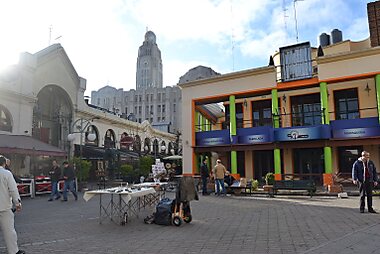
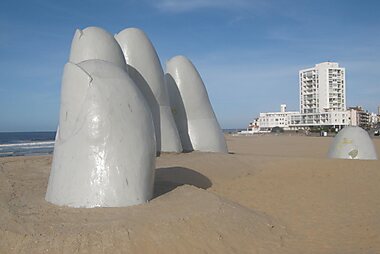
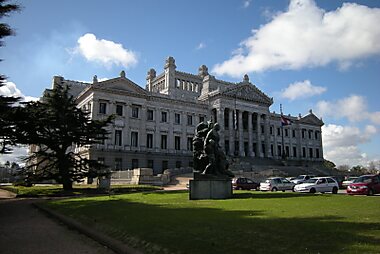
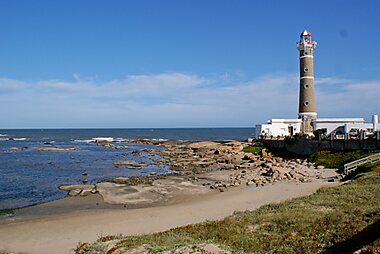
Montevideo is the compact, laid-back capital, with a historic old town, riverside promenade, and the country's main museums and markets. Along the coast to the east, Punta del Este is Uruguay's best-known beach resort, with marinas, nightlife, and sandy peninsula beaches. Nearby Piriápolis offers a quieter, more old-fashioned seaside alternative, and La Paloma further east draws a laid-back surf crowd.
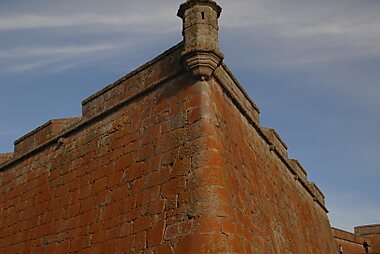
To the west, Colonia del Sacramento is Uruguay's best-known colonial town, its cobblestoned streets and Portuguese-era quarter a UNESCO World Heritage Site, while nearby Carmelo is a quieter riverside town known for vineyards and citrus orchards. Inland, Tacuarembó sits at the heart of gaucho cattle country, and in the north, Salto and Paysandú are river towns known for their hot-spring resorts along the Río Uruguay.
Uruguay – Plan Your Trip
Pick the places you want to see and Tripomatic turns them into a day-by-day route, with smart routing, time estimates, and everything you need for a perfect trip.


Related destinations


Data: © OpenStreetMap contributors, Wikidata, Wikipedia, Tripomatic, Official websites, geoBoundaries (CC BY 4.0). Tours by GetYourGuide. We earn commission from bookings. Travel guide generated with AI.