



Zagreb
Zagreb is Croatia's capital, a compact, walkable city where Central European elegance meets an easygoing café culture. Its center mixes Austro-Hungarian architecture, cobbled squares, and green parks, without the crowds of coastal Croatia's summer hotspots.
The city grew from two rival medieval hilltop towns, Kaptol and Gradec, that merged into one Zagreb in the 19th century. That layered history still shows: a fortified Upper Town, a planned 19th-century Lower Town of parks and grand buildings, and a lively modern center in between. The sculptor Ivan Meštrović lived and worked here for decades, and his statues and reliefs appear across the city.
Zagreb suits travelers who want a relaxed city break with strong museums, good coffee, and an easy base for day trips into inland Croatia.

Zagreb – Planning a Trip?
Build your day-by-day itinerary in the Tripomatic app.


When to visit
Spring and autumn are mild, the best times for walking the city. Summer turns warm to hot with occasional afternoon storms, and winter is cold with occasional snow.
Plan around Advent Zagreb if you can. This Christmas market runs from late November to early January, with stalls, ice skating, and mulled wine spread across the main squares and parks, and it was voted Europe's best Christmas market by European Best Destinations in 2016.
Best time to visit: May, September
Top sights
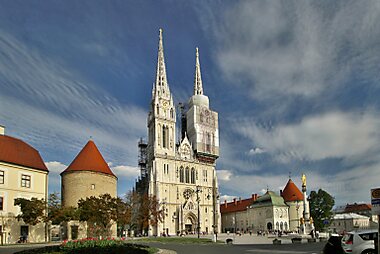


St. Mark's Church is the postcard image of Zagreb, its steep roof tiled in a bright mosaic showing the coats of arms of Zagreb and Croatia.
Zagreb Cathedral dominates the skyline with its twin Gothic spires, rebuilt after a 19th-century earthquake and still one of the tallest churches in the region.
Ban Jelačić Square is the city's central meeting point, ringed by cafés and anchored by a statue of the 19th-century governor the square is named after.
At Dolac Market, vendors sell fresh produce, cheese, and flowers under rows of red umbrellas, much as they have since the market opened in 1930.
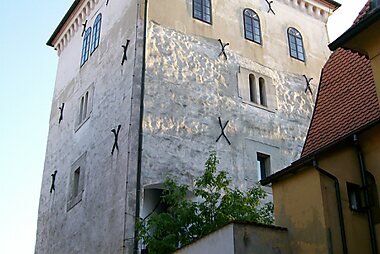
Climb Lotrščak Tower for city views, and stay for the small cannon fired from its top every day at noon.
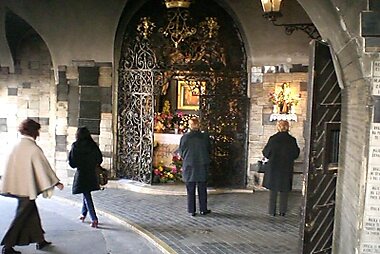
Stone Gate is a 13th-century city gate; according to local legend, a painting inside survived an 18th-century fire untouched, and locals still stop to pray before it.
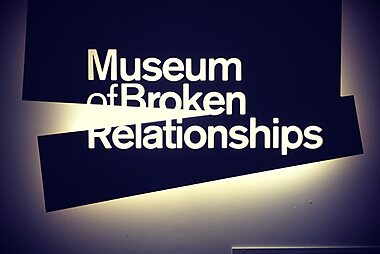
Museum of Broken Relationships turns donated keepsakes from failed relationships into a genuinely moving, sometimes funny, exhibition.
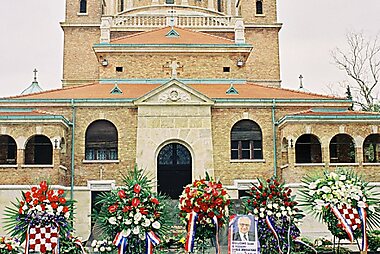
Mirogoj Cemetery is as much a park as a cemetery, its long arched colonnade designed by the same architect behind Zagreb Cathedral's rebuilt spires.
Featured Lists

Zagreb Essentials
Zagreb’s historic core is divided into the medieval Upper Town and the 19th-century Lower Town. This selection spans the city’s most significant landmarks, from the twin-spired Zagreb Cathedral and the iconic tiled roof of St. Mark’s Church to the 13th-century Stone Gate. The "Lenuci Horseshoe" provides a sequence of manicured parks and cultural institutions like the Art Pavilion. Notable highlights include the Lotrščak Tower’s daily cannon fire, the curated greenery of the Botanical Garden, and the monumental arcades of Mirogoj Cemetery.
13 places

Historic Heritage
Zagreb’s architectural heritage spans from the 13th-century Stone Gate and Lotrščak Tower in the medieval Upper Town to the iconic neo-Gothic Zagreb Cathedral. The collection features significant political landmarks like the Sabor Palace and Old Town Hall, alongside cultural institutions such as the Nikola Tesla Technical Museum and the Croatian State Archives. Sculptural highlights include Ivan Meštrović’s 'Well of Life' fountain, while the Zagreb City Museum provides historical context within a restored 17th-century monastery complex.
12 places

What to experience
- Ride the Zagreb funicular, one of the world's shortest public funiculars, connecting the Lower Town to Lotrščak Tower in under a minute.
- Stand nearby at noon to hear the Grič cannon fire from the tower, a tradition that has marked midday in Zagreb since the 19th century.
- Spend a summer afternoon at Jarun Lake, Zagreb's favorite lake for swimming, rowing, and walking or cycling the path around it.
- Browse the stalls and skate on the rink at Advent Zagreb, spread across the main squares and parks each winter.
Tours & Activities
Zagreb — Map

 Open the interactive map
 Day trips
Several rewarding day trips are within easy reach of Zagreb, from small historic towns to Croatia's most famous national park.
- Samobor, about 30 minutes by bus or car, is a small Habsburg-era town known for its Sunday market and kremšnita, a custard cream cake nobody quite agrees on how to make properly.
- Varaždin, about an hour by car, is a well-preserved Baroque town with a hilltop castle and a cemetery park often compared to a botanical garden.
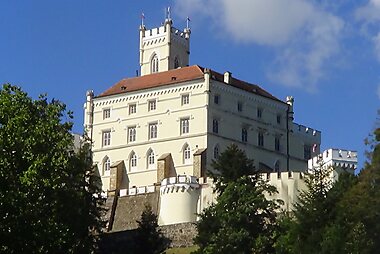
- Trakošćan Castle, about 1.5 hours by car, sits above a small lake and displays period furniture and armor inside a 19th-century remodeled fortress.
- Plitvice Lakes National Park, about 2 to 2.5 hours by car or bus, is Croatia's best-known natural attraction: a chain of turquoise lakes and waterfalls connected by wooden footbridges. It makes for a long day, so an early start is worth it.
Getting there
- By air: Zagreb Airport (ZAG), also called Franjo Tuđman Airport, is about 17 km southeast of the center. A shuttle bus runs to the main bus station in around 40 minutes; a taxi takes about 25 minutes.
- By train: Zagreb Glavni kolodvor connects Zagreb to Ljubljana, Vienna, Munich, Budapest, and Split, with a direct night train from Munich.
- By bus: Zagreb's main bus terminal has frequent long-distance coaches across Croatia and to neighboring countries, including Ljubljana, Sarajevo, and Belgrade.
Getting around
- Public transit: ZET trams and buses cover the city, with trams the fastest way around the center. Buy tickets through the ZET mobile app or at newsstands and vending machines before boarding, and validate them once on board. See ZET timetables and tickets.
- Taxi and ride-hailing: Bolt and Uber both operate throughout the city.
- On foot and cycling: the center is compact and easy to walk. Cycling is workable but not a major focus of the city's infrastructure outside a few parks and the path around Jarun Lake.
Driving
- Is a car worth it?: Not for the city itself — the center is walkable and well served by trams. A car becomes useful for day trips like Plitvice Lakes National Park or Trakošćan Castle, which are slow or awkward by public transport.
- Parking: The center is divided into paid color-coded zones, paid by SMS, app, or parking meter; multi-story car parks near the center are the easier option for a longer stay.
- Restrictions: The historic Upper Town and the main square are largely pedestrianized, with limited vehicle access.
Food & drink
Zagreb's kitchen leans inland rather than coastal: think roasted meats, cheese pastries, and hearty stews rather than seafood. Look for štrukli (a baked or boiled cheese pastry), sarma (stuffed cabbage rolls), and Zagrebački odrezak, a breaded veal cutlet stuffed with ham and cheese.
For a quick bite, browse the stalls at Dolac Market for local cheese, cured meats, and pastries. In the evening, the outdoor cafés and bars along Tkalčićeva Street fill up with locals having a drink after work.
Safety & health
Zagreb is a safe city for travelers, with very little violent crime. The main risks are pickpocketing on crowded trams and around Ban Jelačić Square, and occasional taxis that "forget" to turn on the meter — always ask for it or agree a price first.
Be cautious of unofficial guides offering tours near the cathedral without any visible credentials.
History
Zagreb grew from two rival hilltop towns facing each other across a stream: Kaptol, the seat of the bishop around Zagreb Cathedral, and Gradec, a fortified free royal town entered through Stone Gate. The two towns fought and traded for centuries before formally merging into a single city in 1850.
A well-known local legend says a fire tore through Gradec in 1731 and burned everything around the Stone Gate except a painting of the Virgin Mary inside it, which survived untouched. The painting is still there today, and the gate remains a place people stop to pray.
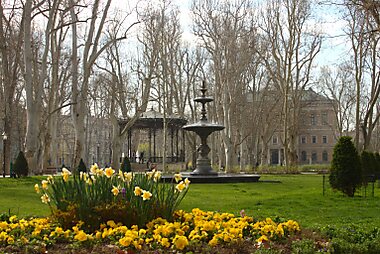
Zagreb's 19th-century growth added the planned Lower Town, with its horseshoe of parks including Zrinjevac, and a Gothic Revival remake of the cathedral's twin spires by the architect Herman Bollé, who later designed the arcades of Mirogoj Cemetery.
Country facts
Quick practical facts for Croatia at a glance:
- Currency
- Euro EUR € · Card payments · Widely accepted
- Emergency numbers
- 112
- Electricity
- 230 V · 50 HzType C / Type F
- Languages
- Croatian
- Tap water
- Safe to drink
- Driving side
- Right
- Calling code
- +385


Zagreb – Plan Your Days
Turn the places from this guide into a real itinerary, with smart routing, time estimates, and everything you need for a perfect trip.




