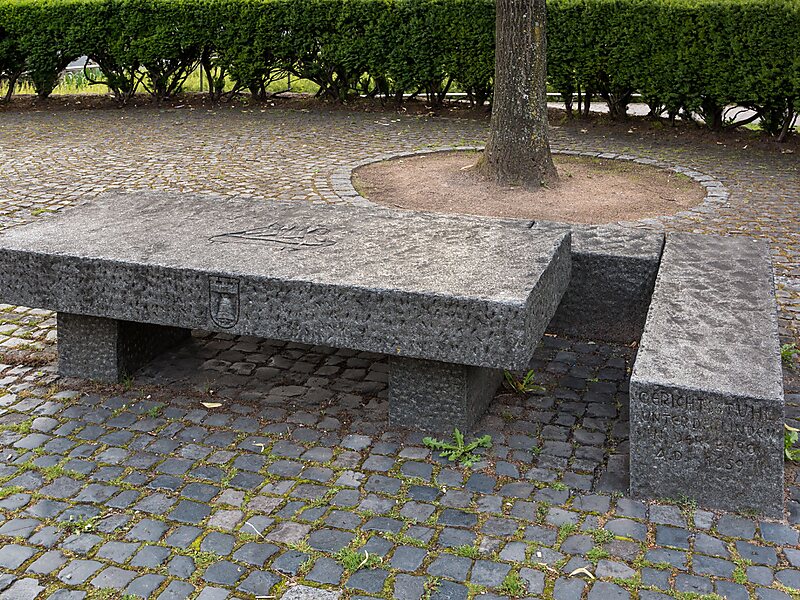
The Vehmic courts, Vehmgericht, holy vehme, or simply Vehm, also spelt Feme, Vehmegericht, Fehmgericht, are names given to a "proto-vigilante" tribunal system of Westphalia in Germany active during the later Middle Ages, based on a fraternal organisation of lay judges called “free judges”. The original seat of the courts was in Dortmund. Proceedings were sometimes secret, leading to the alternative titles of “secret courts”, “silent courts”, or “forbidden courts”. After the execution of a death sentence, the corpse could be hanged on a tree to advertise the fact and deter others.
The peak of activity of these courts was during the 14th to 15th centuries, with lesser activity attested for the 13th and 16th centuries, and scattered evidence establishing their continued existence during the 17th and 18th centuries. They were finally abolished by order of Jérôme Bonaparte, king of Westphalia, in 1811.
Wikipedia https://en.wikipedia.org/wiki/Vehmic_court
Official Website https://www.dortmund.de/de/freizeit_und_kultur/museen/kior/alle_kunstwerke/detail_514386.html
Address 17 Freistuhl, Dortmund 44137, Germany
Coordinates 51°31'0.153" N 7°27'41.033" E