



Corfú
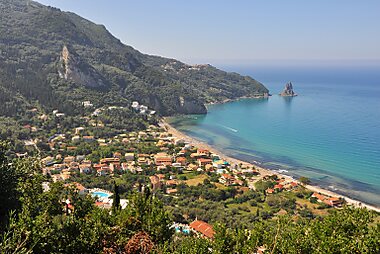
Corfu is the green island in the northwest of Greece, close to the coast of Albania. It has olive groves, cypress trees, quiet villages and long stretches of sandy and pebble beaches. The main town is a UNESCO-listed old town with Venetian, French and British layers, so the island feels more Italian than many Greek islands.
It suits a week of beaches mixed with culture. Corfu Town is good for walking and eating. The northwest coast has dramatic cliffs and coves, and the northeast has pebble bays facing Albania. The south is flatter, with long beaches and a nature reserve. Families, couples and history fans all find something to do. The writer Gerald Durrell made the island famous with his book My Family and Other Animals.

Corfú – ¿Estás planeando un viaje?
Crea tu itinerario día a día en la app de Tripomatic.


Cuándo viajar
Late spring and early autumn are the best times for sightseeing and swimming. May and June are green and warm, and the sea is already good for a swim by June. July and August are hot and busy, and prices are highest. October is still mild but gets wetter. Winter is quiet, rainy and many beach businesses are closed.
Plan a trip around Easter if you want to see the island's biggest festival.
Mejor época para viajar: mayo, junio, julio, agosto, septiembre, octubre
Lugares destacados
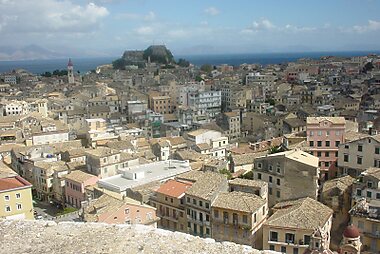
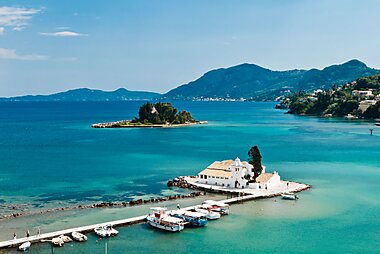
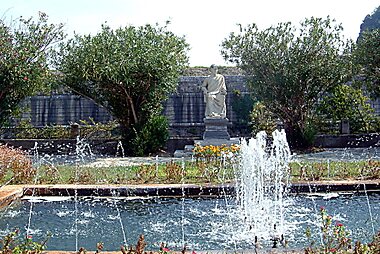
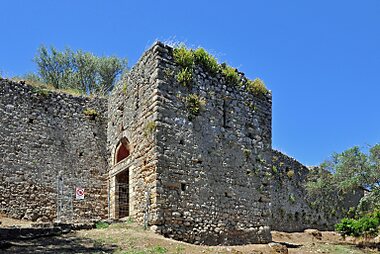
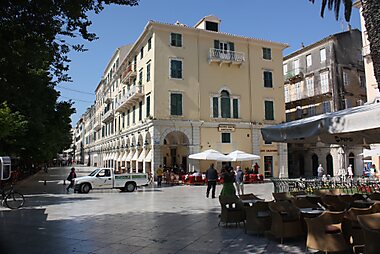
- Corfu Old Town is the UNESCO-listed heart of the island. Narrow lanes, tall Venetian houses and arcades fill the area between the two fortresses.
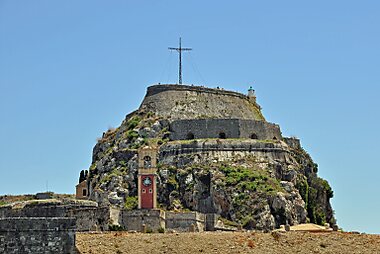
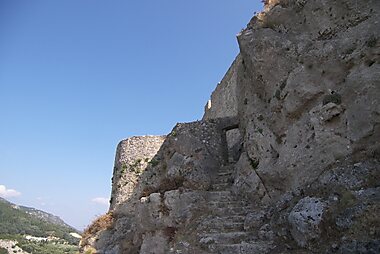
- Old Fortress sits on a rocky headland above the sea. The Venetians rebuilt and expanded it from the 15th century, and the views over the town and the coast of Albania are the reward for the climb.
- Spianada Square Esplanade is the large green square at the edge of the old town. The arcade of Liston runs along one side and is the classic place for a coffee and some people-watching.
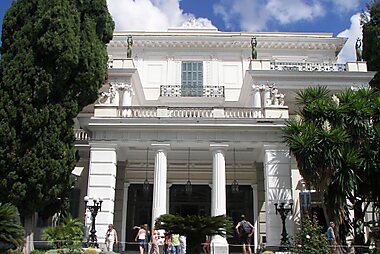
- Achilleion Palace is a palace in Gastouri, south of the town. Empress Elisabeth of Austria built it in 1890 as a retreat. It has a garden with sea views and a statue of Achilles.
- Palaiopolis - Mon Repos Museum is a museum in a neoclassical villa and park south of the old town. Prince Philip was born in the villa in 1921. The museum shows finds from the ancient city of Corfu.
- Angelokastro Castle is a Byzantine castle on a steep cliff above the northwest coast. It is a Byzantine castle with wide views.
- Mouse Island is the small islet with a chapel off the Kanoni peninsula, next to the monastery of Vlacherena. It is a well-known view near Kanoni.
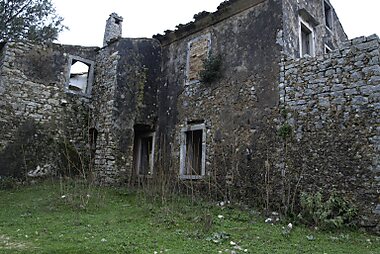
- Old Perithia is an almost abandoned stone village on the slopes of Mount Pantokrator. It is quiet, and a few tavernas operate in the main square.
Listas destacadas


Corfu's Best Beaches
Corfu's coastline features the double-sided bay of Porto Timoni, reachable by boat or hike, and the Canal d'Amour's sandstone formations in Sidari. The west coast offers sandy stretches like Glyfada and the nudist-friendly Myrtiotissa, while the northeast is characterized by pebble beaches such as Barbati and Kaminaki. Southern options include the secluded Arkoudilas, known for its clay cliffs and quiet atmosphere.
13 lugares


Qué experimentar
- Easter in Corfu Town: on Holy Saturday morning, people throw large clay pots filled with water from windows and balconies. Processions with brass bands and the relics of Saint Spyridon are part of Easter week. Saint Spyridon also has processions on Palm Sunday, on 11 August and on the first Sunday of November.
- Cricket: the British brought cricket to Corfu, and it is still played on the island. It is rare in Greece.
- Sea kayaking and boat trips around Paleokastritsa: you can visit sea caves and small coves from the water. The area is also good for snorkelling.
- Swimming at beaches in the west: Myrtiotissa Beach is a quiet cove below steep cliffs, and Agios Gordios Beach is a long beach with a hill at one end. Many west-coast beaches have good evening light for sunsets.
- Walk or drive to the lagoon: Korission Lagoon in the south is a protected wetland with sand dunes next to a long beach.
- Sunset at Porto Timoni: a walk of about 20 to 30 minutes from the village of Afionas leads to a viewpoint above two small bays on either side of a narrow strip of land. The path is rough, so wear good shoes.
Tours y actividades
Corfú — Mapa

 Abrir el mapa interactivo
 Excursiones de un día
Day trips from Corfu go by sea. Check the seasonal timetables before you plan, because many routes run mainly from spring to autumn.
- Albania (Saranda and Butrint): a ferry or fast boat from Corfu Town takes roughly 30 to 60 minutes. Saranda is a lively seaside town. Butrint is a UNESCO World Heritage site with ruins of an ancient city, about 30 minutes by road from Saranda. Take your passport; check entry rules before you travel.
- Paxos and Antipaxos: small, green islands south of Corfu. In season, boats go from Corfu Town and take about 1 to 2 hours each way. Paxos has a pretty harbour town, Gaios. Antipaxos is known for its clear water and beaches.
Qué explorar
Cómo llegar
- By air: Corfu Airport (CFU, "Ioannis Kapodistrias") is about 3 km from Corfu Town. A bus or taxi takes about 10 to 15 minutes to the centre. Most flights are seasonal and run mainly from April to October, so winter options are limited. Athens has regular flights through the year.
- By ferry from mainland Greece: ferries run from Igoumenitsa to Corfu. Igoumenitsa is on the main road network, so this is the usual way to arrive by car from Greece or from other mainland countries.
- By ferry from Italy: ferries link Corfu with Italian Adriatic ports. Check the seasonal schedule before you plan.
- By sea from Albania: ferries and fast boats run between Saranda and Corfu Town.
- By bus: long-distance coaches to Athens and other mainland cities use the ferry.
Cómo desplazarse
- Public buses: local buses cover Corfu Town and the nearby villages. Intercity buses serve the main resorts and villages, but the timetable is limited in the evening and on Sundays. Many villages are poorly connected.
- Taxis: useful for airport and ferry transfers and for longer trips across the island. Agree on the price before you start long trips.
- Car, scooter or quad bike: the best way to reach beaches and mountain villages. See the driving section for tips.
- Boat: small boats and sea taxis run along parts of the coast, for example from the Paleokastritsa area to nearby coves.
- On foot: Corfu Town is compact and walkable. Outside the town, distances between sights are large and roads are narrow.
Conducción
- Is a car worth it? Yes, if you stay outside Corfu Town. A car or scooter gives access to beaches, villages and viewpoints that buses do not reach. In Corfu Town itself, you do not need one.
- Roads: many roads in the hills and villages are narrow and winding, with limited barriers. Drive slowly and expect to give way to buses and oncoming cars.
- Parking: parking in the old town is limited. Use the car parks at the edge of the centre, for example near the Old Fortress and the harbour, and walk the last part.
- Car hire: book early for July and August, and check what the insurance covers for tyres and underbody damage on rough roads.
Gastronomía
Corfiot food shows Venetian influence. Look for pastitsada (spiced meat with pasta), sofrito (veal in garlic and white wine sauce) and bourdeto (fish stew with pepper). Kumquat, grown on the island, appears in liqueurs and sweets. Locals also drink tsitsibira, a ginger beer from the island's British period.
Good places to eat cluster in a few areas. In Corfu Town, try the lanes of the old town around the Spianada. The restaurants in the old streets behind the Liston are busier and more touristy. Village tavernas on the northeast coast and in the hills usually serve simpler home-style food at lower prices. Fish tavernas line the bays of the west coast and the small harbours in the northeast.
Seguridad y salud
Corfu is safe for visitors. Petty theft is rare but possible in crowded places, so keep an eye on your bag in the old town and on beaches. Party resorts such as Kavos have a young crowd and more noise at night.
Summers are hot and dry. Use sun protection, drink water and avoid long walks at midday. Wildfires are possible in dry summers, so follow local advice and fire warnings if you hike or camp. Sea urchins live on rocky shores, so water shoes help.
Most visitors drink bottled water instead of tap water. Pharmacies in Corfu Town can help with minor problems. Call 112 for emergencies.
Historia
Corfu has been fortified for a very long time. The ancient city of Corfu stood south of today's old town, and some remains and finds are in the museum at Palaiopolis - Mon Repos Museum. In the Middle Ages, Byzantine rulers built castles such as Angelokastro Castle and Castle of Gardiki to defend the island.
Venice ruled Corfu from 1386 to 1797. The Venetians built the fortresses around Corfu Old Town, and the Ottomans never conquered the island, despite several long sieges. French and Russian-Ottoman forces then controlled it for short periods, and from 1815 to 1864 Britain ran the Ionian Islands as a protectorate. The British added new buildings, roads and the cricket tradition. Corfu then joined Greece in 1864.
In 1890 Empress Elisabeth of Austria built Achilleion Palace. Later the German emperor Wilhelm II owned it. During World War II, bombing destroyed parts of the old town. Many buildings were rebuilt.
Datos del país
Quick practical facts for Greece at a glance:
- Moneda
- euro EUR € · Pago con tarjeta · Ampliamente aceptado
- Teléfonos de emergencia
- 112
- Electricidad
- 230 V · 50 HzTipo C / Tipo F
- Idiomas
- griego
- Agua del grifo
- Beber con precaución
- Sentido de la circulación
- Derecha
- Prefijo telefónico
- +30


Corfú – Planifica tus días
Convierte los lugares de esta guía en un itinerario real, con rutas inteligentes, estimaciones de tiempo y todo lo que necesitas para un viaje perfecto.




