



Cos
Kos is a long, mostly flat island in the Dodecanese, close to the Turkish coast. It is famous as the home of Hippocrates, the ancient doctor, and it mixes ancient ruins, a medieval castle and long sandy beaches. Kos Town is the main base. It has a busy harbour, Roman and Hellenistic remains, and a cycle path along the sea.
The island suits a relaxed trip of beach days, cycling and short culture stops. Families and couples find easy beaches on almost every coast. Hill villages such as Zia give a quieter side, and ferries link Kos with nearby islands and Turkey.

Cos – ¿Estás planeando un viaje?
Crea tu itinerario día a día en la app de Tripomatic.


Cuándo viajar
Late spring and early autumn are the best times. Days are warm, the sea is pleasant and the island is less crowded than in July and August. Summer is hot, dry and windy, and it is the busiest season. Winter is mild but wet, and many seaside businesses close.
Plan around Easter if you can. Greek Orthodox Easter brings processions and family gatherings in the villages, and the date changes each year.
Mejor época para viajar: mayo, junio, julio, agosto, septiembre, octubre
Lugares destacados
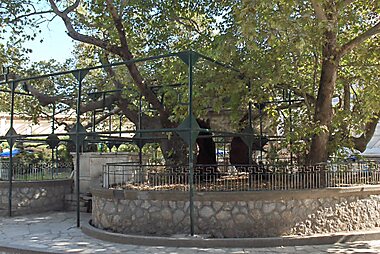
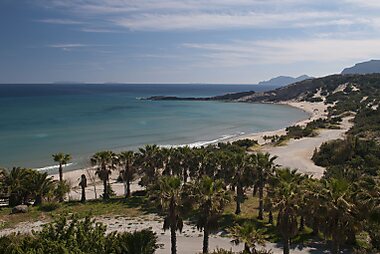
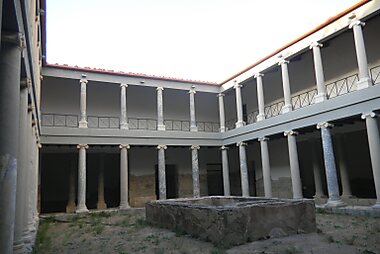
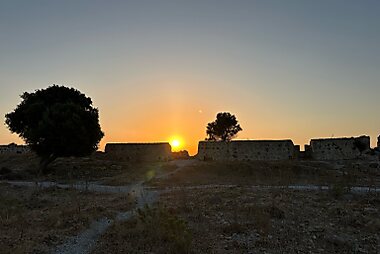
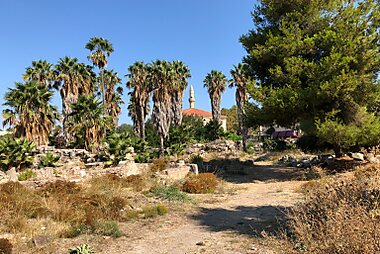
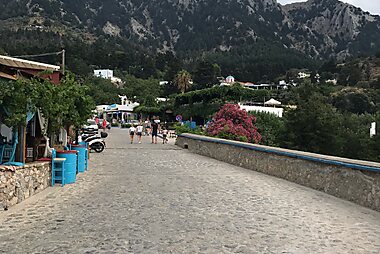
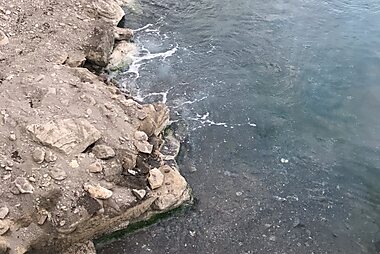
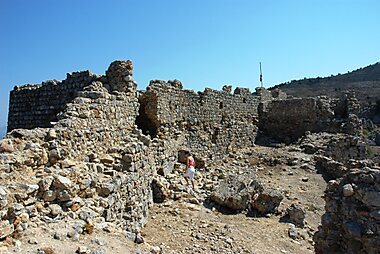

- Beside the harbour, Castle of the Knights of Saint John was built by the Knights of St John in the 14th century. Its walls and moat are easy to explore on foot from the centre.
- Plane tree of Hippocrates stands in the old town. By tradition, Hippocrates taught his students under a tree on this spot.
- Ancient Agora lies next to the harbour. Columns and walls show where people gathered in ancient times, and the ruins are part of the town walk.
- Casa Romana is a restored Roman house with mosaic floors. It shows how wealthy residents lived.
- The Asklepieion is the island's best-known ancient site, about 3 km from Kos Town. Pilgrims came here for healing, and Hippocrates is linked with the place. It has three terraces, temple remains and sea views.
- Zia is a hill village on the slopes of Mount Dikaios. It is a popular stop for sunset views over the island and the sea.
- Old Pyli is a ruined medieval settlement on a hillside above the north coast. It suits visitors who like quiet ruins and hill views.
- Empros Thermes are natural hot springs on the south-east coast. Warm water flows into the sea, so you can soak by the shore.
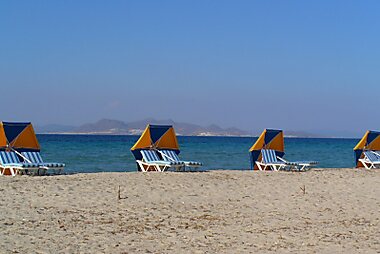
- Paradise Beach is a long sandy beach on the south coast near Kefalos, with clear water and beach bars.
Listas destacadas


Religious Sites in Kos
Explore the diverse spiritual landscape of Kos, ranging from 18th-century Ottoman architecture to secluded Byzantine-style chapels. This collection includes the Defterdar Mosque in the heart of Kos Town and the hilltop Chapel of Panagia Ziniotissa, which offers panoramic views of Kamari Bay. The island's religious heritage is preserved in remote monasteries like Agios Ioannis and local parish churches in villages such as Zipari and Antimachia, often featuring traditional blue domes and intricate iconography.
10 lugaresQué experimentar
- Ride the sea path from Kos Town in the early morning, before the heat.
- Soak in the hot springs at Empros Thermes, early or late in the day.
- Cycle to the Asklepieion for the hilltop sea views.
- Try kitesurfing or windsurfing on the windy north and west coasts. Schools offer lessons for beginners in summer.
- Take a day boat to Nisyros and walk into the crater, or spend a lazy day on a boat tour of the small islands.
- Walk the shaded paths of Plaka Forest for a break from the beach.
Tours y actividades
Cos — Mapa

 Abrir el mapa interactivo
 Excursiones de un día
Most day trips go by boat. Schedules change by season, so check sailings before you plan a day out.
- Pserimos: a small island north of Kos with a quiet beach. It is a short boat ride in season.
- Bodrum (Bodrum) in Turkey: about 30 minutes to 1 hour by ferry from Kos Town. Sailings are few, often one or two a day, and fewer in winter, so check the day before. It has a castle, a marina and a large bazaar. You go through passport control on both sides, so take a valid passport and check entry rules for Turkey first.
- Kalymnos: a rocky island known for sponge diving and for climbing. Boats leave from Mastichari in the north-west.
- Nisyros: a volcanic island with a walkable crater. Day excursions leave from Kardamena in season.
Qué explorar
- For another island in the Dodecanese, see Rhodes. Ferries run between Rhodes and Kos Town.
- Kos belongs to the South Aegean, together with Rhodes and the Cyclades. See South Aegean for the wider region.
Cómo llegar
- By air: Kos Island International Airport, named after Hippocrates (KGS), is about 24 km from Kos Town near Antimachia. Many flights are seasonal charters, mainly from the UK and Germany. Athens is about one hour away by air. Public buses link the airport with Kos Town, Mastichari, Kardamena and Kefalos, and taxis run all day. Many tour operators include a shuttle.
- By ferry: the main port is in Kos Town. Ferries link it with Rhodes, Patmos and Athens (Piraeus). Smaller boats leave for Kalymnos and Pserimos from Mastichari, and for Nisyros from Kardamena.
- From Turkey: boats cross from Bodrum in about 30 minutes to 1 hour. Take your passport and arrive early for border control.
Cómo desplazarse
- Bus: island buses link Kos Town with the airport and the main resorts. Buy a ticket on board for island routes. The main bus station is behind the old town, about 10 minutes on foot from the harbour. Evening and winter services are thinner.
- Taxi: taxis are useful for the airport and for evenings, and they are easy to find in Kos Town.
- Cycling: cycle paths run through Kos Town and along the east coast. Bike rental is cheap and easy.
- Car or scooter: a car helps for Kefalos, Zia and the quiet west coast. See the driving section.
Conducción
- Is a car worth it? For a Kos Town stay, you do not need one. Buses, bikes and taxis cover the town and the nearby beaches. A car or scooter is useful if you want to reach Zia, Kefalos and the west coast.
- Roads: main roads are in good condition. Village roads in the hills need more care.
- Parking: parking in the old town and near the harbour is limited in summer. Park outside the centre and walk in.
- Scooters and quad bikes: they are common rentals. Check your insurance and wear a helmet.
Gastronomía
Kos food is simple Greek island cooking. Seafood, grilled meat, local tomatoes and cheese are on most menus. Look for pitaroudia, chickpea fritters from the Dodecanese. Thyme honey and herbs from the hill villages make good gifts. The island gave its name to Cos lettuce.
Choose areas rather than single restaurants. In Kos Town, the old harbour front and the lanes behind it have many tavernas. In Kardamena, Mastichari and Kefalos, eat by the harbour. Zia has terrace restaurants with sunset views. Dinner starts late in summer.
Seguridad y salud
Kos is safe for visitors. Petty theft is rare but possible in crowded places, so watch bags on the beach and in busy bars at night.
- Sun and heat: summer is very hot, with strong sun. Use sun cream, drink water and rest in the middle of the day.
- Sea: beaches on the north and west coasts can be windy, with strong waves. Follow local flag warnings.
- Wildfires: dry summers carry a risk of fires on the Greek islands. Follow local alerts and the advice of staff.
- The island has a hospital in Kos Town, and there are pharmacies in all main villages.
Historia
Kos has been an important island since ancient times. Hippocrates, born here around 460 BC, is called the father of medicine. People came to the Asklepieion to be healed, and a medical school grew around it.
In the Middle Ages the Knights of St John ruled the island. They built Castle of the Knights of Saint John to guard the harbour, and Antimacheia Castle to guard the island interior. Ottoman rule followed, and later Italy held the island from 1912 until the Second World War. Kos joined Greece after the war, in 1947.
A strong earthquake in 1933 destroyed much of the old town. Italian archaeologists then uncovered the ancient city, including Ancient Agora and Western Excavations. Today ancient, medieval and Italian-period buildings stand side by side in Kos Town.
Datos del país
Quick practical facts for Greece at a glance:
- Moneda
- euro EUR € · Pago con tarjeta · Ampliamente aceptado
- Teléfonos de emergencia
- 112
- Electricidad
- 230 V · 50 HzTipo C / Tipo F
- Idiomas
- griego
- Agua del grifo
- Beber con precaución
- Sentido de la circulación
- Derecha
- Prefijo telefónico
- +30


Cos – Planifica tus días
Convierte los lugares de esta guía en un itinerario real, con rutas inteligentes, estimaciones de tiempo y todo lo que necesitas para un viaje perfecto.




