



Cerdeña
Sardinia is the second-largest island in the Mediterranean. It is a good choice for a beach holiday, and it also suits travelers who like hiking, archaeology and quiet villages. The coast has white sand, clear water and rocky coves. The inside of the island is mountainous and much less visited.
The island has its own language, food and traditions, and it feels different from the Italian mainland. Plan a week or more. Distances are long, and most visitors choose one or two bases, such as the south around Cagliari or the north around Olbia and Alghero.

Cerdeña – ¿Estás planeando un viaje?
Crea tu itinerario día a día en la app de Tripomatic.


Cuándo viajar
Late spring and early autumn are the best times. The days are warm, the sea is pleasant and the crowds are smaller. July and August are hot and very busy. Prices are highest then, and popular beaches and ferries fill up early. Winter is mild on the coast, but many beach resorts close. The high inland mountains can get snow.
The best-known event is the Sant'Efisio festival in Cagliari. It starts on 1 May with a long religious procession in traditional costume.
Mejor época para viajar: abril, mayo, junio, septiembre, octubre
Lugares destacados
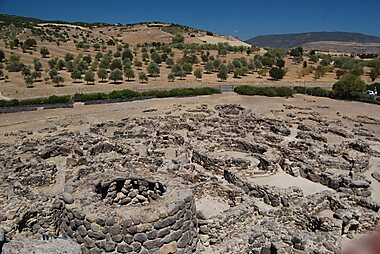



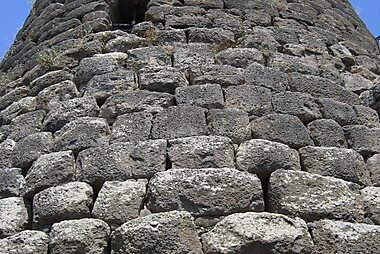

- Su Nuraxi is a UNESCO World Heritage site in the south. It is the best-preserved example of a nuraghe, the stone tower-fortresses of the Bronze Age.
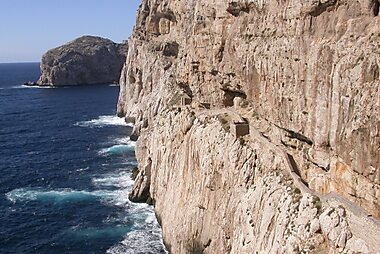
- Grotte di Nettuno is a sea cave near Alghero, at the foot of high cliffs. You can arrive by boat from Alghero in calm weather, or walk down a long cliff staircase.
- La Pelosa is a shallow sandy bay near Stintino in the north-west, with a small old tower just offshore. The water is very clear, so the beach is crowded in summer. In summer you must book a place in advance and pay a small fee.
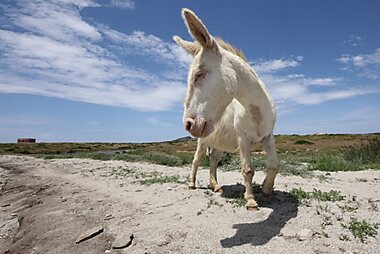
- Parco Nazionale Asinara is a former prison island and now a national park. Wild nature and white donkeys are the main attractions. Private cars are not allowed, so you explore on an organized tour.
- Gorropu Canyon is a limestone canyon in the Supramonte mountains in the east. It is a demanding walk, so wear proper shoes and carry water.
- Cala Goloritze is a small pebble cove below steep cliffs, in the east. You reach it on foot by a trail, and entry needs a reservation.
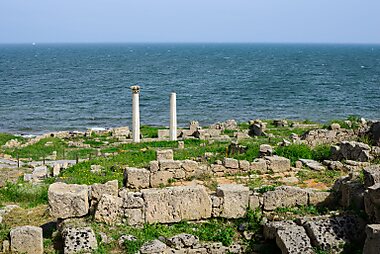
- Area archeologica di Tharros is a ruined Phoenician and Roman port on a headland on the Sinis peninsula, with the sea on both sides.
- Dune di Piscinas are very large sand dunes on the wild south-west coast, far from any town.
Listas destacadas


Editor's Choice: Sardinia
Sardinia’s diverse landscape features the Gorropu Canyon, one of Europe’s deepest limestone gorges with walls reaching 500 meters. The coastline includes the protected Spiaggia Rosa on Budelli Island, known for its distinctive pink sand, and the emerald waters of Cala Mariolu. Historical landmarks like the Torre della Pegna, a coastal watchtower near Alghero, overlook the Mediterranean, while Porto Giunco offers a unique coastal environment where a saltwater lagoon meets the sea.
5 lugares
Best Beaches in Sardinia
Sardinia's coastline features diverse geological formations, from the quartz grains of Is Arutas to the granite cliffs of the Gulf of Orosei. This selection spans the island, including the protected pink sands of Budelli and the shallow, transparent waters of Stintino. Many locations, such as Cala Mariolu and Cala Goloritzé, are accessible only by boat or via coastal hiking trails through the Supramonte massif. Southern destinations like Su Giudeu offer expansive dunes and lagoons frequently inhabited by pink flamingos.
15 lugares
Archaeological Sites of Sardinia
This collection spans several millennia of Mediterranean history, from the Neolithic step pyramid of Monte d'Accoddi to the Roman amphitheater in Cagliari. It features iconic Nuragic fortresses like the UNESCO-listed Su Nuraxi and the massive Santu Antine, alongside coastal Phoenician-Roman cities at Tharros and Nora. Visitors can explore the largest Punic necropolis in the Mediterranean at Tuvixeddu, the rock-cut tombs of Anghelu Ruju, and the mysterious stone sculptures of the Giants of Mont'e Prama. These sites showcase Sardinia's unique transition from prehistoric megalithic cultures to classical urban civilizations.
15 lugares

Castles and Towers of Sardinia
Sardinia’s strategic Mediterranean position is marked by a network of defensive structures spanning centuries. This collection features 14th-century Pisan towers like Cagliari's Torre dell'Elefante, Spanish coastal watchtowers built to defend against Barbary raids, and medieval hilltop fortresses such as the Castle of Serravalle in Bosa. The list also includes unique prehistoric fortifications like the Nuraghe Orolio, showcasing the island's evolution from Nuragic megaliths to sophisticated medieval military architecture.
18 lugares

Qué experimentar
Sardinia is best enjoyed outdoors and on the water.
- Take a boat tour of the La Maddalena archipelago or the Gulf of Orosei, with swim stops in small bays.
- Hike to a beach, for example to Cala Goloritze or Cala Mariolu. The trails are long and have little shade.
- Join the Sant'Efisio procession in Cagliari in early May, or one of the many village festivals in summer, with costumes, horses and singing.
- Visit a farm stay (agriturismo) for a long meal of home-made food.
- Watch the sunset from the cliffs at Capo Testa in the far north.
- Hear a performance of canto a tenore, the traditional polyphonic singing of the central mountains. It is on the UNESCO list of intangible heritage.
Tours y actividades
Cerdeña — Mapa

 Abrir el mapa interactivo
 Excursiones de un día
Sardinia has several islands nearby that you can visit in a day. Most are reached by a short ferry or a boat tour.
- La Maddalena archipelago: a short ferry from Palau, in the north-east, takes you to La Maddalena town. Boat tours stop at pink-sand and turquoise bays. Caprera, linked to La Maddalena by a road, was the home of the Italian hero Giuseppe Garibaldi.
- Corsica: Bonifacio is a short ferry ride from Santa Teresa Gallura, at the northern tip. Take your passport or ID card.
- Asinara: a national park island, reached by ferry from Stintino or Porto Torres.
- San Pietro and Sant'Antioco: two islands off the south-west coast. Carloforte, on San Pietro, is a colorful harbor town with its own Ligurian dialect and tuna dishes. Sant'Antioco is joined to the mainland by a road, so you can drive there.
- Orgosolo: a mountain village in the Barbagia region, about 30 minutes by car from Nuoro. It is known for its political wall murals.
Qué explorar
These are the main bases and gateways on the island.
- North-west: Alghero has a walled old town on the sea and a strong Catalan heritage. It is the base for Capo Caccia and the north-west coast.
- North-east: Olbia is the main arrival port and airport for the north-east. Porto Cervo is the marina resort of the Costa Smeralda, developed from the 1960s.
- South: Cagliari is the capital, with a hilltop old town and a city beach. It is the best base for Nora and the south coast.
- Center and east: Nuoro is the gateway to the mountains of the Barbagia and the Supramonte.
Cómo llegar
- By air: the main airports are Cagliari (Elmas), Olbia (Costa Smeralda) and Alghero (Fertilia). Many flights are seasonal, so check which airport has a flight from your city. Choose the airport closest to your base, because transfers between the north and south take several hours. Official sites: Cagliari Airport and Olbia Airport.
- By ferry: the main ports are Olbia, Golfo Aranci, Porto Torres and Cagliari, with smaller ports at Arbatax and Santa Teresa Gallura. Routes go to Genoa, Livorno, Piombino, Civitavecchia (Rome), Naples and Palermo. Seasonal routes also go to Corsica, southern France and Spain. A ferry is useful if you bring a car. Book early for July and August.
Cómo desplazarse
- Car: a car is the best way to see the island. Public transport is thin outside the main towns, and beaches and archaeological sites are often far from stations. Rent at an airport and book early for summer.
- Bus and train: regional buses link most towns, and trains serve the main towns in the south and north. They are slow and infrequent, especially on Sundays. Buy tickets at stations or tobacco shops. Some narrow-gauge tourist trains run in summer.
- Boat: boats are needed for Asinara, La Maddalena and many coves in the east. Book a day tour or a ferry.
- On foot: city centers such as Cagliari and Alghero are walkable. Between towns, you need a vehicle.
Official regional information is at Sardegna Turismo. Trains in Sardinia are run by Trenitalia.
Conducción
- Is a car worth it? Yes, for almost any trip outside Cagliari or Alghero. Without one you will miss most beaches, ruins and mountain villages.
- Roads: the main road between Cagliari and the north, the SS131, is a fast, free highway. Mountain and coastal roads are narrow and winding, so plan more time than the map suggests.
- Fuel: stations in the interior can be far apart. Fill up before a long drive.
- Beach parking: many popular beaches have paid parking in summer and fill up by mid-morning. Some have limited access in peak season.
- Restrictions: historic centers have restricted traffic zones. Park outside them.
- Ferries: if you arrive with a car, book your crossing early for summer.
Gastronomía
Sardinian food is based on the sea, the shepherd's table and good bread. Look for roast suckling pig (porceddu), ravioli-like culurgiones, small pasta called malloreddus, and fregola with clams. Thin crisp flatbread (pane carasau) and sheep cheese (pecorino sardo) are on most tables. Try seadas, a fried cheese pastry with honey, for dessert. Local drinks include Cannonau red wine, Vermentino white wine and the herbal liqueur mirto.
For eating, go to the harbor streets of Alghero and Cagliari for seafood. Go to a farm stay (agriturismo) in the hills for a set meal of local meat and cheese. The old covered market in Cagliari is good for a quick lunch. Many restaurants close between lunch and dinner.
Seguridad y salud
Sardinia is a safe destination. Violent crime is rare.
- Petty theft: items are sometimes stolen from parked cars and unattended beach bags. Do not leave valuables visible in a car, especially at beach car parks.
- Heat and sun: summer heat is strong. Use sun protection, drink water and avoid long hikes in the middle of the day.
- Wildfires: summer fires are common in dry weather. Never light a fire outdoors, and follow local fire warnings.
- Sea: obey beach flags. Currents can be strong on exposed west-coast beaches.
- Beach rules: taking sand, shells or pebbles from beaches is illegal, and fines are high.
Historia
Sardinia has a very long human history. Between the Bronze Age and the first millennium BC, the Nuragic people built thousands of stone towers across the island. Su Nuraxi is the best known, and Nuraghe Santu Antine is a large nuraghe in the north. Sito archeologico di Mont'e Prama is where stone statues of warriors were found, made in the Iron Age.
The Phoenicians then built ports, and Carthage controlled much of the coast. Area archeologica di Tharros and Nora show this layer. Rome took the island in 238 BC.
In the Middle Ages local rulers, then Pisa and Genoa, held parts of the island. Basilica della Santissima Trinità di Saccargia is a fine Romanesque church from this period. In the 1320s the Aragonese took control, and Spanish influence lasted for centuries. In the early 18th century the island passed to the House of Savoy, which later led the unification of Italy. Sardinia became an autonomous region of Italy in 1948.
Mining also shaped the south-west. At Porto Flavia, ore was loaded straight from a tunnel onto ships.
Datos del país
Quick practical facts for Italy at a glance:
- Moneda
- euro EUR € · Pago con tarjeta · Ampliamente aceptado
- Teléfonos de emergencia
- 112
- Electricidad
- 230 V · 50 HzTipo C / Tipo F / Tipo L
- Idiomas
- italiano
- Agua del grifo
- Potable
- Sentido de la circulación
- Derecha
- Prefijo telefónico
- +39
Cerdeña – Planifica tu viaje
Elige los lugares que quieres ver y Tripomatic los convertirá en una ruta día a día, con cálculo inteligente de rutas, estimaciones de tiempo y todo lo necesario para un viaje perfecto.




