


Prekmurje
Prekmurje is the flat, green corner of Slovenia on the far side of the Mura river, where the country meets Austria, Hungary and Croatia. The name means "the land beyond the Mura". For almost a thousand years the region belonged to Hungary, and it only joined the Slovenian lands in 1919. You can still feel this today in the bilingual signs around Lendava, the Lutheran churches in the villages and a cuisine that is closer to Budapest than to Ljubljana.
The landscape is quiet and open: wheat fields and stork nests on the plain, river forests along the Mura, and the rolling hills of Goričko in the north. Prekmurje suits a slow trip of two to four nights, with thermal spas, cycling on flat roads, small churches and castles, and long meals with local wine. There are no big crowds or famous landmarks, and most visitors come for exactly that quiet.

Prekmurje – Suunnitteletko matkaa?
Rakenna päiväkohtainen matkasuunnitelmasi Tripomatic-sovelluksessa.


Milloin matkustaa
Late spring and early autumn are the best times, with mild days for cycling and walking. Summers are hot on the open plain, so plan outdoor trips for the morning and spend the afternoon at a thermal pool. September and October bring the grape harvest in the wine hills. Winters are cold and grey, but the spas stay open all year.
A good time for a wine trip is St Martin's Day on 11 November. Across the wine hills of Prekmurje, the new wine is blessed and served with roast goose at wine cellars and village celebrations.
Paras aika matkustaa: toukokuu, kesäkuu, syyskuu
Päänähtävyydet
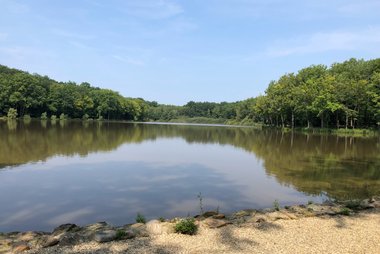
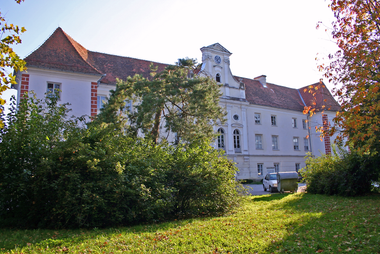
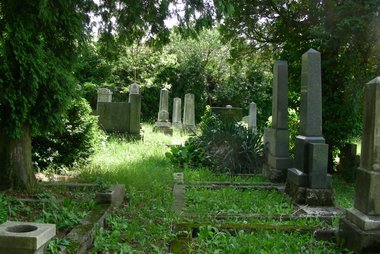
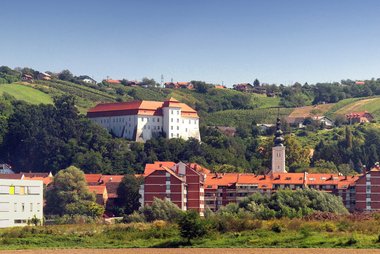
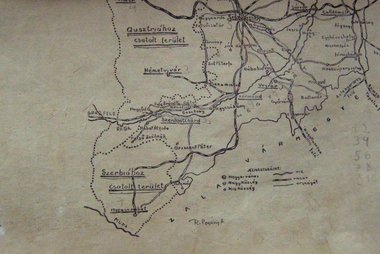
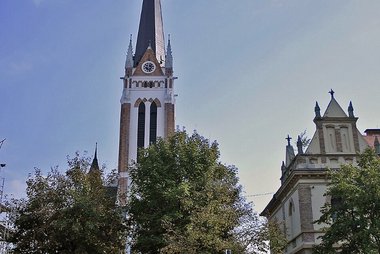
Prekmurje's highlights are spread over the region, so plan them by area: Goričko in the north, the plain around Murska Sobota in the middle, and Lendava in the south-east.
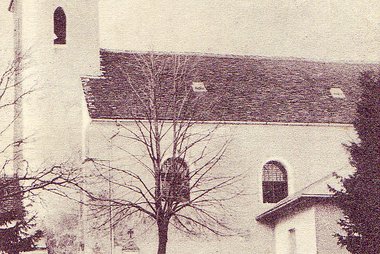
- Plečnik's Church of the Ascension in Bogojina is the region's most famous building. Architect Jože Plečnik extended the old church in 1925–1927, adding a round tower and a wooden ceiling covered with plates and jugs made by local potters. Visits are arranged with the parish office in Bogojina.
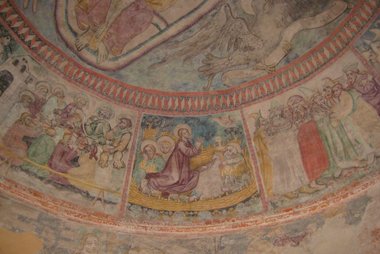
- Selo Rotunda stands on a low rise above the village of Selo, in the hills north of Moravske Toplice. This brick Romanesque rotunda dates from the 13th century and has medieval wall paintings inside.
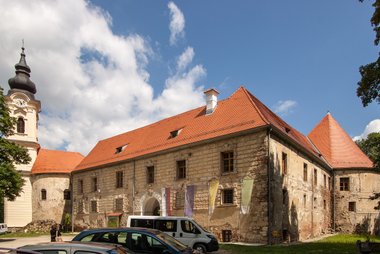
- Grad Castle is the largest Baroque castle in Slovenia, with more than 350 rooms. It is the seat of the Goričko Nature Park, with exhibitions, a large English-style park and walking trails around it.
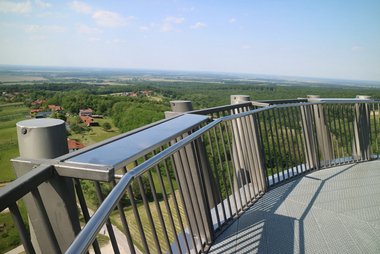
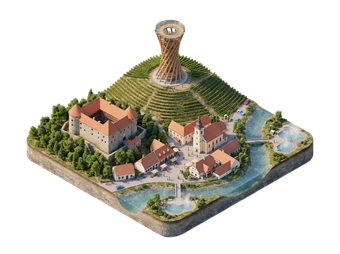
- Vinarium Tower rises 53.5 m above the vineyards of the Lendava hills. A panoramic lift takes you to the viewing level, with views over the Pannonian plain into Hungary, Austria and Croatia.
- Lendava Synagogue in the centre of Lendava is the main reminder of the town's former Jewish community and now holds an exhibition on its history.
- Murska Sobota Castle sits in a park in the centre of Murska Sobota, the regional capital. It houses the Pomurje Museum, the best place to learn about the region's history and folk life.
- Evangelical Church, Murska Sobota is a neo-Gothic church from 1909–1910 and one of the largest Lutheran churches in Slovenia, a sign of Prekmurje's strong Protestant tradition.
- Bukovniško Lake is a small lake in the forest near Dobrovnik, with a chapel, a spring that pilgrims visit and an adventure park for families.
Suositellut listat


Churches and Religious Sites
Prekmurje’s religious landscape features a diverse collection of architectural styles, from the 13th-century Romanesque Rotunda in Selo to Jože Plečnik’s modernist Church of the Ascension in Bogojina. This list includes Gothic parish churches, prominent Evangelical centers reflecting the region’s Reformation history, and the historic Lendava Synagogue. These sites highlight the cultural intersection of Slovenian and Hungarian influences through unique medieval frescoes, traditional wooden bell towers, and varied denominations including Catholic, Lutheran, and Pentecostal traditions.
48 paikkaa
Authentic Regional Cuisine
Prekmurje’s culinary landscape is defined by cross-border influences and traditional staples like bograč stew, bujta repa, and Prekmurje gibanica. This collection features historic inns in Murska Sobota, rural wine taverns, and family-run restaurants along the Austrian border. Highlights include establishments specializing in Styrian fried chicken, riverside fishing lodges, and venues famous for their local wine cellars and authentic regional recipes.
20 paikkaa
Local Crafts and Produce
Explore the commercial and artisanal landscape of Prekmurje, where traditional crafts meet modern agricultural production. This selection includes the long-standing gingerbread and beekeeping heritage of Medičarstvo Celec and the renowned Lušt tomato greenhouses. Alongside specialized services like stonemasonry, glazing, and roofing, the list covers essential local commerce, from regional wineries and fresh produce markets to large-scale hardware stores and convenient refueling points across the Murska Sobota area.
20 paikkaaMitä kokea
Prekmurje is about slow, rural pleasures. A few things to do here:
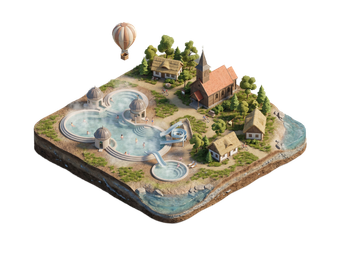
- Bathe in black thermal water: the springs at Moravske Toplice were found by accident during drilling for oil. The dark mineral water comes from about 1,000 m underground and is among the warmest spa water in Slovenia.
- Visit the Island of Love: on the Mura near the village of Ižakovci, a working floating mill turns in the river current. You can walk in the river forest, and in the warmer months rafts leave from the island for short trips on the Mura.
- Watch the storks: from spring to late summer, white storks nest on chimneys and poles in many lowland villages. Velika Polana is known for them.
- Cycle along the Mura: flat routes follow the river through floodplain forest and past old water mills.
- See potters at work: Filovci and Bogojina have a long pottery tradition, and some workshops welcome visitors.
- Stand in three countries at once: at Slovenia–Austria–Hungary Tripoint, a stone on a wooded hill in the far north of Goričko marks the point where Slovenia, Austria and Hungary meet.
Kierrokset ja aktiviteetit
Prekmurje — Kartta

Päiväretket
Prekmurje sits on three borders, so short trips into Austria and Hungary are easy. Times are by car from Murska Sobota.
- Radenci — about 15 minutes. A spa town across the Mura, known for its naturally sparkling mineral water.
- Bad Radkersburg — about 20 minutes, in Austria. A small walled old town on the Mura with a thermal spa.
- Jeruzalem wine hills — about 35 minutes. Steep vineyards, wine cellars and viewpoints in the hills above Ljutomer.
- Őrség National Park — about 45 minutes, in Hungary. The continuation of Goričko across the border, with scattered villages, wooden bell towers and forests.
- Ptuj — about 45 minutes. Slovenia's oldest town, with a castle above the Drava river and a famous carnival.
- Maribor — about 45 minutes by motorway. Slovenia's second city, with an old town on the Drava and the Pohorje hills behind it.
Missä vierailla
Most visitors stay in one of three bases. Murska Sobota is the regional capital, with the main train station, the museum and the most restaurants. Moravske Toplice is the spa village, close to Bogojina, Selo and the Goričko hills. Lendava is the bilingual Slovenian-Hungarian town in the south-east, below the wine hills and the Vinarium tower.
Heading west, Ptuj and Maribor are the nearest larger towns on the Drava river.
Saapuminen
- By air: The nearest large airport is Graz in Austria, about 1 hour by car to Murska Sobota. Zagreb Airport is about 2 hours away and Ljubljana Airport also about 2 hours. There is no direct public transport from the airports, so most visitors rent a car.
- By train: Trains link Ljubljana with Murska Sobota in about 3 hours or more, often with a change on the way. Trains from Maribor are quicker. Slovenian Railways
- By bus: Buses run from Ljubljana and Maribor to Murska Sobota, with local connections to Lendava and Moravske Toplice.
- By car: The A5 motorway runs from Maribor past Murska Sobota and Lendava to the Hungarian border. Murska Sobota is about 180 km from Ljubljana, or 2 hours by motorway. Motorways in Slovenia need an e-vignette.
Liikkuminen paikan päällä
- By car: the easiest way to see the region. Sights are spread over villages and hills, but distances are short, usually 15 to 40 minutes.
- Public transport: buses link Murska Sobota with Lendava, Moravske Toplice and the larger villages, but services in Goričko are rare, especially at weekends.
- Cycling: Prekmurje is one of the best cycling areas in Slovenia. The plain is flat, roads are quiet, and marked routes follow the Mura and lead through the villages. Goričko is hillier and suits e-bikes. Many spas and guesthouses rent bikes.
- On foot: marked trails run through Goričko and along the Mura. The towns are small and easy to walk.
Autoilu
- Is a car worth it?: Yes. Public transport is thin outside the towns, and a car is the practical way to reach churches, castles and viewpoints in one day.
- Parking: easy and usually free in villages and at the sights. In the centres of Murska Sobota and Lendava, check the signs for paid or time-limited zones.
- Roads: country roads are narrow but quiet. Watch for cyclists and farm tractors, especially during the harvest.
- Motorway: the A5 needs an e-vignette, also for short trips to the Hungarian border.
Ruoka ja juoma
Prekmurje has some of the most distinctive food in Slovenia, shaped by Hungarian and Pannonian cooking. The famous dessert is prekmurska gibanica, a rich layered cake with poppy seeds, cottage cheese, walnuts and apples, protected at EU level. Also look for bograč, a spicy meat stew cooked in a kettle, dödöli, potato dumplings with onions and crackling, and pumpkin seed oil, which is used on salads. The wine hills around Lendava and Goričko produce fresh white wines.
The best places to eat are the village inns and tourist farms (turistične kmetije) of Goričko and the plain, which serve home-style local dishes. The spa resorts in Moravske Toplice also offer Prekmurje menus, and the House of Gibanica near Turnišče is dedicated to the famous cake.
Turvallisuus ja terveys
Prekmurje is very safe, with little crime aimed at tourists. The main risks are outdoors: mosquitoes and ticks in the river forests along the Mura, so use repellent and check for ticks after walks. In summer, heat on the open plain can be strong, so carry water when cycling. Do not swim in the Mura itself, as the current is fast and unpredictable.
Historia
For most of its history, Prekmurje belonged to the Kingdom of Hungary, while the rest of today's Slovenia was ruled by the Habsburgs from Austria. Hungarian noble families built the region's castles. You can see their work at Grad Castle, at Lendava Castle, where the Esterházy family rebuilt a medieval fortress, and at Murska Sobota Castle, the seat of the Szapáry family for about 250 years.
Under Hungarian rule, Protestant communities survived in the hills of Goričko, and today many villages have both a Catholic and a Lutheran church. Prekmurje joined the new Kingdom of Serbs, Croats and Slovenes in 1919, after the First World War. A Hungarian minority still lives along the border, especially around Lendava, where Hungarian is an official language. Lendava also had a large Jewish community until the Holocaust; Lendava Synagogue remembers it today.
Tietoa maasta
Quick practical facts for Slovenia at a glance:
- Valuutta
- euro EUR · Korttimaksut · Laajasti hyväksytty
- Hätänumerot
- 112
- Sähkö
- 230 V · 50 HzTyyppi C / Tyyppi F
- Kielet
- sloveeni
- Hanavesi
- Juomakelpoista
- Ajosuunta
- Oikea
- Suuntanumero
- +386


Prekmurje – Suunnittele päiväsi
Muunna tämän oppaan paikat todelliseksi matkasuunnitelmaksi älykkäillä reiteillä, aika-arvioilla ja kaikella, mitä tarvitset onnistuneeseen matkaan.


Liittyvät määränpäät



Data: © OpenStreetMap contributors, Wikidata, Wikipedia, Tripomatic, Official websites. Tours by GetYourGuide. We earn commission from bookings. Travel guide generated with AI.
Suunnittele matkasi Tripomaticilla
- Tekoälypohjainen suunnitteluAnna tekoälyn rakentaa matkasuunnitelmasi, vastata matkakysymyksiin ja arkistoida varausasiakirjasi matkaasi.
- MatkustustiedotteetViralliset tiedotteet, vaaralliset säät, lakot ja luonnonkatastrofit matkasi jokaisen päivän paikkoihin.
- Juhlapyhät ja tapahtumatNäe matkasi päiville osuvat lomat, festivaalit ja sulkuajat sekä niiden vaikutus suunnitelmiisi.
- KustannusarvioTekoälypohjaiset matkakustannuserittelyt auttavat sinua hahmottamaan budjetin ennen lähtöä.
- Kierrokset ja liputVaraa kierroksia, jonon ohi -lippuja ja aktiviteetteja suoraan suunnitelmaasi.