


Francfort
Frankfurt is the financial centre of Germany. It has a rare skyline of glass towers on the Main river, and a rebuilt old town at its core. The European Central Bank and the stock exchange are based here.
The city is compact and easy to visit. It suits short stays of two to three nights. Museums, riverside parks and apple wine taverns give it a relaxed side. Goethe was born here in 1749.

Francfort – Tu prépares un voyage ?
Crée ton itinéraire jour par jour dans l'application Tripomatic.


Quand partir
Late spring and early autumn are the best times. Days are mild and sunny. Summer is warm and good for the river banks and beer gardens. Winters are cold and grey, but the Christmas market is a good reason to come.
The biggest annual event is the Museumsuferfest on the last weekend of August. Museums stay open late, and stages and food stalls line the river. Book early in October, when the Frankfurt Book Fair fills hotels and raises prices.
Meilleure période pour visiter: mai, juin, août, septembre
Sites incontournables
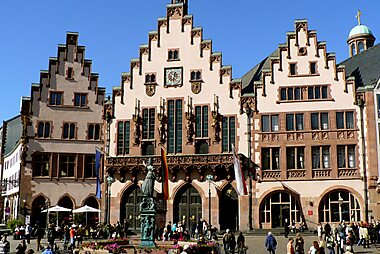
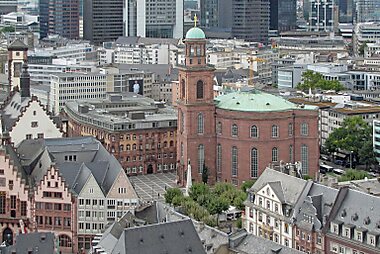
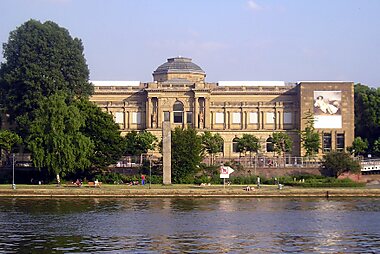
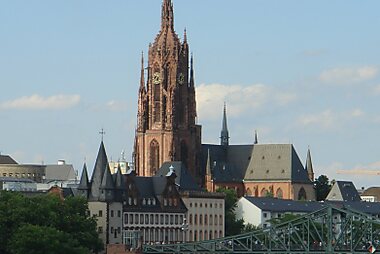

- Römer has been the city hall since 1405. Its stepped gable faces the main square and is the symbol of the city.
- Old Town is the compact historic centre between the Römer and the cathedral. Rebuilt half-timbered houses line its small lanes.
- Imperial Cathedral of Saint Bartholomew is where emperors were crowned from 1562 to 1792. Its red sandstone tower is 95 m high.
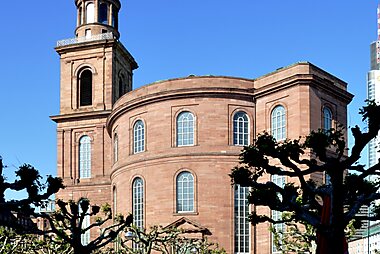
- Paulskirche hosted the first freely elected German parliament in 1848. Today it is a place for exhibitions and events.
- Goethe-Museum is the birthplace of Goethe, with rooms furnished in the style of the 1700s.
- Städel Museum is a major art museum. Its collection covers about 700 years of European painting.
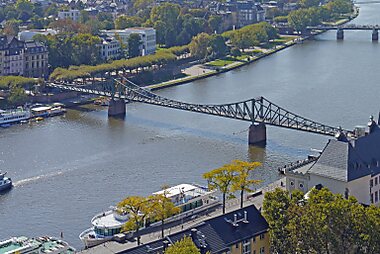
- Eiserner Steg is a pedestrian iron bridge from 1869. It is the best way to cross the Main on foot, with views of the skyline.
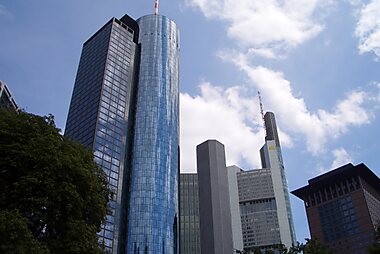
- Main Tower has a public viewing platform. It is the best place to see the whole skyline and the river.
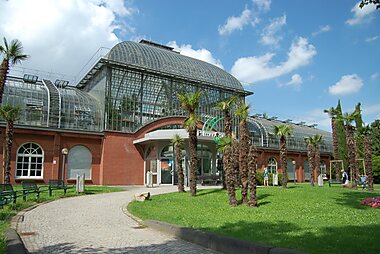
- Palmengarten is a large botanical garden from 1871. Its greenhouses are a good choice on a rainy day.
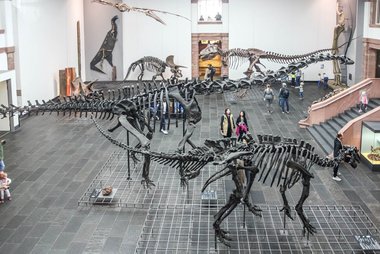
- Senckenberg Naturmuseum is a large natural history museum. It is known for its dinosaur skeletons and is good for families.
Listes recommandées

Frankfurt Essentials
Frankfurt's identity is shaped by its role as a global financial powerhouse and its deep historical roots. This selection spans from the 19th-century Renaissance-style Alte Oper to the modern symbols of the Stock Exchange—the Bull and Bear sculptures. It includes the Berlin Airlift Memorial at the former Rhein-Main Air Base, the oldest Jewish cemetery in the city dating back to 1180, and the Jazzkeller, a cellar club central to Germany's post-war music scene. Architectural highlights range from Ernst May’s functionalist housing to the 1960s concrete brutalism of Sankt Ignatius.
11 lieux
Museums and Culture
Frankfurt’s cultural heritage includes specialized museums, significant memorials, and historical architecture. This collection features one of Europe's oldest Jewish cemeteries, dating to 1180, alongside the neoclassical Nebbiensches Gartenhaus pavilion. Visitors can explore 1920s urban planning at the Ernst May House, view historic engines at the Hochhut collection, or see the iconic Bull and Bear bronze sculptures outside the stock exchange. The Berlin Airlift Memorial further commemorates the city’s role in post-war history.
8 lieux

Expériences à vivre
- Drink apple wine in a traditional tavern in Sachsenhausen. Many have long shared tables and a garden.
- Visit the Christmas market from late November to just before Christmas. It centres on Römerberg and Roßmarkt and extends to the Mainkai.
- Join the Museumsuferfest on the last weekend of August. Museums open late and the river banks fill with music and food.
- Walk or cycle the Main river path on a summer evening. Lawns on both banks fill with locals.
Visites et activités
Francfort — Carte

 Ouvrir la carte interactive
Excursions à la journée
Frankfurt is a good base for day trips. Rail links are fast and frequent.
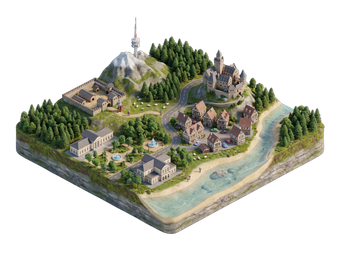
- Oberursel: about 30 minutes by U-Bahn. It is the gateway to hiking in the Taunus hills.
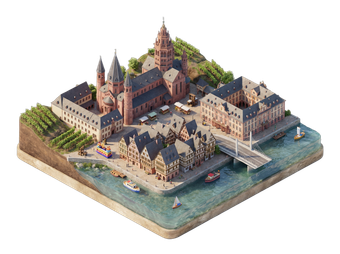
- Mainz: about 30 to 40 minutes by train. It has a pleasant old town and the Gutenberg Museum.
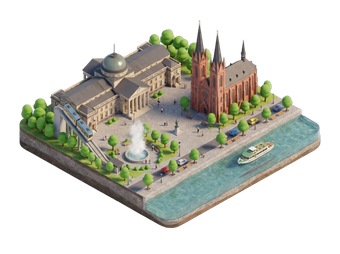
- Wiesbaden: about 40 minutes by train. It is a spa city with grand 19th-century buildings.
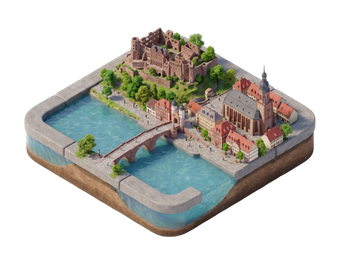
- Heidelberg: about 1 hour by fast train. A castle ruin stands above the old town and the Neckar river.
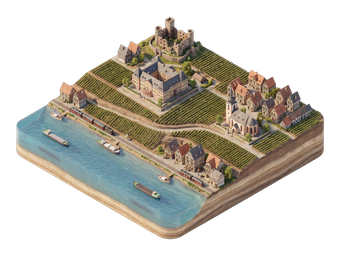
- Rheingau-Taunus: about 1 to 1.5 hours by train to Rüdesheim. Wine villages and castles line the Rhine.
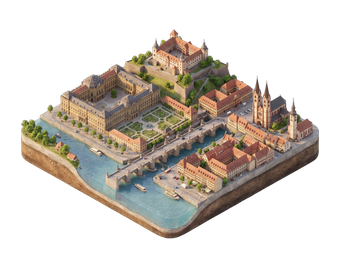
- Würzburg: about 1 hour 15 minutes by fast train. It has a baroque palace and Franconian wine.
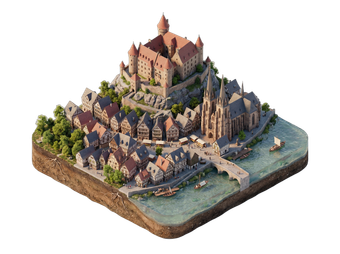
- Marburg: about 1 hour 15 minutes by train. It is a hilly university town with a castle.
Où s'aventurer
These nearby destinations work for day trips and longer stays.
- For city trips by train, see Wiesbaden and Marburg.
- For hiking and wine villages, see Rheingau-Taunus.
- For a start in the Taunus hills, see Oberursel.
- For the wider region, see Hesse.
S'y rendre
- By air: Frankfurt Airport (FRA) is one of the largest hubs in Europe. It is about 10 km southwest of the centre. The S8 and S9 S-Bahn trains reach the main station in about 10 to 15 minutes.
- By train: Frankfurt Hauptbahnhof is a major ICE hub. Fast trains reach Cologne, Stuttgart, Munich and Berlin directly. Mainz, Wiesbaden and Heidelberg are within about one hour. Book on Deutsche Bahn.
- By bus: Long-distance coaches stop at the central bus station near the main station. They are a cheap option for neighbouring cities.
Se déplacer
- Public transit: The RMV network runs U-Bahn, trams, buses and S-Bahn. Buy tickets at machines or in the RMVgo app. Check routes and fares on the RMV site.
- On foot and by bike: The centre and the river banks are flat and compact. Most sights are within a 20-minute walk of each other.
Conduite
- Is a car worth it?: No, for a city stay. Public transit is faster and parking is costly. A car is useful for the Taunus hills and Rhine valley villages.
- Parking: Use a multi-storey car park in or near the centre. Park-and-ride lots on the edge of the city are cheaper and link to the S-Bahn and U-Bahn.
- Restrictions: Check the current low emission rules before you drive in.
Gastronomie
Try the local apple wine, called Ebbelwoi, and green sauce with eggs and potatoes. Frankfurter sausages and the sweet Bethmännchen marzipan are also typical. Most taverns serve simple hearty food.
For eating, go to the stalls inside Kleinmarkthalle, a covered market with snacks and lunch counters. The taverns of Sachsenhausen are the classic area for an evening out. The streets around the Bahnhofsviertel have many international restaurants.
Sécurité et santé
Frankfurt is safe for visitors. Violent crime against tourists is rare.
- Pickpockets work in crowds at the main station, on Zeil and at the Christmas market. Keep bags closed.
- The area around the main station has a visible drug scene. Avoid side streets there late at night.
- Trade fairs fill hotels and raise prices. Book early.
Histoire
Frankfurt was a free imperial city for centuries. German emperors were elected and crowned at Imperial Cathedral of Saint Bartholomew. The city council worked from the Römer.
In 1848 the first German national parliament met in Paulskirche. The church is now a symbol of German democracy.
Bombs destroyed most of the old town in March 1944. Many buildings were rebuilt in a simple style after the war. In 2018 the new old town opened, with reconstructed houses between the cathedral and the Römer.
Since 1998 the European Central Bank has been based in the city, which confirms its role as a centre of finance.
Infos pays
Quick practical facts for Germany at a glance:
- Devise
- euro EUR € · Paiements par carte · Couramment acceptées
- Numéros d'urgence
- 112 Ambulance · Pompiers
- Électricité
- 230 V · 50 HzType C / Type F
- Langues
- allemand
- Eau du robinet
- Potable
- Sens de conduite
- À droite
- Indicatif téléphonique
- +49


Francfort – Planifie tes journées
Transforme les lieux de ce guide en un véritable itinéraire, avec des itinéraires intelligents, des estimations de temps et tout ce dont tu as besoin pour un voyage parfait.


Destinations associées
Data: © OpenStreetMap contributors, Wikidata, Wikipedia, Tripomatic, Official websites, geoBoundaries (CC BY 4.0). Tours by GetYourGuide. We earn commission from bookings. Travel guide generated with AI.
Planifie ton voyage avec Tripomatic
- Planification avec l'IAObtiens une journée prête à l'emploi en un geste, laisse l'IA répartir ta liste de souhaits sur ton voyage ou planifie tout en discutant.
- Alertes de voyageAvis officiels, météo extrême, grèves et risques naturels pour les lieux de chaque jour de ton voyage.
- Jours fériés et événementsConsulte les jours fériés, festivals et fermetures durant ton voyage, ainsi que leur impact sur tes projets.
- Estimation des coûtsDétails des coûts de voyage générés par l'IA pour savoir quel budget prévoir avant de partir.
- Visites et billetsRéserve des visites, des billets coupe-file et des activités directement dans ton planning.