


Val de Loire
The Loire Valley is a long river region in central and western France. It is known for its Renaissance châteaux, formal gardens and wine villages. The valley between Sully-sur-Loire and Chalonnes-sur-Loire is a UNESCO World Heritage Site. French kings and nobles built their country homes here, so the area has far more grand houses than most regions.
The pace is slow, and the towns are small. The region suits a trip of three to seven days by car, train or bike. It works well for travelers who like history, gardens, cycling and local wine. Tours, Blois and Angers are the main bases.

Val de Loire – Tu prépares un voyage ?
Crée ton itinéraire jour par jour dans l'application Tripomatic.


Quand partir
May to September is the best time. Days are warm and long, and all the châteaux and gardens are open. April and October are quieter and still pleasant. Winter is cool and grey, and some smaller sights close or shorten their hours. Many châteaux add Christmas decorations in December.
The biggest annual event is the International Garden Festival at Château de Chaumont-sur-Loire. Designers build new show gardens each year, and the festival runs from spring to autumn.
Meilleure période pour visiter: mai, juin, juillet, août, septembre
Sites incontournables
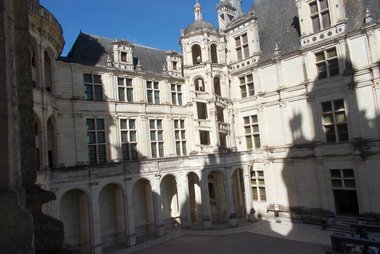
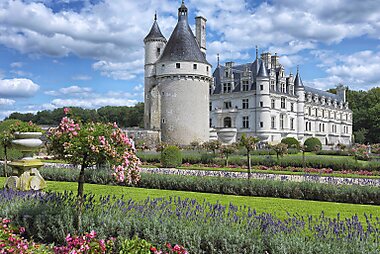
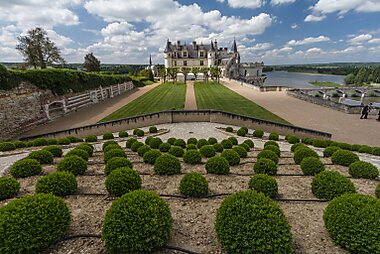

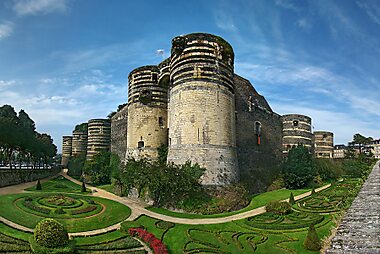
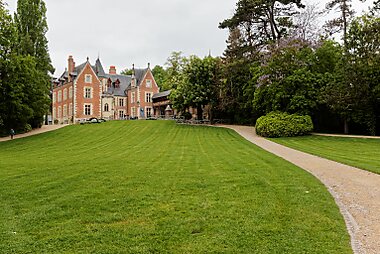
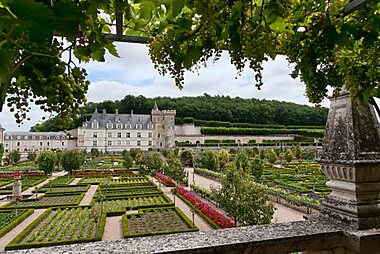
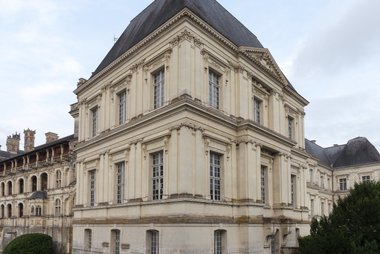
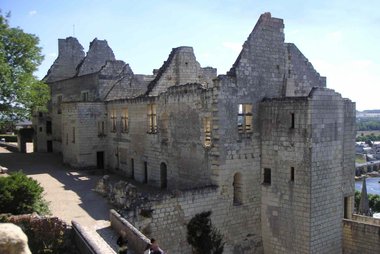

The big châteaux are 30 to 90 minutes apart, so plan two or three a day at most.
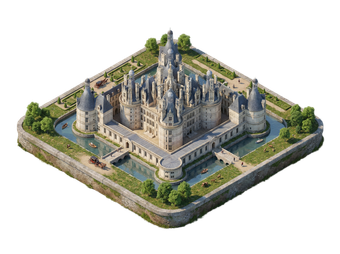
- Château de Chambord is the largest château in the valley. Francis I began it in 1519 as a hunting lodge. Its roof has many towers and chimneys, and the central double staircase is the famous detail.
- Château de Chenonceau stands on arches over the Cher river. Several powerful women shaped it, so it is often called the Ladies' Château. The long gallery over the water is the highlight.
- Château d'Amboise looks over the Loire at Amboise. Château du Clos Lucé is a short walk away. Leonardo da Vinci spent his last years there and died in 1519.
- Château de Villandry is known for its gardens, with a patterned vegetable garden. It is best from late spring to early autumn.
- Château d'Azay-le-Rideau is a small Renaissance château on an island in the Indre river. Built between 1518 and 1527, it is reflected in the water around it.
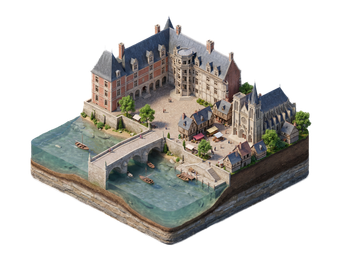
- Royal Castle of Blois has wings from four different periods around one courtyard. It is in the middle of Blois, so it is easy to visit without a car.
- Château de Cheverny is a 17th-century château that is still lived in by the same family. It inspired the home of Captain Haddock in the Tintin books.
- Chinon Castle is a hilltop fortress above the old town of Chinon. Joan of Arc met the future king here in 1429.
- Abbaye de Fontevraud is a large abbey. Its church holds tomb figures of the Plantagenet royals, including Henry II and Eleanor of Aquitaine.
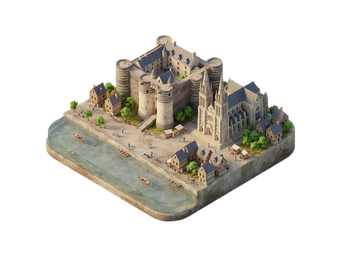
- Château d'Angers is a dark fortress with a large wall of towers. Inside is the Apocalypse Tapestry, a medieval work.
Listes recommandées


Expériences à vivre
Things to do in the Loire Valley, beyond visiting châteaux.
- Cycle the Loire à Vélo: Ride a short stage between two châteaux, for example along the river from Tours. Stop at village cafés on the way.
- Taste wine in a rock cellar: Many wine villages near Vouvray, Chinon and Saumur have cellars cut into the soft limestone cliffs. Most offer tastings.
- See a show garden: The garden festival at Château de Chaumont-sur-Loire changes every year, so it is worth a visit even if you went before.
- Watch a night show: In summer, several châteaux hold evening light and sound shows. Royal Castle of Blois is one.
- Fly in a hot-air balloon: Balloon flights over the valley leave from villages near Amboise in good weather. Book ahead.
- Canoe on the river: In summer, you can paddle on the Loire or the smaller Cher and Indre rivers.
Visites et activités
Val de Loire — Carte

Excursions à la journée
Most visitors stay inside the valley. These places lie just outside it and make a good day out. Times are one way.
- Nantes: about 35 to 45 minutes by train from Angers. It is a large city with a castle and a big old centre.
- Beauval Zoo, near Saint-Aignan: about 1 hour by car from Tours. It is a large zoo known for its giant pandas.
- Le Mans: about 1 hour by train from Tours. It has a well-kept medieval old town.
- Chartres: about 1 hour by car from Orléans. Its Gothic cathedral has famous stained glass.
- Sancerre: about 1 hour 30 minutes by car from Orléans. This hilltop wine village makes crisp white wine.
Où s'aventurer
S'y rendre
- By air: Most visitors fly to the Paris airports (Charles de Gaulle or Orly) and continue by train. For the west, Nantes Atlantique (NTE) is the nearest large airport. Check the train connection from each airport.
- By train: From Paris, high-speed TGV trains from Montparnasse reach Saint-Pierre-des-Corps, the main station for Tours, in about 1 hour. Angers is about 1.5 hours from Paris by TGV. Regional trains also run from Paris Austerlitz to Orléans and Blois. Book on SNCF Connect.
- Between towns: Regional TER trains link Tours with Blois, Orléans, Saumur, Angers and Chinon.
Se déplacer
- Train: The main line follows the river from Orléans through Blois, Amboise and Tours to Saumur and Angers. Chenonceau, Chaumont-sur-Loire and Azay-le-Rideau have stations or are a short taxi ride from one. Buy tickets at the station or on SNCF Connect.
- No train: Château de Chambord and Château de Villandry have no station. You need a car, a bike, a taxi or an organised minibus tour from a nearby town.
- Cycling: The Loire à Vélo route is about 900 km long and mostly flat. It passes many châteaux, and e-bikes are easy to hire in the main towns. Many regional trains carry bikes. See Loire à Vélo.
- Local buses and trams: Tours and Angers have tram lines. Smaller towns have limited buses.
Conduite
- Is a car worth it?: Yes, for a multi-day trip. Many châteaux and wine villages are far from stations. A car saves a lot of time.
- Roads: The A10 and A85 motorways run along the valley. Tolls apply on much of the A10. Smaller roads are quiet and scenic.
- Parking: Most châteaux have a large car park, often paid. In town centres, use the signed car parks and avoid the pedestrian old towns.
Gastronomie
Loire food is simple and fresh. Try rillettes, a potted pork spread, and goat cheeses such as Sainte-Maure-de-Touraine, Selles-sur-Cher and Crottin de Chavignol. River fish, often served with a butter sauce, is a regional dish. In Anjou, fouées are small warm breads that are stuffed with fillings. Tarte Tatin, an upside-down caramel apple tart, comes from the Sologne area.
The valley makes many wines. Vouvray is mostly white, Chinon and Saumur-Champigny are light reds, and Sancerre is a crisp white. Many producers welcome visitors for tastings.
For eating, look at the old-town squares in Tours, Angers and Saumur. Tourist menus near the big châteaux are often average, so walk into the nearest town instead.
Sécurité et santé
The Loire Valley is very safe for visitors. Petty theft is rare but can happen in crowded places.
- Cars: Do not leave bags or valuables visible in parked cars at château car parks.
- Floods: The Loire can flood in winter and spring. Check river-side paths and campsites before you go.
- Heat: Summer afternoons can be hot, and many châteaux have little shade. Carry water.
Histoire
In the 15th century the French kings moved their court to the Loire. The royal court lived in the valley for much of the next 150 years. In 1429 Joan of Arc met the future king at Chinon Castle. She then helped end the English siege of Orléans. Orléans still celebrates this each spring.
Earlier, the Plantagenet kings of England held land here. Henry II and Eleanor of Aquitaine are linked to Abbaye de Fontevraud.
The Renaissance came after French kings brought Italian artists home from war in Italy. Francis I built Château de Chambord and invited Leonardo da Vinci to live near Château d'Amboise. In 1588 Henry III had the Duke of Guise killed at Royal Castle of Blois. Later kings returned to Paris, and the châteaux became quiet country homes.
Infos pays
Quick practical facts for France at a glance:
- Devise
- euro EUR € · Paiements par carte · Largement acceptées
- Numéros d'urgence
- 112
- Électricité
- 230 V · 50 HzType C / Type E
- Langues
- français
- Eau du robinet
- Potable
- Sens de conduite
- À droite
- Indicatif téléphonique
- +33


Val de Loire – Planifie tes journées
Transforme les lieux de ce guide en un véritable itinéraire, avec des itinéraires intelligents, des estimations de temps et tout ce dont tu as besoin pour un voyage parfait.


Destinations associées


Data: © OpenStreetMap contributors, Wikidata, Wikipedia, Tripomatic, Official websites. Tours by GetYourGuide. We earn commission from bookings. Travel guide generated with AI.
Planifie ton voyage avec Tripomatic
- Planification avec l'IAObtiens une journée prête à l'emploi en un geste, laisse l'IA répartir ta liste de souhaits sur ton voyage ou planifie tout en discutant.
- Alertes de voyageAvis officiels, météo extrême, grèves et risques naturels pour les lieux de chaque jour de ton voyage.
- Jours fériés et événementsConsulte les jours fériés, festivals et fermetures durant ton voyage, ainsi que leur impact sur tes projets.
- Estimation des coûtsDétails des coûts de voyage générés par l'IA pour savoir quel budget prévoir avant de partir.
- Visites et billetsRéserve des visites, des billets coupe-file et des activités directement dans ton planning.