


Molde
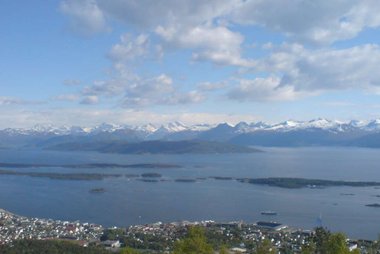
Molde is a small, friendly town on the north shore of the Romsdalsfjord, in the north-west of Norway. It is known as the "Town of Roses" for the roses that grow in its parks and gardens. Its other famous feature is the view: from the hills above town you see the fjord, its islands and a long chain of mountains known as the Molde panorama.
The town makes a good, quiet base for two or three nights. In summer it fills up for one of Europe's oldest jazz festivals. From here you can reach the Atlantic Ocean Road, the fishing village of Bud and the mountain roads around Åndalsnes in a day.

Molde – Tu prépares un voyage ?
Crée ton itinéraire jour par jour dans l'application Tripomatic.


Quand partir
Summer (June to August) is the best time to visit, with mild days, very long evenings and every museum and summer boat running. It rains often in every season, and autumn is the wettest time of year. Winter is dark and cold, and the famous mountain road Trollstigen is closed.
The biggest event is Moldejazz, a week-long jazz festival in mid-July. It has run since the early 1960s, and concerts fill the town's venues, streets and parks. Book accommodation early if you plan to come that week.
Sites incontournables

Most of the town's sights are a short walk from the harbour; Varden and Hjertøya take a little more effort.
- Varden is the 407 m hill above town and the classic viewpoint for the Molde panorama of about 222 peaks. Walk up on the signed "green corridor" trail from the centre, or drive up the Vardevegen road in summer.
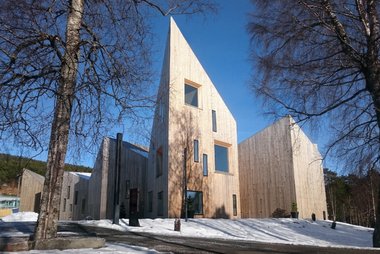
- Romsdalsmuseet - Krona is the newer building of the Romsdal Museum, one of Norway's largest folk museums, with an art collection, a photo archive and a permanent exhibition. The open-air part around it has more than 40 old farm buildings from across the region and a rebuilt town street that shows Molde before the fire of 1916.
- Molde Cathedral is a white brick church from 1957, built after the war destroyed the older church on this site. It has been the cathedral of the Diocese of Møre since 1983.
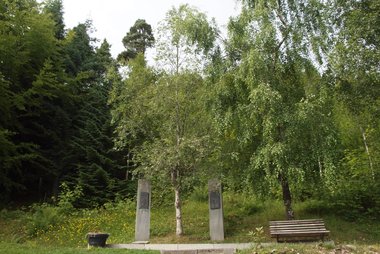
- Kongebjørka marks the birch tree where King Haakon VII and Crown Prince Olav sheltered during a German air raid in April 1940. A photo of them under the tree became a famous symbol of Norwegian resistance.
- The Town Hall roof garden holds the largest collection of roses in town. In front of the Town Hall stands the bronze statue Rosepiken, a girl with roses, surrounded by a fountain.
- The Fishery Museum on Hjertøya is an open-air fishing village on an island about 10 minutes by boat from the centre. Old houses, boat sheds and a cod-liver oil factory show coastal life from around 1850. It is open in summer only.
Listes recommandées

Expériences à vivre
Molde's best moments are outdoors, between the fjord and the mountains.
- Walk the green corridor to Varden. This signed nature trail starts at the quay and climbs about 4.4 km through parks and pine forest to the viewpoint. Allow about 1.5 hours up. On a clear summer evening the light stays on the mountains until late.
- Take the summer boat to Hjertøya. Combine a guided tour of the Fishery Museum with a walk around the island and a picnic by the shore.
- Watch an autumn storm on the coast. When strong westerly winds hit the Hustadvika coast, waves break over the rocks along the Atlantic Ocean Road. Watch from a safe viewpoint, not from the bridges.
- Ride the Rauma Line. From Åndalsnes, the railway climbs the Romsdal valley past high cliffs and waterfalls. In summer, tourist trains stop at the Kylling Bridge high above the river.
- See a Molde FK match. The local football club is one of Norway's most successful, and plays its home games at Aker Stadion by the fjord.
Visites et activités
Molde — Carte

Excursions à la journée
Molde is surrounded by coast, fjords and mountains, and the best day trips need a car or a careful look at the bus timetable.
- Hjertøya (about 10 min by summer boat from the town square): A small island with the open-air Fishery Museum and a nature path.
- Bud (about 50 min by car): An old fishing village on the open coast. Ergan Coastal Fort, a German fort from the Second World War, is now a museum here.
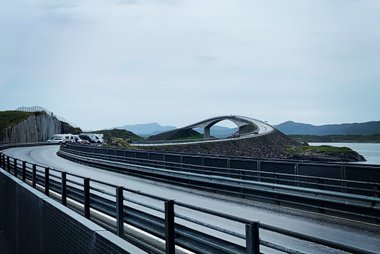
- Storseisundbrua and the Atlantic Ocean Road (about 1–1.5 hours by car): An 8 km National Tourist Route that jumps between small islands on eight bridges. It is most dramatic in stormy weather. Combine it with Bud for a coastal loop.
- Trollkyrkja (about 30 min by car, then a steep hike of about 1.5 hours each way): Marble caves with an underground waterfall. Bring a headlamp.
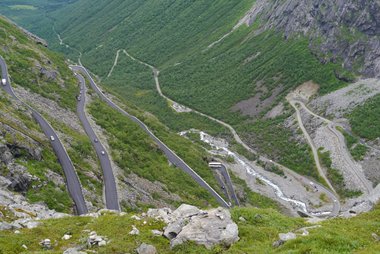
- Åndalsnes and Trollstigen (about 1 hr 15 min by car with a short ferry, then 30 min more to Trollstigen): The town sits under the Romsdal Alps. From there, Trollstigen og Stigfossen climbs the mountain in 11 hairpin bends. Trollstigen is usually open from mid/late May until October or November, depending on snow; check before you go. Rødven Stave Church, a small wooden church from around 1300, is a short detour on the way.
- Kristiansund (about 1.5–2 hours by car or bus over the Atlantic Ocean Road): A harbour town spread over several islands, known for its history of salted and dried cod.
- Ålesund (about 2 hours by bus or car, with a ferry): A coastal town famous for its Art Nouveau buildings, rebuilt after a fire in 1904.
Où s'aventurer
Molde sits in Møre og Romsdal, a county of fjords, islands and steep mountains.
- Ålesund is the region's largest town, south across the fjord.
- Åndalsnes is the gateway to the Romsdal valley, Trollstigen and the Rauma railway.
- Geirangerfjord is a UNESCO-listed fjord, about 3.5 hours away by car with a ferry. It is better as an overnight trip than a day trip.
- Runde is a bird island beyond Ålesund, known for its puffin colony in summer.
S'y rendre
- By air: Molde Airport Årø is about 5 km east of the centre, with direct flights to Oslo and Bergen. FRAM buses take 10–20 minutes to the centre, and a taxi takes about 10 minutes. Molde Airport: transport
- By train: There is no railway in Molde. The nearest station is Åndalsnes, at the end of the Rauma Line from Dombås, which connects with trains from Oslo and Trondheim. A connecting bus from Åndalsnes to Molde takes about 1 hour.
- By bus: Regional FRAM buses link Molde with Åndalsnes, Kristiansund (over the Atlantic Ocean Road) and Ålesund (about 2 hours with a ferry).
- By sea: The Hurtigruten coastal ships call at Molde every day on the route between Bergen and the far north.
- By car: Allow about 4 hours from Trondheim and about 7 hours from Oslo. Most routes from the south include a car ferry, such as Vestnes–Molde (about 35 minutes).
Se déplacer
- On foot: The centre is small and easy to walk, from the harbour to the museum and the cathedral. Paths up to Varden start right in town, but they are steep.
- Bus: FRAM runs the local and regional buses. Buy tickets in the FRAM or Entur app. On regional routes you can also pay by bank card on board. FRAM
- Boat: In summer a small passenger boat runs from the town square to Hjertøya. Car ferries leave from the harbour for Vestnes.
- Taxi: Taxis are available, but expensive; order by phone or at the taxi stand.
Conduite
- Is a car worth it? Not for the town itself, which is compact and walkable. A car is the easiest way to explore the coast and mountains, because buses are infrequent outside the main routes.
- Ferries: Many routes in the region include short car ferries. Expect queues on summer weekends.
- Mountain roads: Trollstigen and other high roads close in winter. Trollstigen is usually open from mid/late May until October or November, depending on snow; check before you go.
- Parking: The centre has paid car parks and on-street parking. The parking area at the top of Varden is private.
Gastronomie
Molde has a small but good food scene based on fish and seafood from the coast. Look for dishes with cod, salmon and shellfish, and for bacalao, a stew made with dried and salted cod that is a speciality of this part of Norway.
The best area to eat is the waterfront around the town square and the harbour, where restaurants and cafés look out over the fjord. During Moldejazz, food stalls and outdoor bars add to the choice in the centre.
Sécurité et santé
Molde is very safe, and serious crime against visitors is rare. Normal care with your belongings is enough, especially during the crowded festival week.
The main risks are natural. Weather changes fast on the coast and in the mountains, so carry warm, waterproof clothes even in summer. On hikes such as Varden or Trollkyrkja, wear good shoes, as paths can be steep and wet. In the Trollkyrkja caves, rocks can be loose, so bring a headlamp and take care.
Histoire
Molde grew from a small trading place around 1600, when merchants shipped timber and herring from the fjord. It received its town charter in 1742.
In the 19th century, Molde became a popular summer resort for wealthy visitors from Europe, who came by steamship for the views and the mild climate. This is when it became known as the Town of Roses. You can still see the style of that time in Bygata, the old town street in the open-air part of the Romsdal Museum.
Two disasters shaped the town you see today. In 1916, a fire destroyed about a third of Molde. German bombing in April and May 1940 then destroyed about two-thirds of the town. During those weeks, King Haakon VII, Crown Prince Olav and the government escaped here from Oslo, and Molde was in effect Norway's capital for a week. The famous photo at Kongebjørka dates from those days. After the war the centre was rebuilt in a modern style, including Molde Cathedral.
Infos pays
Quick practical facts for Norway at a glance:
- Devise
- couronne norvégienne NOK kr · Paiements par carte · Largement acceptées
- Électricité
- 230 V · 50 HzType C / Type F
- Langues
- norvégien bokmål, norvégien nynorsk
- Eau du robinet
- Potable
- Sens de conduite
- À droite
- Indicatif téléphonique
- +47


Molde – Planifie tes journées
Transforme les lieux de ce guide en un véritable itinéraire, avec des itinéraires intelligents, des estimations de temps et tout ce dont tu as besoin pour un voyage parfait.


Destinations associées


Data: © OpenStreetMap contributors, Wikidata, Wikipedia, Tripomatic, Official websites. Tours by GetYourGuide. We earn commission from bookings. Travel guide generated with AI.