



Moscou
Moscow is Russia's capital and by far its largest city, home to more than 13 million people. At its centre sits the Moscow Kremlin, a walled fortress of cathedrals and palaces that has anchored the city since the Middle Ages. It faces the wide cobbled expanse of Red Square. Few cities pack this much history, art, and architecture into one compact centre.
A visit here suits travelers who want grand monuments, world-class museums, and a working, modern metropolis rather than a quiet weekend break. The metro alone is a sight in its own right, with stations built like underground palaces. Moscow rewards a few unhurried days. Give yourself time to see the Kremlin properly, wander the boulevards, and take in a ballet or an opera in the evening.

Moscou – Tu prépares un voyage ?
Crée ton itinéraire jour par jour dans l'application Tripomatic.


Quand partir
Late spring and early autumn are the most pleasant times to visit, with mild days and thinner crowds. Summer is warm and lively, with long daylight hours. Winter is cold and snowy. A large Christmas and New Year fair fills Red Square in December and January, with market stalls, an ice rink, and light displays. It is worth timing a trip around if you don't mind the cold — just pack warm layers.
Meilleure période pour visiter: août
Sites incontournables
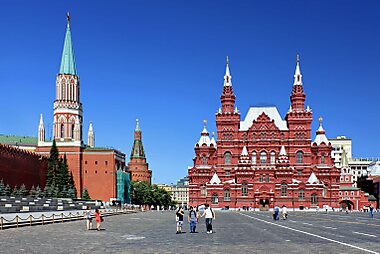

- Red Square is the historic heart of the city, framed by the Kremlin wall, GUM, and Lenin's Mausoleum. It is at its most dramatic after dark, when the surrounding buildings are lit up.
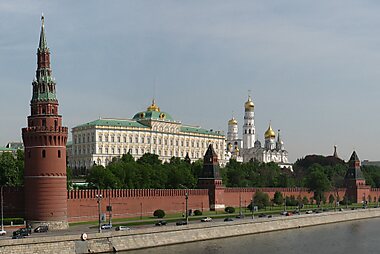
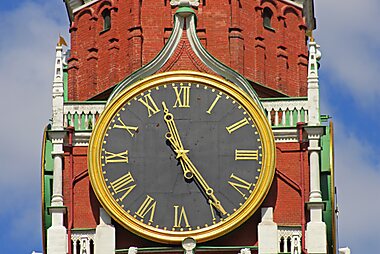
- The Moscow Kremlin is Russia's seat of government and a walled complex of cathedrals, palaces, and towers dating back centuries. Several of its cathedrals and museums are open to visitors on a timed ticket.
- Inside the Kremlin walls, the Armoury holds the imperial crown jewels, coronation robes, and the famous Fabergé eggs.
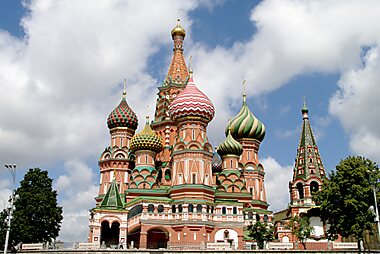
- Saint Basil's Cathedral, with its cluster of colourful onion domes, is one of the most photographed buildings in the world and marks the southern end of Red Square.
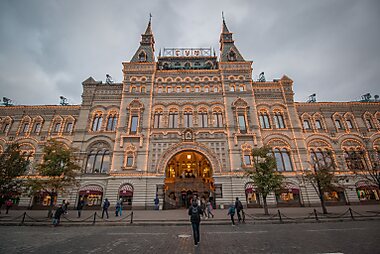
- GUM department store is a grand 19th-century shopping arcade facing Red Square, worth a look for its glass-roofed galleries even if you are not buying anything.
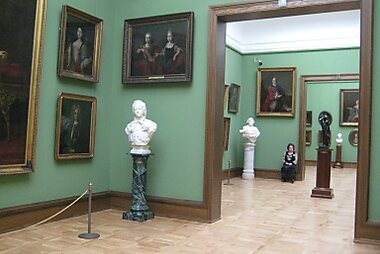
- The Tretyakov Gallery holds one of the world's largest collections of Russian art, from medieval icons to Repin's best-known paintings.
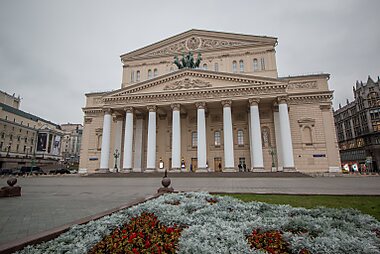
- The Bolshoi Theatre is Russia's premier stage for ballet and opera, famous for its grand columned facade and gold-and-red auditorium.
- Novodevichy Convent is a fortified 16th-century convent on a bend of the Moskva River, a UNESCO World Heritage Site with a working monastery and a peaceful lakeside cemetery.
Listes recommandées

Moscow Must-Sees
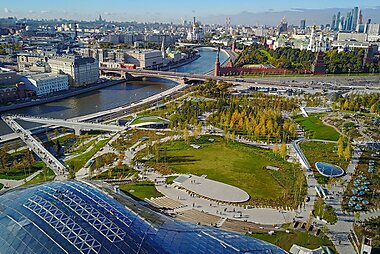
Moscow’s central core revolves around Red Square, home to the 15th-century Kremlin fortress and the multi-colored domes of Saint Basil’s Cathedral. The area highlights Russia's political evolution, from the imperial Assumption Cathedral to the Soviet-era Lenin’s Mausoleum. Nearby, the Tretyakov Gallery houses the world’s largest collection of Russian fine art, while the Novodevichy Convent offers a preserved example of Moscow Baroque architecture. Modern urban design is showcased at Zaryadye Park, featuring a floating bridge over the Moskva River.
12 lieux

Moscow's Hidden Gems
Moscow’s landscape extends beyond central landmarks to include neo-Gothic cathedrals, 18th-century gardens, and specialized museums. This collection features the oldest planetarium in Russia and the star-shaped Central Academic Theatre of the Russian Army. Visitors can explore the 115-meter-long Borodino Battle panorama, the historic Novodevichy Cemetery, and the literary history of Patriarch’s Ponds. From the industrial-turned-art spaces of the Museum of Russian Impressionism to the ancient hillforts in Filevsky Park, these sites showcase the city’s architectural and cultural evolution.
20 lieux

Moscow's Sacred Sites
Moscow’s religious landscape encompasses centuries of architectural evolution, from the 16th-century tent-roofed Church of the Ascension in Kolomenskoye to the neo-Gothic Catholic Cathedral of the Immaculate Conception. The selection includes the Kremlin’s historic cathedrals, the primary seat of the Russian Patriarch at Danilov Monastery, and the Naryshkin Baroque style of the Church of the Intercession at Fili. These sites house significant Russian icons, royal burial vaults, and fortified monastic complexes that once defended the city's southern borders.
20 lieux


Expériences à vivre
- Cross the floating bridge in Zaryadye Park for a skyline view over the Kremlin and the river below.
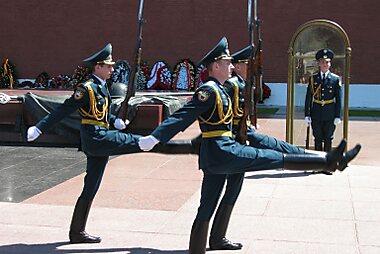
- Watch the changing of the guard at the Tomb of the Unknown Soldier, held on the hour outside the Kremlin wall.
- In winter, skate on the outdoor rink that covers Red Square as part of the Christmas fair.
- Take an evening river cruise along the Moskva, passing the Kremlin's illuminated towers and the Stalin-era skyscrapers.
Visites et activités
Moscou — Carte

 Ouvrir la carte interactive
 Excursions à la journée
Several historic towns make an easy day out from Moscow. Two of Russia's most famous Golden Ring destinations are also within reach if you have a longer day.
- Sergiyev Posad — ≈1h15 by suburban train from Yaroslavsky station. Home to the Trinity Lavra of St. Sergius, one of the most important monasteries in Russian Orthodoxy and a UNESCO World Heritage Site.
- Zvenigorod — ≈1h by train or car. A quiet riverside town with the fortified Savvino-Storozhevsky Monastery, popular for a relaxed half-day away from the city.
- Kolomna — ≈1.5–2h by train from Kazansky station. A walled kremlin, quiet old town, and a small museum devoted to kalach, a traditional bread once baked only here.
- Vladimir — ≈2h by high-speed train from Kursky station. A flagship Golden Ring stop, with white-stone cathedrals dating to the 12th century that are also UNESCO-listed.
- Suzdal — ≈40 minutes further by bus or taxi from Vladimir. Often combined with Vladimir into one long day: a small, largely unspoiled medieval town of churches, monasteries, and wooden architecture.
S'y rendre
Entry requirements vary by nationality and change often. Citizens of the EU and around 60 other countries can apply online for an e-visa. A handful of countries, including the US, UK, Canada, Australia, and New Zealand, need a standard visa arranged in advance through a consulate. Check current rules with the nearest Russian embassy or consulate before booking. Also confirm your airline's own entry document checks.
- By air: Moscow has four airports with scheduled passenger service — Sheremetyevo (SVO), Domodedovo (DME), Vnukovo (VKO), and Zhukovsky (ZIA). There have been no direct flights between the EU and Russia since 2022. Most international travelers connect through hubs such as Istanbul, Dubai, Belgrade, or Yerevan. Each airport has an Aeroexpress train to the city centre, taking 35–45 minutes.
- By train: Moscow is Russia's rail hub. The high-speed Sapsan links Leningradsky station to St. Petersburg in about 4 hours. Long-distance trains from across Russia and the CIS arrive at Moscow's nine mainline stations, and most of those connect directly to the metro.
- By bus: Long-distance coaches serve destinations within Russia and neighboring CIS countries from the Central Bus Station (Salaryevo). International coach links from Europe have been suspended since 2022.
Se déplacer
- Metro: Fast, frequent, and famous for its ornate Stalin-era stations. Foreign-issued bank cards do not work at the turnstiles or ticket machines. Buy a rechargeable Troika card with cash at any station and top it up as you go — it also covers buses, trams, and the river tram. A day pass is worth it if you're moving around a lot. See the official Moscow Metro guide for fares and station details.
- Taxi / ride-hailing: Yandex Go is the dominant app. It works well for both fares and English-language addresses, and foreign ride-hailing apps are not available.
- On foot: The historic centre around Red Square and the Kremlin is compact and pleasant to walk. Moscow is a vast city overall, though, and most sights beyond the centre are best reached by metro.
Conduite
- Is a car worth it?: No. Central Moscow has heavy, unpredictable traffic, and the metro is almost always faster between sights. A car only makes sense for trips well outside the city, such as the Golden Ring towns.
- Parking: Paid parking zones cover the centre, billed by the hour through the city's official parking app or a roadside meter. Renting a car for a short stay is rarely worth the hassle.
Gastronomie
Moscow's dining scene ranges from cheap canteen-style business lunches to elaborate Soviet-era restaurants with live music. Georgian food is everywhere and often the best value in the city, alongside hearty central Russian dishes like solyanka and pelmeni.
For a special meal, seek out the historic food hall inside GUM department store on Red Square. It sells ice cream, pastries, and classic Soviet-style dishes in an ornate 19th-century arcade. For everyday eating, the streets around Nikolskaya and Stoleshnikov Lane cluster with cafés and restaurants. Danilovsky Market is a good spot for a casual meal from stalls run by cooks from across the former Soviet Union.
Sécurité et santé
Moscow is generally safe for tourists, with low levels of violent crime in the areas visitors spend time in. Stay alert for pickpockets on the metro and in crowded tourist spots. Use official taxi apps rather than accepting rides offered by drivers waiting outside the airport, who often overcharge.
Foreign-issued Visa, Mastercard, and Maestro cards do not work anywhere in Russia — not in shops, restaurants, or ATMs. This has been the case since international sanctions took effect in 2022. Bring enough cash for at least your first few days; US dollars or euros exchange easily. If you're staying longer, consider getting a Russian-issued Mir card, available at bank branches in the main airports. Mobile wallets linked to foreign cards do not work either.
Tap water is best avoided for drinking; stick to bottled or filtered water, as is standard across the country.
Histoire
Moscow is traditionally said to have been founded in 1147 by the prince Yuri Dolgoruky. He built a wooden fort on the hill where the Moscow Kremlin now stands. It grew into the seat of the Grand Duchy of Moscow and, by the 16th century, of the Tsars. That status is marked by the building of Saint Basil's Cathedral to celebrate a military victory.
In 1812, Napoleon's army occupied an almost empty Moscow, which then burned for days in a fire that destroyed most of the city. The French withdrew within weeks, badly weakened by the disaster. The capital moved to St. Petersburg for two centuries, returning to Moscow only after the 1917 revolution, when the Kremlin again became the seat of government. Much of the city's 20th-century character dates from the Soviet decades that followed, from the grand metro stations to the "Seven Sisters" skyscrapers.
Infos pays
Quick practical facts for Russia at a glance:
- Devise
- rouble russe RUB · Paiements par carte · Espèces préférées
- Numéros d'urgence
- 112
- Électricité
- 220 V · 50 HzType C / Type F
- Langues
- russe
- Eau du robinet
- Boire avec précaution
- Sens de conduite
- À droite
- Indicatif téléphonique
- +7


Moscou – Planifie tes journées
Transforme les lieux de ce guide en un véritable itinéraire, avec des itinéraires intelligents, des estimations de temps et tout ce dont tu as besoin pour un voyage parfait.




