


Murska Sobota
Murska Sobota is the main town of Prekmurje, the flat farming region in the far north-east of Slovenia. It is a small, green and quiet town, and it works best as a base for exploring the plain, the Mura river and the hills of Goričko. For centuries the town belonged to Hungary, and this past still shows in its Baroque castle, its large Lutheran church and its food.
The centre is compact, with a big castle park, a pedestrian main street and a few landmarks that you can see in half a day. Most visitors combine one or two nights here with the thermal spas of Moravske Toplice, cycling on flat country roads and long meals in village inns. Do not expect crowds or famous sights. The town suits travellers who like slow trips, local food and easy access to Austria and Hungary.

Murska Sobota – Tu prépares un voyage ?
Crée ton itinéraire jour par jour dans l'application Tripomatic.


Quand partir
Late spring and September are the best times to visit, with warm days that are good for cycling and walking. July and August are hot, with afternoon storms on some days. Winter is cold and grey, with frost on most nights and some snow.
In December, the town centre hosts Festive December (Praznični december), a month-long programme of festive events in the streets and squares.
Meilleure période pour visiter: mai, juin, septembre
Sites incontournables
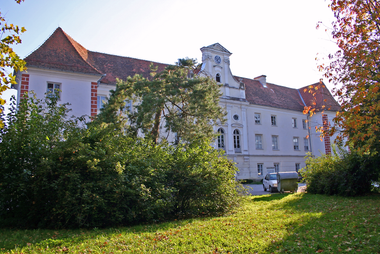
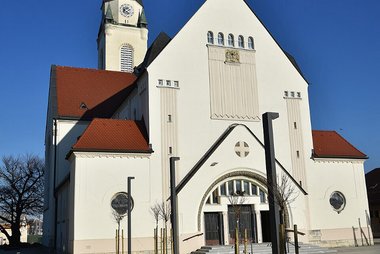
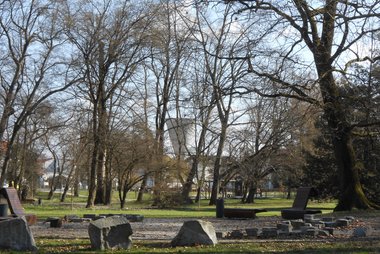
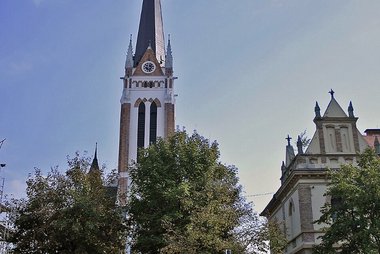
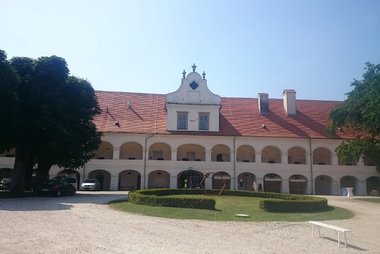
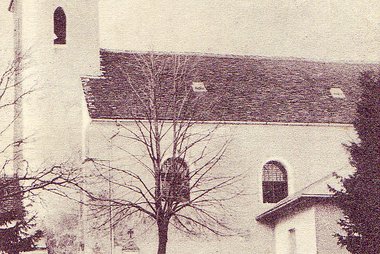
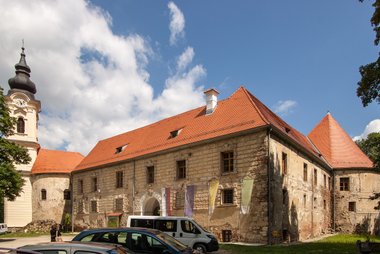
The main sights are in and around the castle park, all within a 10-minute walk of each other. Allow half a day, plus extra time for the lake and Rakičan.
- Murska Sobota Castle is the town's main landmark. The Szapáry family remodelled it in Baroque style, and it has corner towers and an arcaded courtyard. Today it holds the Pomurje Museum, the best place to learn about the history and folk life of the region.
- City Park surrounds the castle and is one of the oldest parks in Slovenia, with oaks more than 200 years old, a small lake and a playground. An avenue lined with monuments leads from the castle to the Lutheran church.
- Evangelical Church is a neo-Gothic church from 1909–1910 and one of the largest Lutheran churches in Slovenia. It shows how strong the Protestant tradition is in this region.
- Murska Sobota Cathedral is a Neo-Romanesque church from 1912 with Art Nouveau details. It has been the seat of a Catholic diocese since 2006, and its organ is among the largest in Slovenia.
- Victory Monument stands on the main square, Trg zmage. This white marble memorial to Red Army and Yugoslav soldiers was unveiled in 1945. It survived the end of communism, when many similar monuments elsewhere were removed.
- Expano Pavilion is the Slovenian pavilion from EXPO 2015 in Milan, moved to Lake Sobota on the southern edge of town. Its interactive exhibition, with a 3D film and a virtual balloon flight, is a fun introduction to the region. It is closed on Mondays.
- Rakičan Manor, on the south-eastern edge of town, is a former Batthyány family manor with four wings around a courtyard. It is surrounded by an English-style park with a nature trail.
Listes recommandées

Expériences à vivre
Life in Murska Sobota is slow and outdoors. A few things worth doing:
- Take a summer break at Lake Sobota: the lake next to Expano is used for swimming, paddleboarding, windsurfing and fishing in summer.
- Float on the Mura: at the Island of Love near Ižakovci, you can watch a floating mill turn in the current, and in the warmer months join a short raft trip on the river.
- Cycle to the villages: on flat roads across the plain you pass fields, small churches and white storks nesting on chimneys from spring to late summer.
- Bathe in black thermal water: the spas of Moravske Toplice, 10 minutes away, use dark mineral water from deep underground. An evening soak is an easy end to a day of cycling.
Visites et activités
Murska Sobota — Carte

Excursions à la journée
Murska Sobota sits close to the Austrian and Hungarian borders, and most of Prekmurje is within half an hour. A car makes day trips much easier. Times are by car.
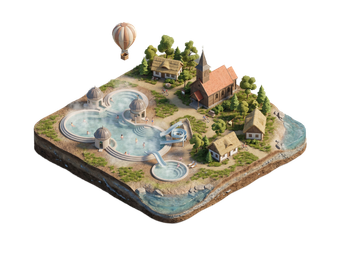
- Moravske Toplice — about 10 minutes. A spa village with large thermal pools fed by dark, very warm mineral water.
- Plečnik's Church of the Ascension in Bogojina — about 15 minutes. A village church rebuilt by architect Jože Plečnik, with a ceiling decorated with local pottery.
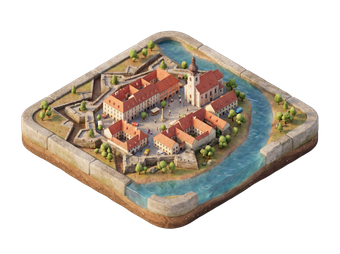
- Bad Radkersburg — about 20 minutes, in Austria. A small walled old town on the Mura with a thermal spa.
- Grad Castle — about 25 minutes north. One of the largest castles in Slovenia, in the green hills of the Goričko Nature Park.
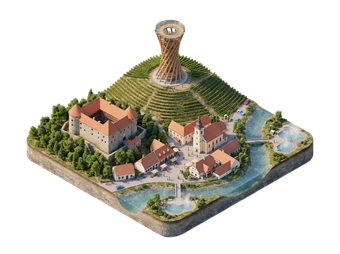
- Lendava — about 25 minutes. A bilingual Slovenian-Hungarian town with a castle, a former synagogue and a viewing tower above the vineyards.
- Maribor — about 40 minutes by motorway. Slovenia's second city, on the Drava river.
- Ptuj — about 45 minutes. Slovenia's oldest recorded town, with a castle above the Drava and a famous carnival.
Où s'aventurer
Murska Sobota is the centre of Prekmurje, so the region's guide is the best place for a wider overview of the area.
- Moravske Toplice is the closest spa resort and an easy alternative base, a few kilometres to the north-east.
- Lendava is the region's second town, in the south-east near the Hungarian and Croatian borders.
S'y rendre
- By air: The nearest airport is Graz in Austria, about 100 km and roughly 1 hour by car. Zagreb Airport is about 1 hour 45 minutes away and Ljubljana Airport just over 2 hours. Public transport from the airports is slow and needs several changes, so most visitors rent a car.
- By train: Trains run from Ljubljana and Maribor, but services are few and slow. The trip from Ljubljana takes about 3 hours or more, and some connections need a change. Check the current timetable before you travel. The station is a short walk east of the centre. Slovenian Railways
- By bus: Buses from Ljubljana and Maribor are often faster than the train. The bus from Ljubljana takes roughly 2.5 to 3 hours, and from Maribor about 1 hour.
- By car: The A5 motorway passes just south of town. Murska Sobota is about 180 km and 2 hours from Ljubljana, and 55 km from Maribor. Motorways in Slovenia need an e-vignette.
Se déplacer
- On foot: The centre is small and flat, and all the main sights are within walking distance. Lake Sobota and Expano are about 3 km south of the centre, a walk of 35 to 40 minutes.
- Cycling: The land is completely flat, and cycling is the best way to reach Rakičan, the lake and nearby villages. Longer routes follow the Mura river.
- Buses: Regional buses connect the town with villages and spa resorts, but services are sparse in the evenings and at weekends. A car is more practical for the wider region.
- Tourist information: The office on Slovenska ulica and the Expano centre give maps and advice. Visit Murska Sobota
Conduite
- Is a car worth it?: Not for the town itself, which is small and walkable. For the spas, the Mura and the villages of Prekmurje, a car is the most practical choice, because buses are infrequent.
- Parking: Parking is easy compared with larger Slovenian cities. There are car parks around the centre; check the signs for paid zones.
- Rural roads: Expect tractors and cyclists on narrow country roads, especially in summer and during the harvest.
Gastronomie
Murska Sobota is a good place to try Prekmurje cooking, which is closer to Hungarian food than to the rest of Slovenia. Look for prekmurska gibanica, a rich layered cake with poppy seeds, cottage cheese, walnuts and apples. Savoury dishes include bograč, a spicy meat stew, and dödöli, potato dumplings with onions. Pumpkin seed oil is used on salads, and local white wines come from the hills of Goričko and Lendava.
In town, restaurants and cafés cluster along the pedestrian Slovenska ulica and around the central market. For more traditional food, drive out to the village inns and tourist farms (turistične kmetije) in the surrounding countryside.
Sécurité et santé
Murska Sobota is a very safe town, and crime against visitors is rare. Normal care with valuables is enough.
The main risks are outdoors. Ticks live in the forests and meadows, including the river forests along the Mura, so check yourself after walks. Summer days can be hot, so carry water when cycling across the open plain.
Histoire
Murska Sobota was first recorded in 1297, and for most of its history it was a market town in the Kingdom of Hungary. The Batthyány family rebuilt the local fortress in the 17th century. In 1687 the estate passed to the Szapáry family, who gave Murska Sobota Castle its Baroque look and kept it for about 250 years. The town council bought the castle in 1934.
At the end of the First World War, in 1919, the short-lived Republic of Prekmurje was declared in the town. Later that year the region joined the new Kingdom of Serbs, Croats and Slovenes. Hungary occupied the town again from 1941. In 1944 the Jewish community was deported to Auschwitz, and its synagogue was demolished in 1954. Soviet troops arrived in 1945, and the Victory Monument on the main square was unveiled that August.
The town's mixed religious past is still visible in the centre. The Evangelical Church serves one of Slovenia's largest Lutheran communities, and the Murska Sobota Cathedral became the seat of a new Catholic diocese in 2006. In 2010, Slovenia's first Holocaust memorial was unveiled at the railway station.
Infos pays
Quick practical facts for Slovenia at a glance:
- Devise
- euro EUR · Paiements par carte · Largement acceptées
- Numéros d'urgence
- 112
- Électricité
- 230 V · 50 HzType C / Type F
- Langues
- slovène
- Eau du robinet
- Potable
- Sens de conduite
- À droite
- Indicatif téléphonique
- +386

Murska Sobota – Planifie tes journées
Transforme les lieux de ce guide en un véritable itinéraire, avec des itinéraires intelligents, des estimations de temps et tout ce dont tu as besoin pour un voyage parfait.


Destinations associées


Data: © OpenStreetMap contributors, Wikidata, Wikipedia, Tripomatic, Official websites, geoBoundaries (CC BY 4.0). Tours by GetYourGuide. We earn commission from bookings. Travel guide generated with AI.
Planifie ton voyage avec Tripomatic
- Planification avec l'IAObtiens une journée prête à l'emploi en un geste, laisse l'IA répartir ta liste de souhaits sur ton voyage ou planifie tout en discutant.
- Alertes de voyageAvis officiels, météo extrême, grèves et risques naturels pour les lieux de chaque jour de ton voyage.
- Jours fériés et événementsConsulte les jours fériés, festivals et fermetures durant ton voyage, ainsi que leur impact sur tes projets.
- Estimation des coûtsDétails des coûts de voyage générés par l'IA pour savoir quel budget prévoir avant de partir.
- Visites et billetsRéserve des visites, des billets coupe-file et des activités directement dans ton planning.