


Ubud
Ubud is a town in the green hills of central Bali. It is the island's center for traditional dance, painting and crafts. Rice fields, river valleys and Hindu temples start at the edge of town.
It suits visitors who want culture, walking, yoga and slow days more than beaches or nightlife. Most people stay three to five nights. Ubud is also a good base for day trips to temples, waterfalls and volcano viewpoints. The 2006 book and 2010 film Eat, Pray, Love added to its fame.

Ubud – Tu prépares un voyage ?
Crée ton itinéraire jour par jour dans l'application Tripomatic.


Quand partir
The dry season runs from about May to September. Days are sunny and mornings are cool. August is the driest month, and it is also the busiest. The wet season runs from about November to March, with heavy afternoon rain, but the rice fields are at their greenest.
The big event of the year is the Ubud Writers & Readers Festival in October. Authors from Indonesia and abroad speak at venues around town. Book rooms early for that week.
Meilleure période pour visiter: août
Sites incontournables
In town
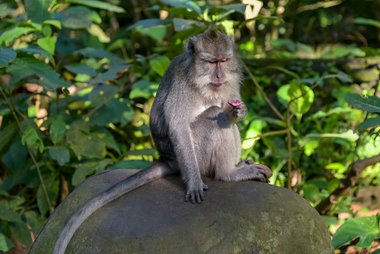
- Sacred Monkey Forest Sanctuary is a forest with temples and hundreds of long-tailed macaques. Keep food and loose items hidden, and do not touch the monkeys.
- Puri Saren Agung Ubud Palace was the home of Ubud's royal family. The courtyards are open to visitors, and dance shows are held here in the evening.
- Saraswati Temple is a temple known for its lotus pond, next to the palace. It is a good place to take photos.
- Ubud Market is best in the early morning, when locals buy fruit, flowers and offerings. Later in the day, stalls sell mostly souvenirs.
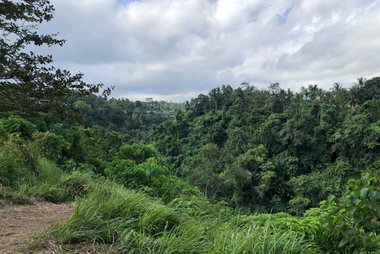
- Campuhan Ridge Walk is an easy ridge walk with views over green valleys. Go early or late to avoid the heat.
- Museum Puri Lukisan has a good collection of Balinese painting from the 1930s onward. Neka Art Museum and Don Antonio Blanco Museum show more of the local art scene.
Just outside town
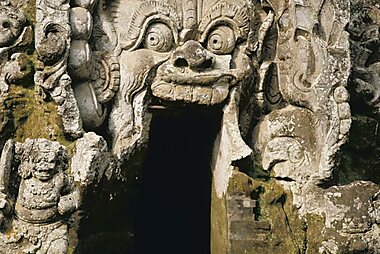
- Goa Gajah is an old cave sanctuary with a carved entrance and bathing pools. It is a short drive east.
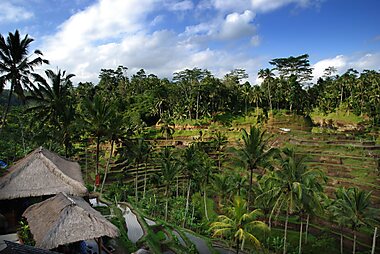
- Tegalalang Rice Terrace is the famous set of stepped rice fields, about 30 minutes north. Visit early to avoid crowds.
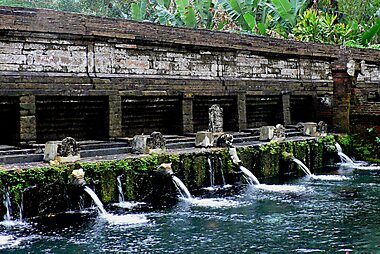
- Pura Tirta Empul is a spring temple where Balinese Hindus take part in a purification ritual. Visitors can join in with a sarong.
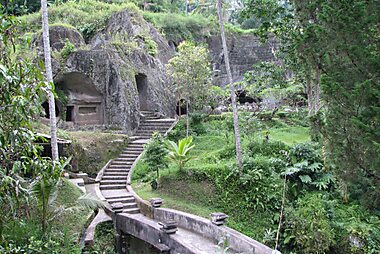
- Gunung Kawi Temple is a group of shrines carved into a rock face in a river valley. The walk down has about 300 steps.
Listes recommandées


Bali Yoga & Spa Retreats
Ubud serves as Bali's spiritual center, hosting a dense concentration of holistic wellness facilities. This collection features major hubs like The Yoga Barn alongside boutique studios like Ubud Yoga House, which offers open-air classes overlooking active rice terraces. The list includes specialized spas such as Karsa and Sedona, known for traditional Balinese treatments in outdoor pavilions, and Bali Life Studio, which integrates martial arts with yoga practice.
13 lieuxExpériences à vivre
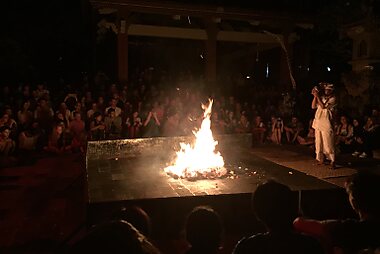
- Watch a traditional dance show in the evening. Legong, barong and the kecak "fire dance" are the main types, and Kecak Fire and Trance Dance is one of the best known. Most shows start around 7 p.m. and last about an hour.
- Join a Balinese cooking class. Many start with a visit to the morning market.
- Take a water purification ritual (melukat) at a spring temple. Wear a sarong, and follow the priest or guide.
- Try a morning yoga or meditation class. Ubud has many studios.
- Walk through the rice fields at sunrise or late afternoon. Paths near Kajeng Rice field are easy to follow.
- See the white herons come in to roost at The White Herons of Petulu. Go in the late afternoon.
- Visit during a ceremony. Offerings and processions happen often, and the major festivals are Galungan and Kuningan. Nyepi, the "Day of Silence" in March or April, closes the whole island for 24 hours, including the airport.
Visites et activités
Ubud — Carte

 Ouvrir la carte interactive
Excursions à la journée
Start with the closest options. Times are one way by car or scooter. Traffic is often slow.
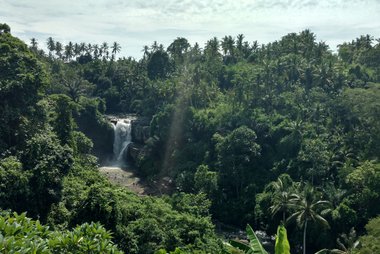
- Tegenungan Blangsinga Waterfall: about 25 minutes south. A waterfall with a swimming area. There are many steps down.
- Sidemen valley: about 1 hour east. Quiet rice fields and weaving villages, with views of Mount Agung.
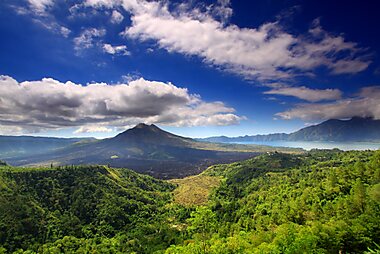
- Kintamani: about 1 hour north. Viewpoints over Lake Batur and the volcano.
- Gunung Batur: about 1 hour north. Many people start a sunrise hike in the dark around 3 or 4 a.m. A local guide is common for the trail.
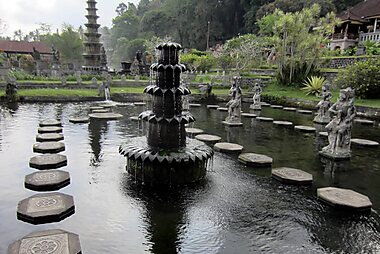
- Tirta Gangga Water Palace: about 1.5 to 2 hours east. A water garden with pools and stepping stones. Combine it with Sidemen.
- Lake Beratan and Jatiluwih: about 1.5 to 2 hours northwest. A lake temple and UNESCO-listed rice terraces. This is a long day.
Où s'aventurer
- For beaches, shops and nightlife, go to Seminyak, about 1.5 hours southwest.
- For the island capital and its markets, see Denpasar.
- For snorkeling and diving, take a boat to Nusa Lembongan or Nusa Penida Marine Protected Area. Boats leave from the east coast, so plan a full day or an overnight stay.
S'y rendre
- By air: Most visitors land at I Gusti Ngurah Rai International Airport (DPS), near Kuta. Ubud is about 35 to 40 km north. The transfer takes 1.5 hours or more, depending on traffic. A private car or app taxi costs roughly 350,000 to 500,000 IDR.
- Shuttles: Tourist shuttle buses run between the south and Ubud a few times a day. They are cheaper than a taxi but slower. Check the current timetable.
- Public bus: Trans Metro Dewata corridor 4 runs from Ubung terminal to the Monkey Forest car park for IDR 4,400, with card or QRIS payment. There is no direct airport bus, and it is not practical with luggage.
- By road from other towns: Drivers and shuttles link Ubud with Sanur, Canggu, Seminyak and the east-coast harbors. There is no train on Bali.
- Tourist levy: Foreign visitors pay a one-time Bali tourist levy of 150,000 IDR. Pay it online before you arrive, or at the airport. Love Bali
Se déplacer
- Public transport: There is no useful city bus or tram in Ubud.
- Taxi and ride-hailing: Private drivers and local taxis are everywhere. Some streets in the center restrict app pick-ups, so you may need to walk a few minutes to a main road. Agree the price before you start with a local taxi.
- Driver for the day: A car with a driver for day trips costs about 600,000 to 900,000 IDR. This is the easiest way to reach the temples and waterfalls outside town.
- Scooter: Many visitors rent scooters. Traffic is dense and the roads are narrow, so only ride if you are experienced. You need a license that covers motorbikes.
- On foot and by bike: The center is walkable, but sidewalks are narrow and broken in places. It is hot and humid. Bicycles work for the quieter lanes north and east of the center.
Conduite
- Is a car worth it?: Not for the town itself. A car with a driver is better for temples and waterfalls around Ubud. Traffic is dense, roads are narrow and Indonesia drives on the left.
- Parking: Parking in the center is limited. Most hotels and the main sights have small paid car parks.
- Restrictions: Some central streets are one-way, and the main roads jam in the late afternoon.
Gastronomie
Ubud has a wide range of food, from simple family-run warung to creative vegetarian and vegan cafes. Local dishes to try include babi guling (roast suckling pig), bebek betutu (slow-cooked duck) and nasi campur (rice with small side dishes). Many places also serve healthy bowls and raw food.
Good areas for eating are Jalan Hanoman and Jalan Dewi Sita, and the streets near Ubud Market. Cheap warung are on the side lanes. Many restaurants add a service charge and tax to the bill, so check before you tip.
Sécurité et santé
Ubud is safe for visitors. Petty theft and bag snatching from scooters happen, so carry bags on the side away from the road. The biggest risks are road accidents and heat.
- Tap water is not safe to drink. Use bottled or filtered water, and avoid ice from unknown sources.
- Monkeys at Sacred Monkey Forest Sanctuary can bite and scratch. Seek medical care quickly after any bite.
- Use only licensed money changers, with a clear rate board. Count the cash before you leave.
- Dress modestly at temples, and cover shoulders and knees. Do not step on offerings on the ground.
- Heavy rain can cause flooding and landslides on hill roads in the wet season.
Histoire
Ubud grew around the royal family at Puri Saren Agung Ubud Palace, which still stands in the center. The town became a center for art from the late 1920s. European artists such as Walter Spies and Rudolf Bonnet settled here and worked with local painters. This mix created the modern Balinese painting style. The Pita Maha artists' group was founded in 1936 with support from the Ubud royal family. Museum Puri Lukisan shows work from this tradition.
Older sites are close by. Goa Gajah and Gunung Kawi Temple are about 1,000 years old and show the early Hindu-Buddhist period on Bali. In the 1950s Antonio Blanco moved here, and his home is now Don Antonio Blanco Museum. Tourism grew from the 1970s, and today art, dance and ceremonies are still part of daily life.
Infos pays
Quick practical facts for Indonesia at a glance:
- Devise
- roupie indonésienne IDR Rp · Paiements par carte · Couramment acceptées
- Numéros d'urgence
- 112
- Électricité
- 230 V · 50 HzType C / Type F
- Langues
- indonésien
- Eau du robinet
- Non potable
- Sens de conduite
- À gauche
- Indicatif téléphonique
- +62


Ubud – Planifie tes journées
Transforme les lieux de ce guide en un véritable itinéraire, avec des itinéraires intelligents, des estimations de temps et tout ce dont tu as besoin pour un voyage parfait.


Destinations associées
Data: © OpenStreetMap contributors, Wikidata, Wikipedia, Tripomatic, Official websites. Tours by GetYourGuide. We earn commission from bookings. Travel guide generated with AI.
Planifie ton voyage avec Tripomatic
- Planification avec l'IAObtiens une journée prête à l'emploi en un geste, laisse l'IA répartir ta liste de souhaits sur ton voyage ou planifie tout en discutant.
- Alertes de voyageAvis officiels, météo extrême, grèves et risques naturels pour les lieux de chaque jour de ton voyage.
- Jours fériés et événementsConsulte les jours fériés, festivals et fermetures durant ton voyage, ainsi que leur impact sur tes projets.
- Estimation des coûtsDétails des coûts de voyage générés par l'IA pour savoir quel budget prévoir avant de partir.
- Visites et billetsRéserve des visites, des billets coupe-file et des activités directement dans ton planning.