


Vannes
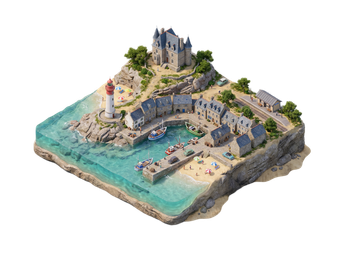
Vannes is a walled medieval town at the head of the Gulf of Morbihan, a sheltered inland sea with about 40 islands. It was a capital of the Dukes of Brittany. Its centre has timber-framed houses, old gates and a cathedral, all within a short walk.
It suits a relaxed stay of two to four nights. Many visitors use Vannes as a base for boat trips in the gulf and for the standing stones at Carnac. The town is also a good stop for travellers who like Breton food, markets and the sea without big crowds.

Vannes – Tu prépares un voyage ?
Crée ton itinéraire jour par jour dans l'application Tripomatic.


Quand partir
Late spring and summer are the best time for boat trips, walks and outdoor meals. Rooms are busiest in July and August. May, June and September are quieter. Winter is mild but grey and wet, and some island services run less often.
The biggest annual event is the Festival d'Arvor, held in mid-August since 1965. It brings Breton music, dance parties, parades and street shows to the old town. Fireworks are launched from the ramparts on 15 August. Book rooms well ahead for that weekend.
Every two years, the Semaine du Golfe fills the gulf with traditional sailing boats. The next one is in 2027.
Meilleure période pour visiter: juin, juillet, août, septembre
Sites incontournables
- Cathédrale Saint-Pierre stands in the heart of the old town. It mixes a Romanesque tower with Gothic and later work. Saint Vincent Ferrer, a Spanish preacher who died in Vannes, is honoured here, and his relics are kept in a chapel.
- The ramparts and their gardens run along the foot of the old town. The Tour du Connétable and several old gates are part of the walls. Walk the garden path for the best views of the walls, then enjoy the old wash houses below.
- Porte Saint-Vincent is the gate that opens from the old town to the port. Jean Bugeau built it in 1622-24.
- Château-Gaillard is a medieval house that now holds the archaeology museum. The collections cover the prehistory of the Gulf of Morbihan area, including the standing-stone region around Carnac.
- La Cohue is a medieval market hall beside the cathedral. It now holds the fine arts museum.
- Place Henri IV and the streets around the cathedral have many timber-framed houses. Look for the carved figures known as Vannes and his wife on one house front.
- Église Saint-Patern is a church a short walk north of the cathedral.
- The port is a short walk from the old town. A canal links it to the gulf, and boats and cafés line the quays.
Listes recommandées


Historical Vannes
Vannes preserves an extensive architectural legacy within its medieval core. The city's fortifications, built between the 3rd and 17th centuries, surround a network of timber-framed houses and granite mansions. Key sites include the Saint-Pierre Cathedral, the 19th-century Town Hall, and the 'Vannes and his Wife' stone carving. Cultural highlights are found at the Château-Gaillard archaeological museum and the La Cohue Fine Arts Museum, housed in a former medieval market hall.
12 lieux

Outdoor & Leisure in Vannes
Vannes offers a diverse range of outdoor activities centered around its historic harbor and green belts. The city’s leisure landscape includes the Port de Vannes marina, which serves as a gateway to the Gulf of Morbihan, and specialized sports facilities like the Aquagolfe swimming complex and Patinium ice rink. Urban parks such as the Butte de Kérino provide elevated viewpoints over the Marle river, while the Vallons de Kercado and Jardin du Manoir de Trussac offer quiet walking paths and landscaped gardens within the city limits.
10 lieuxExpériences à vivre
Vannes has a strong local culture and a sea-based way of life. These are some of the best things to do.
- Take a boat trip in the gulf. Cruises pass between the islands and stop at Île aux Moines or Île d'Arz. Tides and currents are strong here, so the boat captains decide the route.
- Go to a fest-noz. This is a traditional Breton dance evening where everyone joins in. Festival d'Arvor in August has many, and other evenings take place across the region during the year.
- Walk or cycle to Conleau. This small peninsula is about 3 km from the centre and has sea views and a sea-water swimming pool.
- Paddle a sea kayak with a local club or guide. The gulf is calm, but strong tidal currents make a guide a good idea.
Visites et activités
Vannes — Carte

 Ouvrir la carte interactive
Excursions à la journée
Vannes is a good base for day trips on land and by boat. Times are approximate, one way, by car unless stated.
- Île aux Moines and Île d'Arz: about 20 to 30 minutes to the boat departure points, then a short crossing. Île d'Arz boats leave from Conleau, about 20 minutes. The Île aux Moines shuttle leaves from Baden (Port-Blanc) all year. Gulf cruises run from April to September. The islands have quiet lanes, small beaches and gulf views.
- Auray: about 20 minutes by car or train. The old river port of Saint-Goustan has stone houses and a stone bridge.
- Gavrinis: about 25 to 30 minutes to Larmor-Baden, then a guided boat visit. A large stone burial mound on a small island has carved stones inside. Book ahead in the high season.
- Carnac: about 40 minutes. Thousands of standing stones stand in long lines in the fields. The Carnac area has one of the largest groups of prehistoric stones in the world.
- Rochefort-en-Terre: about 40 minutes. This small hill village has granite houses and flower-covered streets in summer.
- Quiberon: about 1 hour. This long peninsula has beaches, a wild west coast and ferries to Belle Île.
- Josselin: about 50 minutes. A large castle stands above a river and a canal in a small medieval town.
Où s'aventurer
Vannes is in the region of Brittany. Nearby places in the gulf and on the south coast:
- For a small island with lanes and beaches, visit Île aux Moines.
- For prehistoric standing stones, visit Carnac.
- For sea views, beaches and the ferry to the larger island of Belle Île, go to Quiberon.
S'y rendre
- By air: The nearest large airports are Nantes Atlantique (NTE) and Rennes–Brittany (RNS), each about 110 km away. Lorient South Brittany (LRT) is closer and has limited service. From any of them, take a train or drive.
- By train: Vannes station is about a 15-minute walk from the old town. TGV trains run from Paris Montparnasse in about 3 hours. Rennes and Nantes are about 1 hour away, and Lorient is about 30 minutes away. Book tickets at SNCF Connect.
- By bus: A bus station stands next to the train station, with regional coach services.
- By car: The N165 expressway links Vannes with Lorient, Quimper and Nantes. The N166 runs to Rennes. These roads are free of tolls.
Se déplacer
- On foot: The old town and the port are compact and mostly closed to cars. Most sights are within a 10-minute walk of each other.
- Public transport: The Kicéo bus network serves the town and nearby communes. The bus station is next to the train station. Ask at the tourist office or at the stop for current fares.
- Boats: Gulf cruises leave from Vannes port. Île d'Arz boats leave from Conleau, and the Île aux Moines shuttle leaves from Baden.
- Cycling: The town is flat and has bike lanes. Bikes can be rented in town. Quiet roads and coastal paths lead to Conleau and Arradon.
Conduite
- Is a car worth it?: Not for the town itself. It is useful for Carnac, Rochefort-en-Terre and the boat departure points for the gulf islands.
- Parking: Park outside the walls. There are paid car parks near the port and at Place de la Libération. From there, walk to the old town.
- Restrictions: The old town has narrow streets and areas closed to cars. Follow the signs.
Gastronomie
Vannes is a good place to eat seafood and Breton food. Oysters and shellfish from the gulf are common. Look for galettes (savoury buckwheat pancakes), crêpes and local cider. Try kouign-amann, a rich butter cake, for dessert.
The best way to eat well is to follow the areas rather than single restaurants:
- The Halles des Lices at Place des Lices open Tuesday to Sunday from 8:00 to 14:00. There is also a fish hall, the Halle aux Poissons, open four mornings a week.
- The open-air market fills Place des Lices and nearby streets on Wednesday and Saturday mornings.
- The port, Place Gambetta and the streets around the cathedral have the most restaurants and cafés.
Sécurité et santé
Vannes is a safe town. Petty theft is uncommon, but keep bags closed in crowds, especially during festivals and in summer.
- The gulf has strong tides and currents. Check tide times before swimming, kayaking or walking on the shore.
- Atlantic weather changes quickly. Bring a light waterproof layer, even in summer.
- Sun protection is needed on boats and beaches in summer.
Histoire
Vannes is one of the oldest towns in Brittany. The Veneti, a seafaring Celtic people, gave it its name. The Romans built a town here, and the first walls date to the end of the 3rd century. A church council met in Vannes in 461.
In the 14th and 15th centuries Vannes was a capital of the Dukes of Brittany. Duke Jean V was born in the Château de l'Hermine. The walls and gates you see today come from this period and later. Porte Saint-Vincent looks over the port.
The Parliament of Brittany met in Vannes from 1675 to 1689. The union of Brittany with France in 1532 took place here. Cathédrale Saint-Pierre holds the relics of Saint Vincent Ferrer, who died in Vannes in 1419. Pilgrims came for centuries to his tomb.
Today the Château-Gaillard shows the area's older history, from Stone Age graves to Roman times.
Infos pays
Quick practical facts for France at a glance:
- Devise
- euro EUR € · Paiements par carte · Largement acceptées
- Numéros d'urgence
- 112
- Électricité
- 230 V · 50 HzType C / Type E
- Langues
- français
- Eau du robinet
- Potable
- Sens de conduite
- À droite
- Indicatif téléphonique
- +33


Vannes – Planifie tes journées
Transforme les lieux de ce guide en un véritable itinéraire, avec des itinéraires intelligents, des estimations de temps et tout ce dont tu as besoin pour un voyage parfait.


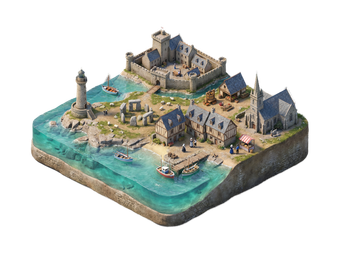
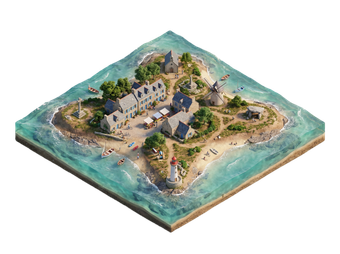
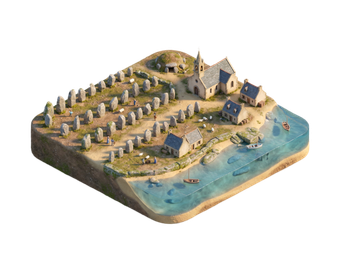
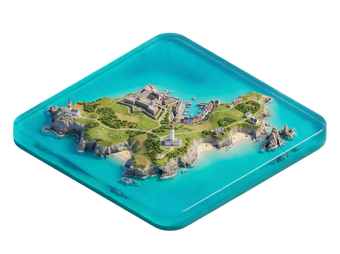
Destinations associées
Data: © OpenStreetMap contributors, Wikidata, Wikipedia, Tripomatic, Official websites. Tours by GetYourGuide. We earn commission from bookings. Travel guide generated with AI.
Planifie ton voyage avec Tripomatic
- Planification avec l'IAObtiens une journée prête à l'emploi en un geste, laisse l'IA répartir ta liste de souhaits sur ton voyage ou planifie tout en discutant.
- Alertes de voyageAvis officiels, météo extrême, grèves et risques naturels pour les lieux de chaque jour de ton voyage.
- Jours fériés et événementsConsulte les jours fériés, festivals et fermetures durant ton voyage, ainsi que leur impact sur tes projets.
- Estimation des coûtsDétails des coûts de voyage générés par l'IA pour savoir quel budget prévoir avant de partir.
- Visites et billetsRéserve des visites, des billets coupe-file et des activités directement dans ton planning.