


Vasteras
Västerås is a lakeside city on the northern shore of Lake Mälaren, about 110 km west of Stockholm, where the Svartån river meets the lake. It is one of Sweden's oldest towns. A Brick Gothic cathedral and a small old quarter of wooden houses sit next to a modern centre shaped by more than a century of electrical industry.
The city is an easy, relaxed base for two or three nights. You can see the historic centre on foot in a day. Add a day for the Iron Age burial mound and stone ships outside town, a summer boat trip to the lake islands, or a trip to a royal palace or a UNESCO ironworks nearby. Locals still call Västerås Gurkstaden, "the Cucumber City", after the cucumber growing that became popular here in the 18th and 19th centuries.
Well-known names linked to Västerås include the Nobel Prize-winning poet Tomas Tranströmer, who lived and worked here for many years, and the singer Loreen, who grew up here and won Eurovision twice.

Vasteras – Tu prépares un voyage ?
Crée ton itinéraire jour par jour dans l'application Tripomatic.


Quand partir
June to August is the best time to visit. Days are long and mild, the island ferries run, and the open-air museum is at its liveliest. Summer is also the wettest season, so pack for showers. Winters are cold and dark, with frost most days and regular snow.
The biggest event is the Västerås Summer Meet, a classic-car festival usually held over several days in early July, traditionally at the Johannisberg airfield. Classic American cars cruise through the city streets, so book a room early if you visit then.
Meilleure période pour visiter: juin, août
Sites incontournables




Västerås domkyrka is the city's main landmark. It was consecrated in 1271 and is built in the Scandinavian Brick Gothic style. The tall Baroque spire was designed by Nicodemus Tessin the Younger in 1694. Inside you will find the sarcophagus of King Erik XIV.
Kyrkbacken, the hill just north of the cathedral, is the oldest part of town. Its narrow lanes are lined with small wooden houses and well-kept 18th-century facades, and it is a quiet place for a walk.
Djäkneberget is a hilltop park on the west side of the centre. Its rocks carry around 500 inscribed stones with names and sayings. From the top you see the cathedral, the city hall tower and Lake Mälaren.
Västerås stadshus is a modernist city hall, begun in the 1950s, with a 65-metre tower. Its 47-bell carillon is the largest in Sweden and plays every hour during the day.
Västerås Slott stands by the Svartån near the lake. Gustav Vasa rebuilt the medieval fortress in the 1540s, and his son Erik XIV was held prisoner here after he lost the throne.
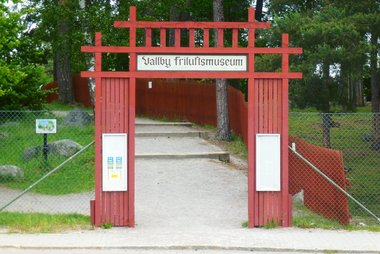
Vallby Friluftsmuseum is one of the largest open-air museums in Sweden. About 40 old buildings from across the province were moved here, from farmhouses to a small town square with craft workshops. In summer, staff in period dress show daily life of the past.
Anundshög, about 6 km north-east of the centre, is Sweden's largest burial mound, about 64 metres across and 9 metres high. Around it are five stone ship settings, a row of standing stones and a runestone.
Karlsgatan 2, a former industrial building near the central station, holds the art museum and the county museum. The art museum focuses on Swedish and Nordic contemporary art, and entry is free.
Listes recommandées

Expériences à vivre
Many of the best moments in Västerås are on the lake or tied to the seasons.
- Island-hopping on Lake Mälaren: from May to August, the hop-on, hop-off Elba ferry leaves the harbour for the islands of Östra Holmen and Elba. Östra Holmen, about 15 minutes away, has sandy beaches and smooth rocks for swimming.
- Listening to the carillon: the bells of Västerås stadshus play on the hour during the day, and in summer there are live carillon concerts.
- A summer day at Vallby: costumed staff, farm animals and craft workshops bring the old buildings to life.
- Watching bandy in winter: Västerås SK is one of Sweden's most successful bandy clubs. Matches are played at ABB Arena Syd, the country's largest indoor bandy arena.
Visites et activités
Vasteras — Carte

Excursions à la journée
Västerås sits in a region of royal palaces, old mining towns and lakes, so good day trips are close.
- Strömsholm Palace (about 20 min by car, west): a Baroque royal palace on an island in the Kolbäcksån river. Horses have been bred and trained here since the 16th century, and equestrian competitions are still held.
- Sala (about 30 min by car, north): a small town known for its silver mine, worked from the 15th century until 1908. Guided tours take you down into the mine.
- Engelsberg Ironworks (about 45 min by car, north-west): a well-preserved 17th- and 18th-century ironworks in the forest, and a UNESCO World Heritage Site since 1993.
- Stockholm (about 1 h by train, east): Sweden's capital, with its old town, museums and islands, is easy to see in a day.
Où s'aventurer
S'y rendre
- By air: Stockholm Arlanda is the main international gateway. Trains from Arlanda to Västerås take about 1 h 30 min, usually with one change, and direct coaches also run. Stockholm Västerås Airport, about 7 km from the centre, has only a few scheduled routes.
- By train: Västerås Central is on the line along Lake Mälaren. Direct trains to Stockholm take about 1 hour and run many times a day. SJ
- By bus: Long-distance coaches link Västerås with Stockholm.
Se déplacer
- Public transport: VL runs the city buses. You can pay for a single ticket on board with a bank card; it is valid for one hour. You can also buy tickets in the VL app. VL
- On foot: The centre is compact. The station, the cathedral, Kyrkbacken, the city hall and the castle are all within about 15 minutes' walk of each other. Vallby is about a 30-minute walk from the station.
- Cycling: The city is flat and has many separate cycle paths, including routes along the lakeshore. Cycling is a good way to reach Anundshög and the beaches.
Conduite
- Is a car worth it?: Not for the city, which is compact and easy on foot, by bike or by bus. A car helps for the palaces, mines and ironworks in the countryside.
- Parking: Use the car parks around the centre or paid street parking. Pay at a machine or with a parking app.
- Restrictions: The main shopping streets in the centre are pedestrian, so park on the edge and walk in.
Gastronomie
For a good-value meal, look for the weekday dagens lunch deals in the centre. These set menus usually include a hot main dish, salad, bread and coffee.
Most cafés and restaurants cluster around Stora Torget and along the Svartån. In summer, take your fika, the Swedish coffee break, at the cafés in Vallby or by the lake.
Sécurité et santé
Västerås is a safe city for visitors. Normal care is enough: watch your bag in crowded places, around the central station and in the nightlife streets late at night.
Cycling is popular, so keep off the cycle lanes when you walk. In winter, pavements can be icy, and shoes with a good grip help.
Histoire
People lived here in the Viking Age, and the name comes from Västra Aros, "the western river mouth", to tell it apart from Östra Aros, the old name of Uppsala. The burial mound at Anundshög shows how important the area already was in the Iron Age. In the Middle Ages the town became a bishop's seat, and Västerås domkyrka was consecrated in 1271.
In 1527 King Gustav Vasa called a parliament in Västerås that started Sweden's move to Protestantism. It met in a Dominican monastery that stood where Västerås stadshus is today. Gustav Vasa also rebuilt Västerås Slott, where his son Erik XIV was later held prisoner. In the 17th century, Bishop Johannes Rudbeckius made the town a centre of learning; his statue stands by the cathedral.
In 1891 a small power station was built on the Svartån. It helped bring the electrical company ASEA to Västerås, and the town grew into an industrial city. ASEA later merged into ABB, which still has its Swedish headquarters here.
Infos pays
Quick practical facts for Sweden at a glance:
- Devise
- couronne suédoise SEK kr · Paiements par carte · Largement acceptées
- Numéros d'urgence
- 112
- Électricité
- 230 V · 50 HzType C / Type F
- Langues
- suédois
- Eau du robinet
- Potable
- Sens de conduite
- À droite
- Indicatif téléphonique
- +46


Vasteras – Planifie tes journées
Transforme les lieux de ce guide en un véritable itinéraire, avec des itinéraires intelligents, des estimations de temps et tout ce dont tu as besoin pour un voyage parfait.


Destinations associées
Autres destinations
Data: © OpenStreetMap contributors, Wikidata, Wikipedia, Tripomatic, Official websites. Tours by GetYourGuide. We earn commission from bookings. Travel guide generated with AI.