


Aix-en-Provence
Aix-en-Provence is an elegant university town in southern France, about 30 km north of Marseille. It has plane-lined avenues, over 100 fountains, shaded squares and golden stone townhouses. Roughly 150,000 people live here, and many are students, so the cafés stay lively all year.
It suits a relaxed trip of two to four nights. Days are for walking the old centre, markets and museums. Nearby you can add hikes and village visits. The painter Paul Cézanne was born here, and the mountain he painted many times rises just east of the city.

Aix-en-Provence – Stai pianificando un viaggio?
Costruisci il tuo itinerario giorno per giorno nell'app Tripomatic.


Quando andare
Late spring (May and June) and early autumn (September and October) are the best times: warm, sunny and comfortable for walking. July and August are hot, but July brings the Festival d'Aix, an international opera and classical music festival that fills the city with concerts. Winters are mild but cool and can be windy. In December the Cours Mirabeau hosts a Christmas market.
Periodo migliore per la visita: maggio, giugno, settembre, ottobre
Attrazioni principali
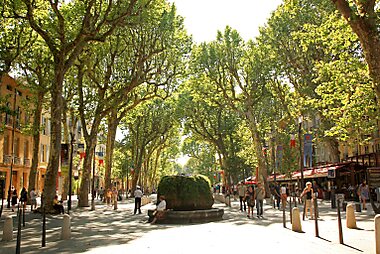
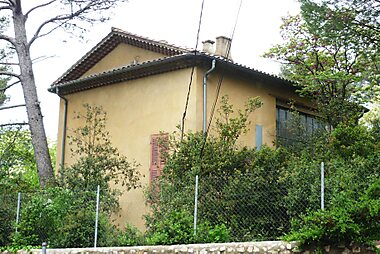
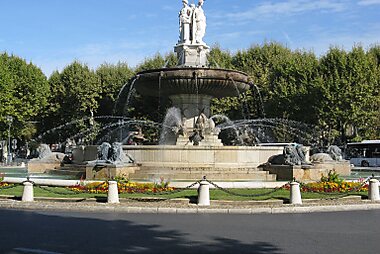
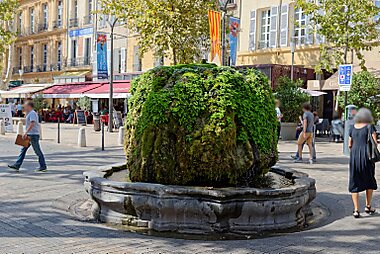
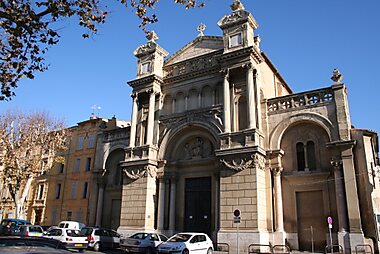
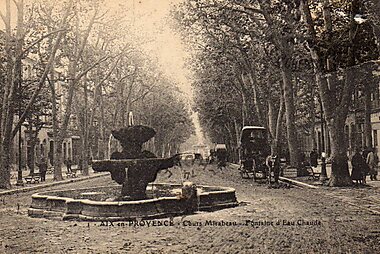

- Cours Mirabeau is the main promenade. Plane trees shade the cafés and fountains along it, and it separates the old town from the 17th-century district.
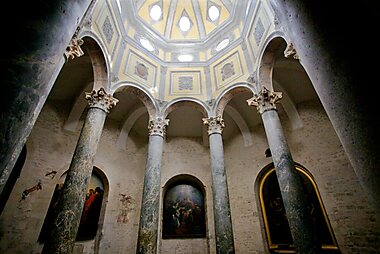
- Cathédrale Saint-Sauveur mixes styles from the 5th to the 17th century. Look for the early baptistery, the Gothic doorway and the 15th-century triptych.
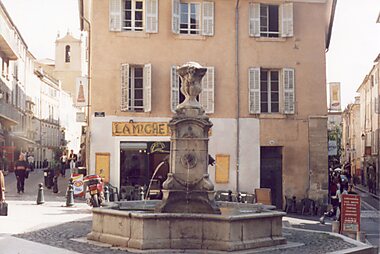
- Vieil Aix is the pedestrian maze north of the Cours. Squares, markets, shops and small streets are all within a short walk.
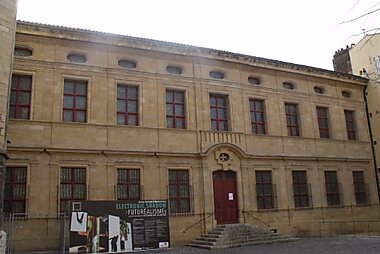
- Musée Granet is the city's fine arts museum. It shows works by Cézanne and other artists in a former priory.
- Atelier Cézanne is the studio where Cézanne worked in his last years. It sits on a hill about 20 minutes' walk north of the centre.
- Quartier Mazarin was laid out in the 17th century on a regular grid. It has calm streets, fine mansions and small squares.
- Fontaine de la Rotonde is the big fountain at the western end of the Cours Mirabeau. It is a popular meeting point.
- Pavillon de Vendôme (ou de la Molle) is a 17th-century pavilion with a formal garden, a quiet stop away from the crowds.
Elenchi in evidenza


Cosa provare
- Walk the Cézanne trail. It links his family estate Jas de Bouffan, his studio and other sites.
- Shop the morning market at Place Richelme and the flower and food stalls around the town hall square. Mornings are best.
- Book a visit to the Bibémus quarries, where Cézanne painted. Visits are arranged in advance through the tourist office.
- Hike on Montagne Sainte-Victoire in spring or autumn. In summer, access can be restricted because of fire risk, so check before you go.
- Go to a concert or opera at the Festival d'Aix in July. One of the main venues is the Grand Théâtre de Provence.
- Relax in a thermal spa. The Romans came here for the warm springs, and the Thermes Sextius spa continues that tradition.
- Visit the Christmas market on the Cours Mirabeau in December. A Provençal nativity figure (santon) fair is part of the season.
Tour e attività
Aix-en-Provence — Mappa

 Apri la mappa interattiva
Gite in giornata
Aix is a good base for day trips. Public transport works for the cities. A car is easier for the coast and villages.
- Marseille: about 35 to 45 minutes by bus or regional train. France's second city has a big port, museums and a lively old harbour.
- Cassis: about 1 hour by car; slower by public transport. This small harbour town has steep cliffs and walks to the Calanques.
- Luberon villages (Lourmarin, Bonnieux, Gordes area): about 45 to 75 minutes by car. Hill villages, markets and lavender fields in summer. Public transport is poor, so a car is best.
- Arles: about 1 hour 15 minutes by car. It has a Roman amphitheatre, a Roman theatre and sites linked to Vincent van Gogh.
- Avignon: about 1 hour 15 minutes by car. It is known for the Popes' Palace and its old city walls.
- Montagne Sainte-Victoire: about 20 to 30 minutes by car. It is a limestone ridge of about 18 km, with hiking trails and the views Cézanne painted.
Cosa esplorare
Come arrivare
- By air: Marseille Provence Airport (MRS) is about 25 km away. Shuttle buses to Aix run about every 30 minutes and take about 25 minutes.
- By train: Fast TGV trains stop at Aix-en-Provence TGV station, about 15 km from the centre. Paris takes roughly 3 hours. Shuttle buses to the centre run about every 30 minutes. Regional trains from Marseille use the smaller city-centre station.
- By bus: Regional and long-distance buses arrive at the Aix bus station, a short walk from the old town. Buses from Marseille are frequent. Aix-en-Provence Tourism: access and transport
Come muoversi
- On foot: The old centre is small and mostly pedestrian. Most sights are within 15 minutes of each other.
- Public transit: A city bus network covers the wider area. Aix-en-Provence Tourism: access and transport
- Cycling: The centre is mostly flat, but traffic and cobbles make it less pleasant than walking. Roads out to the countryside are hilly.
Guidare
- Is a car worth it?: Not for the town itself, which is best on foot. A car helps for Sainte-Victoire, the Luberon and the coast.
- Parking: Use the underground car parks around the edge of the old centre, or the park-and-ride lots. Street parking in the centre is limited.
- Restrictions: Much of the historic centre is pedestrian or has restricted traffic, so follow signs for car parks.
Cibo e bevande
Aix is famous for the calisson, a diamond-shaped sweet made from almonds, candied melon and orange. The city blesses calissons every September. Local menus also use olive oil, tomatoes, garlic and herbs. Wines from the Coteaux d'Aix area, especially rosé, are easy to find.
For eating, head to the old centre rather than to one named restaurant. Squares such as Place Richelme and the streets around the town hall have many terraces. The Cours Mirabeau is good for a coffee, not for the best value meals. Lunch menus (formule) are cheaper than dinner.
Sicurezza e salute
Aix is safe for visitors. Pickpockets work in crowds at markets, on the Cours Mirabeau and on buses, so keep bags closed. In summer, heat and strong sun are the main health risks, so carry water and hats. On hikes in the hills, follow fire-risk notices, which can close trails in dry weather. The strong mistral wind can make it feel much colder in winter.
Storia
Romans founded the town in 123 BC as Aquae Sextiae, named after the consul Sextius Calvinus and the warm springs. You can still see the link at the hot-water fountain, Fontaine d'Eau Chaude, on the Cours Mirabeau. In the Middle Ages Aix was the capital of Provence. King René of Anjou ruled here in the 15th century, and Provence joined France in 1487.
The university was founded in 1409 and still shapes the city. In the 17th century wealthy families built townhouses in Quartier Mazarin. The writer Émile Zola spent his childhood in Aix, and Paul Cézanne was born here. The two were friends. The religious heart of the old town is Cathédrale Saint-Sauveur, built on the site of a Roman forum.
Informazioni sul paese
Quick practical facts for France at a glance:
- Valuta
- euro EUR € · Pagamenti con carta · Ampiamente accettata
- Numeri di emergenza
- 112
- Elettricità
- 230 V · 50 HzTipo C / Tipo E
- Lingue
- francese
- Acqua del rubinetto
- Potabile
- Senso di marcia
- A destra
- Prefisso telefonico
- +33


Aix-en-Provence – Pianifica le tue giornate
Trasforma i luoghi di questa guida in un vero itinerario, con percorsi intelligenti, stime dei tempi e tutto il necessario per un viaggio perfetto.


Destinazioni correlate


Data: © OpenStreetMap contributors, Wikidata, Wikipedia, Tripomatic, Official websites. Tours by GetYourGuide. We earn commission from bookings. Travel guide generated with AI.
Pianifica il tuo viaggio con Tripomatic
- Pianificazione con IAOttieni una giornata pronta in un tocco, lascia che l'IA distribuisca la tua lista dei desideri lungo il viaggio o pianifica tutto chattando.
- Avvisi di viaggioAvvisi ufficiali, maltempo, scioperi e calamità naturali per i luoghi di ogni giorno del tuo viaggio.
- Giorni festivi ed eventiScopri giorni festivi, festival e chiusure nei giorni del tuo viaggio e cosa comportano per i tuoi programmi.
- Stima dei costiDettaglio dei costi di viaggio calcolato dall'IA per sapere quanto mettere a budget prima di partire.
- Tour e bigliettiPrenota tour, biglietti prioritari e attività direttamente all'interno del tuo piano.