


regione di Zlín
Zlín Region sits in eastern Moravia, where a shoe company shaped a modern city, a spa town treats its mineral water like a local specialty, and the Beskydy foothills preserve the last strongholds of Wallachian folk culture. The regional capital, Zlín, is unlike any other Czech city: industrialist Tomáš Baťa rebuilt it in the 1920s and 30s as a functionalist company town, and its uniform red-brick blocks and landmark Baťa's Skyscraper still define the skyline.
The region suits travelers who want architecture and industrial history alongside genuine countryside — spa mornings in Luhačovice, Baroque castles around Uherské Hradiště, and hiking trails into the Wallachian hills near Rožnov pod Radhoštěm. It rewards a slower pace over several days rather than a single stop.

regione di Zlín – Stai pianificando un viaggio?
Costruisci il tuo itinerario giorno per giorno nell'app Tripomatic.


Quando andare
Spring and autumn are mild and pleasant for sightseeing; summer is warm and busiest around the Luhačovice spa and Beskydy trails; winter is cold, with skiing in the hills near Pustevny.
Time a visit around the Wallachian Open Air Museum's folklore festivals in Rožnov pod Radhoštěm, when craftspeople and folk ensembles in traditional dress bring the historic village to life — check the museum's calendar before you go, since exact dates shift from year to year.
Periodo migliore per la visita: agosto
July and August are the warmest, sunniest months, good for hiking, though afternoon storms are common.
Attrazioni principali




Baťa's Skyscraper was the administrative headquarters of the Baťa shoe empire, a 77.5-metre functionalist tower whose top-floor lift cabin doubled as the founder's mobile office. Today it holds a viewing terrace and a museum on the company's history.
Wallachian Open Air Museum is the timber-village section of the Wallachian Open Air Museum, one of the Czech Republic's oldest and largest open-air museums, with farmhouses, a wooden church, and a working mill moved here from villages across the region.
Kroměříž Castle is a UNESCO-listed Baroque archbishop's palace in Kroměříž, its state rooms and picture gallery ranking among the finest in the country; the adjoining Flower Garden is worth the extra walk.
Buchlovice Castle pairs an Italian-style villa with an English landscape park, its round central hall and rare plant collection making it one of Moravia's most elegant chateaux.
Buchlov Castle is a 13th-century royal castle on a forested hilltop above Buchlovice, with Gothic and Renaissance halls and one of the country's oldest natural-history collections, assembled by the 19th-century Berchtold family.
Luhačovice Spa anchors the spa town of Luhačovice, its spa buildings — several by architect Dušan Jurkovič in an ornate folk-Art-Nouveau style — clustered around mineral springs still used for treatment today.
Velehrad Basilica at Velehrad has been Moravia's most important pilgrimage site since the 13th century, linked to the missionary saints Cyril and Methodius and still drawing crowds each July.
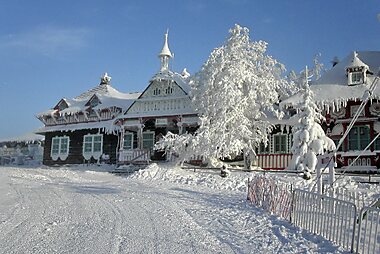
Pustevny is a mountain saddle in the Beskydy hills, its cluster of hand-carved wooden chalets — also by Dušan Jurkovič — a starting point for the walk up Radhošť to the statue of the pagan god Radegast.
Elenchi in evidenza


Hidden Heritage Gems
Explore a selection of culturally and historically significant sites in Zlínský kraj, featuring memorials and monuments honoring important figures and events, intricate statues reflecting local religious heritage, and distinctive rock formations popular for climbing and natural observation. Each location offers insights into the region’s rich history and unique geological features.
16 luoghi
Castles & Historic Sites
This collection features a diverse range of castles, chateaux, medieval ruins, monasteries, and monuments in the Zlín Region of the Czech Republic. Highlights include royal fortresses like Buchlov Castle, Baroque estates such as Buchlovice Chateau, and historically significant sites including ancient monastery ruins and war memorials.
12 luoghi

Regional Culinary Highlights
This selection highlights eleven dining venues in the Zlínský kraj region, featuring a variety of establishments from cafés with outdoor seating to traditional pubs and regional restaurants. Many offer authentic regional cuisine and some provide amenities like wheelchair access, wi-fi, and outdoor terraces, reflecting the area's culinary culture and hospitality traditions.
11 luoghiCosa provare
- Watch the historic village at the Wallachian Open Air Museum come alive during a folklore festival, with folk costumes, cimbalom bands, and craft demonstrations.
- Ride the chairlift up to Pustevny and walk the ridge trail to the statue of Radegast on Radhošť, a pagan-god figure that has become a local hiking landmark.
- Take the waters at the Luhačovice spa colonnade the way locals do, sipping mineral water from a small spouted cup between short walks through the spa park.
- Follow a wine cellar lane in a Slovácko village near Uherské Hradiště after dark, when small producers open their doors for informal tastings.
- Taste slivovice straight from the source on a guided tour of the Rudolf Jelínek distillery in Vizovice.
Tour e attività
regione di Zlín — Mappa

Gite in giornata
Zlínský kraj borders three other Czech regions, and a few worthwhile stops sit just beyond its own edge.
- Strážnice — about 30 minutes by car from Uherské Hradiště, a Moravian Slovácko town with its own open-air folk museum and a well-known international folklore festival each June.
- Štramberk — about 45 minutes by car from Rožnov pod Radhoštěm, a walled medieval town nicknamed the "Moravian Bethlehem" for its Christmas markets, famous for a gingerbread pastry called Štramberk ears.
- Olomouc — around an hour by car from Zlín, a university city with one of Europe's largest Baroque fountain ensembles and a UNESCO-listed Holy Trinity Column.
- Brno — around 2 hours by train, the country's second city, with its own castle, cathedral, and lively restaurant scene.
Cosa esplorare
Zlínský kraj's own towns are as rewarding as its countryside — each has a different character.
Zlín is the regional capital and the place to see Baťa's functionalist city planning up close, alongside contemporary galleries and the university founded in his name.
Kroměříž and Uherské Hradiště, together with the villages around them, form the heart of Moravian Slovácko, a wine-growing area known for folk costumes, cimbalom music, and small family vineyards.
South of Zlín, Luhačovice is the region's spa town, while Vizovice is known for its Baroque chateau and the Rudolf Jelínek plum-brandy distillery next door.
To the northeast, Rožnov pod Radhoštěm is the gateway to Wallachia (Valašsko), the hilly folk region that gives this part of Moravia its wooden architecture and shepherding traditions.
Come arrivare
- By air: The region has no major airport of its own. Most international travelers fly into Prague (PRG) and continue by train or bus (around 3.5 hours), or into Vienna (VIE) and drive or take the train (around 3 hours). Ostrava's Leoš Janáček Airport, with a handful of European routes, is roughly an hour from the northern part of the region around Rožnov pod Radhoštěm and Vsetín.
- By train: Zlín and Kroměříž both have direct trains from Prague (around 3.5 hours) and Brno (around 2 hours), usually changing at Otrokovice or Přerov.
- By bus: Long-distance coaches connect Zlín with Prague, Brno, and Ostrava, often cheaper than the train.
Come muoversi
- Public transit: IDZK, the region's integrated transport system, covers buses and trains across Zlínský kraj, including Zlín's own trolleybus network. Buy single tickets from the driver or a ticket machine; contactless bank-card payment is accepted on Zlín's buses and trolleybuses. IDZK Journey Planner
- Taxi / ride-hailing: Bolt operates in Zlín; smaller towns rely on local taxi firms.
- On foot / cycling: Town centers are compact and walkable, but the region's sights are spread out, so a car or bike is useful for exploring beyond any single town. A flat towpath cycling route follows the historic Baťa Canal along the region's southern edge.
Guidare
- Is a car worth it?: Yes — the region's sights are spread across small towns and countryside, and public transport between them is infrequent outside the Zlín–Otrokovice–Kroměříž corridor.
- Parking: Historic centers like Kroměříž and Uherské Hradiště have paid parking just outside the pedestrian core; pay by app or at a machine.
- Restrictions: None of the region's town centers have significant congestion charging or low-emission zones aimed at tourist traffic.
Cibo e bevande
Zlínský kraj sits on the edge of Moravian Slovácko wine country, so meals here often come with a glass of local white wine rather than beer. Look for slivovice and other fruit brandies — Vizovice is home to one of the country's best-known distilleries — and Valašský frgál, a large sweet flatbread topped with fruit, poppy seed, or curd cheese.
Rather than one restaurant, head for a wine cellar lane in a Slovácko village near Uherské Hradiště, where small producers pour tastings straight from the barrel. In Zlín itself, the restaurant inside Baťa's Skyscraper serves regional dishes with a view over the city.
Sicurezza e salute
Zlínský kraj is very safe for travelers, including in the evenings around Zlín's main square and the Luhačovice spa promenade. Petty crime is rare; the main things to watch are pickpockets in festival crowds and unattended bags at train stations.
Tap water is safe to drink throughout the region. If visiting Luhačovice for its mineral springs, drink the spa water in moderation at first — it has a strong mineral taste and a mild laxative effect that surprises first-time visitors.
Storia
Zlín was a modest market town until the early 20th century, when shoemaker Tomáš Baťa built one of Europe's largest footwear companies here and rebuilt the town around it. Between the wars, Baťa's architects raised entire neighborhoods of standardized red-brick housing, schools, and factories in the functionalist style, along with Baťa's Skyscraper, then one of the tallest buildings in Central Europe. The company was nationalized in 1945, the city was renamed Gottwaldov in 1949 after the country's first communist president, and it reverted to Zlín only in 1990, after the fall of communism.
The region's older history centers on Velehrad Basilica, founded in the 13th century on a site linked to the ninth-century mission of Saints Cyril and Methodius, who brought Christianity and a Slavic script to Great Moravia. Nearby, Buchlov Castle and Buchlovice Castle trace a longer aristocratic history, passing between noble families for centuries before opening to the public.
In the Beskydy foothills, Wallachian shepherds who arrived from the Carpathians in the 16th and 17th centuries brought sheep farming and a distinct folk culture that survives in the wooden architecture preserved at Wallachian Open Air Museum.
Informazioni sul paese
Quick practical facts for the Czech Republic at a glance:
- Valuta
- corona ceca CZK Kč · Pagamenti con carta · Comunemente accettata
- Numeri di emergenza
- 112
- Elettricità
- 230 V · 50 HzTipo C / Tipo E
- Lingue
- ceco
- Acqua del rubinetto
- Potabile
- Senso di marcia
- A destra
- Prefisso telefonico
- +420
regione di Zlín – Pianifica il tuo viaggio
Scegli i luoghi che vuoi vedere e Tripomatic li trasforma in un itinerario giorno per giorno, con percorsi intelligenti, stime dei tempi e tutto ciò che occorre per un viaggio perfetto.


Destinazioni correlate


Data: © OpenStreetMap contributors, Wikidata, Wikipedia, Tripomatic, Official websites, geoBoundaries (CC BY 4.0). Tours by GetYourGuide. We earn commission from bookings. Travel guide generated with AI.