


Fukuoka
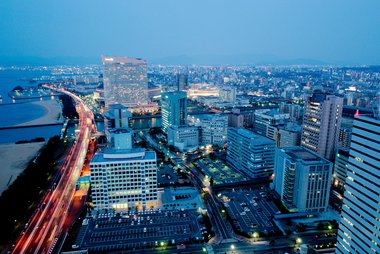
Fukuoka is the largest city on Kyushu, Japan's southwestern island. It sits on Hakata Bay, close to the Korean peninsula, and has been a trading port for centuries. The city feels relaxed for its size. Beaches, parks and mountains are near the centre, and the food scene is among the best in Japan.
Fukuoka suits a trip of two to four nights. Use it for tonkotsu ramen, evening food stalls, shrines and festivals. It is also a good base for day trips to Dazaifu, Itoshima and Yanagawa, and for Shinkansen trips to Kumamoto and Nagasaki.

Fukuoka – Stai pianificando un viaggio?
Costruisci il tuo itinerario giorno per giorno nell'app Tripomatic.


Quando andare
Spring (April–May) and autumn (October–November) are the most comfortable seasons, with mild, mostly dry days. June is the rainy season. July and August are hot and very humid, and typhoons can disrupt travel in late summer. Winter is cool and mostly dry, with occasional light snow.
The biggest event is Hakata Gion Yamakasa, held from 1 to 15 July. Teams of men in loincloths race heavy floats through the streets. The final race starts at dawn on 15 July. Book hotels well ahead if you plan to see it.
Periodo migliore per la visita: aprile, maggio, ottobre
Attrazioni principali
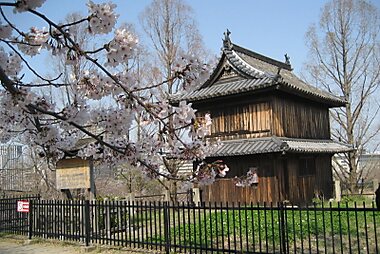
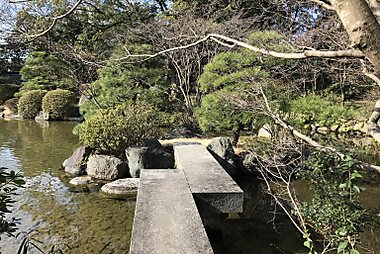
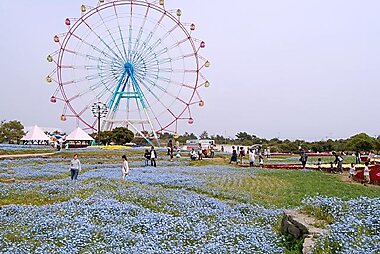
- Fukuoka Castle was built by the Kuroda clan in the early 1600s. The main keep is gone, but the large stone walls remain, and the park around them is a good place to walk, especially in spring.
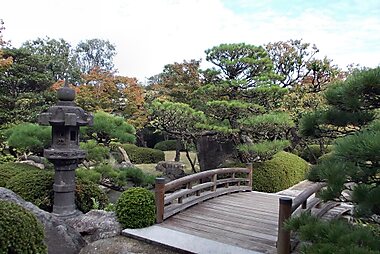
- Ōhori Park is a large lake park next to the castle site. Walk or jog the loop path, or visit the Japanese garden.
- Fukuoka Tower is a 234 m mirror-glass tower by the sea. The top deck has views over Hakata Bay and the city.
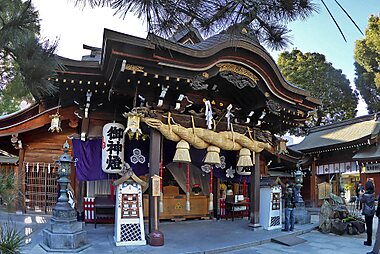
- Kushida Shrine is the shrine at the heart of old Hakata. It is the centre of the Yamakasa festival, and it is a short walk from Canal City.
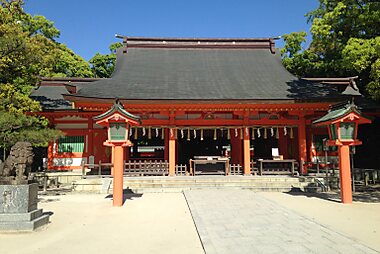
- Sumiyoshi Shrine is an old seafarers' shrine near Hakata Station. It is dedicated to safe travel at sea.
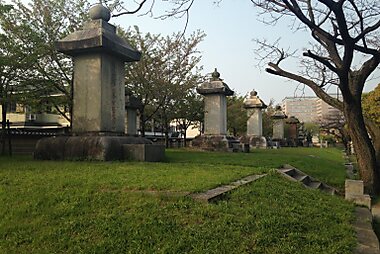
- Sōfuku-ji is an old Zen temple in Hakata. It is a calm stop in the old part of the city.
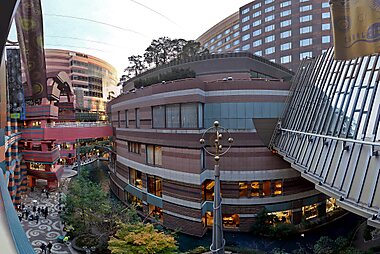
- Canal City is a large shopping and entertainment complex built around a canal. It is useful on a rainy day, and it is close to the Nakasu food stalls.
- Yūsentei Park is a small Edo-period garden and pond in the south of the city. It is a good choice when you want a quiet hour.
- Uminonakamichi Seaside Park is a large seaside park north of the city. It is known for seasonal flower fields, and you can rent a bike to ride around it.
Elenchi in evidenza


Cosa provare
- Watch the Hakata Gion Yamakasa festival in July. The main race starts at dawn on 15 July. The festival is centred on Kushida Shrine.
- Join the crowds at the Hakata Dontaku festival on 3 and 4 May, during Golden Week. Parades and dancers fill Meiji-dori.
- See a day of the Kyushu sumo tournament in November at the Fukuoka Kokusai Center.
- Rent a bike at Uminonakamichi Seaside Park in flower season and ride between the fields.
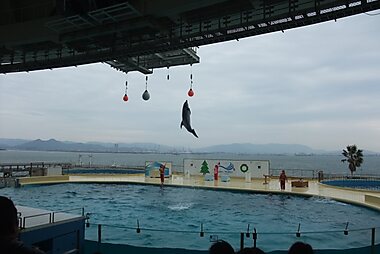
- Visit Marine World Uminonakamichi for the dolphin and sea lion shows.
- Walk or jog the lake loop at Ōhori Park at dusk.
Tour e attività
Fukuoka — Mappa

 Apri la mappa interattiva
Gite in giornata
Fukuoka has several easy day trips by train. Times are one way from central Fukuoka.
- Dazaifu: about 25–40 minutes by Nishitetsu train from Tenjin, with one change at Nishitetsu Futsukaichi. Dazaifu Tenmangu is a famous shrine to the scholar Sugawara no Michizane, and the path to it is lined with small shops.
- Itoshima: about 40–45 minutes by train from Hakata to Chikuzen-Maebaru, then a bus to the coast. The peninsula has beaches, cafes and the white torii at Futamigaura. A car makes it easier to see more than one area.
- Yanagawa: reached by Nishitetsu train from Tenjin. The town is known for its canals and flat-bottomed boat rides.
- Kumamoto: about 35 minutes by Shinkansen from Hakata. It has a large castle and a famous garden.
- Nagasaki: about 1.5 hours by train, with a change at Takeo-Onsen. It is a good long day trip, or an overnight stop.
Cosa esplorare
Two major Kyushu cities are easy to reach by Shinkansen from Hakata Station. Others are farther out and suit a longer stay.
Come arrivare
- By air: Fukuoka Airport is only 5 minutes from Hakata Station and about 12 minutes from Tenjin by subway. The domestic terminal is directly linked to the subway. The international terminal is not, so take the free shuttle bus to the domestic terminal first. Direct flights serve Tokyo, Osaka and many cities in Korea, China and Southeast Asia.
- By Shinkansen: Hakata Station is the main rail hub. Shin-Osaka is about 2 hours 20 minutes away, and Kumamoto about 35 minutes. Nagasaki takes about 1.5 hours, with a change at Takeo-Onsen. Book on the JR Kyushu site.
- By limited express: The Sonic train runs from Hakata through Kokura to Beppu and Oita. Beppu takes about 2 hours.
Come muoversi
- Subway: Three lines link the airport, Hakata Station, Tenjin and Nakasu. IC cards such as Suica and ICOCA work on the subway, so you can tap in. A 1 Day Pass is also sold. See the Fukuoka City Subway site.
- Bus: Nishitetsu buses leave from the Hakata and Tenjin bus centres. A bus runs between Hakata, Canal City and Tenjin, and another goes to Marinoa City and Seaside Momochi.
- Nishitetsu train: This line runs from Nishitetsu Fukuoka Station by Tenjin to Dazaifu and Yanagawa.
- Taxi: Taxis are useful at night, when the subway has stopped.
- On foot: Hakata and Tenjin are 5 minutes apart by subway. Each area is easy to walk, and the city is flat.
Guidare
- Is a car worth it? No, for the city. The subway and trains cover everything central. A car helps only for the Itoshima peninsula and other rural parts of Kyushu.
- Driving side: Traffic keeps to the left.
- Licence: Japan accepts only an International Driving Permit under the 1949 Geneva Convention, carried with your home licence. Drivers from some countries need an official Japanese translation of their licence instead, available from JAF. Verify before travel.
Cibo e bevande
Fukuoka is known for Hakata ramen: thin noodles in a creamy pork-bone broth. Other local dishes are mentaiko (spiced pollock roe) and motsunabe, a hot pot of beef offal.
The best-known food areas are the open-air yatai stalls. They open in the evening, and the biggest group stands along the river in Nakasu. Others are in Tenjin. Seats are few and close together, and cash is the safest way to pay. Some stalls charge a small seating fee.
Sicurezza e salute
Fukuoka is very safe for visitors, including at night. Petty crime is rare. Keep an eye on your belongings in crowds, as anywhere.
Heat and humidity in July and August can be tiring, so drink water and rest often. Typhoons can bring heavy rain and stop trains and flights in late summer. Check forecasts before a day trip.
Storia
Hakata was Japan's main gateway to mainland Asia for centuries. A gold seal found in the Fukuoka area is linked to a diplomatic mission to China in 57 AD. In the Middle Ages, Hakata was a rich port. Temples such as Sōfuku-ji date from this period.
Mongol fleets tried to invade the bay in 1274 and 1281. Storms helped to stop them, and the storms became known as the kamikaze, or "divine wind".
In 1600 the lord Kuroda Nagamasa named his new castle town Fukuoka. He built Fukuoka Castle between 1601 and 1607. Fukuoka and Hakata stayed separate towns, one for samurai and one for merchants. They merged in 1889, and the city took the name Fukuoka. Many Hakata traditions remain, such as the Yamakasa festival at Kushida Shrine.
Informazioni sul paese
Quick practical facts for Japan at a glance:
- Valuta
- yen giapponese JPY ¥ · Pagamenti con carta · Comunemente accettata
- Elettricità
- 100 VTipo A / Tipo B
- Lingue
- giapponese
- Acqua del rubinetto
- Potabile
- Senso di marcia
- A sinistra
- Prefisso telefonico
- +81


Fukuoka – Pianifica le tue giornate
Trasforma i luoghi di questa guida in un vero itinerario, con percorsi intelligenti, stime dei tempi e tutto il necessario per un viaggio perfetto.


Destinazioni correlate
Data: © OpenStreetMap contributors, Wikidata, Wikipedia, Tripomatic, Official websites, geoBoundaries (CC BY 4.0). Tours by GetYourGuide. We earn commission from bookings. Travel guide generated with AI.
Pianifica il tuo viaggio con Tripomatic
- Pianificazione con IAOttieni una giornata pronta in un tocco, lascia che l'IA distribuisca la tua lista dei desideri lungo il viaggio o pianifica tutto chattando.
- Avvisi di viaggioAvvisi ufficiali, maltempo, scioperi e calamità naturali per i luoghi di ogni giorno del tuo viaggio.
- Giorni festivi ed eventiScopri giorni festivi, festival e chiusure nei giorni del tuo viaggio e cosa comportano per i tuoi programmi.
- Stima dei costiDettaglio dei costi di viaggio calcolato dall'IA per sapere quanto mettere a budget prima di partire.
- Tour e bigliettiPrenota tour, biglietti prioritari e attività direttamente all'interno del tuo piano.