


Himeji
Himeji is a city of about half a million people in western Hyogo, between Kobe and Okayama. It is known for one thing: Himeji Castle, one of the best-preserved original castles in Japan. The white main keep rises above the center and shapes the whole visit.
Most travelers spend a few hours here on a day trip from Osaka, Kyoto or Kobe. The city rewards a longer stay. It has a calm old garden next to the castle, a large mountain temple, and a local food scene built around Himeji oden. The center is compact, so the main sights are easy to combine.

Himeji – Stai pianificando un viaggio?
Costruisci il tuo itinerario giorno per giorno nell'app Tripomatic.


Quando andare
Spring and autumn are the best seasons, with May and October the most comfortable months. Cherry blossoms around the castle usually peak in early April and the grounds are then very crowded. Early summer is rainy, July and August are hot and humid, and winter is cold and dry with only occasional snow.
The biggest local event is the Nada no Kenka Matsuri on 14 and 15 October at Matsubara Hachiman Shrine, with 15 October as the main day.
Periodo migliore per la visita: maggio, ottobre
Attrazioni principali
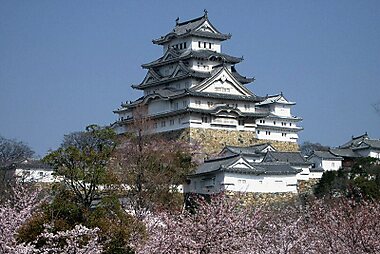
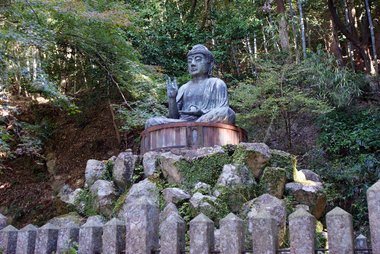
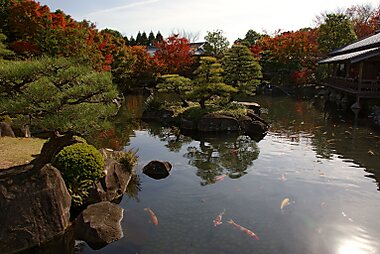
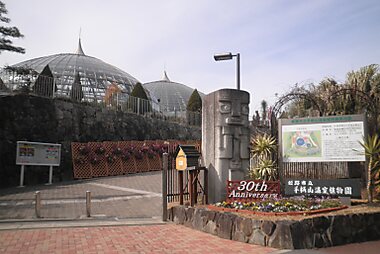
- Himeji Castle is the reason to come. Ikeda Terumasa rebuilt the castle between 1601 and 1609. It has a main keep and three smaller keeps. It was listed by UNESCO in 1993 and reopened in 2015 after a long restoration. The path to the keep winds on purpose, and the passages inside are steep and narrow. Entry is 2,500 yen, or 1,000 yen for Himeji residents. A combined ticket with Kōko-en costs 2,600 yen. Last entry is at 16:00.
- Kōko-en is a garden of nine separate sections beside the castle. It opened in 1992 on the site of the lord's former west residence.
- Engyō Temple is a Tendai Buddhist temple complex founded in 966 on Mount Shosha. It is the 27th stop of the Saigoku Kannon Pilgrimage. Parts of The Last Samurai were filmed here.
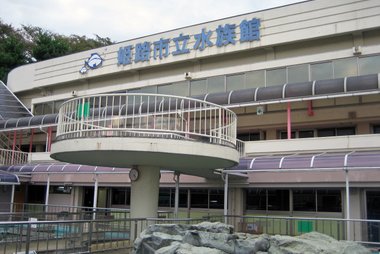
- Himeji City Aquarium is a municipal aquarium on Tegarayama hill. It focuses on sea life and freshwater life of the Harima region. It has a touch pool with sea urchins and starfish and is good for families.
- Himeji City Tegarayama Botanical Garden is a greenhouse garden in the same Tegarayama park as the aquarium. It is an easy add-on for a rainy day.
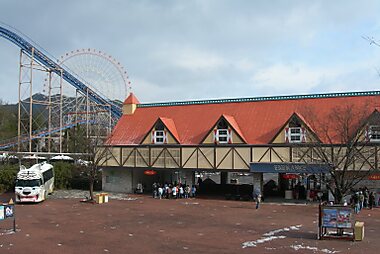
- Himeji Central Park is the only safari park in the Kansai region and also has an amusement park. It lies in the north-east of the city, away from the center.
Elenchi in evidenza


Cosa provare
- Take the ropeway up Mount Shosha and walk through the forest to the temple halls of Engyō Temple. You can also hike up from the base in about 45 to 60 minutes.
- Watch the Nada no Kenka Matsuri in mid-October. Teams of young men carry three portable shrines and strike them against each other. The main day is 15 October.
Tour e attività
Himeji — Mappa

Gite in giornata
Himeji is on the Sanyo Shinkansen line, so several big cities are within about an hour. Times below are one way.
- Kobe: about 35 to 40 minutes by JR rapid train from Sannomiya Station, or 15 to 25 minutes by Shinkansen from Shin-Kobe.
- Okayama: about 20 minutes or more by Shinkansen. Okayama has a famous black castle and a large garden, Korakuen.
- Osaka: about 30 minutes by Shinkansen from Shin-Osaka, or about 60 minutes by JR Special Rapid from Osaka Station.
- Kyoto: about 45 to 50 minutes by Shinkansen. Possible for a very full day, but better as a separate base.
- Hiroshima: 60 to 90 minutes by Shinkansen, depending on the train. The Peace Memorial Park and Miyajima are the main draws.
- Shodoshima: a ferry runs from Himeji port to Fukuda Port on Shodoshima about every two hours. The crossing takes about 100 minutes.
- Takeda Castle Ruins, near Asago: about 1.5 to 2 hours by train, changing at Teramae on the JR Bantan Line. From Takeda Station it is a steep climb of about 40 minutes. The ruins are closed from early January to the end of February. Autumn morning mist makes them look like a castle floating in the sky.
Cosa esplorare
Nearby destinations in Hyogo and the Seto Inland Sea:
- Kobe is the closest large city, to the east.
- Awaji Island is the large island across the Akashi Strait, south-east of Himeji.
- Shodoshima is an island in the Inland Sea with a direct ferry from Himeji.
Come arrivare
- By air: Himeji has no airport. The usual gateway is Kansai International Airport, about 95 to 120 minutes away. Take the Haruka limited express to Shin-Osaka, then the Shinkansen to Himeji.
- By Shinkansen: Himeji is on the Sanyo Shinkansen. From Shin-Osaka the trip takes about 30 minutes on a Sakura or Hikari train. Most fast Nozomi and Mizuho trains skip Himeji. From Kyoto it takes about 45 to 50 minutes, and from Hiroshima 60 to 90 minutes.
- By regular train: JR rapid trains run from Kobe (Sannomiya) in about 35 to 40 minutes and from Osaka in about 60 minutes. They cost much less than the Shinkansen.
- From the station to the castle: it is about 1 km along Otemae-dori. The walk takes 15 to 20 minutes. Buses from the north exit take about 5 minutes.
JR-West (English) has timetables and rail passes.
Come muoversi
- On foot: the castle, Kōko-en and the shopping streets near the station are all within walking distance. The center is compact.
- Buses: Shinki Bus runs the city network from Himeji Station. Major IC cards, such as ICOCA, work on board. Route 10 goes to the Mount Shosha ropeway in about 30 minutes.
- Mount Shosha: a ropeway climbs the mountain, and a minibus runs between the upper station and the Maniden hall. The walk up from the base takes about 45 to 60 minutes.
- Taxi: a ride from the station to the castle costs about 800 to 1,000 yen.
Guidare
- Traffic drives on the left. Japan accepts only an International Driving Permit under the 1949 Geneva Convention. Permits under the 1968 Vienna Convention are not valid.
- Licences from Switzerland, Germany, France, Belgium, Monaco and Taiwan can be used with an official Japanese translation from JAF.
- A car is not needed for the castle and the city center. It helps only for Himeji Central Park and the countryside in the north.
Cibo e bevande
Himeji's best-known local dish is Himeji oden. It is normal oden, but it is served with ginger soy sauce instead of mustard. Look for oden restaurants in the streets in front of the station. Himeji is also known for local seafood from the Seto Inland Sea, including octopus.
Sicurezza e salute
Himeji is very safe for tourists. The main practical risks are physical. The passages and stairs in the castle keep are steep and narrow, so wear shoes that are easy to walk in. In July and August the heat and humidity are strong, so carry water and plan indoor stops for the afternoon.
Storia
Himeji has been the center of the Harima region since the Nara period. The hill where the castle stands was first fortified in 1333 by Akamatsu Norimura. Toyotomi Hideyoshi built a three-story keep there in 1581. After the Battle of Sekigahara in 1600, Tokugawa Ieyasu gave the castle to Ikeda Terumasa, who rebuilt it between 1601 and 1609. The result is today's Himeji Castle, with a main keep and three smaller keeps.
The castle's winding approach was built for defense. A major restoration started in 2010 and ended in 2015, when the roof was returned to its original white color. UNESCO listed the castle in 1993.
On Mount Shosha, Engyō Temple is much older. A monk founded a hermitage there in 966, and the temple grew into one of the main Tendai training centers in Japan.
Informazioni sul paese
Here are the essentials for traveling in Japan:
- Valuta
- yen giapponese JPY ¥ · Pagamenti con carta · Comunemente accettata
- Elettricità
- 100 VTipo A / Tipo B
- Lingue
- giapponese
- Acqua del rubinetto
- Potabile
- Senso di marcia
- A sinistra
- Prefisso telefonico
- +81


Himeji – Pianifica le tue giornate
Trasforma i luoghi di questa guida in un vero itinerario, con percorsi intelligenti, stime dei tempi e tutto il necessario per un viaggio perfetto.


Destinazioni correlate



Data: © OpenStreetMap contributors, Wikidata, Wikipedia, Tripomatic, Official websites, geoBoundaries (CC BY 4.0). Tours by GetYourGuide. We earn commission from bookings. Travel guide generated with AI.
Pianifica il tuo viaggio con Tripomatic
- Pianificazione con IAOttieni una giornata pronta in un tocco, lascia che l'IA distribuisca la tua lista dei desideri lungo il viaggio o pianifica tutto chattando.
- Avvisi di viaggioAvvisi ufficiali, maltempo, scioperi e calamità naturali per i luoghi di ogni giorno del tuo viaggio.
- Giorni festivi ed eventiScopri giorni festivi, festival e chiusure nei giorni del tuo viaggio e cosa comportano per i tuoi programmi.
- Stima dei costiDettaglio dei costi di viaggio calcolato dall'IA per sapere quanto mettere a budget prima di partire.
- Tour e bigliettiPrenota tour, biglietti prioritari e attività direttamente all'interno del tuo piano.