


Horsens
Horsens is a harbour town at the head of Horsens Fjord in East Jutland. It grew rich on trade and industry, and it is best known in Denmark for its former state prison. Today the prison is a large museum, and its yard hosts concerts and festivals.
The town suits a short, relaxed stay. You can see the old prison, two medieval brick churches and good museums on foot in a day or two. Then you can take a small ferry to the quiet islands in the fjord. Horsens is also an easy base for Aarhus and the lakes around Silkeborg. The explorer Vitus Bering, who gave his name to the Bering Strait, was born here.

Horsens – Stai pianificando un viaggio?
Costruisci il tuo itinerario giorno per giorno nell'app Tripomatic.


Quando andare
Late spring and summer are the best time to visit. Days are long and mild, and the island ferries run more often. Autumn and winter are dark, grey and often wet, but the museums stay open all year.
The biggest event is the European Medieval Festival at the end of August, usually on the last Friday and Saturday of the month. Thousands of people in costume fill the streets around the old prison with markets, music, knights and craft stalls. Entry is free. Book a room early if you plan to come that weekend.
Attrazioni principali
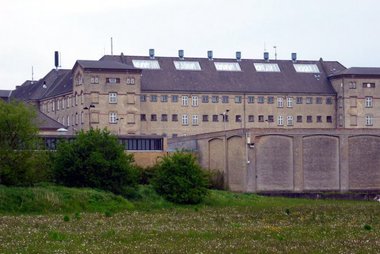
Fængslet is the town's main sight. This state prison held inmates from 1853 to 2006. The museum shows cell blocks, the escape tunnel of a famous prisoner and the story of Danish crime and punishment. You can even sleep in a former cell at the hostel on the site.
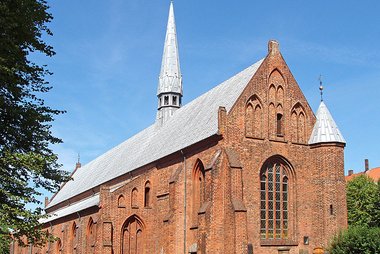
Vor Frelsers Kirke is the oldest building in the old town. Building started around 1225 in costly brick. After an arson fire in 2018 the interior was renovated, and the church reopened in 2020. Entry is free.
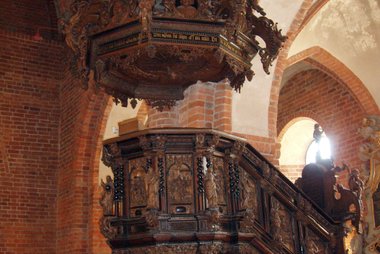
Klosterkirken was built in the 1260s and 1270s for a Franciscan friary. Inside are a gilded altarpiece, carved choir stalls and grand burial chapels of rich merchant families.
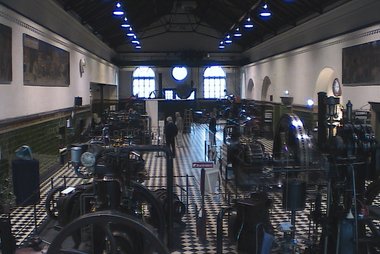
Danmarks Industrimuseum covers more than 150 years of Danish industry and everyday life. Walk through workers' homes from different decades, a hall of steam engines and a street of old shops.
Horsens Museum tells the story of Horsens from prehistoric times to today. It has a permanent exhibition about Vitus Bering and stands in the leafy Caroline Amalie Lund park.
Horsens Art Museum sits in the same park and focuses on Danish contemporary art.
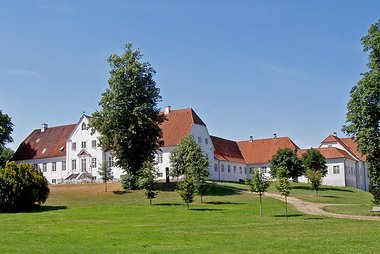
West of the centre, Bygholm stands on the site of a medieval royal castle. The present Baroque manor dates from 1775 and is now a hotel, and the park around it is open to the public.
A museum pass gives entry to the prison, the industrial museum, Horsens Museum and the art museum within seven days. Children under 18 enter free.
Cosa provare
- Join the medieval festival: At the end of August, the town turns into a huge medieval market. Watch knights, try old crafts and listen to music in the streets.
- Spend a night in a prison cell: The hostel at the old prison has rooms in former cells, with the original bunk beds.
- Take the short ferry to Hjarnø: The crossing takes only a few minutes. On the island, join a guided tractor-trailer tour or walk to the Viking stone ships.
- Look for rabbits on Endelave: The wild rabbits are most active at dawn and dusk. Stay overnight to see them, and watch for seals on the sandbanks.
Tour e attività
Horsens — Mappa

Gite in giornata
Horsens sits on a busy rail line, and the small islands in the fjord are close by. Most of these trips take an hour or less each way.
- Hjarnø: A tiny island at the mouth of the fjord. Drive about 20 minutes to Snaptun on the south shore of the fjord, then take the 5-minute ferry. No booking is needed. Walk to the Viking Age stone ship graves on the south-east tip.
- Endelave: A quiet island famous for its wild rabbits. The ferry from Snaptun takes about an hour, so book ahead in summer. A 21 km trail circles the island.
- Skanderborg: Under 20 minutes by train. A small lake town at the edge of the Lake District, with forest and lakeside paths.
- Vejle: About 15 minutes by train. See modern harbour architecture, and continue to the royal monuments of Jelling.
- Aarhus: About 25 minutes by train. Denmark's second city has the ARoS art museum and the Den Gamle By open-air museum.
- Silkeborg: About 45–50 minutes by car. Lakes, forests and the viewpoint at Himmelbjerget, one of the highest hills in Denmark.
Cosa esplorare
Horsens lies between three larger towns of East Jutland, all easy to reach by train or car.
- For a city break: Aarhus
- For the Lake District: Skanderborg and Silkeborg
- Heading south: Vejle
Come arrivare
- By air: Billund Airport is the nearest international airport. Airport bus 912X stops on Silkeborgvej by motorway exit 56, on the west side of Horsens. City buses run from there to the centre. You can also take a bus to Vejle and the train from there. Copenhagen Airport has direct trains to Horsens.
- By train: Horsens station is on the main line between Copenhagen and Aalborg. Trains reach Aarhus in about 25 minutes and Copenhagen in about 2 hours 15 minutes. Book on DSB.
- By bus: FlixBus long-distance coaches stop at Horsens Trafikterminal, the bus terminal on Banegårdsgade in the centre.
- By car: The E45 motorway passes just west of Horsens.
Come muoversi
- Public transport: Midttrafik runs the city and regional buses. Buy a single ticket in the Rejsebillet app, or use a Rejsekort. You can also buy a ticket from the driver, but bring small notes or coins. See Midttrafik tickets.
- Island ferries: The ferries to Hjarnø and Endelave leave from Snaptun, about 17 km south-east of Horsens. A few buses a day go there, so a car or bike is easier.
- On foot: The station, the pedestrian streets, the churches and the museums are all within walking distance. The old prison is about a 20-minute walk north-west of the main square.
- Cycling: The town and the land around the fjord are fairly flat, and there are many cycle paths.
Guidare
- Is a car worth it?: You do not need a car in town. A car helps for the island ferries at Snaptun and for the lakes and forests inland.
- Parking: Check the signs in central car parks. Some are free for a limited time and need a parking disc (P-skive) on the dashboard.
- Ferries: The Endelave ferry has little room for cars, so book early. Many visitors leave the car at Snaptun and take a bike.
Cibo e bevande
Horsens has a typical Danish food scene. Bakeries, cafés and lunch places serve open sandwiches, pastries and fish from the region.
The best area to eat is the pedestrian street of Søndergade and the squares around it, with many cafés and restaurants. In summer, the harbour is a pleasant place for an evening walk.
Sicurezza e salute
Horsens is a very safe town, and crime against visitors is rare. Use normal care with bags in crowds, for example during the medieval festival.
Take care near open harbour edges, and check the ferry times before you go to the islands, as the last boat can leave early. Tap water is safe to drink.
Storia
Horsens has been a trading town since the Middle Ages. Kings minted coins here in the 12th century, and the town got its own laws in the 13th century. Vor Frelsers Kirke dates from this time. A few decades later, Franciscan friars built Klosterkirken. After the Reformation it became a parish church.
The explorer Vitus Bering was born in Horsens in 1681. He served the Russian navy and led expeditions to the sea between Asia and America, which now carries his name.
In the 19th century, Horsens became an industrial town. It had the first iron foundry in Denmark outside Copenhagen, as well as textile and tobacco factories. Danmarks Industrimuseum tells this story. In 1853 the state prison opened on the edge of town. Its most famous inmate, Carl August Lorentzen, escaped in 1949 through a tunnel he began to dig with a spoon. The prison closed in 2006 and reopened as Fængslet.
Informazioni sul paese
Quick practical facts for Denmark at a glance:
- Valuta
- corona danese DKK kr · Pagamenti con carta · Ampiamente accettata
- Numeri di emergenza
- 112
- Elettricità
- 230 V · 50 HzTipo C / Tipo E / Tipo F / Tipo K
- Lingue
- danese
- Acqua del rubinetto
- Potabile
- Senso di marcia
- A destra
- Prefisso telefonico
- +45


Horsens – Aggiungi al tuo viaggio
Crea un itinerario di viaggio dettagliato con percorsi intelligenti, stime dei tempi e tutto ciò che serve per un viaggio perfetto.


Destinazioni correlate



Data: © OpenStreetMap contributors, Wikidata, Wikipedia, Tripomatic, Official websites. Tours by GetYourGuide. We earn commission from bookings. Travel guide generated with AI.