


Kalmar
Kalmar is a compact seaside town on the Kalmarsund strait, facing the island of Öland. Its centre sits on Kvarnholmen, a small island with a planned 17th-century street grid, a Baroque cathedral and stretches of old city wall. A short walk away, a Renaissance castle rises from the water. This castle is where the Kalmar Union of Denmark, Norway and Sweden was formed in 1397.
The town suits a relaxed stay of two or three nights. You can combine history and museums with summer swimming, cycling and easy trips across the bridge to Öland or inland to the glassworks of Småland. Jenny Nyström, the artist who shaped the Swedish image of the Christmas gnome, was born here, and Linnaeus University gives the town a student population.

Kalmar – Stai pianificando un viaggio?
Costruisci il tuo itinerario giorno per giorno nell'app Tripomatic.


Quando andare
Summer is the best time to visit. From June to August the days are long and mild, the sea is warm enough for swimming, and most museums keep their longest hours. May and September are quieter and still pleasant. Winter is dark, cold and often wet, and many seasonal attractions close.
The biggest annual event is Ironman Kalmar in mid-August. Athletes swim in the sea, cycle across the bridge to Öland and run through the town, and crowds line the course all day. Book accommodation early if you visit that week.
Periodo migliore per la visita: giugno, luglio, agosto
Attrazioni principali
Kalmar slott is the town's signature sight and one of the best-preserved Renaissance castles in the Nordic countries. Surrounded by moats, it holds royal halls, a chapel and the stairway to the dungeons, and it is where the Kalmar Union was formed in 1397.
Kalmar domkyrka faces the main square, Stortorget, on Kvarnholmen. Nicodemus Tessin the Elder designed it, and it is a leading example of classical Baroque architecture in Sweden.
Kalmar läns museum is the regional history museum, set in a former steam mill on the harbour. One floor shows finds from the royal warship Kronan, which sank off Öland in 1676, and another exhibition covers the work of Jenny Nyström.
Kalmar Art Museum shows modern and contemporary art in a striking wooden cube building. It stands in Stadsparken, the leafy town park next to the castle, which is a good place for a picnic.
Öland Bridge crosses the strait to Öland and is about 6 km long. You can see it from the waterfront, and the views from the bridge itself are best from a bus or car.
Kvarnholmen, the island centre, is easy to explore on foot. Look for the old city wall and gates, the squares Stortorget and Larmtorget, and the narrow side streets. West of the castle, the older Gamla stan district has wooden houses and an old churchyard.
Elenchi in evidenza

Cosa provare
Kalmar's best moments are tied to the sea and the summer season.
- Swim in the Kalmarsund: on warm summer days, locals swim from the town's beaches and bathing jetties, with the castle or the Öland Bridge in view.
- Watch glassblowers at work: in the glassworks of Glasriket, you can watch craftspeople shape molten glass by hand. Some glassworks hold traditional hyttsill evenings, where herring is cooked in the heat of the furnace.
- Join the Öland Harvest Festival: in late September, farms, shops and villages across Öland open their doors for a long weekend of local food, crafts and markets.
Tour e attività
Kalmar — Mappa

Gite in giornata
Öland lies just across the bridge, and the glass country of Småland is a short drive inland.
- Borgholm: about 40 minutes by car or bus. The main town of Öland has the ruins of Borgholm Castle and Solliden, the royal family's summer residence with gardens open to visitors in summer.
- Glasriket (the Kingdom of Crystal): about 40–70 minutes by car. Glassworks such as Kosta Boda and smaller studios sit in the forests between Nybro and Kosta, with factory shops and glassblowing to watch.
- Southern Öland: about 1 hour by car. The open limestone plain of Stora Alvaret is part of a UNESCO World Heritage landscape, and Eketorp is a reconstructed Iron Age ring fort.
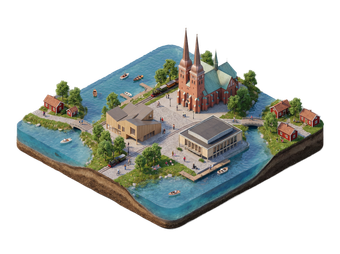
- Växjö kommun: about 1 hour 10 minutes by direct train. A lakeside cathedral town with a museum about Swedish glass and emigration.
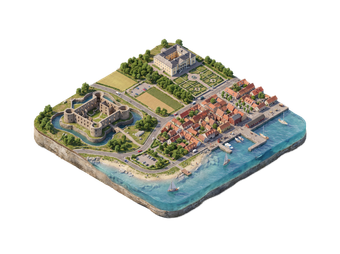
- Karlskrona: about 1.5–2 hours by train, usually with a change in Emmaboda. A UNESCO-listed naval port built on islands, with a large naval museum.
Cosa esplorare
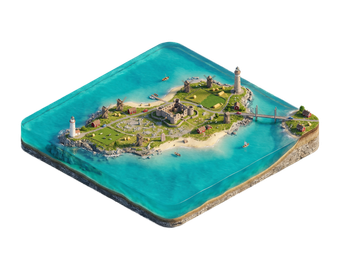
Across the strait, Öland is Sweden's second-largest island, and its main town Borgholm is an easy trip from Kalmar.
Kalmar lies on the coast of the Province of Småland, a region of forests, lakes and glassworks. Inland, the lakeside cathedral town in Växjö kommun is about an hour away by train.
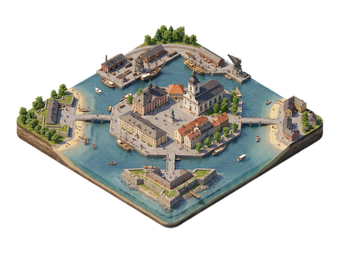
Along the coast to the south, Karlskrona is a historic naval town. Stockholm, the capital, is a short flight away.
Come arrivare
- By air: Kalmar Öland Airport is about 5 km west of the centre and has several daily flights to Stockholm Arlanda. Local bus 402 runs to the railway station in about 15 minutes. Copenhagen Airport is the main international gateway, reachable by train in about 3.5–4 hours.
- By train: Kalmar Central Station is next to Kvarnholmen. Öresundståg trains run to Växjö, Malmö and Copenhagen. Stockholm takes about 5 hours, usually with one change.
- By bus: Long-distance coaches run to Stockholm in about 6 hours and stop at the central station. Regional buses cross the bridge to Öland.
Come muoversi
- Public transit: Kalmar länstrafik runs the town buses and the regional buses to Öland and the airport. You can pay on board with a bank card or buy tickets in the Kalmar länstrafik app. Cash is not accepted on board.
- On foot: Kvarnholmen is small and flat. The walk from the station to the castle or the cathedral takes about 10 minutes.
- Cycling: Kalmar is flat and has many cycle paths. Note that walking and cycling are not allowed on the Öland Bridge, so take the bus across (bikes can go on board if there is space) or rent a bike on Öland.
For visitor information, see Kalmar.com, the official visitor website.
Guidare
- Is a car worth it?: You do not need a car in town. A car is useful for southern Öland and the glassworks, where buses are infrequent.
- Parking: street parking on Kvarnholmen is paid and time-limited. Pay at a machine or by parking app. Larger car parks near the station and at the edge of Kvarnholmen are easier.
- Öland Bridge: traffic to and from Öland can be heavy on summer weekends.
Cibo e bevande
Look for kroppkakor, potato dumplings filled with salted pork, which are a speciality of Öland and the Kalmar coast. They are usually served with melted butter and lingonberries. Smoked fish from the coast and ostkaka, the Småland curd cake with jam and cream, are other local favourites.
For places to eat, start on Kvarnholmen. Restaurants and cafés cluster around Stortorget, Larmtorget and the nearby pedestrian streets. In summer, the harbour front has outdoor terraces with views of the water.
Sicurezza e salute
Kalmar is a very safe town for visitors. Petty crime is rare, but keep an eye on bikes and bags at busy summer events and use a good bike lock.
Ticks are common in long grass and woodland around Kalmar and on Öland. Check yourself after walks in nature. Tap water is safe to drink. In summer, bring sun protection for days at the beach or on the open plains of Öland, where there is little shade.
Storia
Kalmar grew up around a defensive tower built on the shore in the 12th century. That tower became Kalmar slott, which guarded Sweden's border with Denmark for centuries. In 1397, under Margaret I, the castle saw the formation of the Kalmar Union, which joined Denmark, Norway and Sweden under one ruler until 1523.
In the 16th century, the Vasa kings turned the medieval fortress into the Renaissance palace you see today. The town was besieged by Danish forces in the Kalmar War, which began in 1611. In the mid-17th century, the town moved from the area by the castle to the fortified island of Kvarnholmen, with straight streets and a central square. Kalmar domkyrka was built there from 1660 and completed in 1703.
After the Treaty of Roskilde in 1658 moved the border far to the south, Kalmar lost its military role. In 1676, the warship Kronan sank off Öland during a battle with a Danish-Dutch fleet. The wreck was found in 1980, and its finds are now shown at Kalmar läns museum.
Informazioni sul paese
Quick practical facts for Sweden at a glance:
- Valuta
- corona svedese SEK kr · Pagamenti con carta · Ampiamente accettata
- Numeri di emergenza
- 112
- Elettricità
- 230 V · 50 HzTipo C / Tipo F
- Lingue
- svedese
- Acqua del rubinetto
- Potabile
- Senso di marcia
- A destra
- Prefisso telefonico
- +46


Kalmar – Pianifica le tue giornate
Trasforma i luoghi di questa guida in un vero itinerario, con percorsi intelligenti, stime dei tempi e tutto il necessario per un viaggio perfetto.


Destinazioni correlate

Data: © OpenStreetMap contributors, Wikidata, Wikipedia, Tripomatic, Official websites, geoBoundaries (CC BY 4.0). Tours by GetYourGuide. We earn commission from bookings. Travel guide generated with AI.