


Merano
Merano is a spa town in a wide, sunny basin where several valleys meet, surrounded by mountains, vineyards and apple orchards. In the 19th century it became a fashionable health resort for Central European nobility, and the Austrian Empress Elisabeth, known as Sissi, stayed here several times. The grand hotels, villas and riverside promenades from that time still shape the town.
Merano is part of South Tyrol, and most people speak both German and Italian. You notice the mix in the street names, the food and the Tyrolean arcades of the old town. The town suits a relaxed stay of two to four nights, with gardens, castles, a modern thermal spa and easy walks. It is also a good base for hiking in the mountains above the town and for trips to Bolzano and the Dolomites.

Merano – Stai pianificando un viaggio?
Costruisci il tuo itinerario giorno per giorno nell'app Tripomatic.


Quando andare
Spring and autumn are the best seasons. In April the orchards and gardens flower, and in September and October the grape and apple harvests bring warm, clear days. Summer is hot in the valley, but cool walks and lifts are close by. Winter is cold and mostly dry, with snow on the mountains rather than in town.
The biggest event of the year is the Christmas market, from late November to early January. Wooden stalls line the promenade along the Passer river by the Kurhaus, selling crafts, local food and mulled wine.
Periodo migliore per la visita: ottobre
Attrazioni principali
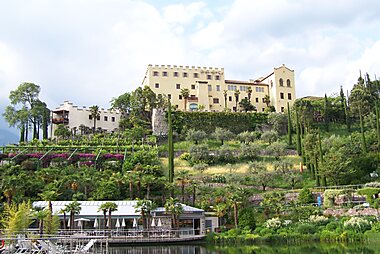
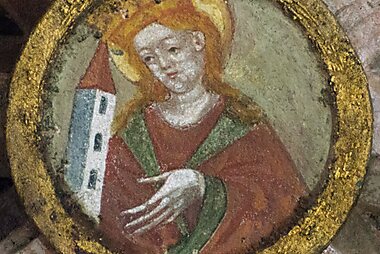
The Gardens of Trauttmansdorff Castle are the town's main attraction. Terraced gardens with plants from around the world climb a hillside around a castle where Empress Sissi stayed, with ponds, viewing platforms and wide views over Merano. Inside the castle, the Touriseum museum tells the history of Alpine tourism. The gardens open from late March or April to early November. From late November to early January, they host an evening light show.
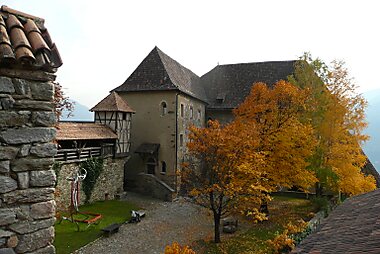
Tirol Castle stands on a ridge above the village of Tirol, about 3 km north of the centre. It was the seat of the Counts of Tyrol and gave the whole region its name. Today it holds the South Tyrolean Museum of History, and the walk from the village has fine views of the valley. It is closed in winter.
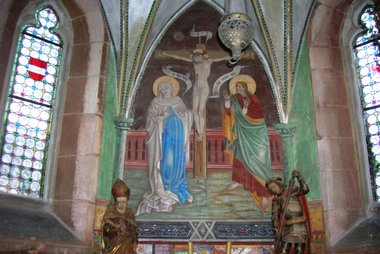
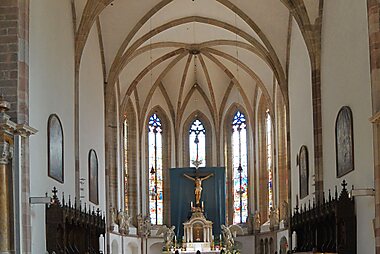
St. Nicholas' Church, Merano is the Gothic parish church at the end of the Lauben, the long arcaded main street of the old town. Look for the giant fresco of Saint Christopher on its south wall. A short walk away on the river is the Kurhaus, the town's elegant Art Nouveau spa hall.
Landesfürstliche Burg - Castello Principesco is a small castle in the old town, built around 1470 as a town home for the rulers of Tyrol. Its rooms keep furniture, painted walls, tiled stoves and old weapons.
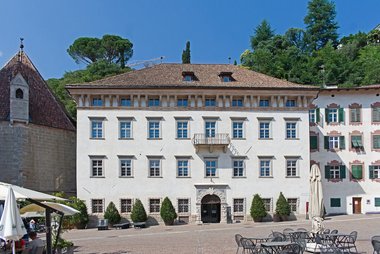
Palais Mamming Museum is the city museum, in a Baroque palace next to the parish church. It covers Merano's story from prehistoric finds to the spa era.
Women's Museum tells the history of women's lives through clothing, household objects and everyday things from the last two centuries.
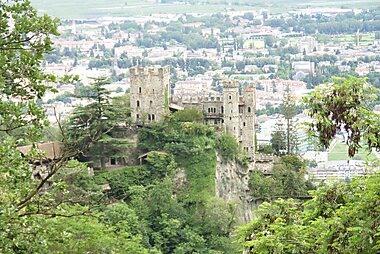
Brunnenburg is a medieval castle just below Tirol Castle. The poet Ezra Pound lived here with his daughter's family, and it now has a small museum of farm life.
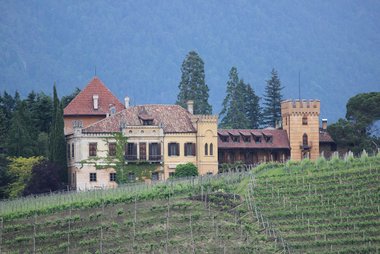
Schloss Rametz - Weinmuseum is a castle estate among the vineyards of Maia Alta, with a winery and a small wine museum.
Elenchi in evidenza


Cosa provare
Merano's best moments are slow ones, in the open air or in warm water.
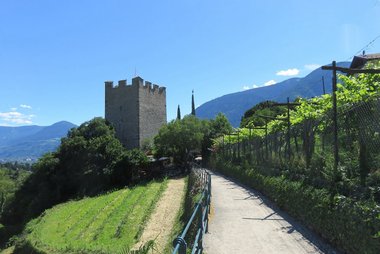
- Walk the spa promenades: Follow the Winter Promenade along the Passer river, past the covered 19th-century Wandelhalle, to the Gilf promenade near the gorge. Then climb to the Tappeiner promenade on the sunny slope above the old town, with palms and views over the roofs. It ends near Pulverturm, a medieval tower you can climb for the view.
- Spend an afternoon at the thermal baths: Therme Meran has indoor and outdoor pools, saunas and a large park in the middle of town. It is a good plan for a rainy day or a winter evening.
- Ride the cable car to Meran 2000: The lift climbs from the edge of town to a high plateau. In summer you can hike on easy mountain paths, and in winter there is a small ski area.
- Watch the horse races: On Easter Monday, the racecourse holds the traditional Haflinger horse race with a parade in local dress. The Grand Prix of Merano, a famous steeplechase, takes place in late September.
- Join the Grape Festival: Every October, the town celebrates the grape harvest. On the Sunday, decorated floats and brass bands in traditional costume parade through the centre.
Tour e attività
Merano — Mappa

 Apri la mappa interattiva
Gite in giornata
Merano sits where several valleys meet, so villages, waterfalls and towns are all close.
- Schenna — about 15 minutes by bus. A hillside village above Merano with a castle and wide views over the valley.
- Partschins — about 20 minutes by bus. A path climbs from the village to a high waterfall at the edge of the Texelgruppe Nature Park.
- St. Leonhard in Passeier — about 30 minutes by bus or car up the Passeier valley. The birthplace of Andreas Hofer, the Tyrolean folk hero, now has a museum about him and the valley.
- Bolzano — about 40 minutes by train. The capital of South Tyrol has a lively old town and the archaeology museum with Ötzi, the Iceman, who lived more than 5,000 years ago.
- Glurns — about 1 hour by car up the Vinschgau valley. A tiny medieval town still inside its full ring of walls and gates.
- Ortisei — about 1 hour 30 minutes by car. A base in Gherdëina - Grödnertal - Val Gardena for cable cars and walks in the Dolomites.
Cosa esplorare
Come arrivare
- By air: Bolzano Airport (BZO), about 30 minutes away by car, has only a few seasonal flights. Most travellers use Verona Airport (VRN) or Innsbruck Airport (INN), each about 2 hours by car, or Munich Airport (MUC), about 3 hours 45 minutes by car. By public transport, take a train to Bolzano and change there for Merano.
- By train: Regional trains run from Bolzano to Merano station in about 40 minutes. From Verona, Munich or Innsbruck, change in Bolzano. The Vinschgau railway continues west from Merano up the valley to Mals. südtirolmobil timetables
- By bus: Regional buses link Merano with the valleys and villages around it. Most leave from the bus station next to the train station.
- By car: A fast road (MeBo) connects Merano with Bolzano and the A22 Brenner motorway in about 30 minutes.
Come muoversi
- On foot: The centre is compact and flat. The old town, the river promenades, the thermal baths and the station are all within about 15 minutes' walk.
- City buses: Urban buses connect the centre with the Trauttmansdorff gardens and the outer districts, and regional buses run to nearby villages such as Tirol and Schenna. On city buses you can pay by tapping a contactless Visa or Mastercard bank card or phone on the validator when you board, and again when you leave. Otherwise, buy a ticket before you board at the tourist office, the train station or the südtirolmobil info point. südtirolmobil tap&go
- Guest pass: Many hotels give guests the Südtirol Alto Adige Guest Pass. It covers buses, regional trains and some cable cars in all of South Tyrol, so ask about it when you check in.
- Cycling: Flat cycle paths follow the valley floor towards Bolzano and up the Vinschgau valley. The town itself is easy to ride, but the hills around it are steep.
Guidare
- Is a car worth it?: Not for the town, which is easy on foot and by bus. A car helps for remote valleys and mountain passes, though buses reach most villages.
- Parking: Use the underground car parks, such as the one at the thermal baths. Street parking in the centre is paid and limited in time.
- Restrictions: The old town and the Lauben are a pedestrian and limited traffic zone. Unauthorised entry is fined, so ask your hotel before you drive in.
Cibo e bevande
Merano's food mixes Tyrolean and Italian cooking. Try Knödel, bread dumplings with speck, cheese or spinach, and Schlutzkrapfen, half-moon pasta filled with spinach and cheese. South Tyrolean speck and crisp rye flatbread called Schüttelbrot are classic snacks. For dessert, order apple strudel, made with apples from the orchards around town.
The hills around Merano grow wine, especially the light red Vernatsch, also called Schiava. In autumn, many farm inns serve Törggelen, a meal of new wine, roast chestnuts and hearty dishes. In town, the best areas to eat and drink are the arcades of the Lauben and the cafés along the Passer river promenade. The Merano WineFestival, held at the Kurhaus every November, is a major event for wine lovers.
Sicurezza e salute
Merano is a very safe town with little crime that affects visitors. Take normal care with bags at the Christmas market and on crowded buses.
Tap water is good to drink. In the mountains, the weather can change fast. Summer afternoons often bring thunderstorms, so start hikes early, carry a jacket and check the forecast. In July and August the valley can be very hot, so plan walks for the morning or evening.
Storia
In the Middle Ages, the Counts of Tyrol ruled a large Alpine state from Tirol Castle, and Merano grew below it as their market town. It was the capital of Tyrol until the early 15th century, when the court moved to Innsbruck. The Gothic St. Nicholas' Church, Merano was completed in the 15th century at the end of the arcaded Lauben. Around 1470, Duke Sigismund built Landesfürstliche Burg - Castello Principesco as his town residence.
After that, Merano became a quiet country town. Everything changed in the 19th century, when doctors began to send patients here for the mild climate. Empress Elisabeth of Austria stayed at Trauttmansdorff Castle, and Merano soon became a fashionable spa. Grand hotels, villas, the promenades and the Kurhaus date from this time. A Jewish community also grew around the spa, and its synagogue still stands and holds a small museum.
After the First World War, South Tyrol became part of Italy, and Merano became a town of two languages and cultures. Since then, the spa tradition has continued, and the modern Therme Meran opened in 2005.
Informazioni sul paese
Quick practical facts for Italy at a glance:
- Valuta
- euro EUR € · Pagamenti con carta · Ampiamente accettata
- Numeri di emergenza
- 112
- Elettricità
- 230 V · 50 HzTipo C / Tipo F / Tipo L
- Lingue
- italiano
- Acqua del rubinetto
- Potabile
- Senso di marcia
- A destra
- Prefisso telefonico
- +39


Merano – Pianifica le tue giornate
Trasforma i luoghi di questa guida in un vero itinerario, con percorsi intelligenti, stime dei tempi e tutto il necessario per un viaggio perfetto.


Destinazioni correlate




Data: © OpenStreetMap contributors, Wikidata, Wikipedia, Tripomatic, Official websites, geoBoundaries (CC BY 4.0). Tours by GetYourGuide. We earn commission from bookings. Travel guide generated with AI.
Pianifica il tuo viaggio con Tripomatic
- Pianificazione con IAOttieni una giornata pronta in un tocco, lascia che l'IA distribuisca la tua lista dei desideri lungo il viaggio o pianifica tutto chattando.
- Avvisi di viaggioAvvisi ufficiali, maltempo, scioperi e calamità naturali per i luoghi di ogni giorno del tuo viaggio.
- Giorni festivi ed eventiScopri giorni festivi, festival e chiusure nei giorni del tuo viaggio e cosa comportano per i tuoi programmi.
- Stima dei costiDettaglio dei costi di viaggio calcolato dall'IA per sapere quanto mettere a budget prima di partire.
- Tour e bigliettiPrenota tour, biglietti prioritari e attività direttamente all'interno del tuo piano.